






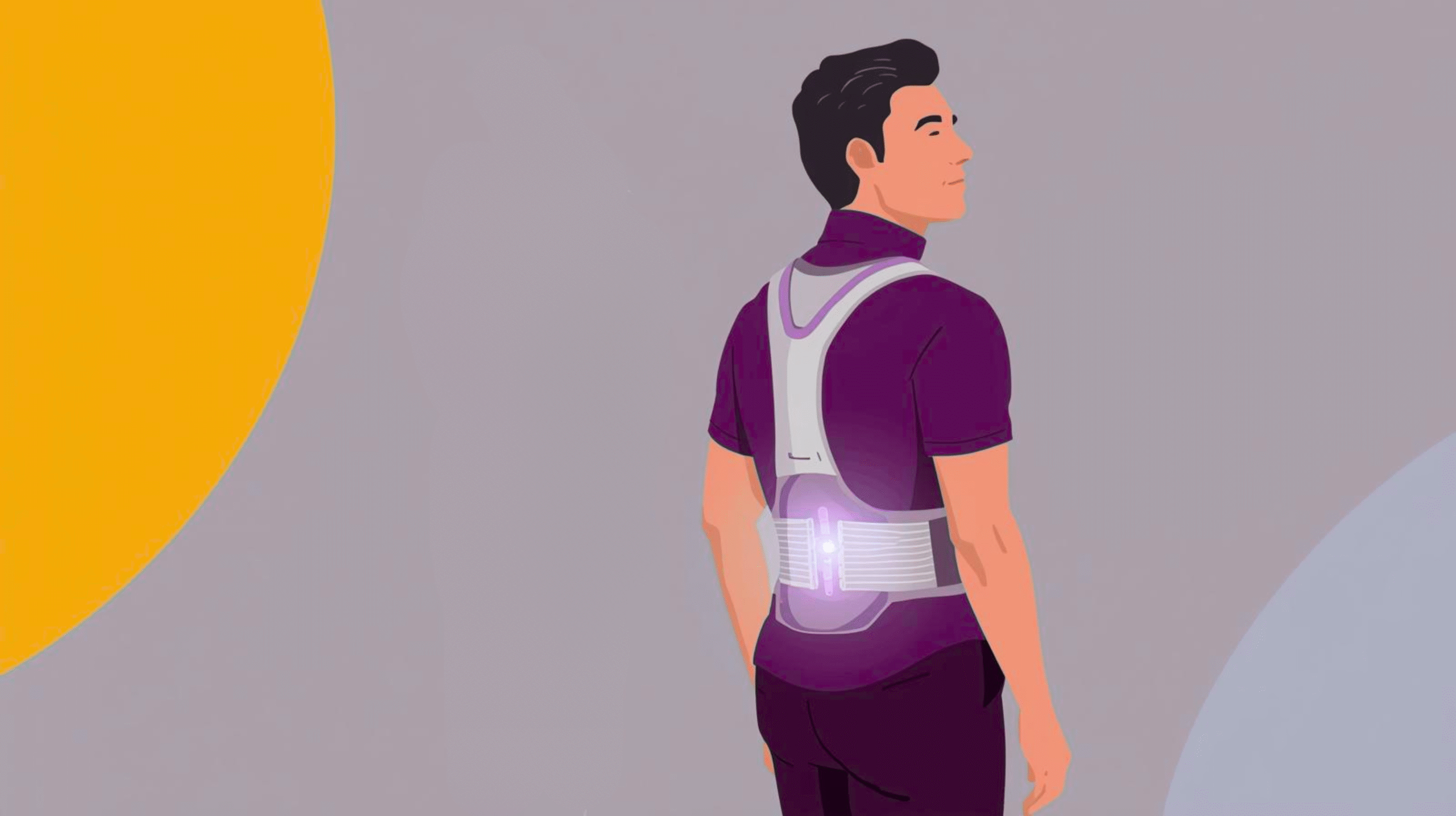
Poor posture is one of the most common yet overlooked causes of back, neck, and shoulder pain. Sedentary lifestyles, long hours of desk work, prolonged sitting, and weak postural muscles contribute to discomfort and long-term spinal issues. Over time, this can lead to chronic pain, reduced mobility, and decreased quality of life.
Posture corrector belts have emerged as an effective, non-invasive solution for supporting proper spinal alignment and relieving discomfort [1]. These wearable devices provide gentle tension to the back and shoulders, helping users maintain upright posture and retrain postural muscles.
This article explores how posture corrector belts can reduce pain, improve posture, enhance comfort, and promote long-term spinal health. It also provides guidance on choosing the right belt, proper usage, and complementary lifestyle habits.
What is a Posture Corrector Belt?
Definition and Function
A posture corrector belt is a wearable device designed to support proper spinal alignment [4]. By applying gentle tension to the upper back and shoulders, it provides continuous feedback, reminding users to maintain upright posture. With time, these belts help strengthen postural muscles and reduce pain caused by poor alignment.
Types of Posture Corrector Belts
- Upper Back Posture Braces: Focus on thoracic spine alignment, helping reduce rounded shoulders.
- Lumbar Support Belts: Target lower back discomfort and provide stabilization to the lumbar region.
- Full Back Braces: Cover both thoracic and lumbar regions for comprehensive support.
- Adjustable, Lightweight, and Breathable Designs: Ensure comfort and suitability for daily use without restricting movement.
How They Work
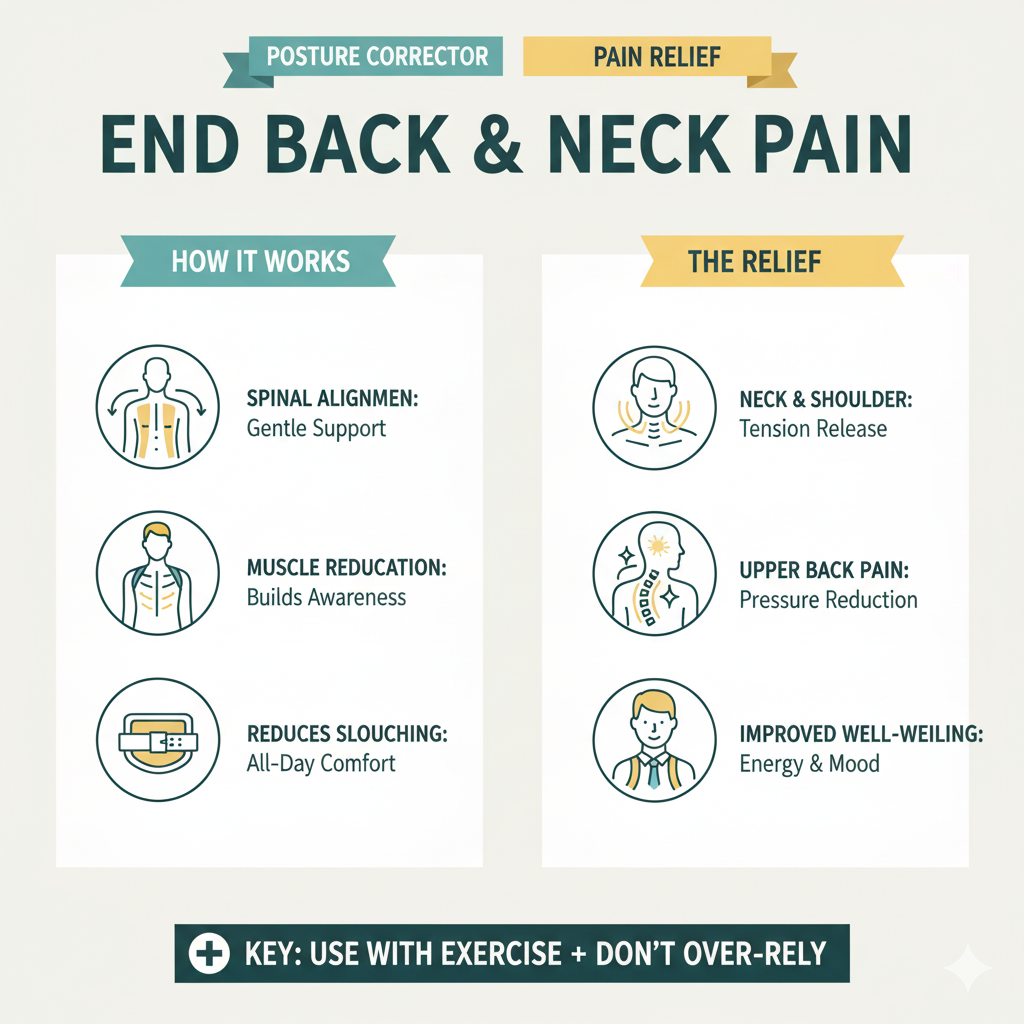
Posture corrector belts function by:
- Retraining postural muscles through proprioceptive feedback.
- Reducing strain on back, neck, and shoulder muscles.
- Encouraging proper spinal alignment during sitting, standing, or physical activity.
- Reminding users to maintain healthy posture habits over time.
Common Causes of Back and Neck Pain From Poor Posture
Poor posture pain often develops gradually due to daily habits and environmental factors. Understanding these contributors helps highlight the importance of early intervention.
Frequent causes include:
- Prolonged screen use leading to forward head posture
- Slouching that increases spinal compression
- Weak stabilizing muscles contributing to structural imbalance
- Inadequate ergonomic setups during desk work
- Insufficient movement or stretching during the day
These factors collectively contribute to discomfort and reduced mobility, making back and neck pain relief strategies essential for maintaining long-term spinal health.
Key Benefits of Posture Corrector Belts for Pain Relief
1. Pain Reduction and Muscle Support
Posture belts relieve discomfort in the neck, shoulders, and lower back by supporting weakened muscles [5]. This is especially beneficial for individuals who sit for long periods, experience muscle fatigue, or have chronic postural pain.
2. Improved Posture Awareness
Wearing a posture belt trains the mind and body to recognize slouching or forward head posture [6]. This constant feedback encourages conscious correction and gradually improves natural posture even when not wearing the belt.
3. Enhanced Comfort and Confidence
Maintaining proper posture improves body alignment, which reduces tension and pain. Users experience better comfort while sitting or standing, improved body language, and heightened self-confidence.
4. Long-Term Spinal Health
Consistent use of a posture corrector belt prevents chronic spinal and joint issues caused by poor posture. It supports the musculoskeletal system and reduces the risk of long-term complications like herniated discs or spinal degeneration.
5. Versatile Use for Daily Activities
Posture corrector belts can be used in various settings:
- Office Work: Wear under clothing to maintain posture while sitting for long hours.
- Gym Workouts: Support back alignment during exercises like weightlifting.
- Daily Activities: Improve posture while walking, driving, or performing household tasks.
How to Use a Posture Corrector Belt for Pain Relief
- Start with 15–30 minutes per day, gradually increasing wear time as your muscles strengthen.
- Adjust straps for a snug but comfortable fit, avoiding excessive tension.
- Combine use with exercises targeting back, core, and shoulders to build postural strength.
- Take regular breaks from sitting to prevent stiffness and improve circulation.
- Avoid overreliance, muscles need to remain active for long-term posture improvement.
Choosing the Right Posture Corrector Belt
Selecting the right posture corrector belt is crucial for ensuring comfort, effectiveness, and long-term benefits. With a variety of designs available, understanding your specific needs and preferences will help you choose a belt that properly addresses your pain, fits well, and complements your daily activities.
1. Identify Pain Area
The first step in choosing a posture corrector belt is to determine the primary area of discomfort. Upper back pain, commonly caused by slouched shoulders or forward head posture, may require a thoracic support brace that encourages shoulder retraction. Lower back pain, often stemming from prolonged sitting or lumbar strain, may necessitate a lumbar support belt that stabilizes the lower spine and relieves pressure on the vertebrae. Some individuals experience discomfort along the entire spine, in which case a full-back posture corrector that covers both thoracic and lumbar regions may be ideal. Identifying the specific pain area ensures that the belt provides targeted support, maximizing relief and promoting proper alignment.
2. Consider Design and Comfort
Comfort is essential for prolonged wear, especially for office workers or individuals who need support throughout the day. Look for adjustable belts that allow you to modify tension for a snug but non-restrictive fit [6]. Breathable materials prevent heat buildup and sweating, while lightweight designs reduce fatigue and allow for discreet wear under clothing. Padded straps and ergonomic designs also contribute to comfort, making it easier to incorporate the belt into your daily routine without irritation or discomfort.
3. Activity Compatibility
Consider your daily activities when selecting a posture corrector. If you spend most of your time at a desk, a low-profile, discreet belt may be suitable. For individuals who exercise regularly or perform physical labor, a more robust design with greater support and flexibility may be necessary to accommodate movement. Choosing a belt that aligns with your lifestyle ensures consistent use and better results over time.
4. Professional Guidance
Finally, seek professional guidance if you have chronic pain, existing spinal conditions, or are recovering from an injury. A physical therapist or healthcare provider can recommend the most suitable type of posture corrector and provide instructions on proper usage, ensuring safety and effectiveness.
By carefully considering pain location, comfort, activity compatibility, and professional advice, you can select a posture corrector belt that effectively relieves discomfort and supports long-term spinal health.
Complementary Lifestyle and Workplace Habits
Ergonomic Workstation Setup:
Position your computer monitor at eye level to prevent neck strain [7]. Use a chair with proper lumbar support to maintain natural spinal curves and reduce back pressure.
Proper Sitting Posture:
Keep your knees bent at 90 degrees with feet flat on the floor. Relax your shoulders and avoid slouching to maintain a neutral spine while sitting for long periods.
Stretching or Walking Breaks:
Take short breaks every 30–60 minutes to stretch or walk around. This improves blood circulation, relieves muscle tension, and reduces stiffness in the back and shoulders [8][9].
Strengthen Back, Shoulder, and Core Muscles:
Incorporate regular exercises such as rows, planks, and shoulder stretches. Strengthening these muscles supports proper posture and enhances the effectiveness of a posture corrector belt.
Stress Management:
Practice relaxation techniques like deep breathing, meditation, or yoga. Reducing stress prevents muscle tension buildup in the neck and shoulders, contributing to overall spinal health.
Conclusion
Posture corrector belts are an effective, non-invasive solution for relieving back, neck, and shoulder pain [10]. When combined with proper posture awareness, ergonomic adjustments, and targeted exercises, these devices promote spinal health, enhance comfort, and improve confidence. Selecting the right belt and using it correctly ensures maximum benefits and long-term improvement in posture and overall well-being.
Here’s some guide to exercises that can relieve you from pain occurring as a result of increased use of electronic devices:
Frequently Asked Questions
1. What is a posture corrector belt, and how does it relieve pain?
A posture corrector belt is a wearable device that provides gentle tension on the upper back and shoulders, retraining muscles and promoting spinal alignment. By reducing strain on postural muscles, it alleviates discomfort in the neck, shoulders, and back (Shariat et al., 2018).
2. Can it help with chronic back, neck, or shoulder pain?
Yes. Regular use can reduce pain caused by poor posture and musculoskeletal imbalances. However, it should be combined with exercise and ergonomic adjustments for best results.
3. How long should I wear a posture corrector belt each day?
Start with 15–30 minutes daily and gradually increase wear time to 1–2 hours as muscles adapt. Avoid prolonged use to prevent over-reliance.
4. Are posture corrector belts suitable for long-term use?
Yes, when used correctly alongside exercise and posture training. Long-term use helps strengthen muscles and improve spinal alignment without dependence on the belt.
5. Which type of posture corrector belt is best for upper back pain?
Upper back posture braces designed for thoracic alignment are ideal. Adjustable, lightweight, and breathable designs provide comfort while correcting slouching.
References
- Kim, D. J., Kim, S. H., & Lee, S. H. (2015). Effect of an exercise program for posture correction on musculoskeletal pain in students. Journal of Physical Therapy Science, 27(2), 521–525. https://www.ncbi.nlm.nih.gov/pmc/articles/PMC4499985/
- Lee, S., Kwon, O., & Lee, J. (2020). Effect of an ergonomic intervention involving workstation modifications on musculoskeletal pain intensity: A long-term randomized controlled trial. International Journal of Environmental Research and Public Health, 17(6), 1987. https://www.ncbi.nlm.nih.gov/pmc/articles/PMC7246595/
- Simpson, L., Nixon, J., & Harrigan, M. (2019). The role of wearables in spinal posture analysis: a systematic review. BMC Musculoskeletal Disorders, 20, 365. https://www.ncbi.nlm.nih.gov/pmc/articles/PMC6368717/
- Bazazan, A., Dianat, I., Feizollahi, N., & Shams, S. (2019). Effect of a posture-correction based intervention on musculoskeletal symptoms and fatigue among control room operators. Applied Ergonomics, 76, 12–19. https://doi.org/10.1016/j.apergo.2018.11.008
https://www.sciencedirect.com/science/article/pii/S0003687018306138 - Kett, A. R., Sichting, F., & Milani, T. L. (2021). The effect of sitting posture and postural activity on low back muscle stiffness. Biomechanics, 1(2), 214–224. https://doi.org/10.3390/biomechanics1020018
- Sheikhhoseini, R., Afzalinejad, Z., & Jahanjoo, F. (2018). Effectiveness of corrective exercises on forward head posture: A systematic review and meta-analysis. Journal of Bodywork and Movement Therapies. https://pubmed.ncbi.nlm.nih.gov/30107937/
- Soares, C., Costa, B., & Teixeira, M. (2023). Ergonomic interventions for work in a sitting position: A systematic review. International Journal of Environmental Research and Public Health. https://www.ncbi.nlm.nih.gov/pmc/articles/PMC10185389/
- Lee, S. F., et al. (2024). Effectiveness of a dynamic seat cushion in preventing neck and low-back pain among high-risk office workers: a 6-month cluster-randomized controlled trial. Scandinavian Journal of Work, Environment & Health. https://doi.org/10.5271/sjweh.4184
- Childs, J. D., Cleland, J. A., Elliott, J. M., et al. (2008). Neck pain clinical practice guidelines — Revision 2017 (updated guidance available). Journal of Orthopaedic & Sports Physical Therapy. Clinical practice guideline: https://orthopt.org/uploads/content_files/files/Neck%20Pain%3A%20Clinical%20Practice%20Guidelines%20-%20Revision%202017.pdf
- Physio-Pedia. (n.d.). Sitting ergonomics and the impact on low back pain. https://www.physio-pedia.com/Sitting_Ergonomics_And_The_Impact_on_Low_Back_Pain