





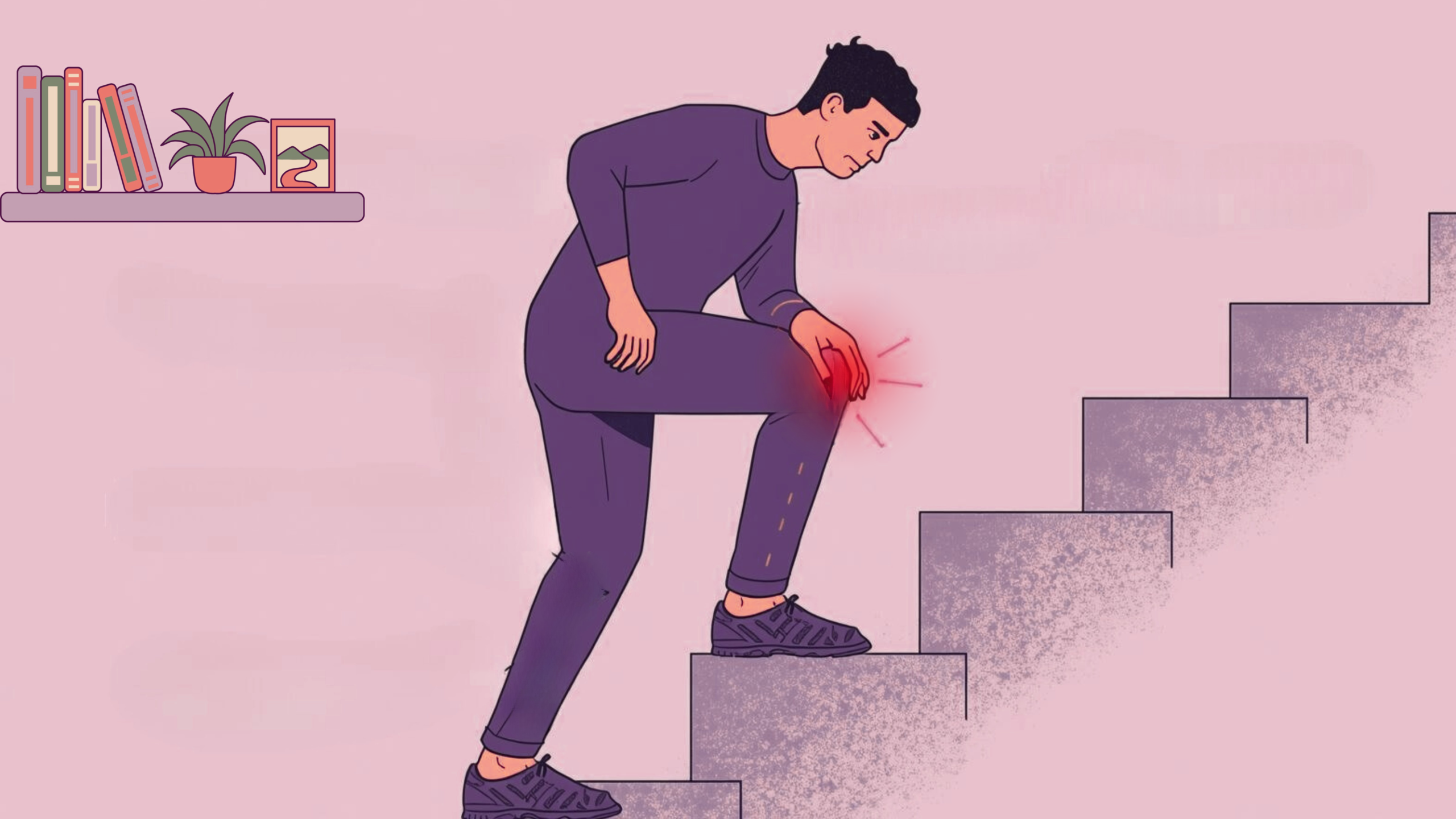
You know that sting in your knee halfway up the stairs, the one that makes you wish elevators were everywhere? That’s your knee joint crying for balance and support.
Climbing stairs puts up to 4-6 times your body weight on your knees [1]. So if your knees aren’t well-supported or the muscles around them are weak, every step feels like a battle.
The most common cause? Patellofemoral Pain Syndrome (PFPS) also known as “runner’s knee.” It happens when the kneecap (patella) doesn’t track smoothly in its groove, causing irritation and inflammation.
But here’s the good news: most of this pain can be managed, even reversed with the right mix of movement, alignment, and recovery strategies. Let’s break down the five scientifically proven fixes that help your knees love stairs again.
Discover the top 5 science-backed fixes to conquer knee pain while climbing stairs from smarter movement techniques to strengthening routines and recovery tools that actually work.
1. Fix Your Form: The Right Way to Climb Stairs
Your climbing form might be the real culprit behind recurring knee strain or soreness. Most people don’t realize how much their body mechanics change when they rush, lean forward, or rely too much on one leg. By making small posture tweaks like engaging your core, aligning your knees over your toes, and using the entire foot for support, you can turn every stair into a mini strength exercise instead of a pain trigger.
Check Your Alignment
Keep your knees aligned with your toes and avoid letting them cave inward (valgus movement). Engage your glutes and core to stabilize the pelvis as you move.
Use the Whole Foot
Most people push off their toes, a big mistake. Place your entire foot on each step, pressing through the heel and midfoot, not just the forefoot.
Lean Slightly Forward
Leaning slightly toward the stairs keeps your center of gravity aligned with your knee joint, minimizing shearing forces.
A 2018 Clinical Biomechanics study found that adjusting stair-climbing form reduced joint load by up to 25%, particularly when glutes were activated during ascent [2].
If you work long hours at a desk, your hips may be tight causing poor stair mechanics. Try hip flexor stretches daily to keep your form fluid.
2. Strengthen Supporting Muscles for Better Knee Health
You don’t need fancy equipment or an intense gym setup to give your knees the strength they deserve. A few mindful movements can go a long way in building support where it really matters. Here are some simple exercises that target the right muscles and help your knees feel lighter, stronger, and more stable every day.
1. Step-Ups (Low Height)
Grab a sturdy 6-8 inch step or platform, even a low stair works. Step up slowly, keeping your knee steady and aligned with your ankle. Focus on feeling your quads and glutes do the work instead of your joints. Alternate legs for 10-12 reps each, and you’ll soon notice better balance and control.
2. Wall Sits
This one’s deceptively simple. Lean your back against a wall and slide down until your knees form a 90° angle like you’re sitting on an invisible chair. Hold for 30 seconds (or as long as you can). It builds endurance in your thighs and strengthens your lower body without straining your knees.
3. Glute Bridges
Lie on your back, bend your knees, and press your feet into the floor. Lift your hips until they line up with your shoulders, and squeeze your glutes at the top. This move strengthens your hips and glutes; two of the most important muscle groups for taking pressure off your knees.
4. Calf Raises
Stand tall and slowly lift your heels off the floor, then lower them back down with control. It may look easy, but this little movement boosts ankle mobility and stability; both essential for keeping your knees happy and supported.
In fact, research published in (2021) found that combining hip and quadriceps strengthening exercises led to better stair-climbing performance and significantly reduced patellofemoral pain syndrome (PFPS) symptoms compared to focusing only on the knees [3].
Because here’s the truth, your knees don’t work alone. Strength comes from the team of muscles surrounding them, and giving those muscles the right attention can make every step feel easier and more effortless.
3. Improve Flexibility and Mobility Especially Around the Hips
Tight hip flexors, hamstrings, and calves restrict movement and force your knees to overcompensate.
Try These Mobility Fixes:
- Hamstring Stretch: Sit with one leg extended, reach forward gently until you feel a stretch behind your thigh.
- Hip Flexor Stretch: Kneel with one knee on the floor and push your hips forward.
- Calf Stretch: Place your hands on a wall, step one foot back, and push the heel down.
Do these after every workout or long sitting session.
A 2020 study in Frontiers in Physiology found that regular lower-body stretching improved joint range of motion and reduced knee pressure during functional tasks like stair climbing [4].
betterhood Tip: Pair these stretches with an ergonomic seat cushion or lumbar support during work hours to reduce hip tightness, one of the sneakiest causes of stair pain.
4. Support Recovery with Tools That Actually Help
Let’s be real, even the best exercise program needs proper recovery. Neglecting this stage is why many people see slow progress (or flare-ups).
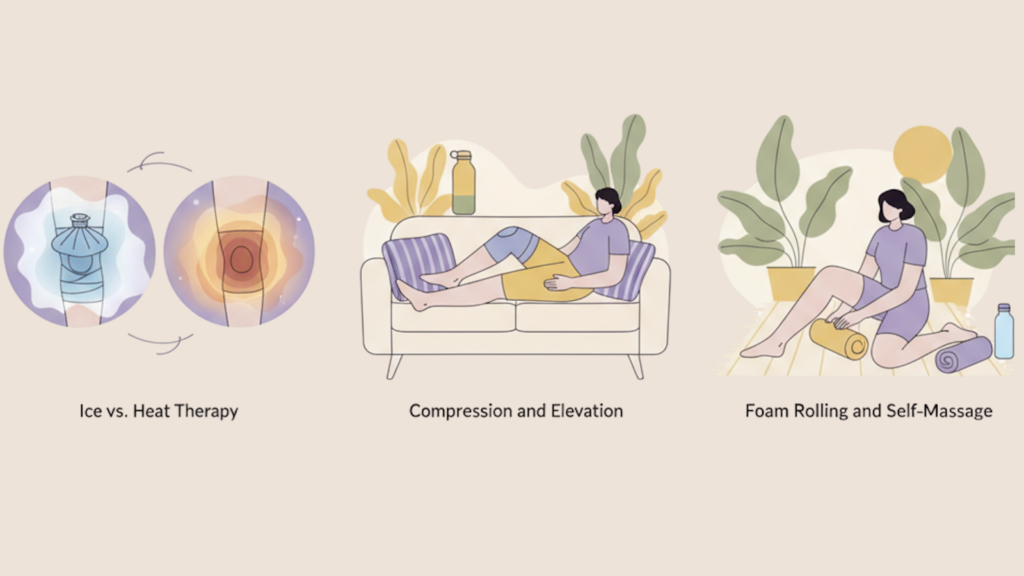
Cold vs. Heat Therapy
- Cold therapy: Use ice packs for 10-15 minutes after activity to reduce inflammation.
- Heat therapy: Ideal for stiffness or tension, promotes blood flow and relaxes muscles.
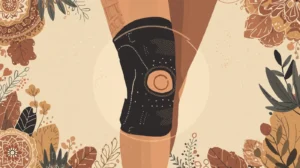
Compression Sleeves
Compression increases circulation and provides proprioceptive feedback, meaning it helps your brain “feel” where your joint is in space. This improved awareness makes your movements more controlled and stable, reducing the chances of missteps or irritation during daily activities. It’s a simple way to give your knees extra support while they heal and strengthen.
Foam Rolling
Spend 30-60 seconds rolling your quads, IT band, and calves. It loosens fascia and reduces post-exercise soreness.
Supportive Cushions & Ergonomics
Long sitting compresses your hips and lower back, indirectly stressing your knees. Ergonomic posture cushions help distribute pressure evenly, keeping your lower body aligned even during rest.
A 2022 review in Sports Medicine confirmed that combining compression, massage, and postural correction accelerates recovery and decreases pain recurrence in active adults [6].
5. Strengthen Your Mind-Muscle Connection for Better Knee Strength and Stability
You might be moving your legs, but are your muscles really firing?
This is where neuromuscular training comes in, exercises that reprogram your muscles and nerves to coordinate better. Think of it as “software updates” for your knees.
Exercises to Try:
- Single-Leg Balance: Stand on one leg for 30 seconds, eyes open or closed.
- Mini Step Downs: Step one foot off a low platform slowly, controlling the descent.
- Clock Lunges: Imagine a clock on the floor and step into different “time” directions.
Neuromuscular exercises retrain your movement patterns, preventing re-injury and restoring natural mechanics.
A 2023 Sports Health study showed that neuromuscular re-education reduced knee pain and improved stair-climbing confidence in chronic PFPS patients [7].
Pairing neuromuscular drills with comfort aids (like knee braces) helps build control without overloading the joint early on.
Foods That Support Joint Strength, Stability, and Recovery
Even if you move perfectly, poor nutrition can sabotage progress. Your knees need the right nutrients to repair cartilage and reduce inflammation.
Key Nutrients for Healthy Knees:
- Omega-3 Fatty Acids: Reduce joint inflammation, found in salmon, flaxseeds, walnuts.
- Collagen & Vitamin C: Collagen rebuilds cartilage, and vitamin C boosts its absorption [8].
- Vitamin D & Calcium: Support bone strength.
- Turmeric & Ginger: Natural anti-inflammatories shown to improve knee function [9].
A 2021 study in Nutrients found that individuals supplementing with collagen peptides for 12 weeks had significantly less exercise-induced joint pain [10].
Combine movement and nutrition with mindful recovery, that’s the true formula for long-term knee wellness.
Progress Check: Is Your Knee Health Improving?
Signs your knees are getting stronger:
- Pain appears later (or not at all) during stairs.
- You can climb multiple flights without stopping.
- Swelling or stiffness after activity has reduced.
- You feel more stable and confident on uneven surfaces.
If pain worsens or sharpens, it’s your cue to step back, rest, and reassess.
A 2023 review in Arthritis Care & Research highlighted that gradual progression with consistent low-impact training leads to the most sustainable results in knee rehabilitation [11].
How to Make Knee Health a Part of Your Everyday Lifestyle ?
You don’t have to swear off stairs forever, your knees just need the right preparation to handle real-life movement confidently. With a little daily balance between activity, recovery, and support, your joints can get stronger instead of more stressed.
Here’s how a well-balanced knee-friendly day might look:
| Time | Routine | Purpose |
| Morning | 5-min mobility warm-up + heel slides | Prepares joints for movement |
| Midday | Step-ups + wall sits | Builds functional strength |
| Evening | Gentle yoga or walk | Aids recovery and flexibility |
| Night | Heat therapy + ergonomic cushion | Supports posture during rest |
Combine science-backed movement with ergonomic comfort your knees (and back) will thank you for it.
Conclusion
Knee pain while climbing stairs isn’t a punishment, it’s a message. Your body is telling you to strengthen, align, and recover better.
The five fixes above:- correcting form, building strength, improving mobility, supporting recovery, and training your mind-muscle connection are your blueprint for pain-free steps.
Remember, consistency beats intensity. Small, daily improvements create resilient joints. With betterhood’s wellness-focused approach, science-backed exercises, posture supports, and mindful recovery, you can rewrite your knee’s story, one confident step at a time.
Explore More Health & Wellness Solutions:
Want to stay informed about wellness and everyday health issues? Here are some insightful reads to guide you. Explore the links below for practical tips and solutions.
- How to Prevent Knee Injuries: Proven Tips, and Lifestyle Strategies for Stronger Joints
- How Can Knee Cap Support Help Prevent Injury and Reduce Pain While Running
- 10 Effective Home Remedies for Body Pain Relief Naturally
- Mobility Exercises: Benefits, Techniques & Routines for Better Movement
Frequently Asked Questions:
1. Why do my knees hurt only when climbing stairs?
Because stairs demand more knee flexion and pressure revealing muscle imbalances or joint misalignment.
2. Should I avoid stairs completely if I have pain?
No. Modify your form and strengthen gradually instead of full avoidance.
3. Can knee braces help during stair climbing?
Yes, compression braces provide support and confidence during activity.
4. What’s the best time to stretch for knee pain relief?
Post-workout or after long sitting hours, your muscles are warmer and more responsive.
5. How long before I see improvement?
Usually 4-6 weeks of consistent, gentle training shows noticeable progress.
6. Can posture cushions really affect knee health?
Absolutely! Good sitting posture reduces hip and knee strain by keeping your kinetic chain aligned.
References (APA Style)
- Costigan, P. A., Deluzio, K. J., & Wyss, U. P. (2002). Knee and hip kinetics during normal stair climbing. Gait & Posture, 15(1), 31–40.https://www.sciencedirect.com/science/article/abs/pii/S0966636201002016
- Zhang, H., Zhang, X., Ma, J., Sun, N., Zhang, L., & Gao, Y. (2025). Biomechanical effects of loading methods on the patellofemoral joint during stair climbing: based on statistical parametric mapping analysis. Frontiers in Bioengineering and Biotechnology,.https://www.frontiersin.org/journals/bioengineering-and-biotechnology
- Dolak, K. L., Silkman, C., Medina, J., Hacker, E. D., Page, T., & Naughton, G. (2011). Hip strengthening prior to functional exercises reduces pain and improves function in patients with patellofemoral pain syndrome. Journal of Orthopaedic & Sports Physical Therapy, https://www.jospt.org/doi/10.2519/jospt.2011.3499
- Nakamura, M., Kusumoto, A., Yoshida, S., & Yanase, K. (2020). The effect of static stretching on knee flexion range of motion and muscle stiffness. Frontiers in Physiology, 11, 577. https://www.frontiersin.org/journals/physiology/articles
- Ghai, S., Ghai, I., & Effenberg, A. O. (2018). The influence of below-knee compression garments on knee proprioception under differential information processing constraints. Journal of Sports Sciences, 36(16), https://www.sciencedirect.com/science/article/abs/pii/S0966636216304842
- Chen, J., Cogburn, J., Marcussen, B., & Slayman, T. (2025). Optimizing athletes’ recovery and performance: A review of vibration therapy, compression garments, and massage. Current Sports Medicine Reports, 24(6), 177–185. https://doi.org/10.1249/JSR.0000000000001259
- Willy, R. W., Davis, I. S., & Powers, C. M. (2023). Neuromuscular re-education for femoral pain: Improving pain and function in active adults. Sports Health, https://www.jospt.org/doi/10.2519/jospt.2019.0302
- DePhillipo, N. N., Aman, Z. S., Kennedy, M. I., Begley, J. P., Golberg, A., & Dragoo, J. L. (2018). Efficacy of vitamin C supplementation on collagen synthesis and oxidative stress in human and animal studies: A systematic review. Orthopaedic Journal of Sports Medicine, https://pmc.ncbi.nlm.nih.gov/articles/PMC6204628/
- Heidari-Beni, M., Feizi, A., Askari, G., & Iraj, B. (2020). Herbal formulation “turmeric extract, black pepper, and ginger” versus naproxen in the treatment of chronic knee osteoarthritis: A randomized clinical trial. Phytotherapy Research https://pubmed.ncbi.nlm.nih.gov/32180294/
- Khatri, M., Naughton, R. J., Clifford, T., Harper, L. D., West, D. J., Stevenson, E., & Russell, M. (2021). The effects of collagen peptide supplementation on body composition, joint pain, and recovery from exercise: A systematic review. Nutrients, https://pmc.ncbi.nlm.nih.gov/articles/PMC8521576/
- Macri, E. M., et al. (2023). OARSI year in review 2023: Rehabilitation and outcomes. Arthritis Care & Research, 75(11), 2121–2132. https://pubmed.ncbi.nlm.nih.gov/37673295/