



Sleep is one of the pillars of good health, but it gets short shrift. People spend money on mattresses, sleep apps and routines but overlook one of the most important factors for quality sleep, the pillow. Using the wrong pillow can cause neck pain, disrupt your posture, rob you of sleep and even lead to chronic musculoskeletal problems.
Side sleeping, according to doctors and sleep experts, is the most common sleeping position and the one we should be using. It has a few health benefits, including supporting your breathing, improving digestion and reducing the chances of snoring. This is but one of the many advantages, all of which only apply when body support is correct.
This is where side sleeping pillows come into play. Body pillows are designed to keep the natural alignment of the body while you’re lying on one side. They help keep the head, neck and spine in a neutral alignment to prevent strain and discomfort.
There is some research demonstrating that good pillow support can result in improved sleep and decreased neck pain. The rise of sleep ergonomics means side sleeping pillows are becoming an essential part of contemporary slumber setups.[1]
This detailed article will cover everything you need to know about side sleeping pillows, including how they work, their benefits, the types available on the market, how to choose one for your specific needs and expert tips on effectively using them.
Understanding Side Sleeping
Before we get into our pillows, it’s worth briefly examining why side sleeping is so prevalent and beneficial.
Why do we sleep on our sides?
Many people sleep on their side, as it is the natural position to take:
- That takes the pressure off of the spine.
- More comfortable than sleeping on your back or stomach
- It supports better breathing
In fact, research shows that most adults like sleeping on their side because it feels more stable and is easier to relax.
Health Benefits of Side Sleeping
Sleeping on your side has multiple proven health benefits:
Reduced Snoring
Lying on your side keeps the airway open, minimizing snoring and mild sleep apnea. [3]
Better Digestion
Sleeping on the left side enables a good flow of blood and helps in maintaining optimal pressure in the groups of veins. [2]
Improved Circulation
This position helps promote better circulation, which can be particularly important during pregnancy.
Spinal Support
When executed properly, sleeping on your side honors the natural curve of the spine.
What Is a Side Sleeping Pillow?
A side sleeper pillow is built to help hold the body up while on its side. Unlike ordinary pillows, it supports the appropriate height and firmness required to fill the space between head and mattress.
Key Characteristics
- Thicker than standard pillows
- Medium to firm support
- Ergonomic design
- Maintains shape over time
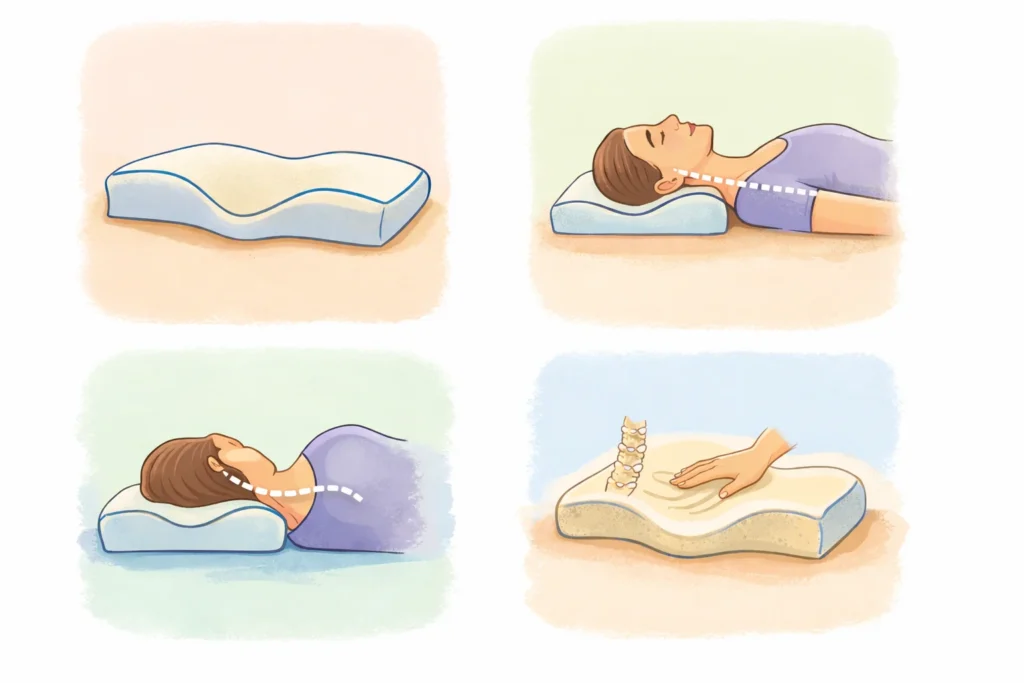
The aim is straightforward: maintain head, neck and spine position in a line.
Why Do You Need A Side Sleeping Pillow ?
The benefits of side sleeping pillows are rooted in biomechanical and ergonomic principles.
When lying on your side:
- Your head does not touch the mattress thanks to your shoulder creating space
- Your neck collapses downward without this support
- This puts strain on muscles and joints
A properly designed pillow:
- Fills this gap
- Keeps the neck neutral
- Reduces pressure points
This is especially important for people who are experiencing back pain, as studies have shown that sleeping in a neutral spine position reduces stress on the spinal joints and muscles .[1]
Advantages of Using a Side Sleeping Pillow
Proper Spinal Alignment
The main benefit is that it keeps your spine in neutral alignment.
When the spine is aligned:
- Muscles relax
- Ligaments are not overstretched
- Pain is minimized
Relief from Neck Pain
Neck pain is one of the most common complaints people have as they age, and choosing the wrong pillow height can lead to neck pain.
Side sleeping pillows:
- Support the natural curve of the neck
- Prevent stiffness
- Reduce strain
Research indicates that using ergonomic pillows can greatly alleviate neck pain . [1]
Reduced Shoulder Pressure
Side sleepers frequently feel pressure on the shoulder.
A good pillow:
- Distributes weight evenly
- Reduces pressure buildup
- Improves comfort
Better Sleep Quality
Comfort is directly linked to how well you sleep.
Side sleeping pillows help:
- Reduce tossing and turning
- Promote deeper sleep
- Improve overall rest
Reduced Snoring and Better Breathing
Managing the airway is so important for good sleep.
Side sleeping with adequate pillow support:
- Improves airflow
- Reduces snoring
Support During Pregnancy
Most pregnancy manuals encourage people to sleep on their side.
Side sleeping pillows:
- Support the belly
- Reduce pressure on the back
- Improve circulation
Recommended by doctors: side sleeping during pregnancy for better fetal health .[4]
Full Body Support w/ Body Pillows
Several pillows for side sleeping support the whole body.
- Benefits include:
- Hip alignment
- Knee support
- Reduced lower back strain
Types of Side Sleeping Pillows
Standard Side Sleeping Pillow
What it is: A thicker version of a normal pillow.
Contour Pillow
Curved to provide neck support .
Memory Foam Pillow
Molds itself to your body contour.
Body Pillow
A pillow that runs long and supports the whole body.
Adjustable Pillow
Could be adjusted for height and firmness.
Materials Used in Side Sleeping Pillows
Memory Foam
- Provides excellent support
- Molds to body shape
Latex
- Durable and responsive
- Naturally breathable
Down/Feather
- Soft and comfortable
- Less supportive
Polyfoam
- Budget-friendly
- Moderate support
Choosing the Right Side Sleeping Pillow
Loft (Height)
The most important factor.
- Broad shoulders , use high loft
- Narrow shoulders , use medium loft
Firmness
Medium-firm is ideal.
Material
Select according to your comfort/support requirements.
Shape
Contour pillows offer better support.
Sleeping Habits
Think about if you move while sleeping.
Using a Side Sleeping Pillow Proper Side Sleeper Positioning
- Maintain an upright posture of head to spine
- Avoid bending your neck
- Put a pillow between your knees
This relieves strain on the hip and lower back.
Common Mistakes to Avoid
- Choosing a very low pillow (one that is too thin)
- Choosing overly soft pillows
- Ignoring alignment
Potential Drawbacks
- Adjustment period
- Cost of premium pillows
- Not all designs fit everyone
Who Should Use a Side Sleeping Pillow?
- Side sleepers
- People with neck pain
- Pregnant individuals
- Snorers
How to Sleep Better with a Side Sleeping Pillow
- Maintain a consistent sleep routine
- Use a supportive mattress
- Replace pillows regularly
Conclusion
Side sleeping pillows are not merely accessories, rather, they serve as essential tools for maintaining proper sleep posture and enhancing overall health.
It relieves pain, improves sleep quality and general well-being when they offer the right support and alignment. A good pillow can do wonders for how you feel on a daily basis.
FAQs
Yes, they do keep the bones aligned and assist in reducing pain.
It depends on shoulder width.
Yes, by improving airflow .
Yes, highly recommended .
Typically 1 to 3 years.
You can, but it probably won’t be adequately supported.
References
- Gordon, S. J., Grimmer-Somers, K., Trott, P., & Pillow Study Group. (2019). Pillow use: The behaviour of cervical pain, sleep quality and pillow comfort. Journal of Pain Research.
https://www.dovepress.com/pillow-use-the-behaviour-of-cervical-pain-sleep-quality-and-pillow-com-peer-reviewed-fulltext-article-JPR - Healthline. (2023). Best Sleeping Positions for Digestion and Acid Reflux.
https://www.healthline.com/health/gerd/sleeping-position-for-acid-reflux - Cleveland Clinic. (2023). Sleeping Positions That Reduce Snoring.
https://health.clevelandclinic.org/best-sleeping-position-to-stop-snoring - Medical News Today. (2024). Best sleeping positions during pregnancy.
https://www.medicalnewstoday.com/articles/best-sleeping-position-pregnancy