






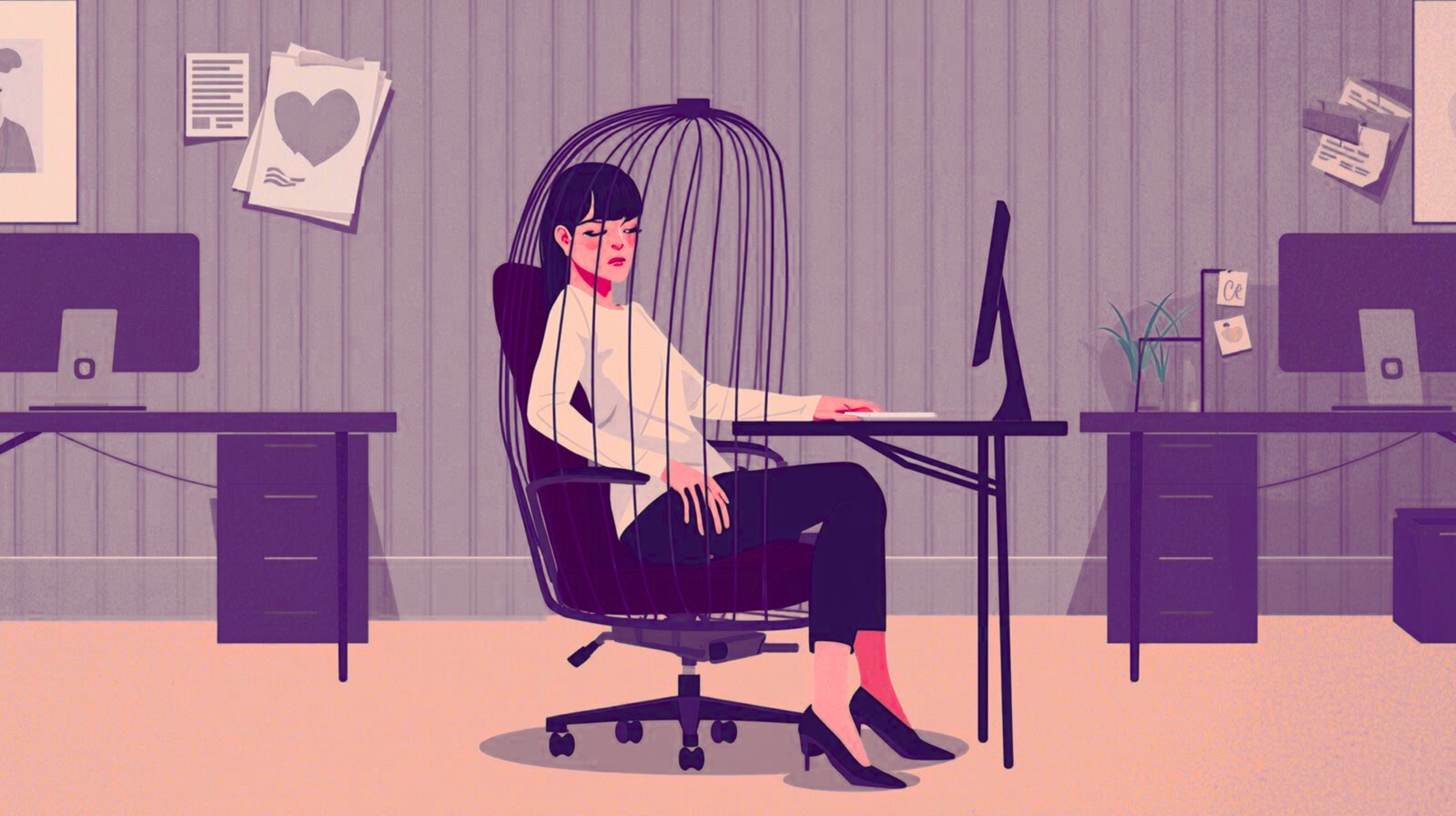
Around 2014, scientists studying long sitting hours noticed something unusual. People who stayed seated for most of the day were not simply slouching or losing muscle tone. Their bodies were behaving as if they were in a freeze response.
Breathing became shallow. The vagus nerve quieted down and the body held tension as if waiting for something to happen.
In reality, they were not relaxing. They were bracing.
And that is the part we usually miss. Sitting feels harmless, but it can signal the nervous system to turn inward, shut down, and conserve energy. Your chair becomes less of a seat and more of a cage.
How Sitting Sends the Wrong Signals
Your posture constantly talks to your brain. When you stay seated for long stretches, the message is not a positive one.
- Your breath flattens because the diaphragm cannot expand fully.
- Your organs get compressed, which affects mood, digestion, and overall energy.
- The vagus nerve becomes less active, pulling your system into a low-energy, low-alert state.
This feels like tiredness or lack of motivation, but your body is actually slipping into a protective mode.
The Hidden Costs of Staying Still
Most people think sitting means the body is calm. But stillness without support creates the opposite effect.
- Your shoulders round forward, which your nervous system interprets as a defensive posture.
- Your head tilts down, signaling vigilance or withdrawal.
- Your spine collapses, reducing the sense of stability and confidence.
Over time, your brain begins to associate work with shutdown, and shutdown with staying exactly where you are.
You do not feel unproductive because you are lazy. You feel unproductive because your physiology is in retreat mode.
Everyday Habits That Trigger Shutdown
You might be slipping into freeze mode without realizing it.
- Long Zoom meetings spent bent over a laptop.
- Working on a couch or bed where the spine automatically collapses.
- Eating while leaning forward, restricting rib movement.
- Scrolling on your phone with your chest folded inward.
None of this looks dramatic. But these small habits quietly teach your body to stay small, quiet, and still.
Signs You Are Stuck in the Loop
- Brain fog even when you slept well.
- Feeling oddly anxious before starting simple tasks.
- Needing caffeine just to feel “on.”
- Losing motivation halfway through your work.
- Feeling overwhelmed by things you normally handle easily.
Often the problem is not your workload. It is the posture you are working from.
A Simple Two-Minute Breakout
You do not need a workout. You just need to reset your body’s signals.
Step 1: Stand up and lengthen your spine.
- Let your ribcage lift naturally.
- Drop your shoulders.
Step 2: Take three deep breaths.
Let your belly expand and soften.
Step 3: Move lightly.
- Stretch your arms up.
- Roll your shoulders.
- Take a few steps.
Thirty seconds is enough to wake your nervous system. This tiny shift tells your brain: We are not stuck. We can act.
The Real Takeaway
Sitting is not bad. Sitting without awareness is what creates the shutdown.
Your chair can be where your instincts retreat or where you return after you have reactivated your energy and breath.
So here is the thought worth passing on:
What would change if you saw every long sitting moment not as your default but as a gentle reminder to reset before your body slips into shutdown?
Co- authored by: Shayamal Vallabhjee
Chief Science Officer: betterhood
Shayamal is a Human Performance Designer who works at the intersection of psychology, physiology, and human systems design, for the last 25 years he is helping high-performing leaders, teams, and athletes thrive in environments of stress, complexity, and change. His work spans across elite sports, corporate leadership, and chronic health—and is grounded in the belief that true performance isn’t about pushing harder, but designing better.


