





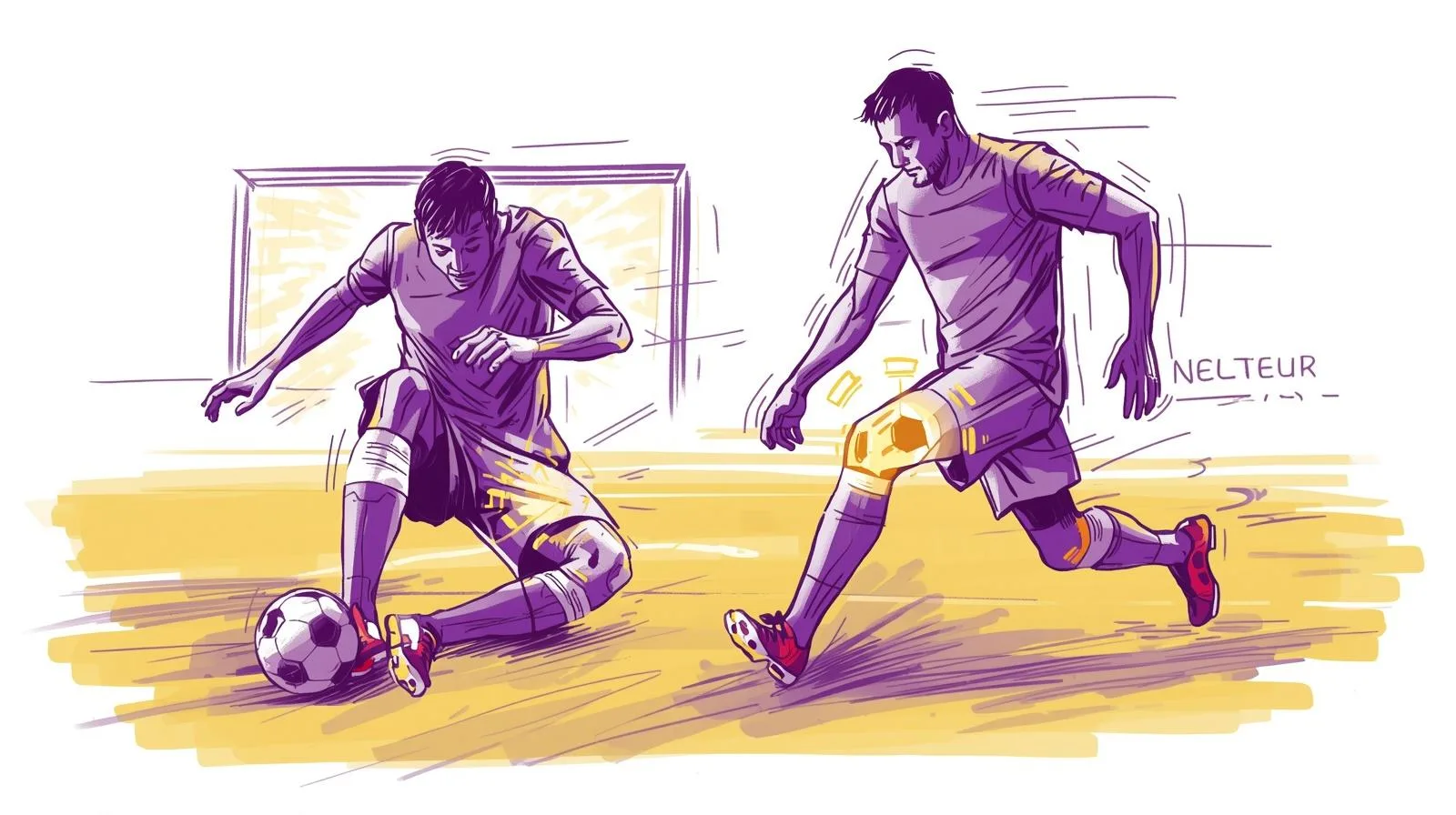
Musculoskeletal injuries are one of the leading health problems among both physically active individuals and those who perform repetitive tasks as part of their daily activities. Strains and Sprains are two very common injuries that confuse many people. While these terms have similar etymology and can potentially manifest as overlapping symptoms, including pain and swelling, they affect different tissues in the body and require subtly but significantly different approaches for treatment and healing.[2]
It is, therefore, important that you understand the differences between muscle strains and ligament sprains as this will assist you in managing your injury better, preventing complications and facilitating recovery. Misdiagnosis of these injuries can result in improper treatment strategies that prolong healing time or worsen the condition.
A strain is the overstretching or tearing of muscles or tendons, typically due to excessive force or repetitive stress. A sprain, by contrast, consists of stretching or tearing of ligaments, the tough cords of tissue that connect bones and stabilize joints.
Both injuries can occur in sports, during workouts, heavy lifting, accidents or even sudden awkward movements while going about your daily life. While most mild cases resolve with care, both severe strains and sprains may need medical attention or rehabilitation.
This comprehensive guide explains.
What muscle strain and ligament sprain are ?
- The key differences between them
- Common symptoms and causes
- Treatment and recovery methods
- Injury prevention strategies
- Warning signs that need to be medically attended.
Once you understand the injury types and how to mitigate them, you can continue to perform an active lifestyle while protecting your joints and muscles.
What Is a Muscle Strain?
A muscle strain happens when a muscle or tendon is stretched too far or tears. Tendons are tough cords of connective tissue that connect the muscles to the bones and help us move.
Muscle strains often happen when muscles are overworked or asked to contract too violently. This can occur with strenuous activity, hoisting heavy objects, or sudden movement without warming-up.[1]
In a strain, muscle fibers have microscopic tears. In turn, the body responds by triggering inflammation and sending repair cells to the injured tissue. This process creates pain, swelling and temporary strength loss.
Common Causes of Muscle Strains
Muscle strains are often caused by the following:
- Overexertion during physical activity
- Lifting heavy objects improperly
- Sudden acceleration during sports
- Poor posture or muscle imbalance
- Repetitive movements without adequate rest
- Lack of warm-up before exercise
Muscles that cross two joints, or those under a lot of stress are especially susceptible to strains.
Muscle Strain Symptoms: the Most Common Signs
Signs and Symptoms may vary by severity of the injury, but often include:
- Sudden or gradual muscle pain
- Muscle weakness
- Swelling or tenderness
- Muscle spasms
- Reduced range of motion
- Moderate or severe bruising
The hamstrings, lower back, shoulders, calves and neck are the areas most commonly affected by muscle strains.
What Is a Sprain?
A sprain happens when a ligament is overstretched, partially torn or completely torn. Ligaments are strong sheets of connective tissue that attach bones to other bones and stabilize joints.
A sprain typically happens when a joint is forced beyond its normal range of motion. That can occur when the joint twists suddenly, bends in a way it shouldn’t or absorbs a strong impact.[3]
For instance, if you roll your ankle walking on uneven terrain or jump and land in an awkward position, the ligaments that help stabilize the joint can be overstretched.
Common Causes of Sprains
- Sprains commonly occur due to:
- Sudden twisting movements
- Falls or accidents
- Landing incorrectly during sports
- Rapid changes in direction
- Slipping on uneven surfaces
These injuries are particularly prevalent in physically highly demanding sports like basketball, soccer and running.
Common Symptoms of a Sprain
- Typical symptoms include:
- Pain around the affected joint
- Swelling
- Bruising
- Limited joint mobility
- Joint instability
- Pain when bearing weight
Most common sprains involve the ankle, wrist, knee and thumb joints.
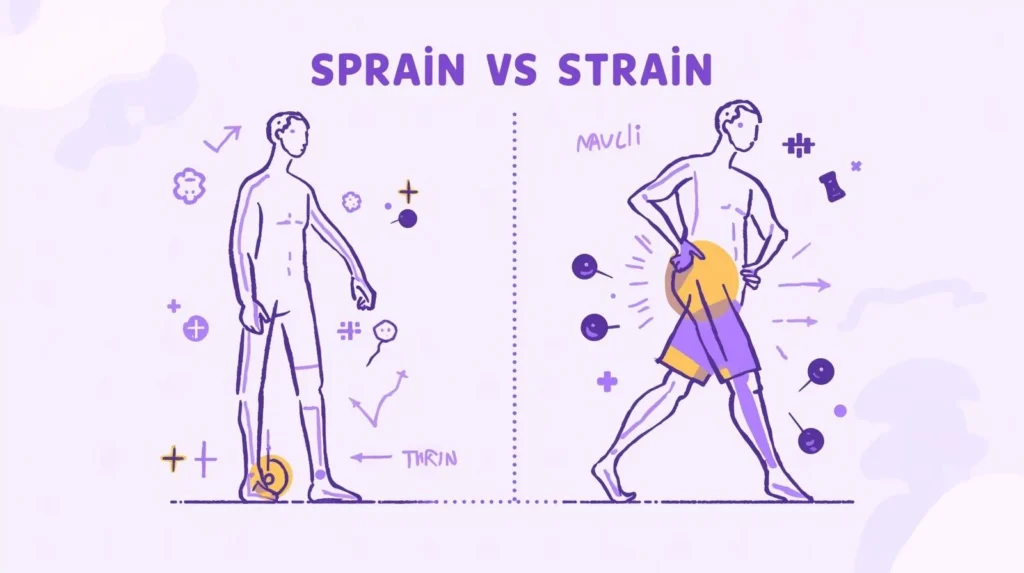
Strain vs Sprain: Key Differences
Despite having a number of common symptoms, strains and sprains affect different anatomical structures and have varying mechanisms of injury.
| Feature | Muscle Strain | Ligament Sprain |
| Tissue affected | Muscle or tendon | Ligament |
| Common cause | Overuse or overstretching | Sudden twist or impact |
| Pain location | Muscle belly or tendon | Around the joint |
| Functional impact | Muscle weakness | Joint instability |
| Common examples | Hamstring strain, back strain | Ankle sprain, wrist sprain |
This distinction is important in guiding treatment decisions and strategies for recovery.
The Severity of Strains and Sprains
Healthcare providers classify strains and sprains into three grades depending on severity.
1. (Mild)
- Minor stretching of tissue
- Mild pain and swelling
- Minimal loss of function
- Recovery typically within 1 to 2 weeks
2. (Moderate)
- Partial tearing of muscle or ligament
- Noticeable swelling and bruising
- Reduced strength or joint stability
- Recovery may take 3 to 6 weeks
3. (Severe)
- Complete tear of the tissue
- Severe pain and swelling
- Loss of a large amount of movement or joint function
- Usually need medical treatment or surgery
The most important thing is to identify the severity of the injury to determine which treatment path is taken.
Immediate Treatment: The RICE Method
In the case of most mild to moderate strains and sprains, early treatment is not aimed at promoting healing but reducing inflammation, while protecting the damaged tissue.[4]
One of the suggested methods you may often come across is RICE, which includes 4 important steps:
Rest
Guide: Avoid anything that places stress on the injured area. Resuming activity too early can delay healing.
Ice
Applying ice packs and compresses for 15–20 minutes every two to three hours during the first 48 hours helps reduce swelling and pain.
Compression
Elastic compression bandages help prevent swelling and support the injured tissue.
Elevation
This elevation is intended to minimize inflammation and fluid buildup (17).
Early management is also critical to minimise complications and facilitate recovery.
Recovery and Rehabilitation
Depending on the injury severity, individual health status and treatment approach, recovery time will differ.
Gradual Return to Activity
Strengthening Exercises
As pain and swelling subside, gentle mobility is crucial to preserve joint function and prevent stiffness.
Progressive strengthening exercises restore muscle strength and joint stability.
Physical Therapy
Rehabilitation protocols may include the following for moderate or severe injuries:
Strength training exercises
Balance and coordination training
Flexibility exercises
Joint stabilization techniques
Physical therapy restores mobility and decreases risk of reinjury.[6]
Long-Term Complications if Left Untreated
Neglecting strains or sprains can result in a number of long-term issues, including:
- Chronic joint instability
- Persistent pain
- Reduced mobility
- Increased risk of repeated injuries
- Muscle weakness
Recovery is possible with appropriate treatment and rehabilitation.
Preventing Strains and Sprains
While not every injury can be prevented, there are a number of things that can be done to minimize the risk.
Warm-Up Before Exercise
A good warm-up increases blood flow to muscles and prepares joints for motion.
Strength Training
Strengthening the muscle also stabilizes and supports the joint.
Maintain Flexibility
Stretching and mobility work preserves healthy patterns of movement.
Use Proper Technique
Proper technique while lifting, running or playing sports prevents your tissues from being overstressed.
Wear Proper Footwear
Good supportive footwear helps balance and lessen stress on joints.
Allow Adequate Recovery
The muscles and ligaments require time to heal after vigorous activities. Overtraining can increase injury risk.
Supporting Muscle and Joint Recovery
Recovery is more than rest and rehabilitation. Incorporating supportive recovery strategies and utilising appropriate muscle care products can help alleviate discomfort, ease muscle ache and aid the body’s natural healing process.
For instance, recuperating coolant sprays can feel good on sore muscles and encourage joint comfort after strenuous activity or injury.
Topical roll-on solutions for muscle and joint recovery work the same way by focusing on specific body areas such as the neck, shoulders, back, and knees.
Magnesium-based recovery lotions can also help relax tired muscles and reduce stiffness, promoting better recovery after workouts or periods of vigorous physical activity.
Such supportive recovery products can supplement conventional treatments like rest, ice therapy and rehabilitative exercises.
When to Seek Medical Attention
Although the majority of strains and sprains will get better with home treatment, some symptoms can signal that you need a health care visit.
If you experience any of the following, seek professional care:
- Severe swelling or bruising
- Cannot move the joint or muscle
- Inability to bear weight
- Chronic pain that does not resolve in a few days
- Numbness or tingling
- Visible joint deformity
Early diagnosis and treatment can help prevent long-term damage and speed recovery.
Conclusion
Sprains and strains are one of the most common musculoskeletal injuries, affecting both athletes and the average person. While the symptoms may seem similar, the underlying tissues involved in these two conditions are different.
A strain affects muscles or tendons, and a sprain involves ligaments that help stabilize joints. Grasping that distinction is crucial when selecting treatment and recovery strategies.
The majority of mild injuries heal completely with appropriate rest, rehabilitation, and gradual return to play. However, serious injuries might need professional medical treatment.
By focusing on injury avoidance, correct training techniques, and healthy recovery practices, people can keep stronger muscles, healthier joints and lifelong physical wellness.
Frequently Asked Questions
A strain impacts muscles or tendons, and most commonly occurs as a result of overstretching or overuse. A sprain involves ligaments, which connect bones and stabilize joints, an injury often caused by twisting or a sudden impact.
Both injuries can be mild or severe, depending on the extent of tissue damage. Severe strains or sprains may involve partial or complete tears and could need treatment from a doctor.
Strains tend to cause muscle pain, weakness and spasm; sprains lead more often to swelling, bruising and instability in joints. The site of pain usually can determine the kind of injury.
Milder injuries typically resolve in 1 to 2 weeks and moderate injuries take an average of 3 to 6 weeks. The most serious cases may take months and require physical therapy.
It is frequently advised to follow the RICE method: Rest, Ice, Compression and Elevation of the injured area should be used.
You might be able to walk with a mild sprain, but it can hurt. Resting the ankle and seeking medical advice is ideal if walking leads to severe pain, swelling, or instability.
References
- American Academy of Orthopaedic Surgeons. (2023). Sprains, Strains and Other Soft Tissue Injuries.
https://orthoinfo.aaos.org - Mayo Clinic. (2023). Sprains and Strains Symptoms and Causes.
https://www.mayoclinic.org - National Health Service (NHS). (2023). Sprains and Strains Overview.
https://www.nhs.uk - Cleveland Clinic. (2023). Sprains vs Strains: What Is the Difference?
https://my.clevelandclinic.org - National Institute of Arthritis and Musculoskeletal and Skin Diseases. (2023). Soft Tissue Injuries.
https://www.niams.nih.gov - McArdle, W., Katch, F., & Katch, V. (2015). Exercise Physiology: Nutrition, Energy, and Human Performance.