






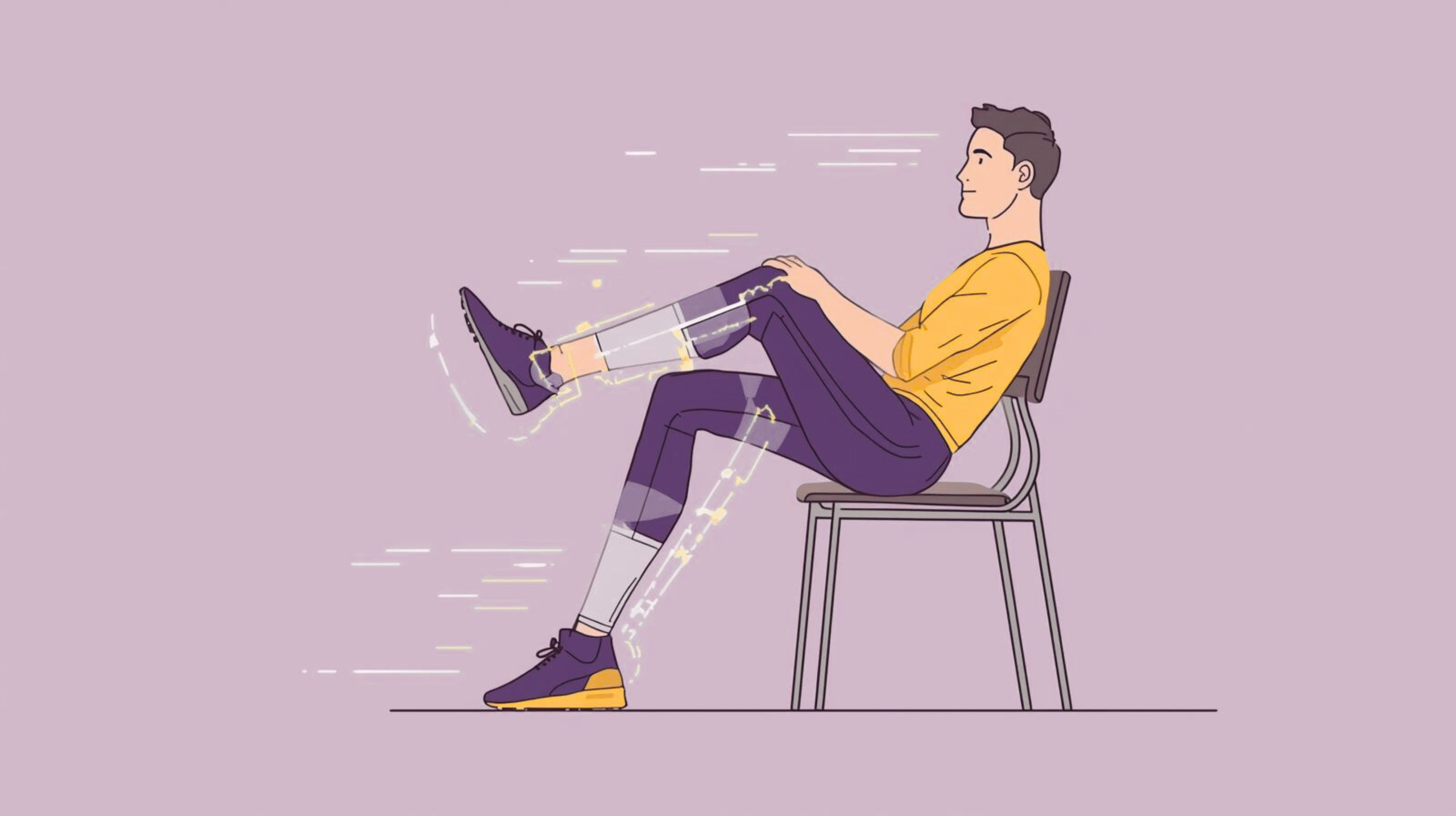
In 2012, a group of Brazilian doctors conducted a study that sounded almost too simple to matter. They asked middle-aged and older adults to perform a single task: sit on the floor and stand back up again without using their hands, arms, or knees for support.
No treadmills.
No blood work.
No advanced imaging.
Just the body, gravity, and the ground.
The results were striking. Participants who could rise smoothly, with little or no support, had significantly lower mortality rates over the next six years. Those who needed their hands, braced their knees, or struggled noticeably had a much higher risk of death from all causes.
In other words, the sit-to-stand test longevity connection turned out to be real. How you stand up may reveal more about your future health than many traditional clinical markers.
What Is the Sit-to-Stand Test?
The sit-to-stand test (sometimes called the sitting-rising test) is a functional movement assessment that evaluates how efficiently your body transitions from the floor to standing.
You begin seated on the floor, usually with legs crossed. Then you attempt to stand up using as little support as possible. Each time you use a hand, knee, forearm, or lose balance, points are deducted.
Unlike isolated strength tests, this movement reflects functional movement longevity because it mirrors a real-world task your body must perform throughout life.
Why This Simple Test Matters More Than It Seems
At first glance, the test feels almost like a party trick. But it quietly measures multiple systems at once:
- Lower body strength and aging: Your legs and hips must generate enough force to lift your body.
- Mobility and lifespan: Hips, knees, and ankles need sufficient range of motion.
- Balance and aging: Your nervous system must stabilize you through transition.
- Coordination: Muscles must fire in the correct sequence.
- Resilience and healthy aging: The body’s ability to adapt under load.
Longevity is never about one system. It’s about how well systems cooperate. This single movement captures that cooperation in seconds.
Sit-to-Stand Test Score Meaning
The scoring system typically starts at 10 points:
- 5 points for sitting down
- 5 points for standing back up
Each time you:
- Use a hand or knee → minus 1 point
- Lose balance → minus 0.5 points
What the scores suggest:
- 8–10 points: Excellent functional capacity and low mortality risk
- 5–7.5 points: Moderate risk, some decline in strength or balance
- Below 5 points: Higher risk associated with reduced mobility, higher fall risk, and increased mortality
This is where sit-to-stand test mortality data becomes meaningful. Lower scores don’t predict a single disease; they reflect declining resilience across multiple systems.
The Hidden Cost of Inactivity
Many adults would struggle with this test today, not because they are “unfit,” but because modern life trains the body to avoid floor-based movement.
Years of sitting:
- Shorten hip flexors
- Weaken glutes and thighs
- Reduce ankle mobility
- Dull balance responses
The body adapts to what it practices. If you rarely get up from the floor, the skill quietly disappears. This decline increases fall risk and longevity concerns, especially as reactions slow with age.
A Window Into Future Health
Difficulty with the sit-to-stand movement doesn’t mean something is “wrong” today. It means layers of resilience have thinned.
Resilience protects you when:
- You slip on a wet surface
- You stumble on uneven ground
- You need to get up after a fall
When functional movement declines, the consequences extend beyond muscles and joints. Reduced mobility often leads to less activity, social withdrawal, cardiovascular decline, and even mood changes. This is why balance and aging play such a large role in overall lifespan.
Try the Sit-to-Stand Test Yourself
Choose a safe, open space.
- Sit on the floor with legs crossed.
- Stand up without using your hands, knees, or external support.
Ask yourself:
- Did I use my hands or knees?
- Did I wobble or lose balance?
- Did it feel harder than expected?
Each support you needed is information, not judgment. It reflects your current functional reserve.
Rebuilding the Basics: How to Improve Your Score
The most encouraging part of this research is that functional decline is reversible.
Practice the Movement
Simply practice sitting down and standing up daily. Skill improves quickly with repetition.
Build Lower Body Strength
- Squats
- Lunges
- Glute bridges
These directly support lower body strength aging.
Improve Balance
- Single-leg stands
- Heel-to-toe walking
Better balance lowers fall risk and supports long-term independence.
Restore Mobility
Stretch hips, hamstrings, calves, and ankles. Mobility supports both strength and balance.
Who Should Avoid or Modify the Test?
The sit-to-stand test is generally safe, but some individuals should modify or avoid it:
- People with recent joint replacement surgery
- Severe knee, hip, or spine pain
- Advanced balance disorders
- Recent fractures or neurological conditions
In these cases, a chair-based sit-to-stand or supervised assessment is safer.
Final Thought
Longevity isn’t written only in genetics or lab results. It’s written in the ordinary movements your body can still perform.
The sit-to-stand test reminds us that resilience and healthy aging are physical, measurable, and trainable. The ability to rise from the floor reflects how well your body handles gravity, stress, and change.
So if someone asks how long you’ll live, forget the numbers for a moment.
Sit down.
Then stand back up.
Co-authored by: Shayamal Vallabhjee
Chief Science Officer: betterhood
Shayamal is a Human Performance Architect who works at the intersection of psychology, physiology, and human systems design helping high-performing leaders, teams, and individuals thrive in environments of stress, complexity, and change. His work spans elite sport, corporate leadership, and chronic health and is grounded in the belief that true performance isn’t about pushing harder, but designing better.
Frequently Asked Questions (FAQs)
1. What does the sit-to-stand test measure?
It measures integrated functional capacity, including strength, mobility, balance, coordination, and overall resilience, all of which are linked to longevity.
2. What is a good sit-to-stand score?
A score between 8 and 10 indicates strong functional health and lower mortality risk. Lower scores suggest areas needing improvement.
3. Can failing the sit-to-stand test be reversed?
Yes. Strength, balance, and mobility respond well to training at almost any age. Regular practice can significantly improve performance.
4. Is the sit-to-stand test accurate for longevity?
It is not a crystal ball, but studies show a strong association between lower scores and higher mortality risk because it reflects overall system health.
5. How often should you practice the sit-to-stand movement?
Daily practice is ideal. Even a few repetitions per day can rebuild confidence, strength, and coordination.


