





We often hear people say, “I have a weak core.”
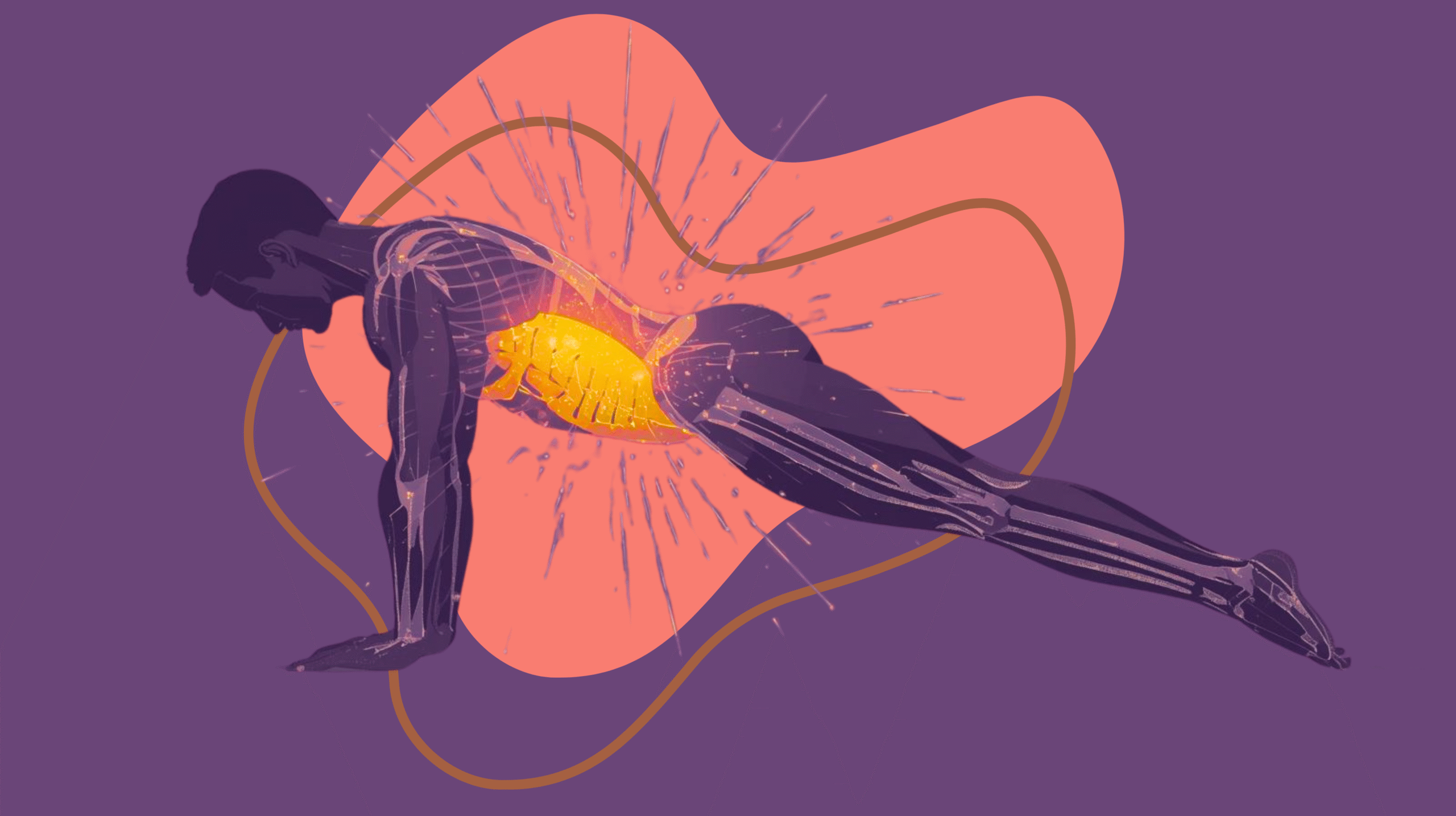
But here’s the truth for most people: the core isn’t weak, it’s asleep.
This condition, known as muscular amnesia, occurs when stabilizing muscles like the deep abdominals and glutes stop firing correctly. Not because they’re damaged, but because modern life has trained them to switch off.
Hours of sitting, minimal movement, and passive support teach your nervous system that it doesn’t need to engage your core. Over time, your body forgets how to stabilize itself naturally.
Understanding Muscular Amnesia: Why Your Core Isn’t Weak
Muscular amnesia refers to the loss of proper muscle activation, not muscle strength.
Your core is designed to stay lightly active throughout the day. It stabilizes the spine, aligns the pelvis, and coordinates movement between the upper and lower body. But when movement is limited, these muscles go dormant.
This leads to sleeping core muscles, especially:
- Deep abdominals (transverse abdominis)
- Glutes
- Pelvic stabilizers
Instead of working together, other muscles jump in to compensate. That’s when discomfort begins.
This is why many people experience pain despite exercising regularly. The issue isn’t strength. It’s disconnection.
Why Sleeping Core Muscles Are Dangerous
A dormant core creates a chain reaction throughout the body:
- Glutes off-duty
Without glute activation, the pelvis tilts forward, increasing stress on the lower back. - Deep abdominal disengagement
Poor deep abdominal activation reduces spinal support, forcing hip flexors to tighten. - Compensation overload
Quads, hamstrings, and lower back muscles take on stabilization work they weren’t designed for.
This imbalance reduces efficiency, drains energy, and increases injury risk. It also weakens the glute and core connection, essential for healthy movement.
Everyday Habits That Switch Off Your Core
You don’t need a major injury to develop muscular amnesia. Everyday habits are enough:
- Sitting for long hours at a desk or in a car
- Slouching on a couch while scrolling your phone
- Relying on heavily cushioned chairs
- Skipping mobility or posture improvement exercises
These habits tell your nervous system, “Support is external. Muscles not required.”
Over time, the brain forgets how to recruit stabilizers at the right moment.
Signs Your Core May Be Asleep
Your body gives clear warning signals:
- Chronic lower back pain despite exercise
- Tight hip flexors or hamstrings
- Difficulty balancing on one leg
- Slouching even when trying to sit upright
- Fatigue after short walks
- Reduced core strength for back pain prevention
These signs indicate poor core stability training, not laziness or aging.
A Quick 3-Minute Core Wake-Up Call
You don’t need intense workouts. You need core activation exercises.
Core Activation Routine
- Glute Squeezes: Squeeze glutes for 10 seconds, repeat 10 times
- Dead Bugs: Opposite arm and leg extension while bracing the core
- Bridges: Lift hips, squeeze glutes, hold 5 seconds
- Bird Dogs: Extend opposite arm and leg, maintain spinal control
These movements wake up core muscles by restoring communication between muscles and brain.
Daily Tips to Keep Your Core Active
Consistency beats intensity.
- Stand up every 30–60 minutes
- Lightly brace your abs while standing or walking
- Squeeze glutes while brushing your teeth
- Practice daily micro-activation exercises
These habits retrain your nervous system to keep stabilizers engaged throughout the day.
Core Activation Is Also Posture Training
An active core improves posture automatically.
With proper engagement:
- The pelvis stays neutral
- The spine stacks naturally
- The chest opens without strain
That’s why posture improvement exercises often start with core awareness, not stretching alone.
Final Thought: Disconnection Is the Real Problem
Weakness isn’t always the issue.
Disconnection is.
A sleeping core robs you of stability, posture, energy, and confidence in movement. But the solution doesn’t require extreme workouts or endless gym hours.
Small, intentional activation restores balance.
Reconnect with your core daily, and your spine, hips, posture, and future self will thank you.
Co-authored by: Shayamal Vallabhjee
Chief Science Officer: betterhood
Shayamal is a Human Performance Architect who works at the intersection of psychology, physiology, and human systems design — helping high-performing leaders, teams, and individuals thrive in environments of stress, complexity, and change. His work spans elite sport, corporate leadership, and chronic health — and is grounded in the belief that true performance isn’t about pushing harder, but designing better.
FAQs
1. What is a “sleeping” core, and how do I know if mine is asleep?
A sleeping core refers to stabilizing muscles that fail to activate automatically. Signs include back pain, poor posture, balance issues, and fatigue during simple movements.
2. Can a weak core cause chronic back or hip pain?
Yes. Poor core stability forces other muscles to compensate, increasing strain on the lower back and hips.
3. How long does it take to wake up my core muscles?
Some people feel improvement within days. Lasting changes typically take 2–4 weeks of consistent activation.
4. Are short daily exercises enough, or do I need a full workout?
Short daily activation is often more effective than occasional long workouts. Frequency matters more than intensity.
5. Can sitting less alone reactivate my core?
Sitting less helps, but intentional core activation exercises are necessary to retrain muscle firing patterns.