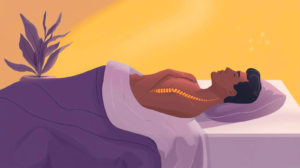






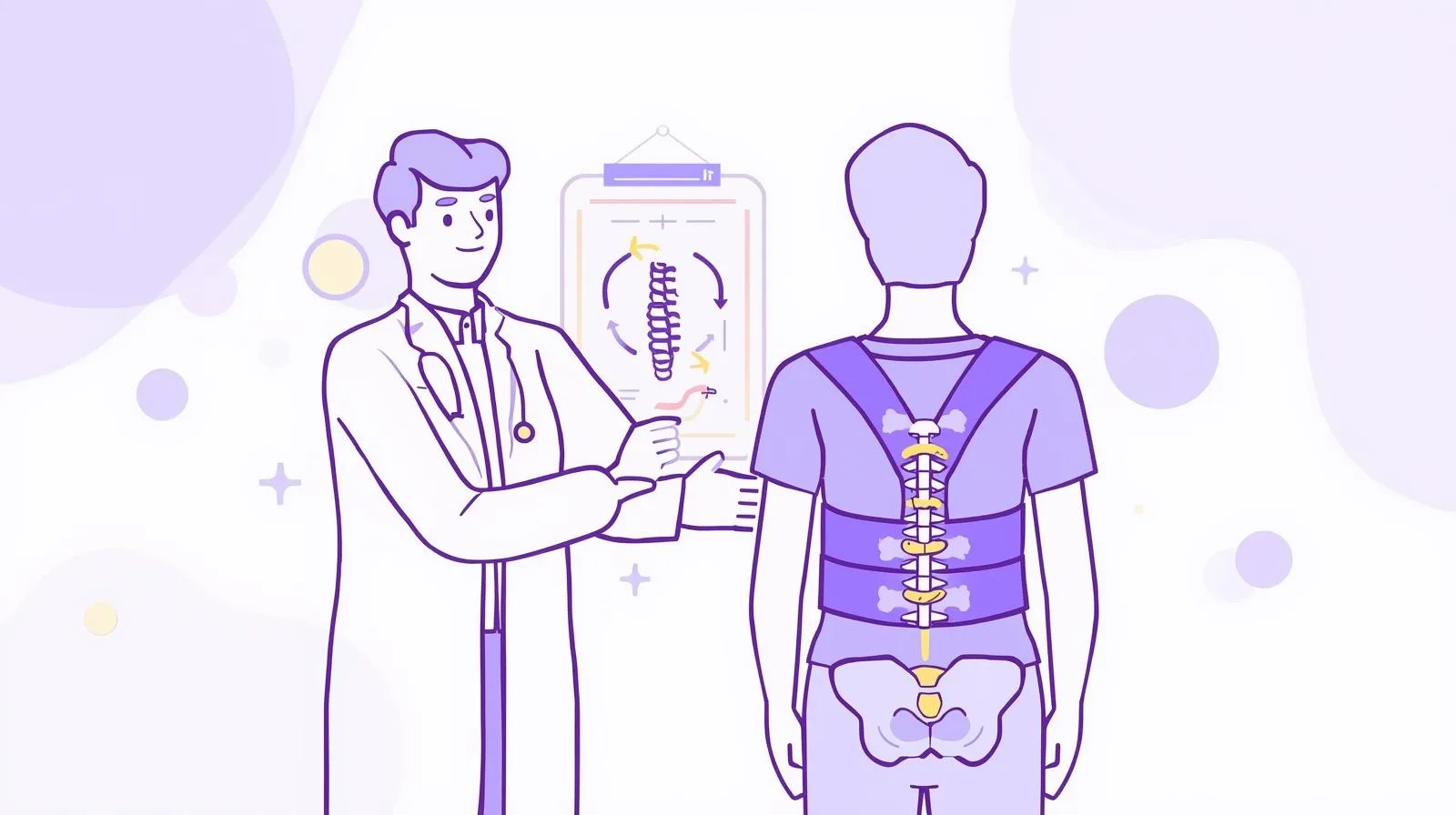
Scoliosis braces are aids that help control the curvature of the spine in scoliosis patients. Doctors typically prescribe a scoliosis brace for children or teenagers with growing bones. The brace maintains the spine in a better position and stops the curve from worsening.
But hearing for the first time there’s a need for a brace raises concern in many families. The questions about comfort, appearance and daily life tend to remain the same. Thus, understanding how a scoliosis brace works can help make the treatment journey easier.
Musculoskeletal diseases are among the leading causes of disability worldwide, according to the World Health Organization. If untreated, spinal disorders, such as scoliosis, can compromise posture, mobility and overall health.[1]
In this guide, you’ll learn what a scoliosis brace is, why doctors recommend it, the different types available and real-life tips for living comfortably while wearing one.
Understanding Scoliosis
No one wants to find out their child has scoliosis and the first thing you need to learn about a scoliosis brace is how scoliosis works.
Scoliosis is a condition that causes the spine to approach sideways rather than remain straight. The spine may also curve in an S-shaped or C-shaped pattern from the back.
The majority of cases arise during childhood or early adolescence. The spine grows rapidly during growth spurts. This means that any abnormal curvature can escalate quickly.
Approximately 2 to 3% of the population suffers from scoliosis, according to the National Institute of Neurological Disorders and Stroke. Most cases are mild, but moderate and severe curves may need medical treatment.[2]
Scoliosis is usually caught by doctors during routine school screenings or physical exams. There are excellent treatment outcomes, but the key is early diagnosis as treatment works best when the spine is still growing.
What Is a Scoliosis Brace?
A scoliosis brace is an orthotic device used to support the spine and slow progress of curvature in the spine.
A brace is not meant to completely immobilize the body, unlike a cast designed for broken bones. Instead, it uses gentle pressure to ease the spine into proper alignment.
Mayo Clinic explains that braces are often suggested for children and teens with moderate scoliosis whose bones have not completed growing.[3]
The primary goals of a scoliosis brace are as follows:
- Keeping the curve of the spine from getting worse
- Supporting healthy spine growth
- Improving posture
- Minimizing the chances of future surgery
Keep in mind that a scoliosis brace rarely does totally correct the curve. But it is essential for preventing progress as we grow.
Why Doctors Advise Getting a Scoliosis Brace
When the spinal curve reaches a certain degree and there is still plenty of growth left, doctors will recommend that you wear a scoliosis brace.
As per the American Academy of Orthopaedic Surgeons, bracing is commonly recommended when spinal curvature falls within 25 to 40 degrees in adolescents.[4]
Some spinal curves may progress over time, so it is always important to seek out treatment! Wearing a brace regularly decreases this risk dramatically.”
Big Benefits of Scoliosis Brace
- Prevents curve progression
- A brace’s primary goal is to halt further curvature of the spine.
- Reduces the need for surgery
Studies in the PubMed literature suggest that adolescents who wear their brace as prescribed have a significantly lower risk of having spinal surgery.[11]
Improves posture
A brace stabilizes the back, promoting better posture all day long.
Supports growing bones
During adolescence, bones develop quickly. A scoliosis brace helps direct this growth in a healthier way.
Types of Scoliosis Braces
Common modern treatment scoliosis braces. The doctor determines the best brace type based on the curve location and severity.
Custom braces made for an individual patient tend to be the most effective type of brace for treating moderate scoliosis [5]
TLSO Brace (Thoraco-Lumbar-Sacral Orthosis)
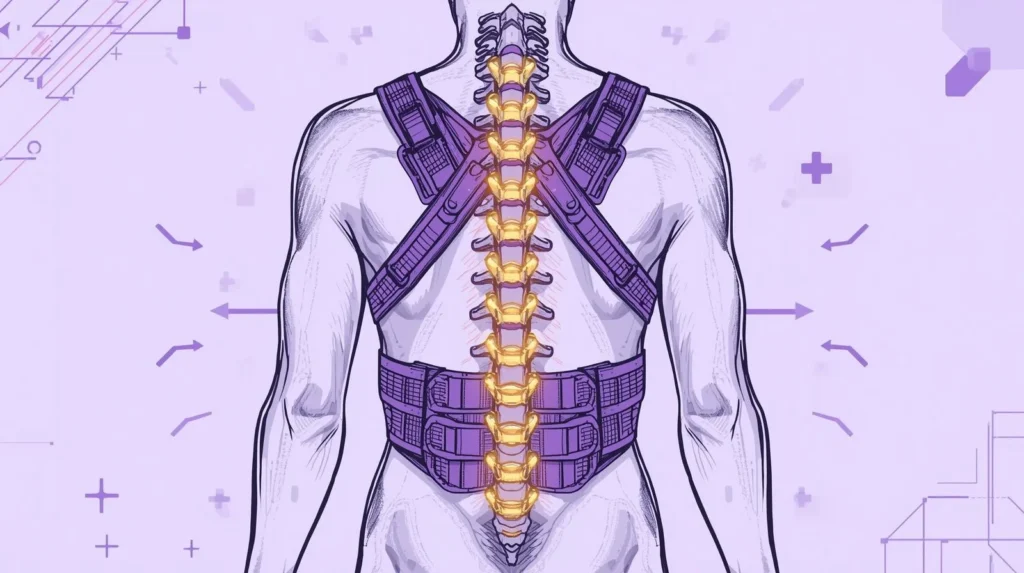
Today the most widely used scoliosis brace is called a TLSO brace.
This brace encircles the torso and covers the body from just below the arms to the hips.
Key characteristics:
- Made from rigid plastic
- Tailored to the shape of the patient’s body
- Lightweight and discreet
- Worn under clothing
Doctors usually recommend wearing this brace 16 to 23 hours a day.
The TLSO brace is preferred by many patients since, in most cases, it allows comfortable continuation of everyday activities.
Boston Brace
One of the most well-known versions of TLSOs is the Boston brace.
This system works by applying pressure at different points on the spine, whilst allowing movement to occur in other sections.
Braces such as the Boston brace are meant to maneuver spinal growth during an adolescent’s growing years.They are called Boston braces and they are used for curves in the lower and middle spine.[6]
Milwaukee Brace
The Milwaukee brace is one of the older types of braces used in scoliosis treatment.
Unlike the smaller braces seen more widely, it features a neck ring on uprights connected to metal bars.
Features:
- Extends from pelvis to neck
- Adjustable as the patient grows
- Commonly used for (upper) spine curvatures
The Milwaukee brace, although effective, is not used as much today because modern braces are smaller and less uncomfortable.
Nighttime Braces
Nighttime scoliosis braces are meant for only sleeping.
Examples include:
- Charleston bending brace
- Providence brace
The braces exert more corrective force to the body in a prone position.
Nighttime braces could potentially be effective for some mild or moderate spinal curves, But they are up to doctors to decide which is the best brace for each patient’s situation.[7]
How to Use a Scoliosis Brace
A scoliosis brace is a common recommendation for children and high school who are still growing
Doctors may suggest bracing if:
- The curvature of the spine is between 25 to 40 degrees
- The patient is still growing
- Worsening curve The net signs
The National Health Service states that early intervention can manage spinal curvature as it develops, preventing severe progression.
Adults with scoliosis often wear braces too. But adult braces are most effective for pain management, not curve correction.[8]
How does a scoliosis brace work?
The support presses against the bent parts, creating two free spaces on the other side. This, in turn, causes the spine to slowly go into better alignment.
Modern braces most commonly use a method known as three-point pressure correction.[6]
This method includes:
- Pressure on the outer curve
- Counter-pressure to stabilize the spine
- This creates room for the spine to move freely and correct itself.
This constant pressure keeps the curve from advancing further over time.
Daily Life with a Scoliosis Brace
It can take time to adjust to a scoliosis brace. But for most patients, the adjustment period is only a few weeks.
The National Health Service states that many adolescent braces-wearers participate in regular activities, including school and sports as well as social events.
Tips for Comfortable Brace Use
- Use a soft cotton shirt under the brace
- Check skin daily for irritation
- Keep the brace clean and dry
- Follow the doctor’s wearing schedule
- Having family and friends also helps ease the adjustment process.
Exercises when Wearing a Brace
And exercising can help increase spinal strength and flexibility.
Harvard Health Publishing notes that having strong core muscles offers key support for the spine.
Helpful exercises include:
- Plank
- Bird-dog exercise
- Cat-cow stretch
- Side stretches
Scoliosis patients might also learn specific exercises from a physical therapist.
Wearing a Brace: Potential Downsides
Though an effective treatment, patients sometimes struggle with scoliosis bracing.
Common challenges
- Initial discomfort
- Braces can feel tight when you first get them.
- Skin irritation
- Open wounds may become infected, causing redness or mild irritation.
Emotional concerns
Teenagers are sometimes self-conscious about wearing a brace.
But with sufficient support and encouragement, patients are able to adapt successfully.[9]
When Surgery May Be Necessary
In some cases, a brace cannot completely halt the progression of spinal curvature.
Doctors may suggest surgery when the curve becomes 45–50 degrees.
In some cases, surgery is needed when severe curvature endangers long-term health of the spine.The most common procedure is spinal fusion surgery that stabilizes the spine with rods and screws.[10]
Fortunately, many patients escape surgery by donning their brace diligently.
Supporting Spine Health During Treatment
In addition to utilizing a brace, building healthy habits can contribute to spinal wellness.
- Maintain good posture:Sit upright and avoid slouching.
- Stay active:Movement strengthens the muscles that support the spine.
- Eat a balanced diet:Calcium and vitamin D aid in keeping bones robust.
- Get enough sleep:Rest is what allows the body to recover and grow properly.
These habits help maximize the effectiveness of a scoliosis brace.
Conclusion
One potential non-surgical option is a scoliosis brace, used to halt worsening curvature during childhood and adolescence. Although it cannot fully straighten the spine, it is essential in preventing the curve from increasing.
Today’s models are lighter, more comfortable and streamlined enough to fit easily under clothes. Many young patients with scoliosis learn how to manage the condition and develop their spines in a healthy way with an early diagnosis paired with appropriate medical assistance and continued brace use.
Knowledge of how a scoliosis brace works can help empower patients and families during the treatment process.
Frequently Asked Questions
Once scoliosis occurs, a scoliosis brace will not correct it, but it may prevent the curve from progressing.
We typically advise wearing the brace 16 to 23 hours a day.
Yes. Most kids take the brace off when they play sports or do physical activity.
It may feel mildly uncomfortable initially, but most patients adapt rapidly.
The brace is typically stopped once skeletal growth has finished.
References
- World Health Organization. (n.d.). Musculoskeletal Conditions. https://www.who.int
- National Institute of Neurological Disorders and Stroke. (n.d.). Scoliosis Overview. https://www.ninds.nih.gov
- Mayo Clinic. (n.d.). Scoliosis Treatment Guide. https://www.mayoclinic.org
- American Academy of Orthopaedic Surgeons. (n.d.). Adolescent Idiopathic Scoliosis. https://orthoinfo.aaos.org
- Johns Hopkins Medicine. (n.d.). Scoliosis Bracing. https://www.hopkinsmedicine.org
- Scoliosis Research Society. (n.d.). Scoliosis Treatment. https://www.srs.org
- Cleveland Clinic. (n.d.). Scoliosis Information. https://my.clevelandclinic.org
- National Health Service. (n.d.). Scoliosis Guide. https://www.nhs.uk
- Harvard Health Publishing. (n.d.). Spine Health and Exercise. https://www.health.harvard.edu
- National Institutes of Health. (n.d.). Scoliosis Treatment Overview. https://www.nih.gov
- PubMed. (n.d.). Research on Scoliosis Bracing. https://pubmed.ncbi.nlm.nih.gov