




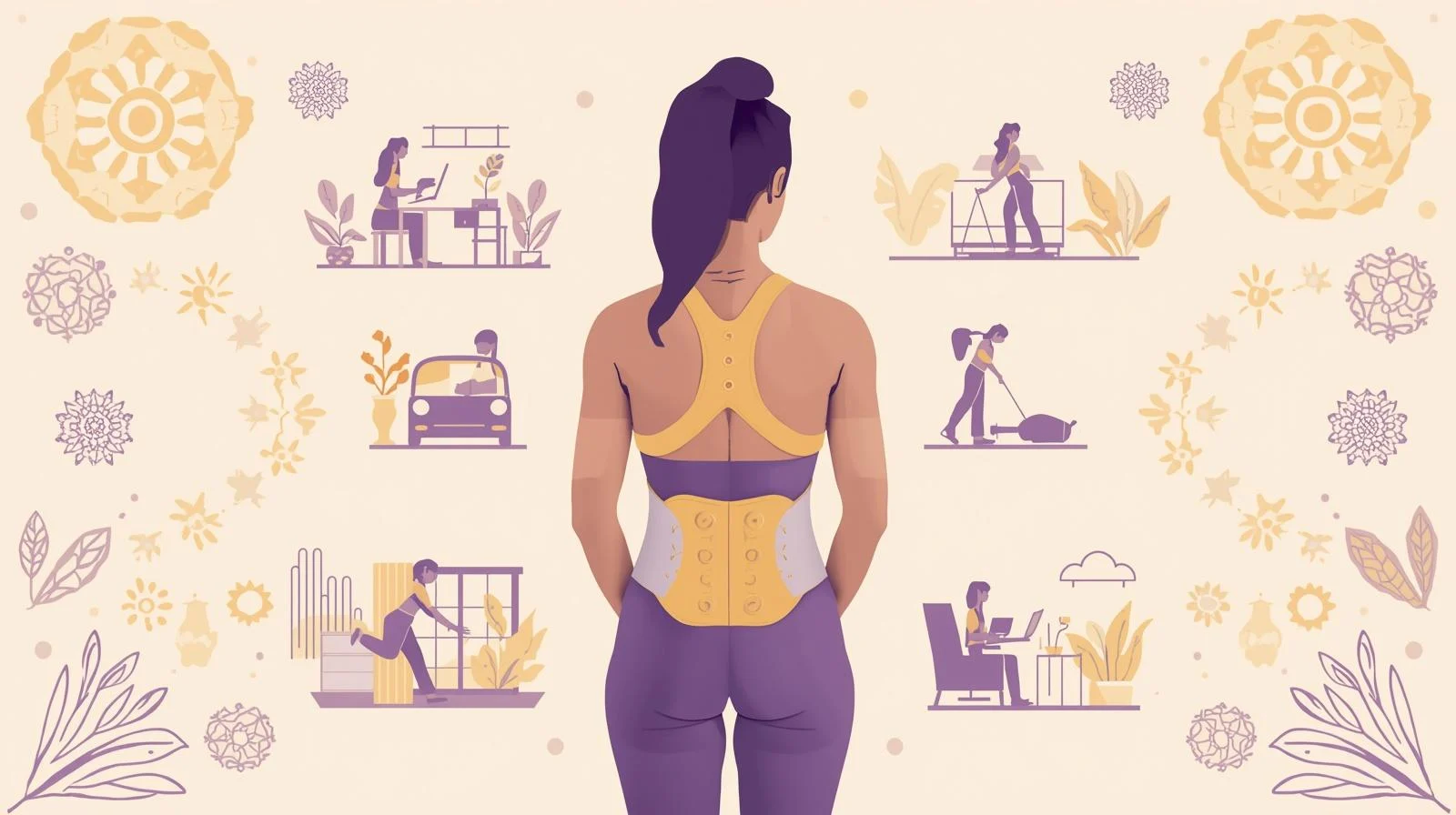
A lumbar support belt is a pretty basic assistive device that wraps around the waist and lower back. They wear it when they need additional support while sitting, standing, lifting or driving. It can help the lower back feel more stable during movement in daily life. Lower back pain is also common, possibly related to posture or prolonged sitting, lifting or recurring strain. [1]
A lumbar support belt, however, isn’t a must-have for every occasion. It is designed to work at the right time and in the right form. It may assist during certain movements, but it should never take the place of movement itself or proper posture and lifting habits. “Back supports should be used with caution, and long-term overuse may not be beneficial,” health guidance suggests. [5] [7]
So, when do you wear a lumbar support belt? The answer depends on your activity, your comfort and the reason for use. Here is a guide on when to wear one, when not to and how to use it judiciously. [3]
What Is a Lumbar Support Belt?
A lumbar support belt is a type of garment that wraps around and supports your lower back. It provides light compression to the lumbar region, or lower back. It is a favourite for many as it feels sturdy and comfortable while doing daily tasks. [3]
The Belt : Most belts are made of some flexible material. Adjustable straps are available on some, so you can make them tighter or more relaxed as desired. That’s what makes them a candidate for being useful for daily movement. Compression Vests are typically worn underneath or over clothing, as preferred. [4]
A lumbar support belt is not a stiff medical brace. A belt is generally thinner and more agile. A brace may be stiffer and used for more support. [3]
When Should You Use the Lumbar Support Belt?
Additional pressure on the back is the moment to make use of the lumbar support belt. This may involve sitting for long hours, driving for extended periods of time, lifting light to moderate objects or performing repetitive work that fatigues your back. [1] [8]
You can also put it on when your lower back feels uncomfortable and you could use some extra support throughout the day. In which case, it can help you feel more comfortable while out and about. According to MedlinePlus, a back brace might be involved in care for low back pain in certain situations, particularly when worn as directed. [3]
In summary, here are the scenarios where you would wear a lumbar support belt:
- you require more active help
- your lumbars are tired or stressed
- you sit, drive or stand too long
- you are squatting and need help to keep better posture
- your doctor or physio has recommended support for a particular reason
Use It While Sitting For Long Hours
Lumbar support is common for extended periods of sitting. Sitting too long can lead to more pressure on your lower back, particularly if posture is poor. Ergonomic seating guidelines advise that the lower back be supported and slouching avoided. [2]
During desk work, study sessions or long meetings, a lumbar support belt may assist. It provides the lower back with more of a sense of stability and may encourage you to sit right. That can be helpful if your chair isn’t providing enough support. [2]
But don’t just trust the belt. Break regularly, stand up and move often. Even with support on, sitting in one position too long is still an issue. [2]
Wear It While Driving
Sitting in one position for a long time while driving can stiffen the lower back. So, a support belt may make you feel more comfortable on long trips. Seating guides for drivers recommend putting lumbar support in the curve of the lower back, or at belt level so that it conforms with the spine’s natural shape. [8]
So indeed, you can wear a lumbar support belt while driving. It might be particularly helpful on long road trips, long commutes or days when you anticipate being in the car for an extended period. [8]
Still, it should fit properly. As you drive, however, if this feels too tight or shifts, it’s less helpful.” A good seat set-up and taking breaks matter too. [2]
Wear It During Lifting Tasks
Another instance when a lumbar support belt can be helpful is during lifting work. It can help the lower back feel supported as you move things or perform repetitive physical tasks. But it is useful to know what enables it, or doesn’t. [1]
OSHA and NIOSH do not endorse back belts as a means of preventing workplace back injuries. They say back belts have not been proven to prevent injury. ref-6 That means the belt isn’t a safety armor blanket.
Instead, consider it as a comfort aid to have on while lifting, but continue to use safe lifting practices. Bend your knees, hold the object close to you and do not twist your back. And so those habits are more important than the belt. [4]
Wear It During Standing Jobs
Certain occupations can involve extended periods of standing. In places like schools or stores, teachers, shop workers, kitchen staff and other people in similar jobs are likely to have lower back tiredness by the close of play. When standing still for long, the lower back has to work harder. [1]
A lumbar support belt may also be useful during those hours, providing moderate compression and a sensation of stability. It might also alert you to elevate your posture while you’re working. [3]
That said, standing support is most effective when one also changes positions, stretches and takes short breaks to move around. A belt should assist your routine, not substitute healthy movement. [2]
Use It for Temporary Pain Bumps
At times, the lower back seems more sensitive than normal. For a while, wearing a lumbar support belt in the daytime might seem to help. It offers a little support as you’re moving, working or on the go. [3]
MedlinePlus says back supports can be used as part of care when a person has low back pain, and treatment plans for this condition often include other components, including exercise and posture care. So the belt can be one component of the routine, as opposed to the entire strategy.
It’s best to seek advice from a medical professional when your pain is severe, lingers for a long time, or follows an injury. Support belts are not the solution for every case. [1]

When You Should Avoid Wearing It All Day:Without Breaks
A lumbar support belt can help when you are active, but donning it too often isn’t always advisable! According to MedlinePlus, if you wear a brace too often this could cause the core muscles that support your back to weaken. [5]
That’s why belts must be worn wisely. Slip them on when you need (to close) and take them off at rest. You must still allow your back muscles to function as usual in the daytime. [4]
Avoid making the belt your only back strategy. Combine it with movement, stretching and good posture. [2]
While a Lumbar Support Belt Might Be More Beneficial
A lumbar support belt can be particularly useful when:
- you sit for many hours
- you drive for a long time
- you do light lifting
- your lower back becomes exhausted at work
- you want a subtle nudge to sit up straighter
These are the times when support can provide a little warmth without getting in the way of everyday life.
When Should a Lumbar Support Belt Not Be Used
But a belt might not be ideal if it feels too tight, uncomfortable or prevents you from moving in your usual way. And when you’re turning to it as an excuse to skip all exercise or movement, it’s also not the way to go. Staying safe while you stay active often helps back care work better. [4]
Back belts also are not recommended by OSHA and NIOSH as an employer tool to prevent workplace injuries. So, if your goal is injury-prevention alone, it’s best to focus on safe lifting, good ergonomics and movement breaks. [6]
How Tight Should It Be?
A lumbar support belt should be tight, not painful. It should provide support without constricting breathing or movement. A proper fit is essential, as the belt needs to stay in place without being uncomfortably constrictive. [4]
If the strap is too loose, it may shift around. If it is tight, the user will shift to compensate for the discomfort, which may go against the original purpose of wearing them daily. A good fit is steady and stable, as well as comfortable. [4]
How Long Can You Wear It?
Where you need support during the day, wear a lumbar support belt. For most people, that means at work or while driving or doing chores. [3]
But generally it is best to take it off when you sleep. Overnight, your body needs a break without undue pressure. If you’re instructed otherwise by a clinician, follow those instructions. [3]
Should You Wear It Every Day?
If you require support while performing everyday activities, you can wear a lumbar support belt on a daily basis. But daily use should not mean constant use. Better to wear it for the activities that really require support. [4]
That method allows you to achieve comfort without over-relying on the belt. It also allows your core muscles to continue doing their job. [5]
Now, here are some simple daily rules for lumbar support belt use.
Use the belt when you:
- sit for long hours
- drive for long periods
- lift objects
- stand for extended time
Do not use it to:
- replace exercise
- sleep in it without advice
- wear it too tightly
Conclusion
So when should you be wearing a lumbar support belt? The ideal moment is when your lumbar region requires more assistance with everyday movement. That refers to prolonged sitting, driving, standing up or lifting, or temporary back pain. [1] [3]
The belt should not be worn 24/7 without periodic breaks, however. It is not to supplement posture, movement or safe lifting habits. OSHA and NIOSH do not endorse back belts as effective injury prevention, either. [6]
The lumbar support belt is only useful when done at the right time and in the right way in addition to good daily habits. That’s how it turns into a comfort tool, rather than just another accessory. [4]
FAQs
Yes, you can wear it during the day when you need support. Most applicable to work, driving or lifting. However, remove it while sleeping.
True, it may assist in prolonged periods of sitting by providing lower back support. Proper chair adjustment and regular breaks still count.
Yes, it is commonly worn while driving as a comfort enhancer for long trips. Ensure that it is well fitted and not extremely tight.
Yes, it may assist with lifting support. Yet proper lifting technique still matters.
It can be worn during the day, but not all of the time. If worn a little too much, it might allow core muscles to progressively weaken.
References
- NHS. (n.d.). Back pain.
https://www.nhs.uk/conditions/back-pain/ - Cambridge University Hospitals NHS Foundation Trust. (n.d.). Seating and ergonomics.
https://www.cuh.nhs.uk/patient-information/seating-and-ergonomics/ - MedlinePlus. (2025). Low back pain – chronic.
https://medlineplus.gov/ency/article/007422.htm - MedlinePlus. (2024). Taking care of your back at home.
https://medlineplus.gov/ency/patientinstructions/000517.htm - MedlinePlus. (2024). Back pain – returning to work.
https://medlineplus.gov/ency/patientinstructions/000517.htm - Occupational Safety and Health Administration (OSHA). (1998). Prevention of back injuries and use of back belts.
https://www.osha.gov/laws-regs/standardinterpretations/1998-04-06 - National Institute for Occupational Safety and Health (NIOSH/CDC). (1994). Back belts Do they prevent injury?
https://www.cdc.gov/niosh/docs/94-127/ - Physiomed. (n.d.). Correct sitting posture: Driving.
https://www.physiomed.co.uk/uploads/guide/file/21/Physiomed_Sitting_Guide_-_Driving_Digital.pdf


