





You bought a posture correction belt thinking that slouching will be history, that back pain will vanish, and that you’ll suddenly stand tall in photos like a superhero. But after days (or weeks) of wear, you wonder: Why am I still slumping? Why does my back hurt more?
It’s not just you. Using a posture belt isn’t plug-and-play. There are common mistakes many people, especially posture belt beginners, make. If you avoid those, you can get the benefits of posture corrector belts with fewer side effects.
In this guide we’ll walk you through the most frequent posture belt mistakes people make, how to use posture corrector belts properly, the benefits when done right, and tips to avoid trouble.
Think of it like your posture correction belt guide and cheat sheet.
Are You Wearing Your Posture Correction Belt the Right Way?
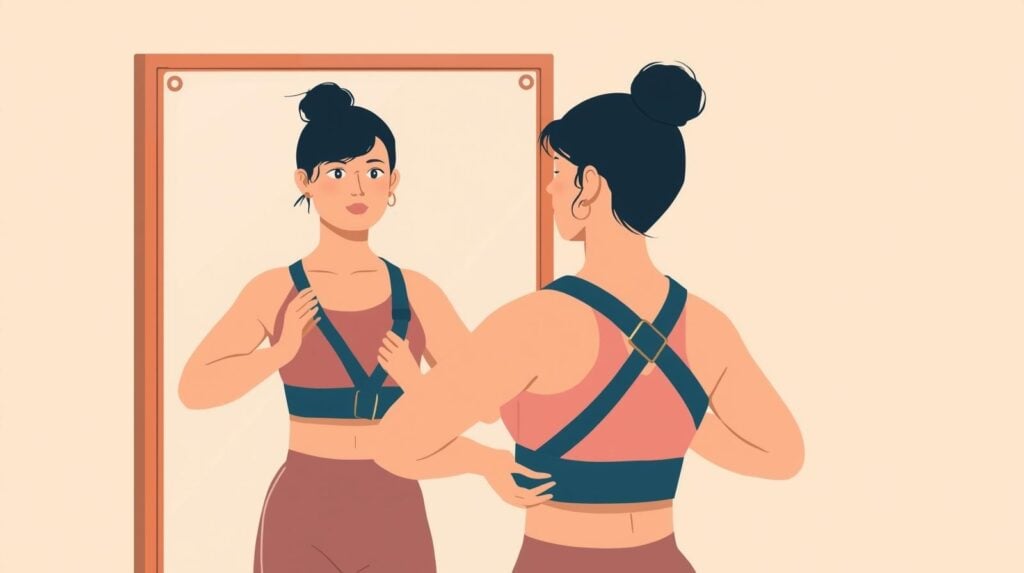
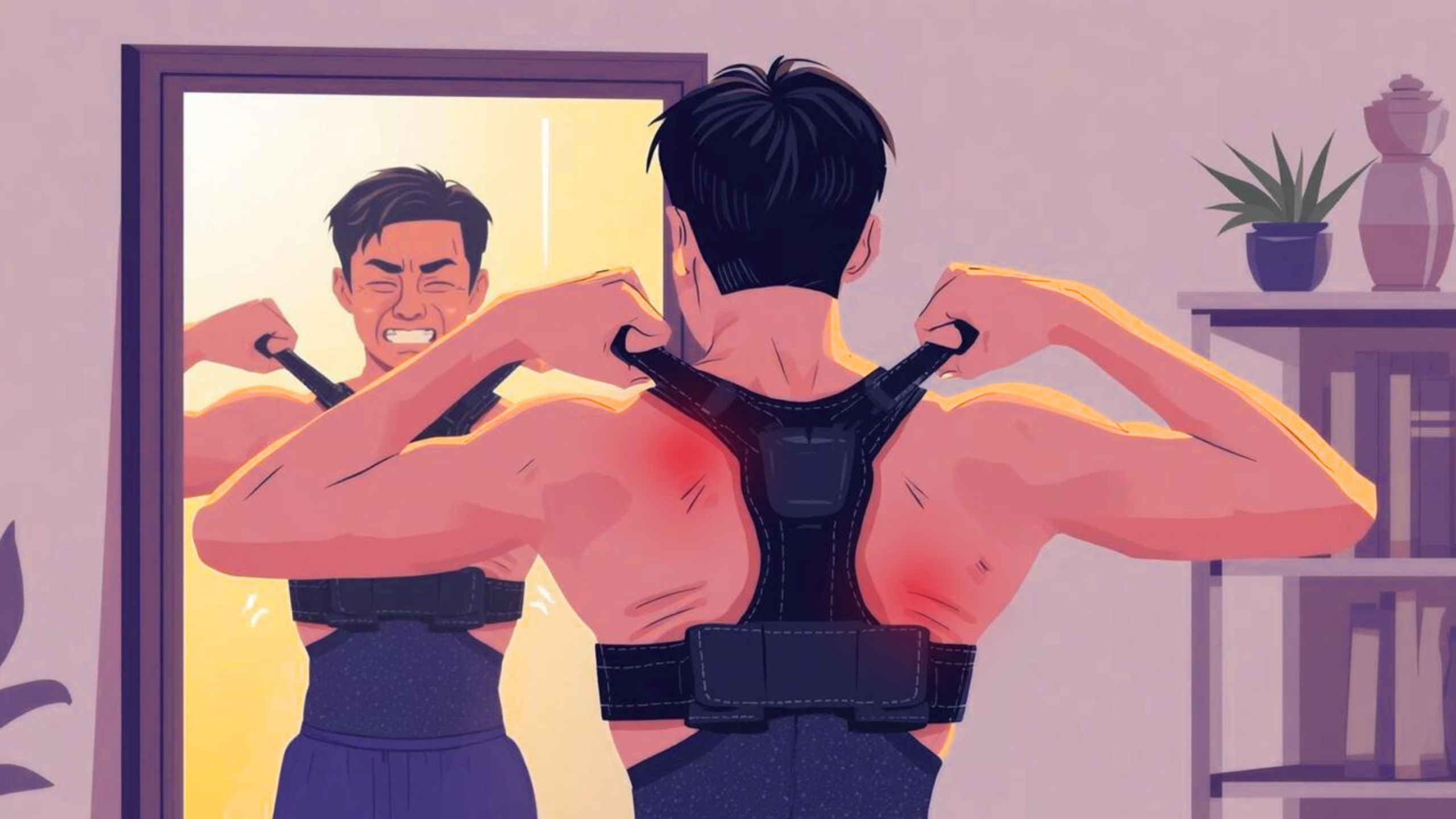
Wearing a posture correction belt might look simple, but let’s face it, most people get it wrong from day one. A small mistake in how you wear it can make the difference between better posture and unnecessary pain.
Common mistake #1: Incorrect positioning or sizing
- Straps too loose → no support.
- Straps too tight → discomfort, restricted breathing, chafing.
- Belt too high or too low → not targeting the right muscle groups or spinal regions.
How to avoid it:
- Choose the right size first. Mostly, the posture belt comes with a simple size instruction guide to help you choose the right fit.
- Adjust so that the shoulder straps pull gently, not forcefully, and the belt rests comfortably on the mid-back or target area depending on the style.
- Check that when you stand naturally, the belt doesn’t push your head forward or force your chest unnaturally.
Using it wrong is a big posture belt mistake. When worn properly, you can start experiencing posture corrector belt benefits like reduced slouching, better alignment, less strain on the shoulders.
Are You Overusing Your Posture Belt and Weakening Your Muscles?
Here’s a story: I, a few years back, wore a belt all day, convinced it would magically fix my forward-rounded shoulders. A few weeks in, I felt more sore and had less strength in my upper back when the belt was off.
This is a really common issue. The belt is meant to help, not to replace your muscles.
What science says:
- Studies on back and lumbar belts show that overuse can alter muscle activity and reduce natural activation of muscles, because the support takes over some of the load your muscles otherwise would handle. [1]
- Another study in patients with nonspecific low back pain found that lumbar belts (both extensible and non-extensible) affected kinematics, kinetics, and muscle activity during functional tasks like sit-to-stand. They are helpful, but not a substitute for movement and active muscle engagement. [2]
How to avoid this overuse mistake:
- Start with wearing it for short periods: 30-60 minutes a day.
- Gradually increase use as you build awareness and strength.
- Always pair the belt with posture improvement tools like core/back strengthening exercises.
Do You Expect Instant Posture Correction From Your Belt?
This is perhaps the most unrealistic expectation. Many people think, “wear the belt once, and posture is fixed forever.” If only life were that easy.
What realistic posture correction tips and data suggest:
- The human body, especially the spine and supporting muscles, needs time to adapt. Changes in muscle strength, alignment, and and habit take weeks if not months.
- Research (as in systematic reviews of wearables/wearable feedback devices) shows that long-term use of biofeedback combined with behavior change is what leads to lasting posture improvements. [3]
- In one study, posture correction bands were shown to reduce forced vital capacity (an indicator of breathing) immediately after wearing, meaning that incorrectly can even have negative short-term impacts. [4]
Tips to avoid this mistake:
- Set realistic goals like “I want to feel less slouched at work by 4 weeks,” rather than “I’ll be perfect next week.”
- Take photos or keep a posture journal. Before/after in the mirror.
- Be consistent but patient. Use a posture correction belt together with posture correction tips like stretches, ergonomic adjustments, and posture-aware breaks.
Are You Ignoring Exercises That Support Better Posture?
Wearing a posture belt without doing posture improvement exercises (like strengthening, stretching) is like putting scaffolding around a weak wall but never reinforcing the bricks.
Why the belt alone won’t do all the work:
- Belts provide passive support. To maintain posture naturally, your muscles– core, back, shoulders must be strong and active.
- Without exercise, over time you may become dependent, which is a posture support belt problem. Also, stiffness can creep in.
What to do instead:
- Add simple strength exercises to your daily routine: planks, supermans, rows, and scapular squeezes.
- Stretch tight muscles: chest, anterior shoulder, and hip flexors.
- Use a posture belt for posture awareness, not as the only tool.
Are You Using the Wrong Type of Posture Correction Belt for Your Needs?
Not all posture belts are built the same. You may be using a belt made for upper back rounding, while your issue is lumbar slumping. That mismatch reduces benefit and may create new problems.
What to consider:
- Area of concern: upper back, lower back, full spine.
- Material: breathable, adjustable, padded if needed.
- Flexibility vs rigid support: a rigid back brace is more supportive but less comfortable; a flexible strap is more tolerable but may offer less correction.
What science suggests:
- A parametric study of lumbar belts showed that morphology (body shape) matters; a belt that matches your body (shape and where it applies pressure) gives a better therapeutic effect. [5]
- Studies show different belts (extensible vs. non-extensible) affect muscle activity differently in people with low back pain.
Are You Wearing It at the Wrong Time or for Too Long?
Another mistake: wearing the belt at all times, while sleeping, while doing heavy activity, or beyond what’s safe.
What can go wrong:
- Wearing during sleep could restrict breathing or compress tissues.
- Extended wear without breaks can irritate skin, reduce skin-breathability and lead to discomfort.
- Psychological dependence: you feel “naked” without it.
Science / real data:
- A study on posture correction bands in healthy adults showed forced vital capacity (how much air your lungs can exhale after maximum inhale) decreased significantly after wearing the band. Meaning, breathing may be compromised if the belt or band is too tight or worn improperly.
- Work on lumbar support belts shows that in forward bending / lifting tasks, with a properly used back belt, disc compression forces are reduced. But wearing at wrong postures or wrong times reduces those benefits. [6]
How to avoid misuse in timing:
- Use during periods when posture tends to suffer: desk work, driving, doing chores.
- Remove it while sleeping unless specifically recommended by a professional.
- Take regular breaks: remove for part of the day to let muscles work.
Could Your Daily Habits Be Undoing Your Belt’s Benefits?
You might do everything “belt-wise” but then sit hunched over a phone for hours, carry a heavy bag slung to one side, or slouch in your car. All those habits pull your posture correction efforts backward.
Why habits matter:
- Belt gives external cue/support. But your posture is largely dictated by what you do without thinking.
- Repetitive strain / slouching habits lead to muscle imbalances, tightness in the chest/front shoulder, and weakening of the upper back.
How to avoid these sabotage habits:
- Ergonomic workstation: monitor at eye level, proper chair height, and good keyboard posture.
- Phone use: hold at eye level, and avoid bending your neck for long.
- Carry bags evenly; avoid always carrying weight on one shoulder.
- Frequent posture checks: set timer reminders or use posture improvement tools like posture awareness apps.
Are You Taking Care of Your Belt the Right Way?
Congratulations, you got the right belt, you wear it properly, and you combine it with exercise, but you neglect its maintenance. Surprise: even your belt needs care.
Common belt support problems due to neglect:
- Elastic losing elasticity
- Pads or straps irritating the skin because of dirt, sweat, or rubbing
- Velcro or fasteners wearing out
How to maintain it:
- Clean the belt regularly (hand wash, mild soap) and air dry. Avoid machine wash/tumble dry if instructions say so.
- Inspect periodically: straps, seams, and fasteners. Replace or repair as needed.
- Store properly: flat or hanging, not crumpled.
How to Maximize Benefits From Your Posture Correction Belt?
After all those “don’ts,” let’s focus on what you should do with your cheat code for getting the most out of the belt.
Checklist of Dos:
- Measure it correctly and pick a suitable belt style (upper back vs lumbar vs full spine).
- Wear for short intervals initially. 30-60 minutes, gradually increasing.
- Pair with posture correction tips: do posture belt tips like stretches and strengthening.
- Be posture aware outside the belt: sitting, standing, phone use, and driving.
Helpful posture improvement tools:
- Foam rollers for thoracic extension
- Resistance bands for rows, pull-backs
- Ergonomic chair / lumbar cushion for sitting hours
- Apps or reminders to check posture
Benefits you can expect when you do things right:
- Reduced back pain and neck-shoulder strain (as many users report)
- Better alignment, reduced slouch or forward head posture. [7]
- Improved breathing and more confidence in posture and appearance.
Conclusion
Wearing a posture correction belt is a great tool. It’s like a training wheel for your spine and shoulders helpful, but not meant to be on forever. The real magic happens when you pair the belt with correct usage, exercises, good daily habits, and plenty of care (for both your body and the belt).
Check your fit. Don’t overrely on it. Be patient. Strengthen your muscles. Stay aware. Maintain the belt. If you avoid the usual posture belt mistakes, you’ll be much more likely to enjoy the posture corrector belt benefits without frustration or harm.
Here’s to standing tall, moving freely, and feeling good in your posture journey.
Explore More Health & Wellness Solutions
Want to stay informed about wellness and everyday health issues? Here are some insightful reads to guide you. Explore the links below for practical tips and solutions:
- Tech Neck Relief: Best Posture Tips & Pillow Fixes for Pain-Free Living
- 5-Minute Stretching Routine for Desk Workers to Improve Posture & Reduce Pain
- Do Lumbar Support Belts Really Work? A Science-Backed Guide to Back Pain Relief
Frequently Asked Questions
1. How long should you wear a posture corrector belt daily?
Start with 30–60 minutes daily and gradually increase as your body adapts. Avoid wearing it for more than 2 hours continuously to prevent muscle dependency.
2. Can a posture belt help with back pain?
Yes, when used correctly, it can help reduce discomfort caused by slouching or poor spinal alignment [5]. However, combine it with core exercises for lasting relief.
3. Is it okay to wear a posture corrector while sleeping?
No. Your body needs full relaxation during sleep. Wearing it overnight can restrict blood flow and cause muscle stiffness [6].
4. What exercises should I do with a posture correction belt?
Try posture-supportive movements like bridges, wall angels, planks, and shoulder blade squeezes. These strengthen key muscles that maintain alignment.
References
- Warren, L. P., & Marras, W. S. (2001). Effect of soft lumbar support belt on abdominal oblique muscle activity. Journal of Orthopaedic & Sports Physical Therapy, 31(6), 316–323. https://doi.org/10.2519/jospt.2001.31.6.316
- Im, S.-C., Seo, S.-W., Kang, N.-Y., Jo, H., & Kim, K. (2022). The effect of lumbar belts with different extensibilities on kinematic, kinetic, and muscle activity of sit-to-stand motions in patients with nonspecific low back pain. Journal of Personalized Medicine, 12(10), 1678. https://doi.org/10.3390/jpm12101678
- Simpson, L., Maharaj, M. M., & Mobbs, R. J. (2019). The role of wearables in spinal posture analysis: a systematic review. BMC musculoskeletal disorders, 20(1), 55.https://bmcmusculoskeletdisord.biomedcentral.com/articles/10.1186/s12891-019-2430-6
- Park, T. S., Kim, S. H., Jang, M. H., Kim, S. Y., Min, J. H., & Shin, M. J. (2025). The impact of posture correction bands on the respiratory function of healthy adults in their twenties: The difference between men and women: Corrigendum. Prosthetics and Orthotics International, 49(3), 343. https://pubmed.ncbi.gov/36791383/
- Bonnaire, R., Han, W. S., Calmels, P., Convert, R., & Molimard, J. (2019). Parametric study of lumbar belts in the case of low back pain: effect of patients’ specific characteristics. In Computational biomechanics for medicine: personalisation, validation and therapy (pp. 43-59). Cham: Springer International Publishing. https://arxiv.org/abs/2009.02923
- Urara NISHIJIMA, Yusuke Habatate, Hirokazu Hatano, Effect of Lumbar Support Belt on Working Posture, 9 (2015) https://www.jstage.jst.go.jp/article/jje/51/2/51_115/_article/-char/en
- Tanya (2024), Posture corrector belt benefits: How it supports spine health?, https://www.thip.media/news/trending/posture-belt-benefits-side-effects-and-the-rule/91590/