





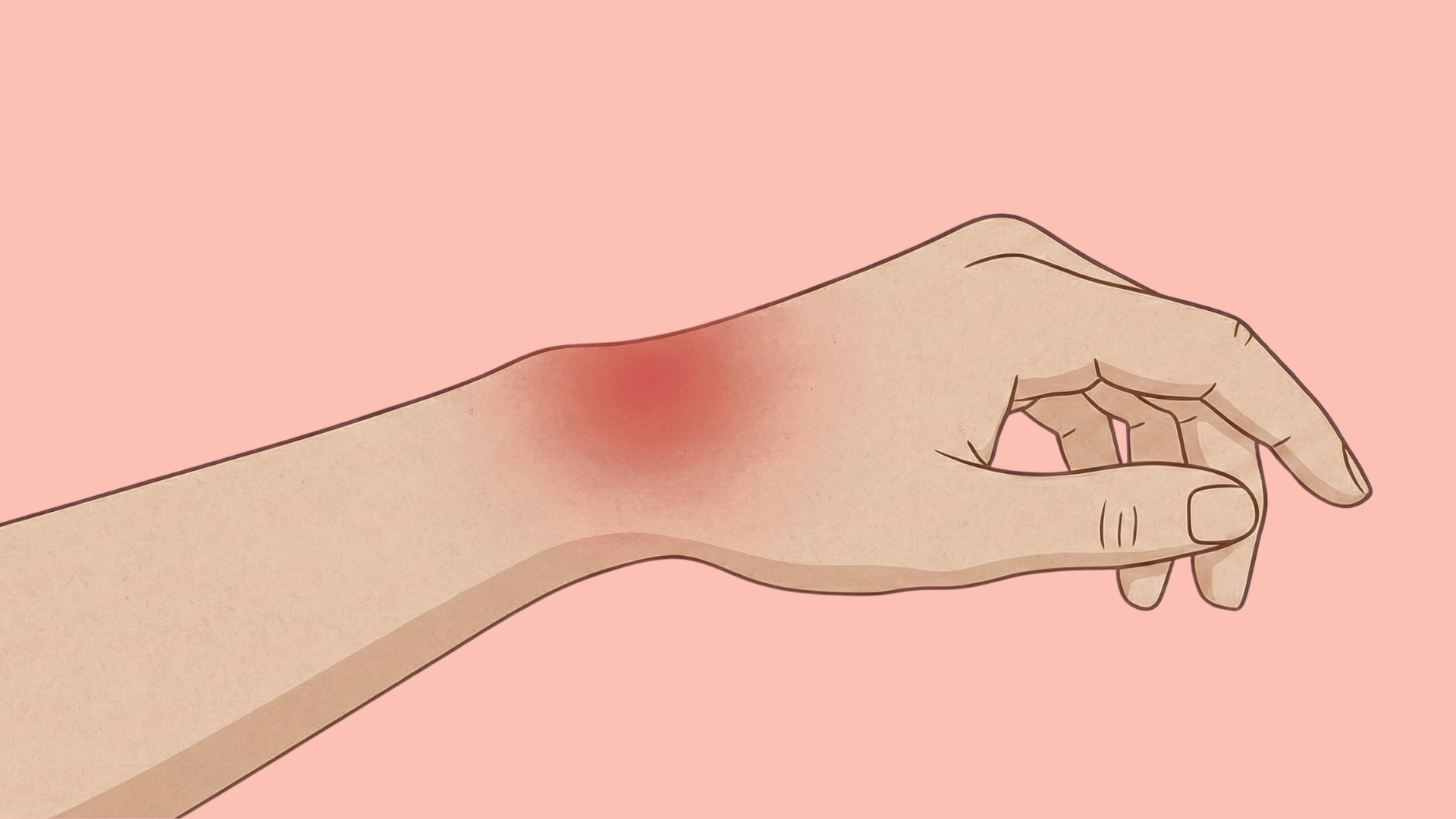
Dorsal wrist pain can sneakily hijack your days. One day it throbs gently as I type, the next sends sharp jolts in response to my lifting a cup, opening a door or pushing up. Because the wrist is implicated in nearly all we perform, even mild pain at the top of the wrist can feel restrictive.
The good news? The vast majority of cases of dorsal wrist pain are controllable and reversible with the right combination of posture and movement awareness, daily activity across a range of activities, ergonomic habits.
This guide explains why dorsal wrist pain occurs, what your symptoms are telling you and easy, science-backed methods that you can begin using today to reduce pain and avoid long-term damage.
What Is Dorsal Wrist Pain and Why Does It Happen?
Understanding the Pain on Top of Your Wrist
“Dorsal wrist pain” refers to the feeling of discomfort on the back (top) of your hand, and not on the palm. This is where the wrist extensor tendon, small stabilizing ligaments, joints and nerve structures live that assist in controlling hand movement and grip.
Since these tissues are small and see frequent use they are especially prone to repetitive strain, poor postural mechanics and overuse. Even small habits like curling your wrist while typing or clenching your phone can add up to wear and tear over time [1].
Common underlying contributors include:
- Tendon irritation from repetitive extension
- Inflammation of the wrist joint from bad alignment.
- Acute or fatigue induced ligamentous strain.
What Causes Dorsal Wrist Pain?
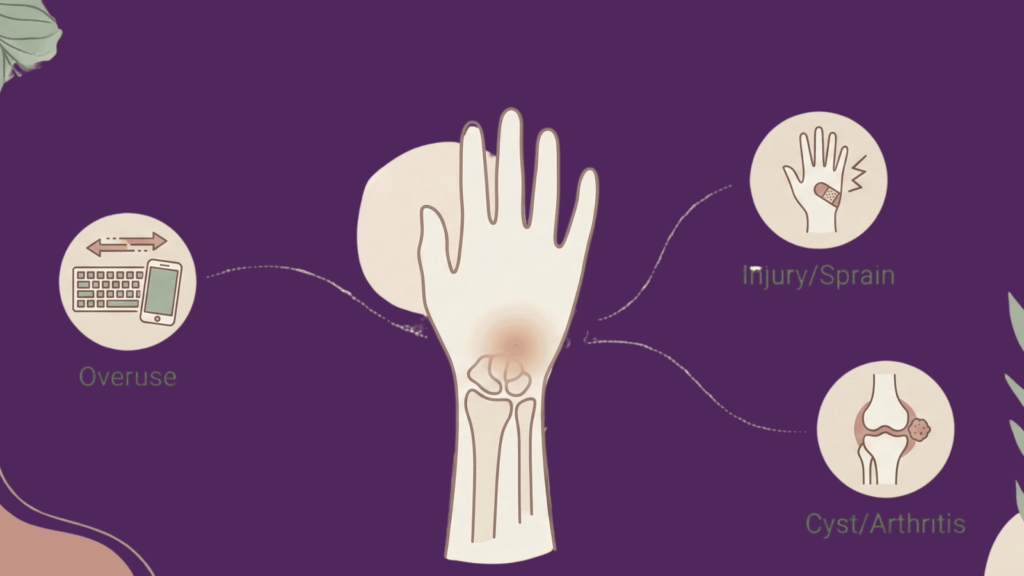
Overuse-Related Causes
Typing with a lifted or an elevated wrist is the most common cause leading to top of the wrist pain.
- Typing and mousing: Gentle up and down pressure on the extensor tendons of the wrist may increase inflammation at wrist joint If you type with bent wrists for long periods. This over time causes the area to inflame, and micro tears [2].
- Incorrect weight lifting: Any training using exercises such as push-ups, bench presses or planks with excessive wrist extension overloads the dorsal structures.
- Extended phone time: Continual finger scrolling with the wrist held in extension can contribute to sustained low level strain.
- Repetitive wrist loads on the job: Tasks that involve gripping, twisting or using tools may silently overload wrist tissues.
Overuse injuries often develop gradually, which is why many people ignore early symptoms until pain becomes persistent.
Injury-Related Causes
Not all dorsal wrist pains are insidious. In certain scenarios, the condition begins abruptly from injury.
- Wrist sprain: If a ligament is stretched or torn in an accident or sudden movement, the dorsal pain can present immediately.
- Direct trauma: Direct trauma can bruise soft tissues or injure the surfaces of the joint.
- Bad posture under load: Misaligned wrists while lifting or pushing may put a strain on stabilizing structures even in the absence of an acute injury.
Even mild injuries can become long-term if the wrist doesn’t receive adequate rest and support during recovery [3].
Medical and Structural Causes
Some causes of dorsal wrist pain are medical or anatomical and occur to the distal radius.
- Tendinitis: Inflammation of the wrist extensor tendons due to overuse or repeated strain.
- Ganglion cysts: Lump filled with fluid that often appears on the dorsal aspect of the wrist and may cause pain or stiffness.
- Osteoarthritis: Wear-and-tear, degenerative changes in the joints of the wrist that can be seen as a result of aging or former injuries.
When life changes fail to relieve pain, these conditions should be checked for by a physician [4].
What Are the Common Symptoms Of Dorsal Wrist Pain ?
Physical Symptoms to Watch For
Not everyone will experience dorsal wrist pain in the same way, but these are a few common symptoms:
- Having a dull or stabbing pain when you extend your wrist or grasp something.
- Wrist swelling or being tender on the top of the wrist.
- Low grip strength, increased difficulty with daily activities.
- Snapping or popping noises during movement.
Some patients also experience stiffness in the morning or increased discomfort towards the end of their day, particularly with repetition.
Simple Daily Techniques to Ease Wrist Pain
Stretching Techniques for Wrist Relief
Stretching can alleviate tightness, increase circulation and give you back the motion to inflamed structures.
Wrist Flexor Stretch
Reach your arm forward with your palm up. Using the other hand, gently pull your fingers downward until you feel a stretch in your forearm. Hold for 20-30 seconds. This decreases opposing muscle tension that predetermines dorsal pain.
Wrist Extensor Stretch
Extend your arm in front of you, palm down and gently press the hand down to stretch the top forearm muscles. This specifically addresses those tissues commonly implicated in dorsal wrist pain [5].
Do the stretches 2-3xb daily, particularly after prolonged periods of typing or phone use.
Strengthening Exercises for Long-Term Support
Strengthening builds resilience so your wrist can tolerate daily demands without irritation.
Wrist Curls
Do a wrist curl with light weight or resistance with a band and very slowly lift the wrist up, then down all the way.This exercises flexor and extensor muscles to ensure joint stability.
Grip Squeezes
Exercising your hand muscles by squeezing a ball or soft towel helps to strengthen the intrinsic muscles, which help maintain correct wrist alignment. Stronger grip muscles relieve an overtired tendon [6].
Consistency matters more than intensity. Start light and progress gradually.
Small Lifestyle Changes, Big Benefits
Exercises alone don’t relieve pain. Daily habits matter.
- Minimize repetitive strain: Break every 30-45 minutes while doing activities that put pressure on your wrists.
- Improve your typing posture: adopts an inbuilt ergonomics design to the case. Keep your wrists at a neutral angle for optimal, comfortable typing.
- Use the wrist support: These ergonomic aids help with alignment, especially during long workdays.
Small ergonomic adjustments can give weeks of pain relief.
When Should You See a Doctor ?
Though the majority of dorsal wrist pain will improve with conservative treatment, you should see a doctor if you have:
- Persistent swelling or worsening pain.
- Hand or finger numbness or tingling.
- Inability to raise or hold objects.
- Prolonged pain for more than 2 weeks despite rest..
An early assessment prevents small problems from turning into long standing injury [7].
The Long-Term Impact Of Wrist Posture On Your Joints
The position of your wrist as you go about your day is essential to both pain and recovery. Prolonged wrist extension can compress the surfaces of joints and stress tendons, depleting oxygen supply while impeding healing.
Tendons slide with ease and load is evenly distributed over joint surfaces when the wrist is in a neutral position. With continued use, this will decrease inflammation and promote joint health in the long run [8].
Final Thoughts: Save your Wrists, Save your Life
Dorsal wrist pain generally doesn’t just turn up overnight and it rarely goes away without some intervention. The good news is that with early awareness and small daily corrections, wrist pain can be reduced (and usually fully reversed). Simple things like working on posture, stretching often, not pressing too hard when you strengthen and support your wrist when you’re at work for long periods can be very beneficial.
Hear what your pain is saying. Treating wrist strain now will not only help alleviate today’s pain, but it can also safeguard your joints from more serious damage in the long run. Literally, your wrists hold so much of what you do; taking care of them now can help keep you doing things with less pain for years to come.
How Betterhood Helps Break the Pain Cycle
At betterhood, we believe lasting pain relief starts by supporting your body the way it’s meant to move, not forcing it into rigid positions.
Our wrist support is designed to gently guide your wrist into a neutral, strain-free alignment during long hours of typing, scrolling, or repetitive hand use. By keeping the wrist properly supported, it helps reduce excess load on the extensor tendons, one of the most common contributors to dorsal wrist pain.
Unlike stiff braces, our wrist support allows natural movement while maintaining stability. This balance helps improve posture at the wrist and forearm level without restricting circulation or comfort.
By addressing the root cause of wrist strain, poor positioning and repetitive stress; betterhood supports prevention as much as relief, helping you stay comfortable through your workday instead of managing pain after it shows up.
Explore More Health & Wellness Solutions:
Would you like to be up-to-date on everyday health and wellness issues? Here are some interesting pieces to help you. Follow the links below if you want practical tips or solutions:
- What Causes Back Pain? Understanding Root Triggers & Prevention Tips
- 10 Effective Home Remedies for Body Pain Relief Naturally
- Wrist Support Braces Explained: Protocols for Pain Relief
- Pillow for Neck Pain: Best Contour Pillow Every Side Sleeper Needs
Frequently Asked Questions
Yes, relatively mild cases can get better with rest and ergonomic modifications, but persistent pain should be treated early on in order to avoid chronic problems.
Ice is going to be most effective for acute inflammation, and heat feels better when it’s stiffness and muscle tension. This is effective for many individuals who passed among both.
Yes. Bad typing position and extended wrist extension lead to a significantly higher load on the tendons..
Short-term bracing can be useful during flare-ups, but persistent reliance without also working to strengthen may actually weaken the muscles in your wrist.
Yes, when modified properly. Both wrist-neutral postures and slow loading help mobilize and strengthen the area.
References (APA Style)
- Mayo Clinic. (2023). Wrist pain: Causes and treatment. https://www.mayoclinic.org
- Cleveland Clinic. (2022). Repetitive strain injuries of the wrist. https://my.clevelandclinic.org
- American Academy of Orthopaedic Surgeons. (2023). Wrist sprains and injuries. https://orthoinfo.aaos.org
- National Institute of Arthritis and Musculoskeletal and Skin Diseases. (2022). Hand and wrist conditions. https://www.niams.nih.gov
- Harvard Health Publishing. (2021). Stretching and joint health. https://www.health.harvard.edu
- Physiopedia. (2023). Wrist strengthening and rehabilitation. https://www.physio-pedia.com
- Johns Hopkins Medicine. (2022). When to see a doctor for wrist pain. https://www.hopkinsmedicine.org
- National Institutes of Health. (2020). Biomechanics of wrist alignment. https://www.ncbi.nlm.nih.gov
- British Journal of Sports Medicine. (2019). Overuse injuries of the wrist. https://bjsm.bmj.com
- American Physical Therapy Association. (2021). Ice vs heat for musculoskeletal pain. https://www.choosept.com