





Imagine trying to construct a skyscraper on a foundation that is gradually settling into the mud. No matter how robust the steel beams, no matter how perfectly you fit the windows; with enough time and pressure, it will crack. Your body works the same way. Your feet are the base of your entire skeletal system. When that base caves in; a state commonly referred to as having flat feet or fallen arches, the consequences ripple all the way up, breaking your sense of stability apart like a crack on the foundation does with an actual house, and leading to problems such as knee pain, hip misalignment and even chronic back pain.
For some, flat feet (doctors call the condition ‘pes planus’) are a minor annoyance or simply a question of genetics. If you’ve ever completed a long walk feeling a deep, throbbing ache beneath your soles or sharp pains shooting up your shins, you know it’s more than just an aesthetic problem. It is an useful mechanical error.
The million dollar question and the reason you’re here is, how to fix flat feet? Can you, in fact, rebuild an arch that appears to have lost its way or are you stuck with a life sentence of clunky orthopedic footwear?
The answer is a hopeful yes; but with qualifiers. You’re not going to change your bone structure overnight, but you can strengthen the muscles responsible for suspending your foot. In this complete guide, we’ll look at foot biomechanics and how it’s linked to your posture in the “kinetic chain” plus what you can do right now to fix your arches and alignment.
Here at betterhood, we believe in living pain-free starts with a strong foundation and we are here to help you rebuild yours.
Understanding the Collapse: What Are Flat Feet?
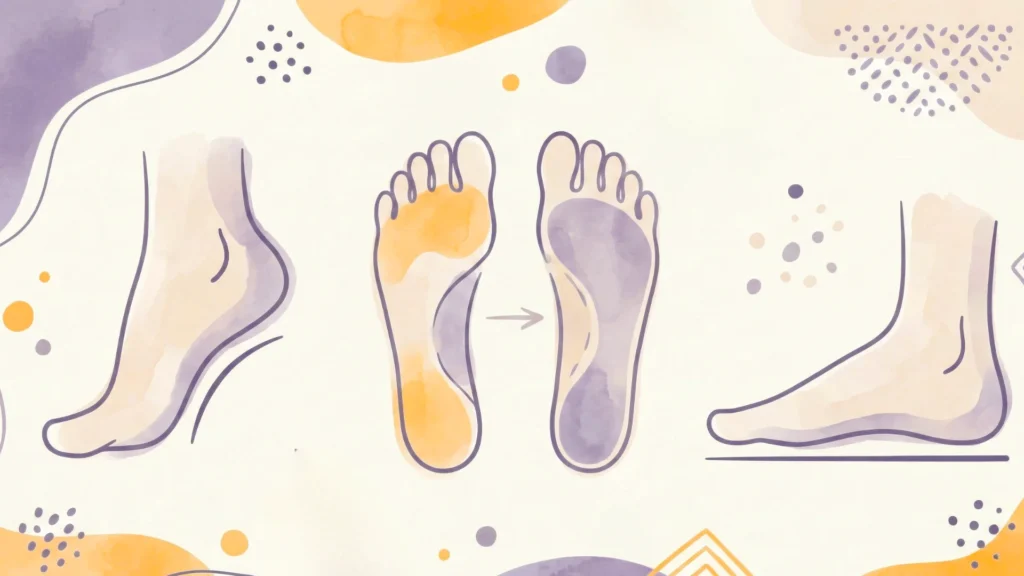
To fix the problem, we have to understand how the machinery works. The human foot is an amazing creation with 26 bones, 33 joints and more than a hundred muscles, tendons and ligaments. The “arch” is not a bone but a tension bridge born of the tension with which these elements draw together.[4]
When we describe flat feet, we typically mean that the medial longitudinal arch, the curve along the inside of your foot, has collapsed.
The Two Types of Flat Feet
Not all flat feet are created equal, and determining which sort you have is critical for treatment.
1.Flexible Flat Feet: This is the most popular one. It’s like sitting and standing on the arch, he said, or abducting (lifting) a foot in a seated position to see an arch but as soon as you stand on it rolls under, and strikes inside. This means that joints are able to move but the muscles and ligaments holding these joints together, are not strong enough to support your body weight.
2. Rigid Flat Feet: As the name suggests, the foot appears flat regardless of whether you are sitting or brushing your teeth. This is frequently a result of structural issues with the bones (such as tarsal coalition) or arthritis. Retroglide flat feet are more resistant to be fixed by exercise alone and other more support-related treatments may need apply [1].
The Kinetic Chain: Why Your Feet Hurt Your Back
One of the fundamental betterhood beliefs is that no body part functions in a vacuum and that part of you especially is your feet. The association is referred to as the kinetic chain in physiotherapy.
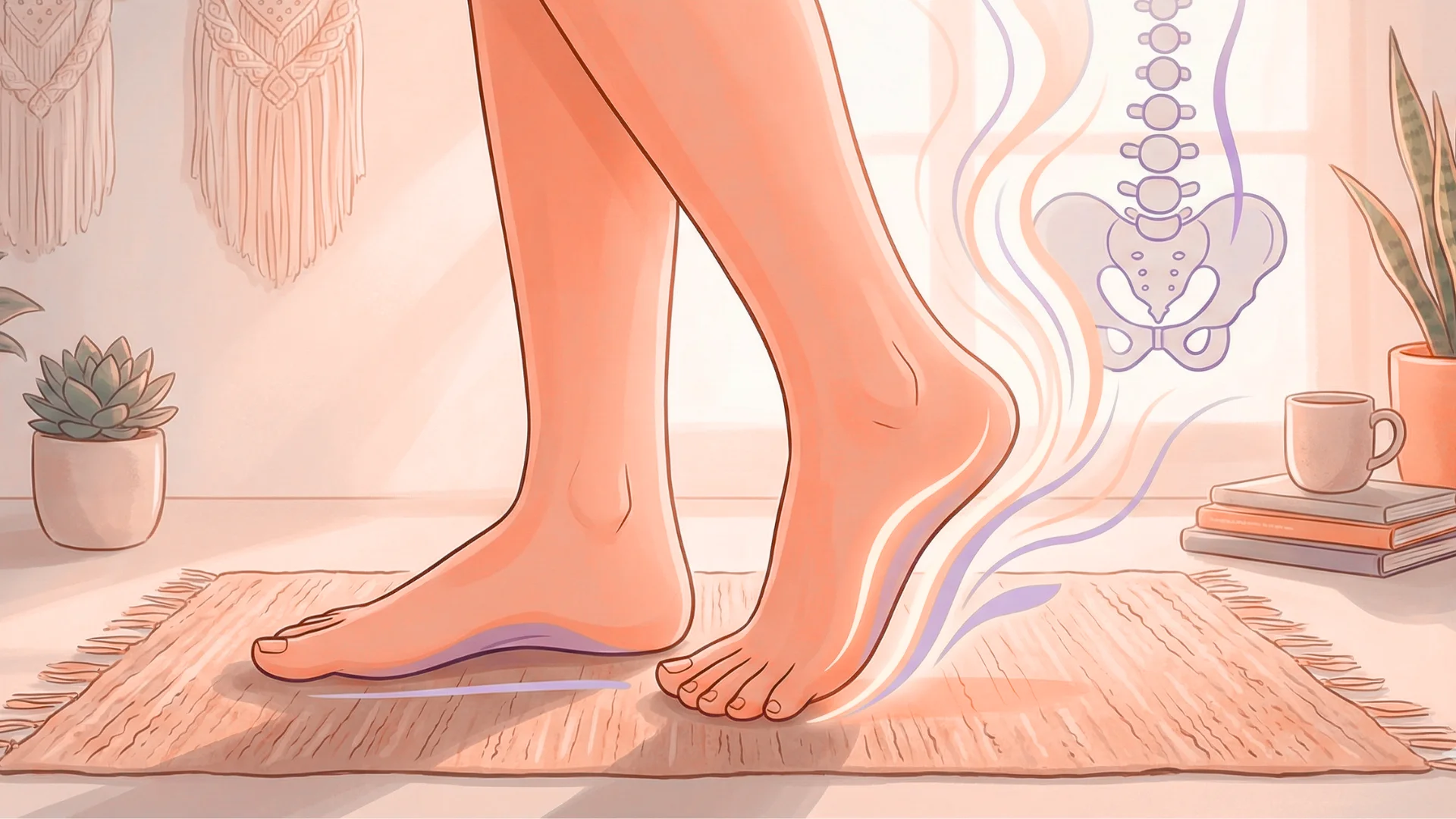
When your arch falls, too, your foot doesn’t just flatten; it overpronates. This has the effect of rolling your ankle inward.
- The Tibia Twists: When the ankle rolls in, it pulls the shin bone (tibia) into an internally rotated position.
- The Knee Caves: This rotation loads the knee in a position that it typically does not like to be forced into (knee valgus stress), resulting in fatigue, and runner’s knee as well as ligament sprain strain.
- The Hip Drops: The femur (thigh bone) does it, too, twisting inwards and out rather than standing straight which upsets the balance of your hip joint.
- The Pelvis Shifts: The last thing that results is a forward-tilting pelvis (anterior pelvic tilt), which causes the lower back to get overextended more than it should be.[6]
In an instant, your “foot problem” has become your lower back. This is also exactly why addressing flat feet often becomes the first step in fixing bad posture. If you’ve been experiencing back pain off and on, even with the assistance of its ergonomically designed tools, your foundation might just be what’s missing. For more on how aligning affects your spine, read our guide to posture correction and spinal health.
Why Do Arches Collapse? (It’s Not Just Genetics)
Some people are born with inherently low arches, but adult-acquired flatfoot occurs more frequently. Why do arches, sturdy in the past, suddenly crumble?
Posterior Tibial Tendon Dysfunction (PTTD):
Leading the list is this classic. This posterior tibial tendon extends from your calf down to the inside of your foot and is essentially the main hammock that holds up your arch. The arch collapses over time due to the tendon being irritated, inflamed or degenerating [2][11].
Intrinsic Foot Muscle Weakness:
Modern footwear is a cast. Our feet are prematurely yanked into solid-soled shoes, which do the stabilizing job for us; the small muscles in our feet atrophy and go unused. It’s “use it or lose it,” and a lot of us have lost it.[13]
Obesity and Pregnancy:
Carrying extra weight puts additional strain on the foot’s suspension system then it was meant otherwise to accommodate and this will end up stretching out your ligaments.
Aging :
Like our skin, which loses its elasticity as we age, tendons lose their tensile strength. The ligaments that bind the foot bones together become stretched out, resulting in a wider, flatter foot footprint.
Can You Really “Fix” Flat Feet?
Here’s where we need to tamper expectations. If, however, you have stiff flat feet because of bone in the way, exercise won’t build a bridge where there’s no structure. But for most of you who have flexible flat feet, you can totally:
- Develop the muscles to dynamically raise the arch.
- Prevent further collapse from progressing.
- Relieve the disease related to pain.
It’s kind of like running up biceps. Your humerus bone is the right length, and you won’t change that. But what will happen is the muscle on top of that bone will get stronger and bigger. You are reconstructing a muscular arch (often functionally superior to the passive bony one).
5 Proven Exercises to Strengthen Your Arches
You need to get involved if you want to learn how to fix flat feet. You must activate those muscles at rest. Consider adding these exercises to your daily schedule; maybe winding down at night, or taking a break from your desk.
1.The Short Foot Exercise (The Janda’s Approach)
This is the ultimate in arch strengthening. It instructs you to engage the inside muscles without curling your toes.
- How to do it: Sit in a chair and keep your feet flat on the floor. Try to slide the ball of your foot toward your heel without scrunching your toes. Think about making your foot “shorter” by doming the arch.
- Hold: 5-10 seconds and release.
- Reps: Do 10–15 reps per foot. Once you have mastered this exercise, try standing to increase difficulty [3].
2. Seated Heel (Calf) Raises with a Tennis Ball
Strengthening the posterior tibial tendon is non-negotiable..
- How to do it: With a tennis ball squished between your heels, stand. Go up onto your toes without releasing the ball. This keeps your ankles in a neutral position and prevents them from rolling outward, isolating the arch supporting muscles.
- Reps: 3 sets of 15 reps each.
3. Toe Yoga
Control is key. This workout increases the neuromuscular connection to your toes.
- How to do it: Avoid pointing the foot. Raise your big toe only, with the four other toes pressing down. Then, do the opposite: Press the big toe down and lift the remaining four toes.
- Reps: It’s going to be maddening at first! Try for 10 switches on the controlled side of each foot.
4. Towel Scrunches
A classic, low-frills effort designed to help you build overall foot strength.
- How to do it: Lay a small towel on a smooth floor. Use your toes to scrunch the towel toward you, draw it under your foot.
- Challenge: Once you get the hang of it, add some resistance by placing a small weight (like a book or water bottle) on the end of the towel.
5. Arch Lifts Standing
That assists in making arch strength part of your real posture.
- How to do it: Stand normally. Roll your weight to the outside edges of your feet, rising up on your arches slightly and return back down to a neutral position (don’t let them collapse all the way in).
- Reps: 20 reps, and repeat throughout the day.
The Role of Support: Insoles, Shoes, and Recovery
Even as exercises rebuild your foot, you still need structure while healing. You wouldn’t stand on a broken leg and expect it to heal, nor should you stand on a collapsed arch without support and work at strengthening it.
Orthotics and Insoles: Cushion or Cure?
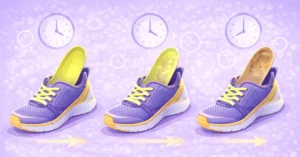
There is a controversial idea that wearing insoles makes the feet weak. The balanced view is that orthotics are a bridge. If your feet hurt, arch support insoles would relieve some of the burden on the posterior tibial tendon. This allows the tissue to stop behaving inflamed. Slowly remove the support as you exercise and your feet become stronger.[14]
Choosing the Right Footwear
Stiff Heel Counter: The back of the shoe (heel area) should not collapse. If you can easily crush the heel of the shoe, it isn’t going to be giving your ankle support.[15]
Wide Toe Box: Your toes must splay to provide stability. Tight shoes make the toes point together and put the arch to sleep.
betterhood Tip: We recommend supportive footwear to align your body during the day. The name of the game is all about protecting that neutral alignment to prevent damage.
Lifestyle Habits for Healthy Arches
Curing flat feet isn’t really about exercises, it’s about how you use your body 24/7.
Barefoot Walking (With Caution)
When you walk barefoot over natural surfaces such as grass or sand, the muscles in your foot have to work. Not like hardwood floors which do not give, the ground that is uneven stretches out muscle groups and your nerves. Begin with 10-15 minutes daily to ensure not to overstress the Achilles tendon.[8,10]
Weight Management
For every extra pound of body weight, about four pounds of pressure is added to your knees and feet. Maintaining a healthy weight takes the load off your arches, and can help to mitigate further arch collapse.[7]
Stretching the Calves
Stiff calves (gastrocnemius and soleus) pull on the heel bone, causing the foot to flatten in response.[12]
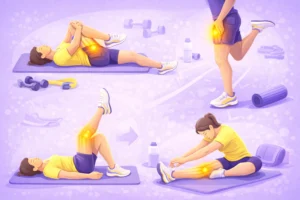
The Stretch: Do a runner’s stretch against a wall with your back leg straight and heel down. Hold for 30-60 seconds. Mobile calves let the ankle joint move as it should, the foot isn’t required to overpronate.
Active Recovery
After a long day, it’s time to take care of your feet. Rolling your foot over a frozen water bottle or a massage ball can ease inflammation in the plantar fascia and loosen up tight muscles. It’s vital to build in some recovery tools into your routine for long-term health. Peruse our recovery collection for gear to revitalize aching muscles and enhance circulation.
Conclusion
Flat feet may seem to be a life sentence of discomfort, but that does not have to be the case. Once you get how to fix flat feet’s mechanics your body is under your control. It is a process of re-education; your feet have to be taught how to be feet once more.
After all, the aim is not only for an appealing arch but a functional one. It’s about starting the day without heel pain, walking without knee strain and standing proud with a posture ground on solid footing.
Begin by doing the “Short Foot” exercise immediately. Swap out those unsupportive flip-flops. Stretch your calves. If you start to treat your feet kindly in small ways, day in and day out, the improvements are not just foot deep. They spread upward to help your knees, hips and back.
At betterhood, we are rooting for your recovery every step of the way.
Explore More Health & Wellness Solutions:
Want to stay informed about wellness and everyday health issues? Here are some insightful reads to guide you. Explore the links below for practical tips and solutions.
- How to Prevent Knee Injuries: Proven Tips, and Lifestyle Strategies for Stronger Joints
- How Can Knee Cap Support Help Prevent Injury and Reduce Pain While Running
- 10 Effective Home Remedies for Body Pain Relief Naturally
Frequently Asked Questions
Furthermore, going barefoot on natural and uneven surfaces, such as sand or grass, can strengthen the intrinsic muscles of the feet that support the arch. That said, walking around barefoot on hard, level surfaces (think tile or concrete floors) may worsen the pain for some people who already have collapsed arches because there’s no shock-absorbing cushion. Which is why it’s better to take ‘baby steps’.
Mass and tendon strength are not achieved overnight. With regular daily work, you may begin to experience less pain in 4-6 weeks though observable differences in arch height or major improvement in foot strength generally require 3-6 months of devoted activity [3].
No. There are a lot of people with flat feet who have no pain. Normally, we treat only “symptomatic” flat feet, those that cause pain in the foot, the knee or the low back. Strengthening exercises are always helpful because even asymptomatic flat feet can contribute to posture problems later in life.
Custom orthotics can be life changing for anyone with severe or stiff flat feet. Over the counter good quality insoles and strengthening exercises are generally enough to treat mild-to-moderate flexible flat feet and much less costly.
Absolutely. Due to the legs turning inward and the pelvis tilting, flat feet are a common ”silent” cause of lower back pain. Fixing your foot mechanics will realign the whole chain of force, which has the effect of taking pressure off your lumbar spine.
References
- Mayo Clinic. (2022, August 16). Flatfeet – Symptoms and causes. https://www.mayoclinic.org/diseases-conditions/flatfeet/symptoms-causes/syc-20372604
- American Academy of Orthopaedic Surgeons. (n.d.). Progressive collapsing foot deformity (Flatfoot). OrthoInfo.https://orthoinfo.aaos.org/en/diseases–conditions/posterior-tibial-tendon-dysfunction/
- McKeon, P. O., Hertel, J.,(2015). The foot core system: A new paradigm for understanding intrinsic foot muscle function. British Journal of Sports Medicine, 49(5), 290. https://doi.org/10.1136/bjsports-2013-092690
- Anatomy, Bony Pelvis and Lower Limb, Foot Joints. (2023). In StatPearls. StatPearls Publishing.https://www.ncbi.nlm.nih.gov/books/NBK536941/
- Teng, H. L., & Powers, (2014). Sagittal plane trunk posture influences patellofemoral joint stress during running. Journal of Orthopaedic & Sports Physical Therapy, 44(10), 785-792. https://doi.org/10.2519/jospt.2014.5249 [Note: For kinetic chain evidence]
- Plos One. (2024). Association between lower limb alignment and low back pain. PLOS ONE, 19(10), e0311480. https://doi.org/10.1371/journal.pone.0311480
- Messier, S. P., Gutekunst, (2005). Weight loss reduces knee-joint loads in overweight and obese older adults with knee osteoarthritis. Arthritis & Rheumatism, 52(7), 2026-2032. https://doi.org/10.1002/art.21139
- Miller, E. E., Whitcome, (2021). Daily activity in minimal footwear increases foot strength. Scientific Reports, 11(1), 18648. https://doi.org/10.1038/s41598-021-98070-0
- Ridge, S. T., Johnson, (2018). Foot bone marrow edema after 10-week transition to minimalist running shoes. Medicine & Science in Sports & Exercise, 50(3), 537-545. https://doi.org/10.1249/MSS.0000000000001448
- Hollander, K., Heidt, C., (2017). Long-term effects of habitual barefoot running and walking: A systematic review. Medicine & Science in Sports & Exercise, 49(4), 752-762.
- National Center for Biotechnology Information. (2024). Posterior tibial tendon dysfunction. StatPearls. https://www.ncbi.nlm.nih.gov/books/NBK542160/
- Mohamed, M. E., (2022). Prevalence of calf muscle tightness in asymptomatic flat foot subjects. Egyptian Journal of Physical Therapy, 11(2), 1-6. https://ejpt.journals.ekb.eg/article_244412.html
- Lieberman, D. E., Castillo (2018). Foot strength and stiffness are related to footwear use in a comparison of minimally- vs. conventionally-shod populations. Scientific Reports, 8(1), 3679. https://doi.org/10.1038/s41598-018-21916-7
- Taddei, U. T., Matias, (2020) : A randomized controlled trial. Journal of Biomechanics, 104, 109720.https://doi.org/10.1016/j.jbiomech.2020.109720
- Cucuzzella, M. (2017, May 17). The orthotics debate: How running shoe inserts are dividing experts. ESPN. https://www.espn.com/espnw/life-style/article/19405383/the-orthotics-debate-how-running-shoe-inserts-dividing-experts