






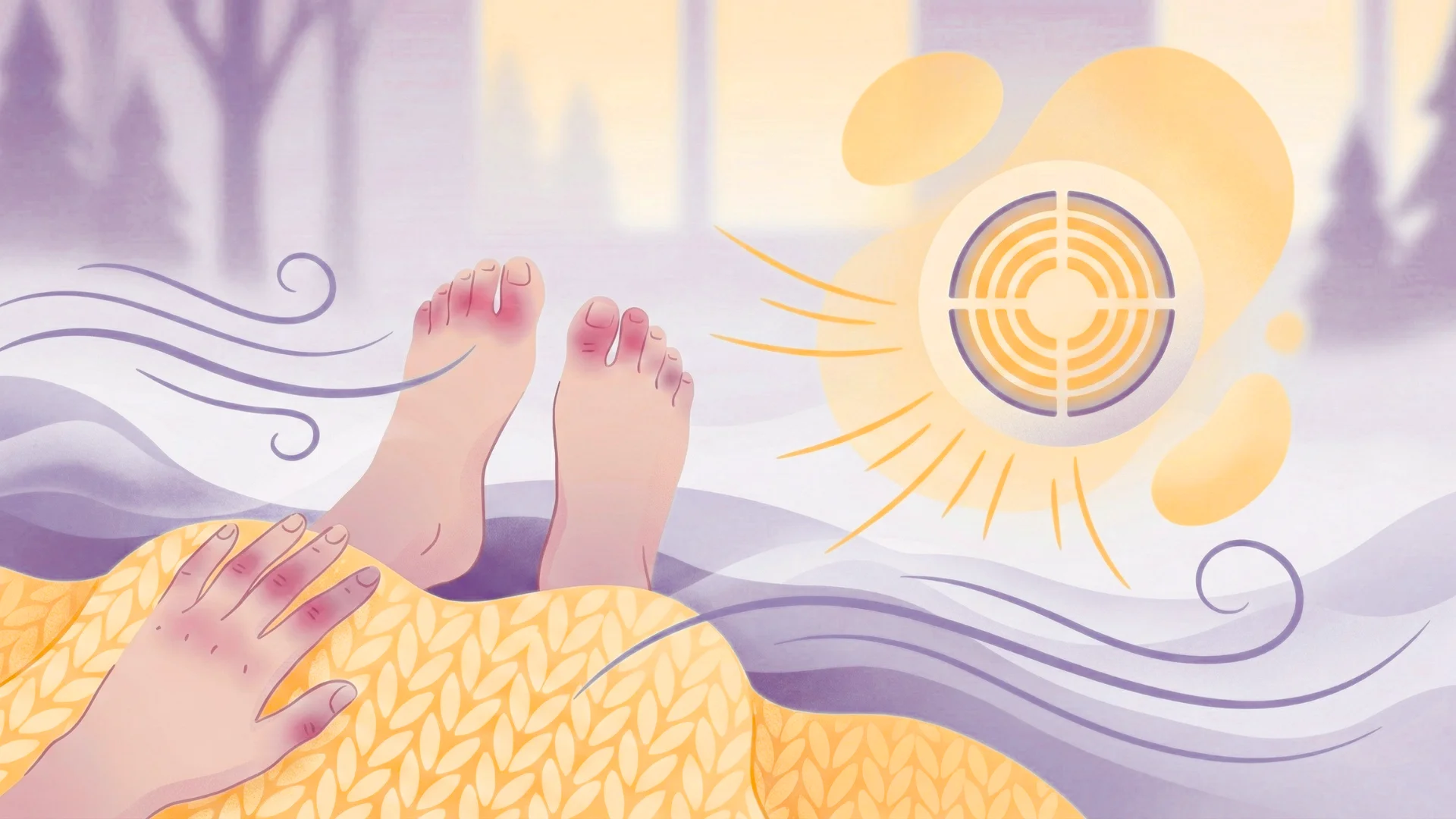
There’s a certain kind of unease that sets in with the cold, especially foggy mornings so common to Indian winters. It’s not that sharp pang of a sprained ankle or the dull throb of a stiff neck; this is an insistent, burning itch that appears to well up from deep beneath your skin. If you’ve ever stepped inside after a long winter walk and warmed your feet by the heater or a blower, only to suddenly see red and swollen patches on your toes or fingers, chances are that you’re suffering from classic chilblains symptoms.
Although they are frequently misdiagnosed as an allergic reaction or “dry winter skin,” chilblains (medically referred to as pernio) are a circulatory response to rapid temperature changes. It can also be confusing for lots of people. One minute your hands are ice-cold, and the next they’re swollen and tender.
The first step to getting relief is understanding why this happens. At Betterhood, we also know listening to these signals from your body is critical for your overall limb health and recovery. In this guide, we’ll discuss what chilblains are, what causes them to materialize and how to treat that itchy sensation naturally so you can be comfortable all season.
What Are Chilblains Exactly?
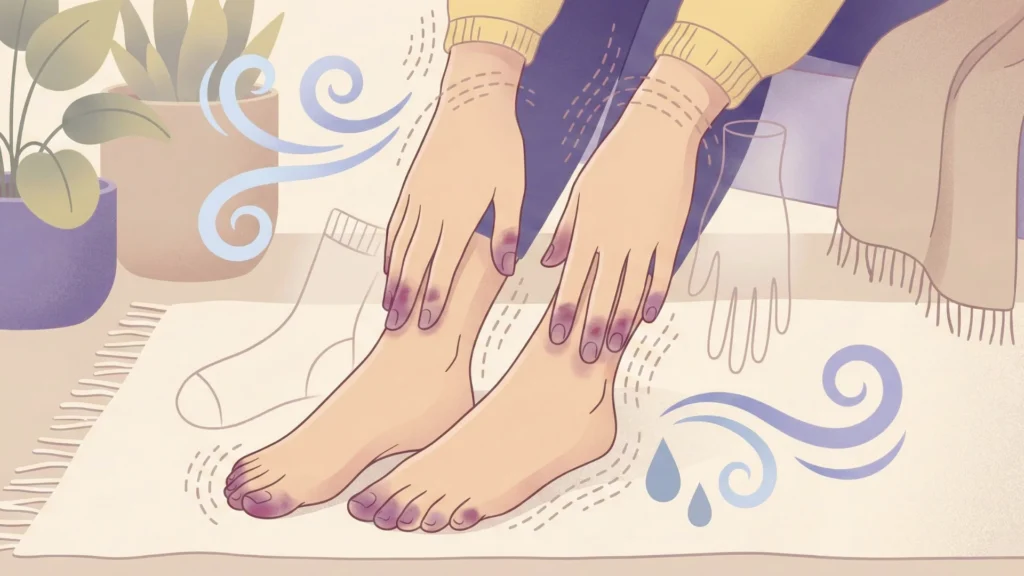
The way to address it is by first getting under the skin. Chilblains are basically a “traffic jam” in your blood vessels as they respond quickly to changes in temperature.
Your body’s job is to maintain your core temperature. When you’re exposed to cold air; whether it’s in a drafty room or outdoors in winter, small blood vessels (capillaries) just under your skin constrict, or get smaller, to reduce the flow of warm blood near the surface of your body and conserve heat closer to your core. This is a natural means to survive.
Where the trouble comes in is when you start warming up too fast. If you put freezing cold feet directly in front of a high-powered room heater, blower or place them in hot water, the blood vessels dilate quickly. But the tiny blood vessels can’t accommodate the surge of blood. This leads to blood seeping out and into the surrounding tissue, which provokes the inflammation, redness and itching we know as chilblains [1].
Common Causes of Chilblains: Why Does It Happen?
Although the biological reason is straightforward, there are certain things like external influences and lifestyle behavior can increase your risk of getting chilblains.
1. Sudden Temperature Changes:
This is the number one suspect. In many Indian homes without central heating, we depend on spot to spot bumping up the heat (with electric heaters or angithis). The sudden heat in the blood vessels is a shock from which they have never recovered.
2. Wet and Chilly:
It’s not just the fact that it’s freezing; it’s wet, too. Cold water also causes heat to be rapidly lost when in contact with wet shoes or socks.
3. Poor Circulation:
If you’re the type of person who always has cold hands and feet, or if you suffer from conditions like anemia (pretty prevalent) your blood vessels respond more readily to cold.
4. Tight Apparel and Footwear:
Tight shoes or tight socks can restrict circulation to the toes, resulting in poor temperature control in the extremities.
Habits: Smoking and poor eating habits can also impact circulation, in turn raising the risk.
Recognizing the Top Chilblains Symptoms
Because chilblains occur in the extremities, they are sometimes confused with frostbite or Raynaud’s phenomenon. But the symptoms of chilblains are different. The symptoms usually present a few hours after cold exposure.
Here is a list of the most frequent chilblains symptoms to be aware of:
1. Intense Burning and Itching
That is generally the first red flag. Before the characteristic visual marks begin to develop, a pricking or burning sensation may be felt in your toes, fingers, ear lobes or nose. This itch may be intense and is mostly exacerbated by warmth.
2. Red or Purple Discoloration
There will be small, discrete areas of skin that become red or dark blue. These patches, called lesions, may resemble a rash but are in fact localized inflammation of the capillary beds.
3. Swelling (Edema)
You’ll see that it’s puffy and swollen. If the chilblains are on your feet, you may find that your shoes suddenly feel tighter than normal. This swelling can cause discomfort while walking and leads to stiffness in the toes.
4. Skin Texture Changes
With further progression, the skin of the chilblain becomes dry, shiny and stretched. In more severe instances, the skin can crack and become blisters or ulcers, putting the area at risk for infection.
Chilblains vs. Raynaud’s Phenomenon: Spotting the Difference
It is easy to mix up for the simple reason that both are circulation-related conditions that occur in cold weather, but they are distinct in their own activities.
Raynaud’s Phenomenon: This is a condition where vasospasms produce temporary absence of blood flow altogether. The fingers or toes will go white as paper or blue and they feel like tingling numbs or dead. Pain is said to be due to the rewarming kernel and the though when blood returns and digits thaw [2].
Chilblains: This is inflammation and leakiness. It’s red, hot, swollen and itchy; not white and numb.
These people often have both types, by the way. If you’re the person with cold hands and feet, increasing your systemic circulation is crucial to avoiding those seasonal flares.
How to Treat Chilblains Naturally at Home
If you’ve noticed these chilblains symptoms, don’t panic. Most cases are benign and will heal on their own within one to three weeks if you refrain from further cold exposure. But there are a few natural strategies to help you deal with the pain.
1. The Golden Rule: Gradual Rewarming
Most important is to avoid heating fast. Never put cold feet right in front of a heater, blower or even into a pail of hot water. Instead, let them come to temperature slowly, at room temperature.
- Wear warm, dry wool socks.
- Wrap yourself in a blanket.
- Slide your hands up inside your armpits (they’re a natural source of warmth).
2. Soothing the Itch (Without Scratching)
It is not good to scratch a chilblain, because the skin is very fragile and can break. To help relieve the itch without harming the tissue, apply a soothing lotion containing calamine.
3. Boost Circulation with Gentle Movement
The worst thing for chilblains is stagnant blood flow. Mild, soft movement can also help flush the tissue. Move your toes, circle your ankles and keep active.
We believe in what we call “active recovery” at betterhood. Although, you should not massage directly over an inflamed chilblain, gently massaging the calves or forearms with warm oil (like mustard or olive oil) can stimulate blood flow to the extremities, helping to clear the congestion in the vessels.
4. Keep Feet Dry
Dampness accelerates heat loss. If your winter shoes trap sweat, the damp shoe will get cold that much more quickly. Change your socks often and keep your shoes dry when you put them on.
Prevention: Stopping the Swell Before It Starts
The best cure is prevention. Because we know that chilblains symptoms are instigated by rapid temperature changes, the aim is to maintain body temperature.
Layering Up: Dress in layers of thermals or thin layers of clothing, and not one thick layer that can more effectively insulate body heat.
Choose Wool: Cotton socks can retain moisture next to your skin. Merino wool or a thick pair of socks are great for wicking away sweat and keeping your feet warm.
Stand up for Alignment: Believe it or not, circulation is about alignment. You could be experiencing poor posture, or you might sleep with your spine in an unnatural position. An ergonomic pillow would keep your nervous system and circulatory system in peak shape when you sleep.
Internal Link: Click here to learn about our Postural Support Pillows designed to make sure you’re aligned ito support better circulation.
Conclusion: Winter-Proof Your Wellness
Chilblains might feel like a nuisance; unsightly, itchy, and uncomfortable but think of them as a gentle tap on the shoulder from your body. That burning sensation is a signal to pause, warm up, and prioritize your circulation before the cold takes a deeper toll. Recognizing these early whispers allows you to act fast, turning a potential painful blister into a moment of self-care.
At betterhood, we believe that protecting your limbs involves a holistic “ecosystem of warmth”; from maintaining the mobility that keeps blood flowing to nurturing your skin with recovery essentials that encourage circulation. We help you insulate your body, not just from the outside, but from the inside out.
As we navigate the colder months, remember that maintenance is just as important as movement. Listen to your skin, layer up with intention, and give your body the gentle warmth it craves. Let’s walk through winter without the sting.
Explore More Health & Wellness Solutions:
Would you like to be up-to-date on everyday health and wellness issues? Here are some interesting pieces to help you. Follow the links below if you want practical tips or solutions:
- What Causes Back Pain? Understanding Root Triggers & Prevention Tips
- 10 Effective Home Remedies for Body Pain Relief Naturally
- Wrist Support Braces Explained: Protocols for Pain Relief
- Pillow for Neck Pain: Best Contour Pillow Every Side Sleeper Needs
Frequently Asked Questions
The majority of people with chilblains recover within a few weeks and don’t have long-term complications, as long as exposure to cold is avoided. When the same symptoms occur more chronically or repeatedly, this can indicate an instrumental circulation problem.
Yes, gentle exercise is great for promoting circulation of blood which can aid in the healing of chilblains. But steer clear of high-impact sports that can cause friction on the affected toes and make sure your shoes aren’t too tight.
Some are at higher risk because of genetics, lighter body weight or an existing lack of good circulation. Women are also chronologically more prone to chilblains compared with men [3].
With unbroken skin, it’s best to leave it open and let the area breathe (while covering with a sock). If the skin has blistered, or split and burst (ruptured), apply a sterile dressing to the wound to prevent infection.
Generally, no. They can cause complications like skin ulcers or infections if scratched, however. Those living with diabetes should be particularly cautious, and consult a doctor if they notice any foot irregularities.
References
- Mayo Clinic. (2022). Chilblains – Symptoms and causes. Mayo Clinic. https://www.mayoclinic.org/diseases-conditions/chilblains/symptoms-causes/syc-20351097
- National Health Service (NHS). (2021). Chilblains. NHS UK. https://www.nhs.uk/conditions/chilblains/
- Nyssen, A., & Benhadou, F. (2019). Chilblains. New England Journal of Medicine, 381(20), 1960https://pubmed.ncbi.nlm.nih.gov/31808732/
- DermNet NZ. (2003). Chilblains (pernio). DermNet. https://dermnetnz.org/topics/chilblains


