






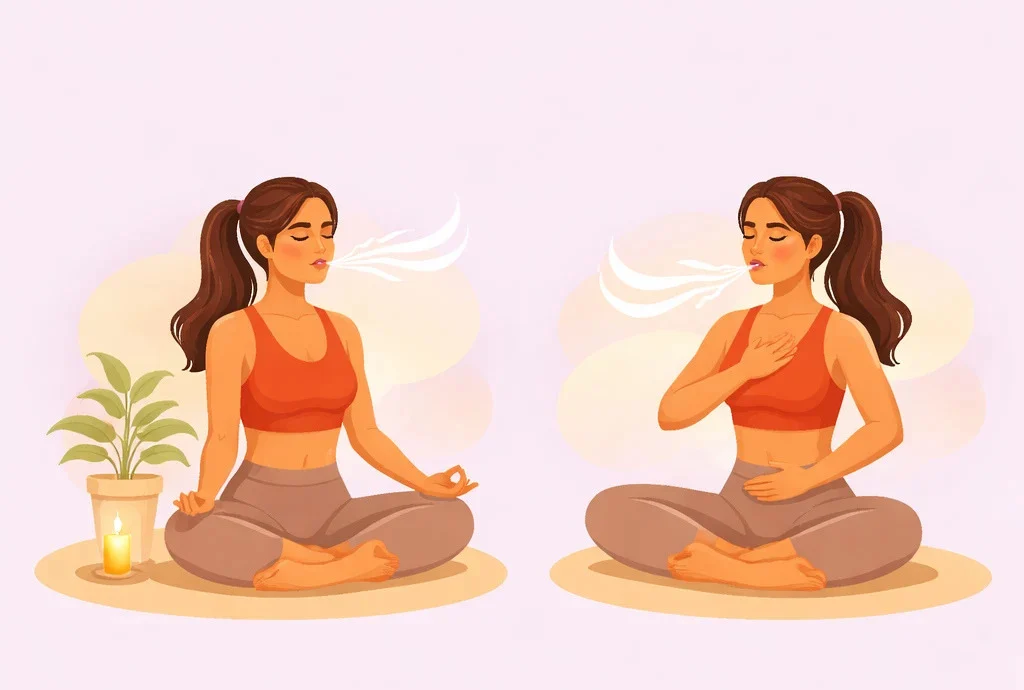
Breathing exercises are straightforward techniques that involve slow, controlled breathing to foster relaxation, alleviate stress and improve the effectiveness of respiration. Health organizations and medical sources often recommend them because they may soothe the nervous system, help people become more mindful of their breathing patterns, and potentially facilitate easier breathing in times of stress or shortness of breath. [1]
These exercises are simple to learn, don’t require equipment and can be done nearly anywhere. Deep breathing, diaphragmatic breathing, box breathing and pursed lip breathing are some common methods. [3]
What Are Breathing Exercises?
These instruct how you should inhale, exhale, hold or slow your breath. The purpose is often to alleviate shallow breathing, calm the body down and gain more control over the process of breathing itself. [2]
A wide variety of breathing techniques emphasize better use of the diaphragm. Diaphragmatic breathing helps strengthen the diaphragm and may help make your breath feel more effective, according to Cleveland Clinic. The American Lung Association similarly describes breathing exercises as techniques that can help people breathe more easily and remain more active. [3]
Why Breathing Exercises Matter
They can help reduce stress
Breathing techniques are frequently employed for the relaxation response because slower breathing is able to help steer physiology away from a stressed state. Research reviews and clinical advice indicate that controlled breathing might help decrease stress levels and promote a more relaxed nervous system.[6]
They can improve breathing awareness
Those who are anxious often have a tendency to breathe too quickly or shallowly. Breathing exercises help you slow down and focus on your breath and breathe more intentionally. [3]
They can support lung efficiency
Diaphragmatic and pursed-lip breathing are common techniques that help make your breath feel easier and more controlled. According to MedlinePlus, pursed-lip breathing can help people avoid feeling panicked and save energy when breathing makes it feel like they are exerting effort. [5]
They are highly achievable to practice on a daily basis
One of the greatest advantages of breathing exercises is consistency. Since they are easy and on-the-go, people can apply it in their daily habits, breaks, before sleep or when tense.
Types of Breathing Exercises
Deep Breathing
One of the most common techniques is deep breathing. It consists of breathing in slowly through the nose and then out gentle and completely. The NHS recommends gentle, paced breathing without making anything too much of an effort sometimes for at least five minutes. [2]
Diaphragmatic Breathing
Also referred to as belly breathing, this technique encourages inhaling and the expansion of the abdomen rather than shallow breathing through the chest. Cleveland Clinic: Diaphragmatic breathing can strengthen the diaphragm, decrease your breathing rate and lessen the work of breathing. [3]
Box Breathing
An example of a simple pattern that box breathing provides would be inhale, hold, exhale, hold. Cleveland Clinic describes it as a well-known breathwork technique that can reduce stress and stimulate the parasympathetic nervous system. [4]
Pursed-Lip Breathing
This technique is particularly helpful when breathing seems tight or rushed. Pursed-lip breathing, in which you breathe in through your nose and out slowly through pursed lips, may help with controlling your breath and make it easier to exhale, according to MedlinePlus and the American Lung Association. [5]
Benefits of Breathing Exercises
Helps calm the mind
Breath work is often used in relaxation and mindfulness-its routines, which provide the singular task for the mind to hold on to. This focus can relieve mental tension and contribute to a steadier state. [2] [4]
Supports stress management
In return diaphragmatic breathing may be beneficial to guide stress through both physical and psychological channels, a systematic review in PubMed concludes. Other NHS sources also say that conscious breathing can counteract the physical manifestations of stress and anxiety. [6] [7]
May improve breathing control
Breath practices can slow a person’s breath, engage the diaphragm better and make them feel more in control during uncomfortable moments, she said. [5]
Can be helpful in times of shortness of breath
It is also recommended when someone feels short of breath, as it slows down the breath and can make each breath feel more manageable. [5]
Can support better routines
Breathing exercises are used by many before sleep, after exercising, during work breaks or in moments of anxiety. Breath work can be a useful practice during the day.
How to Properly Perform Breathing Exercises
Sit or lie comfortably
A relaxed posture makes it easier to breathe long and slow. The NHS recommends that the breath should be soft and easy rather than forced deep inhalations. [2]
Breathe in through the nose
Breathing in through the nose can help to slow down the breath pattern, making it feel more controlled. This is often recommended among deep breathing and diaphragmatic breathing instructions. [3]
Exhale slowly
Slow exhalation forms an essential aspect of many breathing exercises. It helps lengthen the breath cycle and can make the technique more soothing. [5]
Keep your shoulders relaxed
Breath should be easy, never strained. The CUH NHS advice for doing breathing exercises suggests to relax your upper chest and shoulders while you breathe at a comfortable speed. [8]
Best Breathing Exercises for Beginners
Deep Breathing
This is the simplest starting point. Inhale deeply, with a pause if it feels good, and exhale softly for several rounds. [2]
Diaphragmatic Breathing
Put one hand on your belly and one on your chest, then try to let the stomach rise more than the chest when you breathe in. And Cleveland Clinic lists this as a major method for effective breathing.
Box Breathing
Breathe in, hold, breathe out, and hold do so evenly for the count. According to Cleveland Clinic, such a pattern can be especially beneficial for quieting the mind.
Pursed-Lip Breathing
Breathe in through the nose and breathe out slowly through pursed lips. MedlinePlus notes that this can slow breathing and may help some people with shortness of breath. [5]
When Breathing Exercises Might Be Helpful
During stress
When the pressure of work, school or daily life feels overwhelming, slow breathing can help. Breathing exercises are practical tools for calming the body and mind, according to both NHS and Cleveland Clinic resources.[4]
Before sleep
In fact, breathing techniques are often used at nighttime to ease sleep. Box breathing and deep breathing are often used for relaxation.
During exercises recovery
Other breathing techniques, particularly pursed-lip breathing, are used to help people regain control after exertion or when they feel short of breath.
During moments of tension
Breathwork can help restore the body to a slower rhythmic flow when breathing begins to feel fast and shallow. NHS and CUH describe this form of controlling breathing as valuable for relaxation. [8]
Tips for Safe Practice
Keep the breath gentle
Avoid forcing long inhalations or breath holds if they feel uncomfortable.
Stop if you feel dizzy
Breathing exercises should be calm and under control. If you get dizzy, stop and go back to breathing normally.
Use with medical care when necessary
Breathing exercises can help with symptoms but are no substitute for medical treatment if a respiratory condition exists.
Get emergency help for severe trouble breathing
Breathing trouble can be serious. Difficulty breathing can be a medical emergency in some cases, according to MedlinePlus. [9]
Conclusion
Breathing exercises are an easy and inexpensive method to enhance relaxation, encourage healthy breathing techniques, and handle day-to-day anxiety. Deep breathing, diaphragmatic breathing, box breathing and pursed-lip breathing are all simple to learn and can be practiced throughout the day. When practiced with consistency, they can become an invaluable piece of a healthy routine.
FAQs
Breathing exercises are relaxation techniques that involve controlled breathing.
Yes, they are used to help with stress relief and calming the nervous system.
Deep breathing is usually the most accessible first step, then diaphragmatic breathing and box breathing.
Yes, pursed-lip breathing is commonly recommended for slowing the tempo of your breath and easing it.
A few minutes at a time is a typical starting point, but many people do them every day.
Typically, they’re safe when practiced gently, but stop if you feel dizzy or unwell.
References
- American Lung Association. (2026). Breathing Exercises. https://www.lung.org/lung-health-diseases/wellness/breathing-exercises
- NHS. (2021). Breathing exercises for stress. https://www.nhs.uk/mental-health/self-help/guides-tools-and-activities/breathing-exercises-for-stress
- Cleveland Clinic. (2024). Diaphragmatic Breathing Exercises & Benefits. https://health.clevelandclinic.org/diaphragmatic-breathing
- Cleveland Clinic. (2021). How Box Breathing Can Help You Destress. https://health.clevelandclinic.org/box-breathing
- MedlinePlus. (2024). How to breathe when you are short of breath. https://medlineplus.gov/ency/patientinstructions/000059.htm
- Hopper, S. I., Murray, S. L., Ferrara, L. R., & Singleton, J. K. (2019). Effectiveness of diaphragmatic breathing for reducing stress: A systematic review. PubMed. https://pubmed.ncbi.nlm.nih.gov/31092112/
- Berkshire Healthcare NHS Foundation Trust. (n.d.). How breathing can reduce stress and anxiety. https://www.berkshirehealthcare.nhs.uk/media/109514/breathing-techniques-to-reduce-stress.pdf
- Cambridge University Hospitals NHS Foundation Trust. (n.d.). Breathing exercises in the treatment of hyperventilation. https://www.cuh.nhs.uk/patient-information/breathing-exercises-in-the-treatment-of-hyperventilation/
- MedlinePlus. (2025). Breathing difficulties – first aid. https://medlineplus.gov/ency/article/000007.htm


