




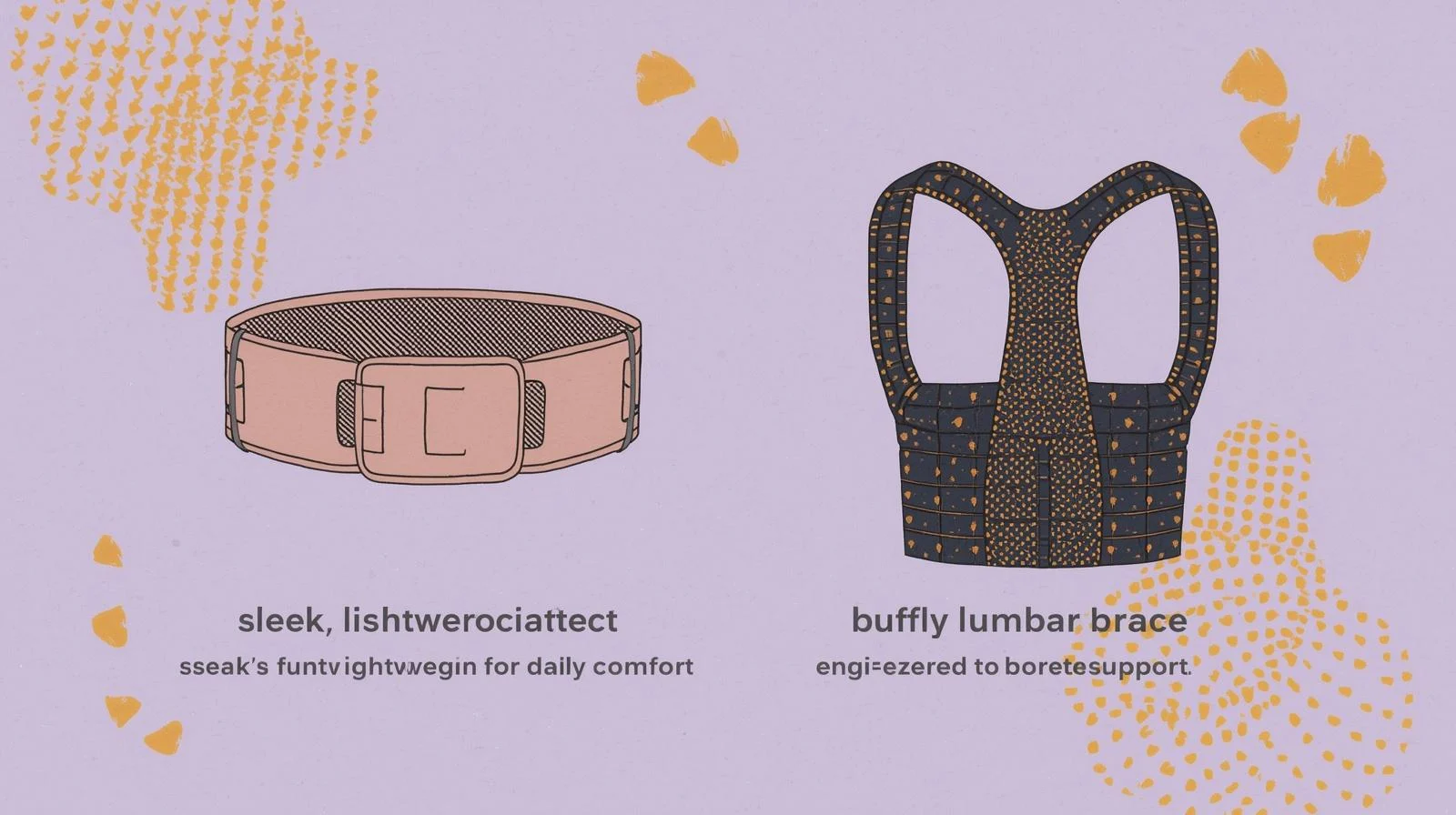
Now, back pain is an extremely common condition in daily life. Most people get lower back strain when sitting, lifting, or driving. As a result, support products such as back support belts and lumbar braces are on the rise. But the confusion is which one they should opt for.
This is related to knowing the difference between back support belt vs lumbar brace before using any type of support. They both offer lower back support, but they function a little differently. A back support belt is designed with flexibility and comfort for daily use. A lumbar brace is stiffer and made for greater support. [1]
In addition, there are also influences on back comfort from posture, sitting habits and lifting methods. Supportive products can be a great help, but it is recommended to also develop good habits on a daily basis. So, select the one that suits your needs and routine. [2]
In this guide, we break down the difference between a back support belt and a lumbar brace. It also helps you choose which one is better for day-to-day use, sitting, lifting and driving.
What Is a Back Support Belt?
A back support belt is a flexible or elasticated support worn around your waist and lower back. It delivers light compression and assists in lumbar stability. These belts are also lightweight and low profile.
The use of a back support belt is for:
- Office work
- Sitting long hours
- Driving
- Household work
- Light lifting
- Daily activities
The belt is flexible, which enables natural movement. You can bend, walk and sit easily. This makes it great for everyday use [6]
Many back support belts also have adjustable straps. This makes for a snug fit with no pinching. Proper fit makes the shoe more comfortable and supportive. [7]
What Is a Lumbar Brace?
A lumbar brace is a firmer support for the lower back. It often features stiffer panels or stays that offer greater structure. As such, it could limit some movement compared to a belt.
Lumbar supports are used to keep the spine resistant and healthy. They can also help stabilize the lower back in certain activities. But they can be bulkier than flexible belts. [7]
A lumbar brace may be worn during:
- Long standing hours
- Repetitive lifting
- Extra posture support
- Activities requiring stability
Some people wear a lumbar brace only for short periods (not all day), because they tend to be stiffer. [8]
Key Difference between Back Support Belt andLumbar Brace
One of the primary distinctions between back support belt vs lumbar brace is their degree of support. Back support belts are lightweight and flexible. Formed and more rigid, a lumbar brace.
Back support belt:
- Flexible support
- Lightweight
- Comfortable for daily use
- Allows movement
- Easy to wear
- Lumbar brace:
- Firmer support
- More stability
- Slightly restrictive
- Bulkier design
- Structured support
So belts are typically better if you wear them every day and need comfort, whereas braces provide much stronger support. [7]
Daily Use Back Support Belt VS Lumbar Brace
Day-to-day tasks demand comfort and flexibility. You sit, walk and bend a lot during the day. As a result, most people prefer to use a back support belt for daily purposes.
A back support belt is more lightweight and can be worn underneath clothing easily. It also allows natural movement. The suit makes it perfect for office and daily work. [2]
Conversely, a lumbar brace might be bulkier. Some use it only when they need a little extra support. So, in order to bring comfort to people’s daily lives they tend to be used more with belts. [7]
Difference between Back Support Belt and Lumbar Brace for Sitting
One of the most common causes of lower back strain is prolonged sitting. Poor posture and not moving can exacerbate discomfort. A good seat and lumbar support will help with posture. [2]
A back support belt maintains the natural position of sitting. It cradles the lower back without limiting movement. This helps it serve well for desk work.
Lumbar braces can also be good for posture. However, it can be rigid after long periods of sitting. Belts are more comfortable for some people on long-term wear. [2]
Differentiate Between a Back Support Belt and Lumbar Brace For Lifting
When lifting objects, this puts pressure on the lower back. Proper lifting techniques must also be utilized. Bending your knees and bringing the object into your body helps lessen strain. [1]
A lumbar brace should offer better support for lifting. It holds the lower back steady, preventing sudden movement.
The back support belt is also helpful but provides lesser support. Best for lite lifting or occasional use So the decision comes down to what you need for lifting. [7]
Comparison between Driving Back Support Belt and Lumbar Brace
When driving too long, it can stiffen the lower back. These strains can be avoided by adjusting the position of your seat and maintaining posture. The recommendation is to also take a break from long driving. [5]
While driving, a back support belt is often preferred as it is flexible and adjustable. It hides well beneath clothing, enabling movement.
A lumbar brace could feel bulky in the sitting position. For this reason, many drivers who long journeys opt for belts. [5]
Benefits of Back Support Belt
There are several advantages of a back support belt:
- Lightweight design
- Flexible support
- Comfortable for daily use
- Allows movement
- Easy to wear under clothes
- Suitable for sitting and driving
It’s all these elements that make it ideal for everyday comfort. [6]
Benefits of Lumbar Brace
A lumbar brace provides:
- Stronger support
- Improved stability
- Structured design
- More posture control
- Support during lifting
It might seem more firm but offers better contoured support. [7]
Who Should Wear a Back Support Belt?
Back support belts may be helpful for:
- Office workers
- Drivers
- Students
- People sitting long hours
- People doing light lifting
- Daily comfort needs
Such users are usually inclined towards flexible support. [2]
Who Would Benefit From a Lumbar Brace?
Here are a few things that may help a lumbar brace:
- People needing extra support
- People lifting frequently
- People standing long hours
- People wanting stronger stability
Such users might have more to gain from stronger support. [7]
How Tight Should It Be?
Both the belts and braces should be able to sit snug. They shouldn’t feel too constricting. You still need to be able to breathe and move comfortably.
Support that is too snuggly will feel uncomfortable. A good fit enhances both comfort and usability. [7]
Can You Wear Them All Day?
People wear back support belts during their daily activities. But they’re generally advised to be removed while sleeping. This means the body can unwind naturally. [7]
Lumbar braces can be worn during the day too. But also comfort and fit nicely. Avoid wearing too tightly. [8]
Comparing Back Support Belt vs Lumbar Brace
Choose a back support belt if:
- You want daily comfort
- You sit long hours
- You drive frequently
- You need flexible support
- Choose a lumbar brace if:
- You need stronger support
- You lift frequently
- You want more stability
- You prefer structured support
The best decision depends on your routine.[6] [8]
Conclusion
Correlating back support belt vs lumbar brace can make you choose whatever is more suitable. Back support belts are flexible and can be worn comfortably on a daily basis. Lumbar braces usually have more rigid and firmer support options. [7]
If you spend your day sitting, driving and low-intensity activity, a belt might be preferable. If you require additional support, a lumbar brace might be better. Maintaining good posture and regular movement also helps enhance comfort. [1] [5]
FAQs
A back support belt is lightweight and flexible for everyday comfort. A lumbar brace is firmer and provides stronger, more structured support for stability. [7]
For daily use, a back support belt is usually more comfortable. It allows movement and is easy to wear during sitting, walking, or routine work. [2]
Yes, many people wear a back support belt while driving. It may help improve comfort and support during long journeys. [5]
Yes, a lumbar brace provides stronger support during lifting tasks. However, proper lifting posture is still important to reduce strain. [1]
Yes, they can be worn during daily activities if comfortable. However, it is better to remove them while sleeping. [7]1
References
- NHS. (n.d.). Back pain.
https://www.nhs.uk/conditions/back-pain/ - NHS. (n.d.). Sitting exercises.
https://www.nhs.uk/live-well/exercise/sitting-exercises/ - Guys and St Thomas’ NHS Foundation Trust. Low back pain.
https://www.guysandstthomas.nhs.uk/health-information/low-back-pain - Mersey Care NHS Foundation Trust. Spinal brace.
https://www.merseycare.nhs.uk/spinal-brace - BackCare / NHS. Back care for drivers.
https://wellbeing.wmas.nhs.uk/wp-content/uploads/2022/06/Back-Care-for-Drivers.pdf - MedlinePlus. Taking care of your back at home.
https://medlineplus.gov/ency/article/002119.htm - Bedfordshire Hospitals NHS Trust. Spinal corsets and supports.
https://www.bedfordshirehospitals.nhs.uk - North Bristol NHS Trust. Spinal orthosis.
https://www.nbt.nhs.uk


