






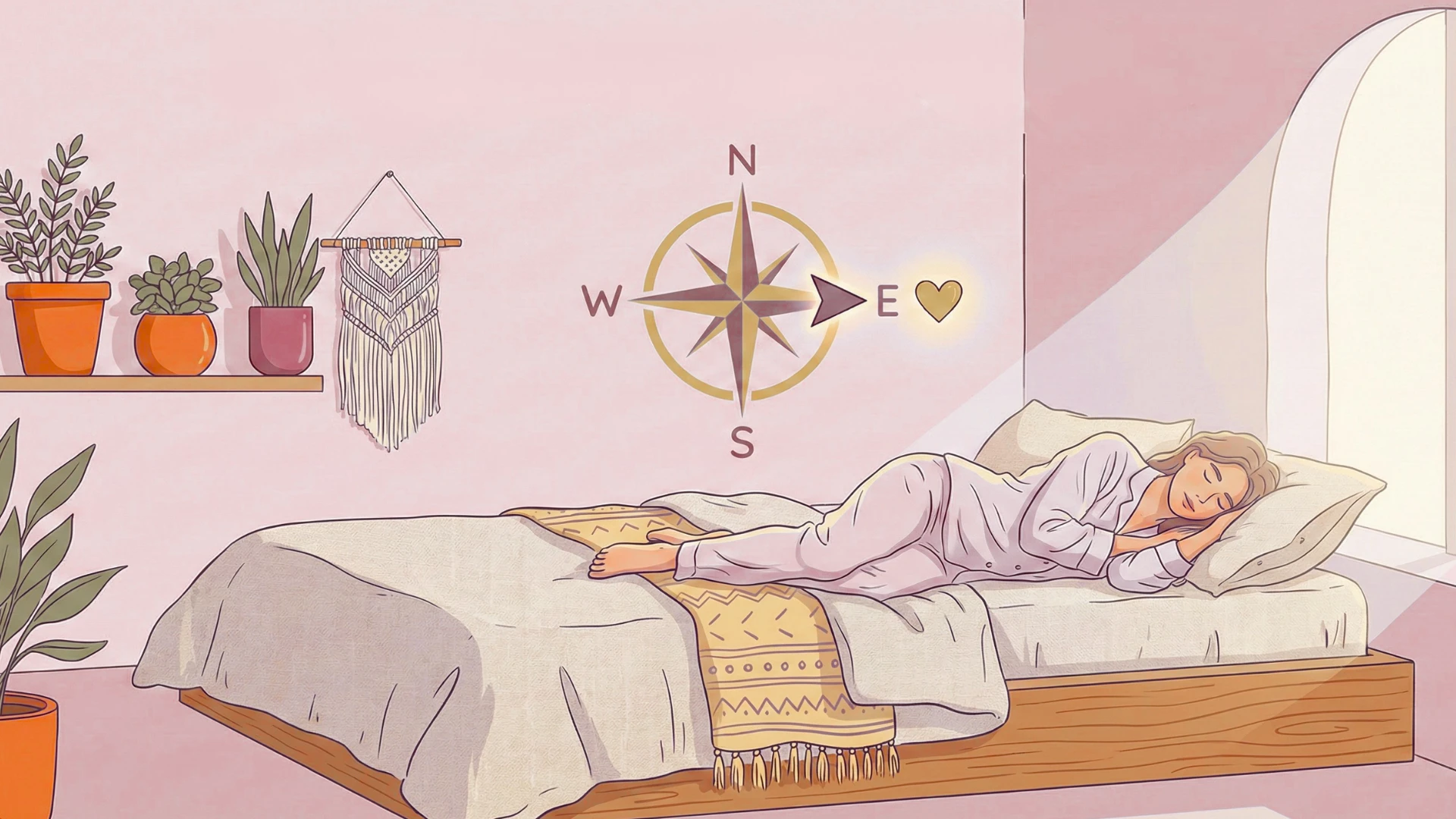
We’ve all had those mornings when we wake up feeling as though we haven’t slept a wink despite spending eight hours in bed. You’ve had your haldi doodh, put the phone away and even dimmed the lights, yet you wake up with either a heavy head or a wired sense of unrest. Amid the bustle of Indian life; the stress of a Bangalore commute and the responsibilities of a multi-generational household, most of us rarely pause to think about something as basic as the best direction to sleep in order to wake up truly refreshed in both mind and body.
As mythic as it may sound, the position and direction in which you sleep can influence not just sleep quality, but overall health too; from how easily you drift into deep rest to issues like snoring, sleep apnea, and even cardiovascular strain.
We believe that living pain-free starts with making the most of the 30% of life you spend in bed. Aligning your sleep with the principles of Vastu Shastra, supported by modern electromagnetic science, can turn an ordinary bedroom into a genuine recovery zone..
Understanding the Science of Sleep Orientation
To figure out why the orientation of your head is significant here, we need to think a bit about the Earth’s magnetic field. In serving notice as a giant magnet, our planet encourages the creation of regional magnetic poles at its North and South. The human body also contains its own magnetic field, and the head is considered as “North” pole while feet is designated as “South”.[6]
When you sleep with your head to the North, your body’s magnetic fields get aligned with Earth’s. Science tells us with the iron that’s in our blood that this alignment might be causing some ‘magnetic interference,’ according to the museum. This can potentially raise blood pressure in the brain a bit and disrupt heart electrical patterns causing interrupted or even stressful dream-nightmares [2].
Such perturbations are stronger in the form of inverse solar cycle on Indian sector (Northern hemispheric region) than the southern hemisphere for a country located between North and South geographical pole.
The 7 Core Benefits of Choosing the Right Sleep Direction
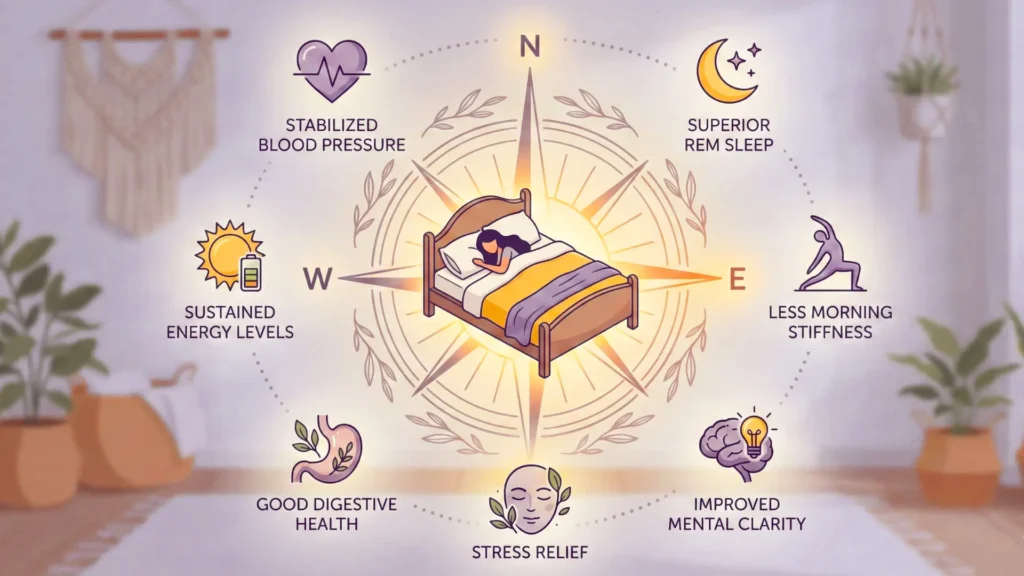
Because of course, aligning your bed properly is about much more than tradition; it has real health benefits that you can feel within days of making the switch:
Stabilized Blood Pressure:
When oriented South, North-pointing is reduced which allows for an easier blood flow and removes the “magnetic tug” on your circulatory system [3].
Superior REM Sleep:
Without the body fighting magnetic backlash, you spend more time in deep, restorative REM sleep.
Less Morning Stiffness:
While a well-supported body also means less tossing and turning, which can help to prevent you from waking up with the dreaded “crick” in your neck or back.
Improved Mental Clarity:
For students and working people, the habit of sleeping with heads in the East direction is more healthy. This enhances memory and brain power.
Stress Relief :
Sleeping in the right direction is crucial to allow parasympathetic nervous system to do its job of managing the stress we experience from our urban Indian lifestyle.
Good Digestive Health:
Direction is important, but some like sleeping on the left side, along with a direction can benefit your digestion post heavy Indian dinner.
Sustained Energy Levels:
You will wake up feeling “light” and not “full”, which are the two different factors to give energy (energy for gym, or good productive shift at work).
Best Direction to Sleep According to Vastu & Science
In India, we have been following the sleeping direction as per vastu since ages and now science is endorsing these directions and giving reasons why they are not only creatively perfect but also do wonders for your physical health.
1. South: The Gold Standard
Having your head toward the South while sleeping is considered the best in the Northern Hemisphere. It sets your body’s magnetic ”North” (your head) at an angle to the Earth’s north, so the energy flows.
Benefits: Helps with deep sleep, reduces blood pressure and is great for anyone dealing with high stress or anxiety [1].
2. East: The Student’s Choice
For children and students it is strongly recommended to sleep with head towards the East. East is the direction of sunrise and filled with positive ‘Prana’ or life forces.
Benefits: Aids in the concentration, memory retention and health of your brain [4].
3. West: The Neutral Zone
If not South and East, West is an appropriate third option. But Vastu says it might prompt what Mann calls “active” dreams or make the dreamer feel more restless than compared to, say, South or East.
Is Your Sleep Direction Wrong?
How will you know if your bed is not placed in the right direction, without using a compass? Here’s what to look for in terms of daily lifestyle:
The Morning Heaviness: You wake up after a solid eight hours and feel like your head weighs 10 kg. This “heavy-headedness” is one of the most common side effects of sleeping with your head to the North.
The “Restless Leg” Syndrome: When you end up kicking your blanket frequently or tossing and turning in the bed after a day of some heavy physical work or Diwali cleaning, then illusion to balance-out from this posture is marred, causing the body to not be at ease at all.
The 3 AM Wake-up: If you are lying awake in the middle of the night for no apparent reason, your bedroom’s sleep direction vastu may be disturbing your natural circadian rhythm.
Directions to Avoid and Their Effects
North: The Danger Zone
In India, it is strongly believed that keeping head towards the north while sleeping is prohibited. Indeed, that world’s magnetic North is so strong that it “pulls” at the iron in your blood.
Scientific Impact: It can cause rise in the intracranial pressure (pressure inside your skull), headaches and long-term strain on the heart [2].
Cultural Note: Some Indian traditions place the dead north facing (soul exiting).
Level 1-3 Progressive Sleep Solutions
Positioning your bed properly is only the beginning. If you want to sleep properly and do good for your health, here is a 3-tier approach.
Level 1: Passive modifications (Environmental Alignment)
Turn the Bed: When possible try clearing all that space under your bed and moving it so your head faces South or East.
The “Vastu Hack”: If you’re in a little Mumbai or Bangalore apartment with fixed bed spaces, just switch the pillow to the other end of the bed.
Step 2: Dynamic Adjustments (Posture and Support)
The Left-Side Rule: When you are where you want to be, and wish to take a nap, sleep on your left side. This helps to avoid acid reflux (just another down-side following a spicy Indian meal) and also puts your circulatory muscles at ease with heart circulation [5].
Use an Orthopaedic Pillow: Direction doesn’t matter if your neck is kinked. An orthopaedic Memory Foam Pillow ensures that while you face South, your cervical spine remains in a neutral, pain-free position..
Level 3: Deep Recovery (Into Long-term Habits)
Alignment Gear: Add a knee spacer or leg pillow to your South sleeping position and eliminate post-scooter ride back pain. This will keep your hips in line and prevent “twisting” of the spine throughout the night.
Regular Schedule: Establish regular sleep and wake time and try to stick there as much as possible, (Circadian rhythm).
How Betterhood Helps: Your Sleep Recovery Companions
A good sleep direction is the beginning, but your gear gives you some structure. Here at Betterhood, we consider our product your body’s recovery “training wheels.”
- Cervical Support: If you’re trying bedroom sleeping instructions yet get up with neck ache, your pillow’s “loft” just isn’t right. Our pillows are form-fitting to cradle your neck’s natural curve.
- Spine Alignment: If you are struggling with back, hip and neck pain from being on the joblong hours, our lumbar or posture support cushions for superior comfort help in getting your spine into proper alignment preparing your body for deep relaxation at night.
- Ideal for The Perfect Sleep: For seniors, finding the best orthopedic mattress topper and sleeping with their head facing South can help relieve joint tension.
When to Seek Professional Advice?
While the direction of sleep can help with many things, it’s no replacement for medical treatment. See a sleep specialist or your doctor if:
- You have Sleep Apnea (chronic snorer who stops breathing while sleeping).
- You suffer from severe, persistent insomnia for more than a month.
- You wake with limbs having gone pins and needles dead (it might not just be direction, it could also be a nerve).
- You have a past history of heart issues and your sleep has taken a dive.
Conclusion, baby steps: The first small step to better living
The direction in which you sleep may seem like a small thing, almost too simple to affect your health, but many friendly spirits and their ancient guardians would tell us otherwise; that health is often molded from exactly these quiet choices. When your body finally stops moving, that’s when it does its most serious repairs. And providing it with a sympathetic environment in the form of alignment that is not excessive, stress that is not too severe and calm surroundings, can help the balance gradually tip your way.
Whether you’re more comfortable with the magnetic science of the Earth or Vastu, age-old wisdom, it all comes down to the same thing: enabling your body to rejuvenate itself. When your neck is properly supported when sleeping, breathing is easier, and muscles aren’t spending the night fighting against gravity; you wake up feeling lighter, not only in body but also in mind.
Something as simple as switching the direction in which you sleep or the side of your pillow tonight can be part of taking that first step toward less-achy days, more-sharp focus and more-sustained energy all day long. These small changes don’t require perfection, just commitment and consistency. Over time, taken together, they combine into a lifestyle that’s all about healing instead of minimizing pain.
Sleep well, listen to your body and keep making those small decisions that lead you closer to a healthier and more balanced life.
Explore More Health & Wellness Solutions:
Want to stay informed about wellness and everyday health issues? Here are some insightful reads to guide you. Explore the links below for practical tips and solutions:
- Struggling to Breathe? Here’s a Simple Postural Drainage Routine to do at Home
- Acupressure Points in the Foot: Benefits, Chart & Pressure Techniques
- How Can Knee Cap Support Help Prevent Injury and Reduce Pain While Running
Frequently Asked Questions
Well, for adults in the Northern Hemisphere (like India), South is usually best for both, as Stride Health writes.
From a Vastu as well as some neurological perspective, East direction sleep is linked with “Pranic” energy that can help provide you with better cognitive function during your school or research days.
Towards the North Region in India The north magnetic field of the Earth can induce an increase in brain blood pressure which causes restlessness as well headache and a heavy feeling on waking [2].
The North is to be kept religiously out of sight of the infirm. South is strongly advised to help control heart rate and reduce wear and tear on aging joints.
Absolutely. If you can’t move the bed frame, just change the location of your pillows so that your head faces in the correct direction. Every bit of alignment helps!
References
- Ruhenstroth-Bauer, G., et al. (1993). Influence of the earth’s magnetic field on resting and activated EEG in humans. Zeitschrift für die gesamte Hygiene und ihre Grenzgebiete, 39(5), 331–334. https://pubmed.ncbi.nlm.nih.gov/8169054/
- Mayo Clinic. (2023). Sleep Hygiene: Tips for Better Sleep. https://www.mayoclinic.org/healthy-lifestyle/adult-health/in-depth/sleep/art-20048379 [2]
- Spine-health. (2022). Choosing the Best Sleep Position for Your Back. https://www.spine-health.com/wellness/sleep/choosing-best-sleep-position [3]
- Cleveland Clinic. (2021). Does the direction you sleep in actually matter? https://health.clevelandclinic.org/sleep-direction/ [4]
- NHS. (2023). Insomnia and Sleep Problems. https://www.nhs.uk/conditions/insomnia/ [5]


