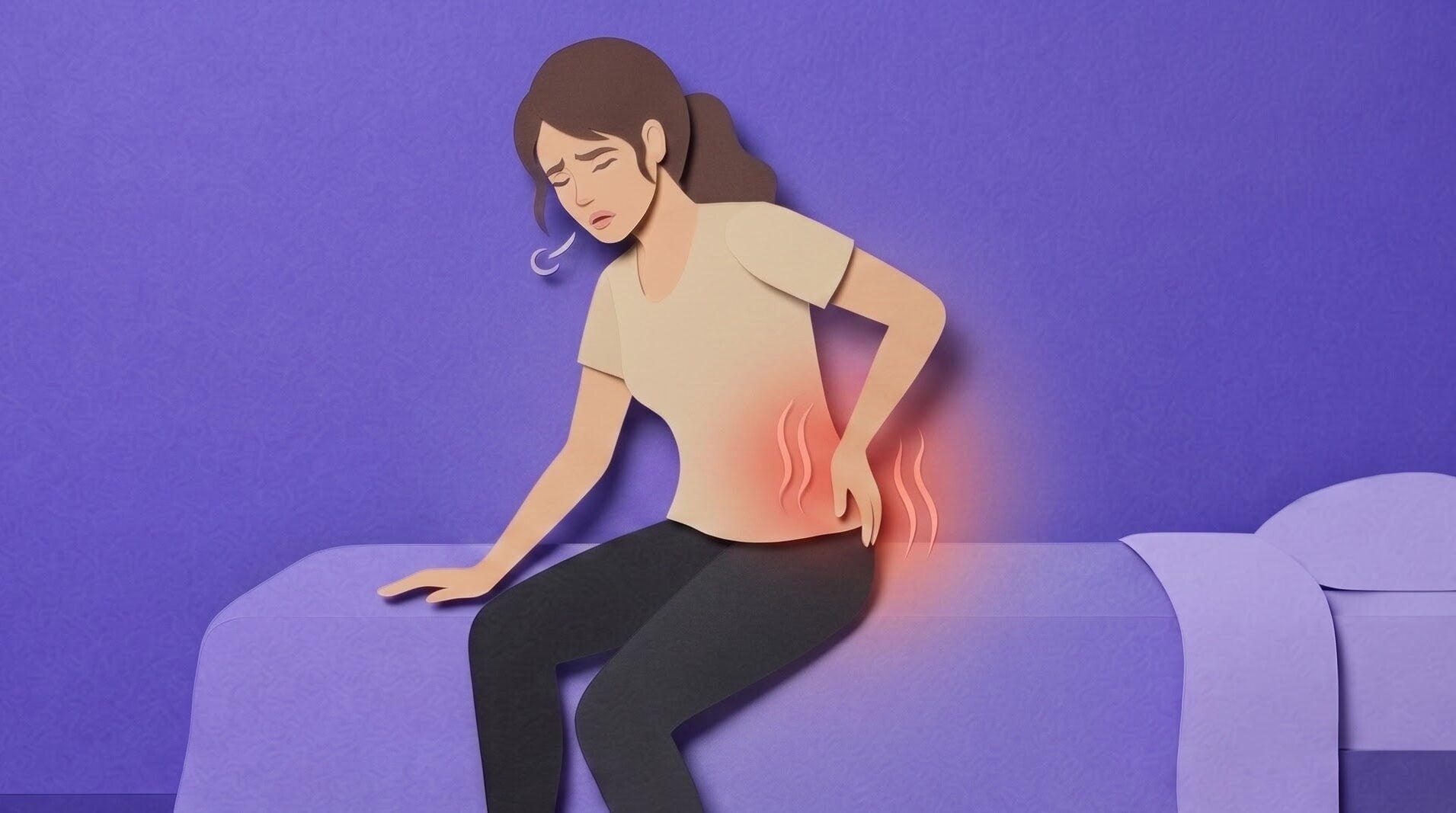
If you wake up every morning needing to stretch a stiff neck before your morning chai, your pillow may be quietly straining your spine. While sleep is essential for cellular repair and energy, an unsupportive pillow forces delicate cervical vertebrae into awkward angles. An orthopaedic pillow maintains neutral spinal alignment so your neck muscles can fully relax overnight. In this guide, we break down the key cervical pillow benefits, from soothing morning headaches to restoring posture, and show you how proper support helps you wake up truly refreshed.
Understanding the Cervical Spine and Its Importance
To appreciate why a cervical pillow for sleep is so vital for morning relief, we first need to look at how your neck works during the day, and what happens to it at night.
Your cervical spine consists of the top seven vertebrae of your spinal column (C1–C7). This delicate structure supports the weight of your skull, protects your spinal cord, and allows you to tilt, turn, and nod your head throughout the day.
Natural Curvature of the Cervical Spine
In a healthy spine, these seven vertebrae form a gentle, C-shaped forward curve known as cervical lordosis. This curve acts as your body’s built-in shock absorber, distributing physical stress evenly across your spine[1].
- The Weight of Your Head: On average, an adult head weighs 4.5 to 5.5 kilograms, roughly equivalent to carrying a bowling ball or a large bag of rice! Without proper curvature, this weight places excessive mechanical pressure directly on your vertebrae, spinal discs, and surrounding muscles.
- The Pillow Pitfall: When you lie down to sleep, maintaining this natural curve is critical. A pillow that is too high pushes your neck unnaturally forward, while one that is too flat forces your head backwards. Over time, this nighttime misalignment strains neck ligaments, triggers muscle stiffness, and accelerates long-term spinal wear and tear.
Muscles and Ligaments of the Neck
Your neck is stabilised by a complex network of muscles and ligaments, including the trapezius, sternocleidomastoid, scalenes, and suboccipital muscles. These muscles work all day continuously to balance your head.[2]
At night, these overworked muscles are supposed to fully relax and rebuild. However, an unsupportive pillow forces them to stay active and tense all night just to keep your head elevated. This continuous nighttime strain is why millions of people wake up with tight shoulders, neck stiffness, and morning headaches, even after 8 hours in bed.
Posture and Its Connection to Cervical Health
Modern habits like prolonged desk work, laptop use, and slouching lead to forward head posture (commonly called “Tech Neck”). For every single inch your head juts forward in front of your shoulders, you add an extra 4 to 5 kilograms of pressure onto your neck muscles![3]
Using an orthopaedic cervical pillow helps counteract these daily posture strains. By cradling your head and supporting the natural curvature of your neck, an ergonomic pillow encourages a neutral sleeping alignment, allowing overworked muscles to relax, easing disc pressure, and restoring your body overnight.
Problems Caused by Using the Wrong Pillow
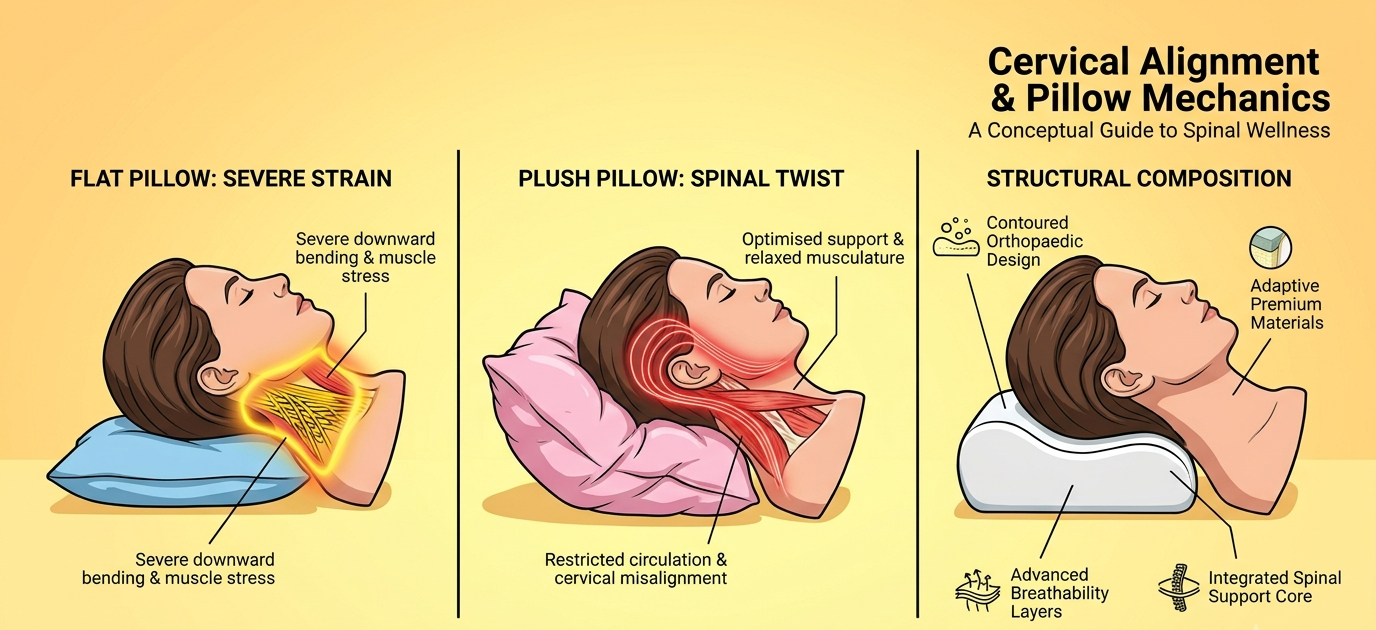
When shopping for a pillow, most of us make choices based on pure comfort, squishing a fluffy plush pillow at a local store or picking a design that matches our bedsheets. What we rarely realise is that a pillow isn’t just decorative bedding; it is a vital orthopaedic support tool for your spine.
Because we spend nearly one-third of our lives sleeping, using an unsupportive or ill-suited pillow causes subtle, cumulative strain every single night. Over time, this nightly misalignment leads to chronic aches, broken sleep, and long-term joint wear and tear.
Morning Stiffness and Chronic Neck Pain
One of the most frequent complaints associated with an ill-fitted pillow is waking up with a rigid, painful neck that restricts your morning movement. When your head rests on an overly plush or completely flat pillow, your neck is forced into an awkward, bent angle for 6 to 8 hours straight.
This awkward positioning restricts local blood circulation and keeps your neck muscles stretched under constant tension. Instead of recovering during sleep, your muscle fibres become inflamed, turning temporary stiffness into persistent, chronic neck pain that drags on throughout your workday.
Unsure if your morning stiffness or headaches are caused by poor sleeping posture? Take our 2-minute interactive Betterhood Neck Pain Assessment Test to evaluate your posture habits, identify spinal strain, and get personalized recommendations from our physio team
Muscle Strain and Tension Headaches
When your neck muscles spend the entire night battling an unsupportive pillow, they become fatigued, overworked, and inflamed.[4]
This continuous strain extends beyond your neck into the trapezius and suboccipital muscles at the base of your skull. This tightness frequently triggers tension-type headaches, characterised by a dull, tight band-like pain around the head, while sending tight, aching knots deep into your upper back and shoulders.
Poor Spinal Alignment Leading to Upper Back and Shoulder Pain
Your cervical spine does not exist in isolation; it connects directly with the thoracic spine (upper back) and directly influences shoulder posture.
A pillow that pushes your head too far forward or lets it sag backward causes misalignment across your entire upper body. This misplaced strain creates discomfort not only in your neck but also in your upper back and shoulder blades, often causing radiating discomfort down into your arms during daily laptop work or long drives.
Sleep Disruptions and Insomnia
Discomfort during sleep is one of the leading causes of frequent nighttime awakenings. People often toss and turn throughout the night trying to find a comfortable angle, failing to realise that their pillow itself is the root problem.
Poor neck support leads to fragmented sleep cycles, reduced deep REM sleep, and heavy morning fatigue. Clinical studies confirm that switching to an ergonomic cervical pillow significantly improves sleep efficiency by eliminating restlessness and maintaining uninterrupted rest.
Long-Term Risks: Spondylosis, Disc Degeneration, and Postural Deformities
Perhaps the most concerning consequence of using an unsuitable pillow is the long-term, structural damage it inflicts on your cervical spine.
Conditions such as cervical spondylosis (age-related spinal wear and tear), herniated discs, and postural deformities are aggravated when your cervical curve is left unsupported night after night. Unexplained shoulder stiffness, nerve compression syndromes, and arm tingling often trace back to chronic poor sleeping posture.
This is why orthopaedic doctors, physiotherapists, and spine specialists routinely highlight Cervical Pillow Benefits as an essential part of long-term treatment and preventive spine care.
Unlocking Real Cervical Pillow Benefits: How Ergonomic Support Restores Your Sleep and Spine
Now that we’ve looked at the delicate anatomy of your neck and how ordinary, unsupportive pillows cause morning stiffness, let’s explore the life-changing side of orthopaedic sleep support.
Understanding real Cervical Pillow Benefits goes far beyond finding a soft place to rest your head at night. Proper ergonomic support directly protects your entire musculoskeletal health, elevates your deep sleep quality, and restores the daily energy you need for work, family, and active living.
Pain Relief and Muscle Relaxation
The most immediate difference you’ll feel after switching to an orthopaedic pillow is the fast relief from stubborn neck and shoulder tension.
- Reduced Neck Strain: Cervical pillows ensure the neck is neither flexed too far forward nor extended backwards, keeping it in a neutral position. This prevents overstretching or compression of soft tissues.
- Alleviation of Shoulder Pain: For side sleepers, cervical pillows provide enough elevation to keep the shoulders in proper alignment, reducing the risk of shoulder impingement or stiffness.
- Better Muscle Relaxation: Because the muscles can fully rest without constantly engaging to support the head, recovery occurs overnight. This reduces inflammation, soreness, and morning stiffness.
Clinical studies show that patients with chronic neck pain report significant improvement in symptoms within just a few weeks of switching to a cervical pillow.
Improvement of Spinal Alignment
Spinal alignment isn’t just about good standing posture; it impacts your entire musculoskeletal system. Your cervical spine forms the top of your spinal column; when it is misaligned overnight, it creates a domino effect that pulls on your upper back (thoracic spine), lower back (lumbar spine), and even your hips.
A quality cervical pillow holds your head, neck, and spine in a straight, neutral line throughout the night. This neutral alignment:
- Distributes Body Weight Evenly: Eliminates painful pressure points on your neck vertebrae and shoulder joints.
- Protects Spinal Discs: Reduces daily friction and mechanical wear on your spinal discs, helping prevent premature degeneration.
- Improves Daytime Posture: Orthopaedic research highlights that neutral sleeping posture is one of the strongest predictors of long-term spine health. Correcting your posture at night naturally trains your body to sit, walk, and stand with better posture during the day.
Deeper, Uninterrupted & Restorative Sleep
Quality sleep isn’t just about the number of hours you spend in bed; it’s about how deeply your body rests. When your pillow fails to support your neck, your body instinctively tosses and turns all night to find relief, disrupting your sleep cycles.
Experiencing full Cervical Pillow Benefits transforms your nightly sleep architecture:
- Fewer Nighttime Awakenings: By removing localised pressure and muscle aches, you fall asleep faster and stay asleep longer.
- More Deep & REM Sleep: Physical comfort allows your brain to spend more time in slow-wave deep sleep, the vital biological phase where cellular repair, hormone balance, and tissue rebuilding occur.
- Waking Up Energised: Instead of dragging yourself out of bed with morning fatigue, you wake up feeling clear-headed, active, and ready for your day.
Clinical sleep studies confirm that orthopaedic pillow users score significantly higher on sleep efficiency indexes and experience far greater overall sleep satisfaction compared to those using standard, unstructured pillows.
Fast Relief from Headaches and Migraines
One of the most surprising and life-changing aspects of orthopaedic support is its ability to reduce chronic headaches. Many morning headaches don’t start in your head; they originate directly in your neck:
- Migraine Frequency: While not all migraines are posture-related, poor sleep quality and neck strain are well-documented triggers. By easing muscular stress and deepening your sleep, orthopaedic support helps reduce migraine flare-ups.
- Tension Headaches: Caused by prolonged overnight contractions in your neck and scalp muscles. When an ergonomic pillow allows these muscles to fully relax, tension dissolves naturally.[5]
- Cervicogenic Headaches: These headaches stem directly from cervical spine dysfunction and nerve irritation. Maintaining proper contour alignment reduces pressure on delicate cervical nerves, soothing radiating pain.
Clearer Breathing & Reduced Snoring
Loud snoring and nighttime breathing interruptions are frequently worsened by poor head placement. When an ordinary pillow lets your head tilt too far backward or slump forward, it constricts your upper airway.
- Unobstructed Airflow: A contoured cervical pillow holds your head and neck in a neutral position that keeps your airway open, preventing soft tissue blockage.
- Better Oxygen Intake: Unrestricted breathing improves oxygenation during sleep, supporting cardiovascular health and helping you wake up feeling clear-headed and refreshed.
- Support for Sleep Apnea: While not a standalone cure, sleep specialists frequently prescribe cervical pillows alongside CPAP therapy for individuals managing mild obstructive sleep apnea or upper airway resistance syndrome.[6]
Targeted Benefits for Special Groups
Certain lifestyle factors and health conditions make proper neck support even more critical:
- Office Workers & Students: Spending hours slouched over laptops or smartphones leads to “forward head posture” (Tech Neck). An orthopaedic pillow counterbalances this daytime strain by restoring natural cervical curvature overnight.
- Seniors & Older Adults: Age-related spinal changes, such as cervical spondylosis, osteoarthritis, and thinning spinal discs worsen when unsupported at night. Ergonomic support slows wear and tear and eases daily joint pain.
- Post-Surgical Recovery: Following cervical spine or shoulder surgery, maintaining precise neutral alignment is vital. Surgeons and physiotherapists routinely include cervical pillows in post-operative rehabilitation plans.
- Expecting Mothers: Postural shifts and hormonal changes during pregnancy place extra strain on the spine. A supportive pillow reduces musculoskeletal stress and helps pregnant women rest comfortably.
- Athletes & Active Adults: Athletic performance depends on cellular repair during sleep. Optimal spinal alignment accelerates muscle recovery and reduces injury risks.
Choosing Your Ideal Match: Types of Cervical Pillows & Sleep Positions
Just as one pair of walking shoes doesn’t fit every foot, no single pillow suits every sleeper. To truly unlock all Cervical Pillow Benefits, choosing a design, shape, and material tailored to your unique body frame and sleeping style is essential.
Whether you struggle with morning neck stiffness, suffer from heat sensitivity during warm summer nights, or sleep primarily on your side, there is an orthopaedic design built for your needs.
Memory Foam Cervical Pillows: Tailored Heat-Conforming Support
Memory foam responds dynamically to your body heat and pressure, softening precisely where your head rests while remaining firm under your neck.
- Key Advantages: Excellent pressure redistribution that cradles your neck without pushing back aggressively. Highly durable and long-lasting.
- Best For: Individuals with chronic morning neck stiffness, those who shift positions during the night, and anyone seeking a plush yet supportive balance.
If you’re looking for ergonomic neck support designed to maintain your spine’s natural curve (cervical lordosis), the Betterhood Orthopaedic Cervical Pillow features contoured memory foam that cradles your head, relieves pressure on C1–C7 vertebrae, and keeps your neck in neutral alignment all night long
Water-Based Cervical Pillows: Fully Customizable Firmness
These pillows feature a soft top layer resting over a sealable water chamber, allowing you to personalise the exact height and firmness level.
- Key Advantages: You control the firmness by simply adding or removing water. The fluid base adjusts automatically as you shift positions during sleep.
- Best For: People whose neck pain severity fluctuates day-to-day, or anyone who struggles to find the “just right” height with standard pillows.
Contour Cervical Pillows: Ergonomic Curve Protection
Featuring a specialised ergonomic shape, typically with a lower centre groove for your head and raised side rolls for your neck, contour pillows are designed specifically to preserve your natural cervical lordosis.
- Key Advantages: Holds your spine in neutral alignment whether you lie on your back or side, significantly reducing morning shoulder strain.
- Best For: Back and side sleepers who need structured, therapeutic neck and shoulder support to prevent nerve compression.
Cervical Rolls: Compact & Versatile Neck Support
Cervical rolls are cylindrical, log-shaped foam cushions placed directly under the curve of your neck.
- Key Advantages: Lightweight, highly portable, and easily combined with flat standard pillows for extra neck elevation.
- Best For: Travel, post-injury physiotherapy rehabilitation, or anyone who wants gentle, minimal elevation while relaxing on the couch or bed.
Orthopaedic Latex Pillows: Cool, Bouncy & Hypoallergenic
Derived from natural rubber sap, latex offers a resilient, firm, and slightly springy feel that instantly supports your head without letting you “sink in” too deep.
- Key Advantages: Naturally resistant to dust mites, bacteria, and mould. Open-cell structure keeps the pillow cool during hot nights.
- Best For: Allergy sufferers, hot sleepers who dislike heat-retaining memory foam, and those who prefer a firmer, buoyant cushion.
Matching Your Pillow to Your Sleeping Position
To experience maximum cervical pillow benefits, your pillow height (loft) must match how you lie in bed:
- For Back Sleepers: Choose a low-to-medium loft pillow with a gentle neck contour. This keeps your chin from tilting downward toward your chest or leaning too far backwards.
- For Side Sleepers: Choose a higher loft pillow with firm side support. This fills the physical gap between your ear and shoulder, preventing painful shoulder compression and neck tilting.
- For Stomach Sleepers: Use a very thin, flat pillow, or transition away from stomach sleeping altogether. Physiotherapists generally discourage sleeping on your stomach, as turning your head sideways for hours places severe twisting strain on your cervical vertebrae.
How to Use a Cervical Pillow Correctly: Maximise Your Cervical Pillow Benefits
To get the full Cervical Pillow Benefits, proper placement is essential. Incorrect positioning can reduce support and trigger unnecessary neck strain.
- Correct Sleep Postures:
- Back Sleepers: Support the natural neck curve (cervical lordosis) without pushing your head forward.
- Side Sleepers: Keep your head aligned horizontally with your spine to prevent shoulder crowding.
- Stomach Sleepers: Avoid where possible, or use a very thin roll to minimise twisting strain.
- Transition Period: Allow a 1–2 week adjustment phase as your neck muscles adapt. Start with short afternoon naps before full-night use.
- Common Mistakes: Using the wrong height (loft), selecting overly soft/hard firmness, or letting your shoulders rest on the pillow instead of your neck.
- 3 Quick Daily Exercises: Pair pillow use with Chin Tucks (strengthen deep flexors), Neck Rotations (mobility), and Shoulder Squeezes (posture correction).
- Expert-Backed Care: Physiotherapists, chiropractors, and spine surgeons routinely prescribe cervical pillows for rehabilitation and long-term posture correction.
Conclusion
Cervical pillows are not mere luxury items; they are scientifically designed therapeutic tools that improve spinal alignment, reduce pain, and enhance sleep quality. Whether you are an office worker with poor posture, an elderly individual with degenerative spine changes, or an athlete recovering from strain, cervical pillows can play a crucial role in musculoskeletal health.
By choosing the right type, using it correctly, and integrating it into a holistic lifestyle approach, users can achieve long-term relief and prevention of chronic disorders.
People are also reading:
- Can Your Sitting Posture Cause Hip Misalignment
- Fast, Targeted Relief: The Science Behind Pain Relief Gel
- Knee Joint Pain Causes
- Knee Cap Uses
- Wrist Pain Exercises for Relief
Disclaimer
The information provided in this guide is for educational and informational purposes only and does not constitute medical advice, diagnosis, or treatment. Always consult a qualified general physician, orthopaedic specialist, or certified physiotherapist before starting new exercises, altering your sleep setup, or using supportive orthopaedic tools, especially if you have underlying conditions such as cervical spondylosis, herniated discs, or chronic joint pain. If you experience sharp tearing pain, persistent arm numbness, dizziness, or loss of muscle strength, discontinue use immediately and seek urgent medical evaluation.
Frequently Asked Questions:
What are the main benefits of using a cervical pillow compared to a regular pillow?
Cervical pillows support the natural curve of the spine, reduce neck pain, improve posture, enhance sleep quality, and may prevent long-term spine issues, unlike regular pillows that often allow misalignment.
Can a cervical pillow help relieve chronic neck pain and stiffness?
Yes. Studies show that cervical pillows significantly reduce chronic neck pain by relieving muscle tension and maintaining correct alignment.
Which type of cervical pillow is best for side sleepers?
Contour pillows or medium-to-high loft memory foam pillows work best for side sleepers, as they align the head, neck, and shoulders properly.
Do cervical pillows reduce snoring and improve breathing during sleep?
Yes. By keeping the airway open through proper head elevation, cervical pillows reduce snoring and may help with mild obstructive sleep apnea.
How long does it take to adjust to sleeping with a cervical pillow?
It usually takes 1–2 weeks for the body to adapt. Some people adjust faster, while others need gradual introduction.
References
- Gordon, S. J., Grimmer-Somers, K., & Trott, P. (2010). Pillow use: The behaviour of cervical pain, sleep quality and pillow comfort in side sleepers. Journal of Manipulative and Physiological Therapeutics, 33(3), 221-228. https://pubmed.ncbi.nlm.nih.gov/19427257/
- Her, J. G., Ko, J. Y., & Jeon, H. S. (2014). Effects of cervical pillow on pain and mobility in patients with cervical spondylosis. Journal of Physical Therapy Science, 26(9), 1519-1522. https://www.sciencedirect.com/science/article/abs/pii/S1356689X09000459
- Fazli, F., et al. (2020). The Effect of Ergonomic Latex Pillow on Head and Neck. (This article cites the Lee & Shin trial). https://pmc.ncbi.nlm.nih.gov/articles/PMC7452254
- Preliminary study on adverse effects of a semi-customized cervical pillow (Hagino et al.) https://scispace.com/pdf/a-preliminary-study-assessing-adverse-effects-of-a-semi-1kdwyju6j4.pdf