






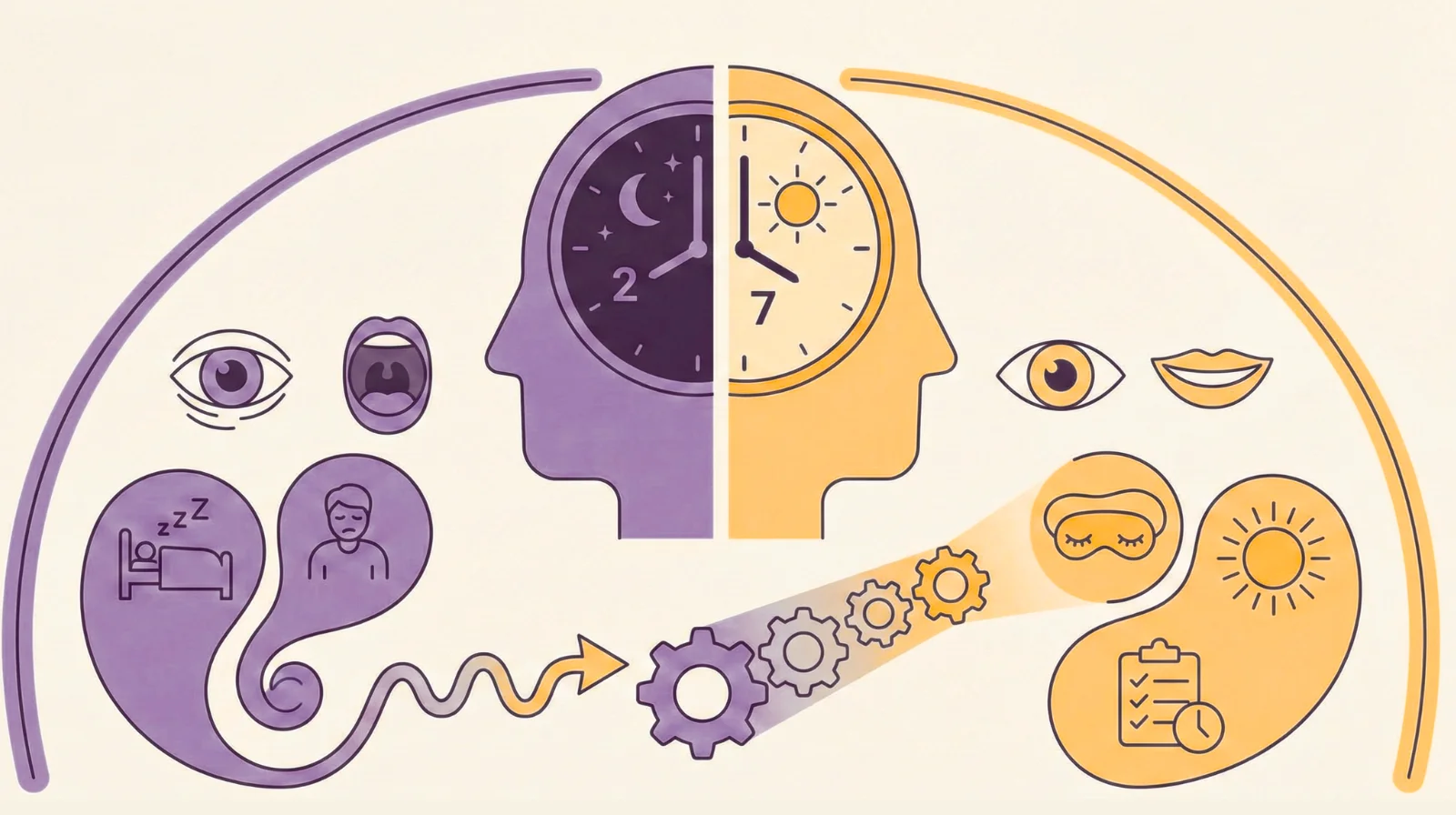
Are you laying wide-awake at 2am, even though you’re exhausted? Or do you find it hard to keep your eyes open at key afternoon meetings but then feel wide awake come bedtime? Wish to know what, why and how you can do to avoid it? If erratic sleep is knocking at your life, then you could have a circadian rhythm disorders which is a rapidly spreading health condition, especially among Indians in our 24/7 work culture.
When your internal body clock is out of sync with your external environment, sleep problems, tiredness and ill-health can ensue. Between 10 and 15% of all adults suffer from some type of circadian rhythm sleep disorder, findings showed in the Journal of Clinical Sleep Medicine [1]. These disorders are on the rise in busy metropolitan Indian cities where night shifts, longer hours of screen time and irregular sleep-wake schedule is a trend.
Learning about circadian rhythm disorders is the initial step to regain restful sleep and optimal health. Through this comprehensive guide, we’ll discuss the various forms, identify key sym unds, and reveal how you can revert to a natural sleep-wake system with proven approaches.
What Are Circadian Rhythm Disorders?
Your circadian rhythm is quite literally your internal 24-hour clock, and it controls everything from sleep-wake patterns and hormone production to body temperature and metabolism. This body clock is most influenced by your brain’s hypothalamus, which responds to light and dark cues with help from the suprachiasmatic nucleus (SCN) [2].
Circadian rhythm disorders occur when your internal clock doesn’t match the external environment. This desynchronization can result from:
- Irregular work schedules (shift work)
- Disruption of the body clock by traveling between time zones
- Genetic factors affecting clock genes
- Age-related changes in circadian function
- Ecological variables such as being exposed to an abnormally high level of artificial light
The impact is not only limited to poor sleep, disturbance of circadian rhythm is associated with an increased risk for obesity, diabetes, cardiovascular disease as well as mood disorders [3]. These conditions are imperative to understand in relation to sleep health.
Types of Circadian Rhythm Disorders
1. Delayed Sleep-Wake Phase Disorder (DSWPD)
The most frequent circadian rhythm sleep disorder , DSWPD means that you fall asleep and wake up much later than normal or often not sleeping until 2-6 AM and waking in the afternoon.
Characteristics:
- Not able to sleep at a good time for public perception
- Very hard to wake for early morning appointments
- Quality of sleep is normal once asleep.
- Present in adolescents and young adults
- Often misdiagnosed as insomnia
Impact: This disorder affects students who can’t attend morning classes and employees who have to combat the 9-to-5 periods it describes. In the competitive system of education in India, this can prove quite debilitating.
2. Advanced Sleep-Wake Phase Disorder (ASWPD)
The opposite of DSWPD, this occurs when people start to feel sleepy very early in the evening (6-8 PM) and therefore go to bed very early but wake up very early, too – as they get older, sometimes at 2-5 AM.
Characteristics:
- Overwhelming sleepiness in early evening
- Rising before dawn, without power to sleep.
- More common in older adults
- Can disrupt social and family life
- Often dismissed as “normal aging”
Impact: Individuals with ASWPD often experience social isolation as a result of falling asleep during evening gatherings and family meals.
3. Shift Work Sleep Disorder (SWSD)
Especially in India’s expanding BPOs, healthcare and manufacturing sectors, which often work on odd hours, like night shifts or rotational shifts, SWSD affects people working at non-traditional timing.
Characteristics:
- Excessive sleepiness during work hours
- Insomnia in attempted daytime sleep
- Shortened total sleep duration (but may be >1-4 hours less than required)
- Difficulty maintaining alertness and concentration
- Increased rates of accidents and errors [4]
Impact: Research indicates that shift workers in India are at greater risk of suffering from health hazards such as digestive disorders, cardiovascular diseases and metabolic complications. Read more about how to manage sleep for shift workers.
4. Jet Lag Disorder
The transient circadian rhythm disturbance precipitated by rapid flight across time zones, jet lag plagues regular business travelers and holidaymakers.
Characteristics:
- Difficulty sleeping post-traveling across 2 or more time zones
- Daytime fatigue and reduced alertness
- Digestive issues and appetite changes
- Mood disturbances and irritability
- Usual (in most cases resolves in days to weeks)
Impact: For Indians commuting abroad for business or academics, jet lag can play a significant role in hampering productivity during important business deals or academic orientation sessions.
5. Irregular Sleep-Wake Rhythm Disorder
This condition is characterized by frequent short naps during the day and night that are not preceded by a consolidated period of sleep.
Characteristics:
- No consistent major sleep period
- Naps all over the old clock block.
- Total sleep duration can be normal but fragmented
- Frequent in dementia and neurodegenerative diseases
- Injuries to the brain may be involved, as well as neurological problems.
Impact: Common in senior Indians with Alzheimer disease or survivors of strokes; a heavy burden on caregivers.
6. Non-24-Hour Sleep-Wake Disorder
This da is most commonly seen in blind, where the circadian rhythm rides on a cycle more than 24 hours, so sleep times move later and later each day.
Characteristics:
- Sleep and wake times grow later each day
- Riding on around of sound and not so sound sleep
- Most prevalent in those who are completely blind
- Rare in sighted people
- Creates significant lifestyle disruption
Common Symptoms of Circadian Rhythm Disorders
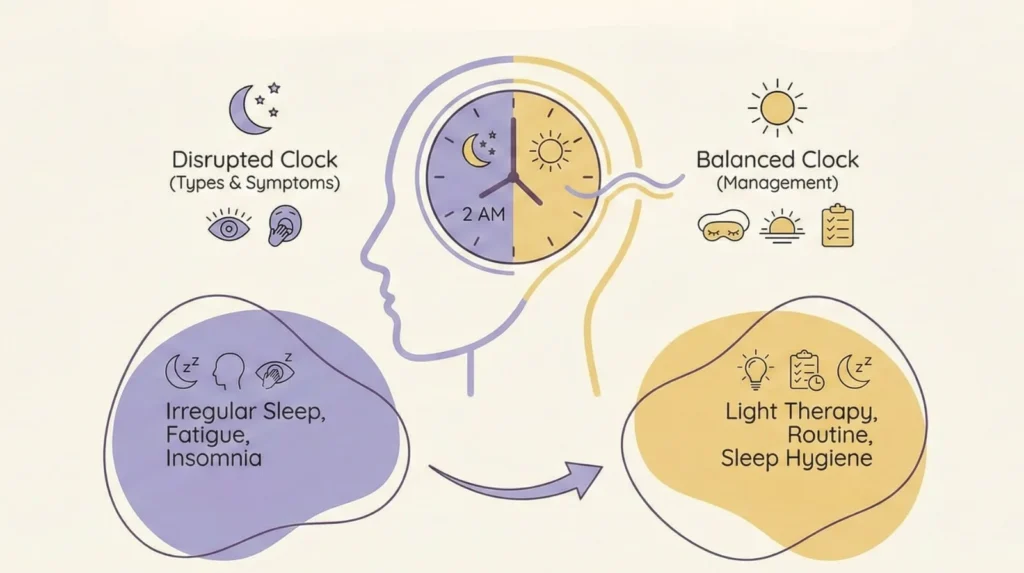
The early recognition of circadian disorders should facilitate their appropriate treatment:
1.Sleep-Related Symptoms:
- Chronic inability to sleep at the times wanted
- Failure to wake at socially-acceptable hours
- Daytime sleepiness despite adequate time allocated for sleep.
- Bad sleep or waking unrefreshed
- Waking frequently during sleep periods
2. Daytime Symptoms:
- Chronic fatigue and low energy
- Lack of focus and impaired mental ability
- Memory problems and decreased productivity
- Changes in mood such as irritability and depression
- Headaches, particularly morning headaches
3. Physical Symptoms:
- Digestive problems and appetite changes
- Difficulty in gaining or maintaining a healthy weight
- Compromised immune system and recurrent sickness
- Increased sensitivity to stress
4. Social and Occupational Impact:
- Difficulty maintaining work schedules
- Tension over conflicting schedules
- Social isolation, and decreased quality of life
- Academic or professional performance decline
If you are having more than one symptom on a chronic basis for three or more months, consult with a sleep medicine specialist. Early detection of circadian rhythm disorders is key to avoiding long-term health problems.
Diagnosing Circadian Rhythm Disorders
Medical evaluation; by a sleep expert to include:
- Comprehensive review of sleep history and symptoms
- Medical history and medication review
- Diary kept for 1-2 weeks of sleep and wake patterns
- Sleep and Psychometrics: Questionnaires measuring the quality of sleep and daily function
Diagnostic Tools:
- Actigraphy: Wearing a wrist gadget like a fitness tracker over 1-2 weeks and it records when you are asleep and awake, giving an objective measurement of your circadian rhythm [5].
- Polysomnography (Sleep Studies): Monitoring of the patient overnight in a sleep lab to determine that other sleep disorders such as sleep apnea are not the cause.
- Dim Light Melatonin Onset (DLMO): Salivary or blood measurements of melatonin at specific times to identify circadian phase. This is the gold standard in diagnosing disorders of the circadian rhythm.
Evidence-Based Management Strategies
1. Light Therapy (Phototherapy)
The most effective intervention for circadian rhythm disorders is strategically scheduled light exposure since it serves as the main zeitgeber (time-giver) for your internal clock [6].
For Delayed Sleep-Wake Phase Disorder:
- 30-minute exposure to bright light (10,000 lux) on awakening
- Performed best when completed within 30 minutes of target waketime
- Utilize specialized light therapy boxes and not ordinary lamps
- Eliminate bright light exposure in the evening hours
For Advanced Sleep-Wake Phase Disorder:
- Bright light in the evening (6-8 PM)
- Helps delay your circadian phase
- Paired with not spending time in the morning initially
Implementation Tips:
- Place light box 16-24 inches in front of face
- Utilize while eating breakfast or reading
- Consistency is crucial, daily use required
- Results usually within 1-2 weeks
2. Melatonin Supplementation
Melatonin supplements can be used strategically to translocate circadian timing but timing and dose are important.
Dosing Guidelines:
- 1 Low (-3 mg) doses are often superior to high doses.
- For DSWPD: Administer 5-7 hours before the planned bedtime
- For ASWPD: Generally not recommended
- For jet lag: Take at bedtime in new time zone[7]
Important Considerations:
- Consult healthcare provider before starting
- Quality varies significantly between brands
- India (Not as regulated as medications)
- May interact with certain medications
To help you find high quality supplements, utilize evidence based resources.
3. Chronotherapy (Sleep Schedule Adjustment)
For DSWPD, chronotherapy consists of advancing in time bedtime for 2-3 h every day until the ultimate bedtime target is achieved.
Example Protocol:
- Day 1: Sleep 3 AM – 11 AM
- Day 2: Sleep 6 AM – 2 PM
- Day 3: Sleep 9 AM – 5 PM
Continue until reaching target schedule
Challenges:
- Requires several days off work/school
- Strict adherence essential
- Risk of reverting without maintenance
- Should be under the care of a sleep physician
4. Sleep Hygiene and Behavioral Strategies
By maximizing your sleep environment and lifestyle, you help to regulate your circadian rhythm:
Essential Practices:
- Keep the same sleep schedule, even on weekends
- Make bedroom dark and cool (18-20°C)
- Cut screen time 1-2 hours before bed (the blue light inhibits melatonin)
- Limit caffeine after 2 PM
- Frequent exercise, but not 3 hours before bedtime
- Eating a heavy meal full of calories right before getting into bed is not recommended.
Indian Context Considerations:
- Get blackout curtains to prevent a process of reluctant early morning awakening by the sun.
- Try using AC or a fan for temperature adjustment
- Limit evening chai consumption
- Plan social activities around a good night’s sleep
For full sleep hygiene recommendations, see evidence-based guidelines.
5. Medications
Non-pharmacologic interventions: If non-pharmacological treatments are not successful, medications can be considered:
For Delayed Sleep Phase:
- Fast-Acting Sedatives to Induce Sleep
- Wake-promoting agents for morning alertness
- Always under medical supervision
For Shift Work Disorder:
- Modafinil or armodafinil for shift work sleep disorder.
- Short-acting hypnotics for daytime sleep
- Use cautiously and temporarily
6. Lifestyle Modifications
For Shift Workers:
- Request consistent shifts rather than rotating
- Take power naps (20-30 minutes prior to shift)
- Exposure to bright light while working
- Sun glasses on your evening ride home during the summer months
- Create sleep-conducive environment during day
For Frequent Travelers:
- Slowly acclimate to time zone Nagrani says it takes roughly one day per hour of time difference for our bodies to get used to a new schedule.
- Strategic exposure to light in the new time zone
- Some acts of war Again, stay hydrated and not wasted on booze
- Consider melatonin supplementation
Workplace Accommodations:
- Discuss about flexible work hours with your employers
- Workplaces may offer distant working environments for patients with disabling DSWPD
- Adjusted academic schedules for students
When to Seek Professional Help
When to see a doctor If:
- Sleeping problems that don;t resolve after three months.
- Symptoms interfere with work or relationships.
- Self-management strategies haven’t helped
- You suspect underlying medical conditions
- Feeling depressed or anxious and also having a problem with your sleep
In India, we have sleep medicine specialist in most of the major cities at hospitals like AIIMS, Manipal hospital, Apollo etc. Some now provide telemedicine consultations for an initial evaluation..
Conclusion
Circadian rhythm disorders do affect quality of life, however with good comprehension and management one can reset their circadian rhythm by returning to a natural sleep-wake cycle and again enjoy peaceful nights. Whether you have delayed sleep phase due to staying up late studying, or shift work disorder thanks to those BPO hours, or advanced sleep phase impacting your social life; getting help that works is available in an evidence-based way.
Consistency is key when it comes to addressing circadian rhythm disorders; having a consistent bedtime and rise time, as well as timed light exposure, appropriate melatonin timing, and good sleep hygiene are regarded the cornerstones for maintaining healthy circadian health.” Although these disorders can be chronic, they don’t have to rule your life.
Keep in mind that circadian health is about more than just sleep, it also affects metabolism, immunity, mood and health overall. When you make circadian alignment a priority, you are investing in long term health and longevity.
For more support in improving sleep quality and overall wellbeing, explore betterhood’s science-backed wellness content. Along with expert guidance on sleep hygiene, stress management, and nutrition for better rest, we offer thoughtfully designed support pillows to promote healthy neck and spine alignment during sleep, helping your body truly recover overnight.
Our calming recovery lotions and topical formulations can also be part of your wind-down routine, supporting muscle relaxation and easing daily tension before bed. Combined with mindful habits and education-driven resources, betterhood helps you move toward deeper sleep, faster recovery, and more energized mornings.
Sweet dreams and healthy rhythms!
Explore More Health & Wellness Solutions:
Want to stay informed about wellness and everyday health issues? Here are some insightful reads to guide you. Explore the links below for practical tips and solutions.
- Best Foods to Eat at Night: Healthy Snacks for Sleep & Digestion
- 10 Effective Home Remedies for Body Pain Relief Naturally
- How Sleep Quality Affects Your Neck Pain: Choosing the Right Pillow
Frequently Asked Questions
Although most of the circadian rhythm sleep disorders are chronic, they can be adequately controlled with therapy. Patients who can adhere to light therapy, schedule and lifestyle changes will have a return to normal function with continued maintenance necessary.
Some types, in particular DSWPD and ASWPD, are hereditary. Mutations in clock genes such as PER3 and CLOCK have been found in those affected, indicating why these disorders may be familial in some cases [8].
You expose yourself to light within 1-2 weeks you will see results but full adaptation may take between 4 and 6 weeks. It takes 1-2 weeks for chronotherapy to reschedule. Patience and consistency are essential.
Blue light filters do help with some circadian disruption, but they’re not the only solution. Some people find avoiding screens altogether before bedtime is more effective, along with getting adequate light therapy at the right times.
If you can work during the day, moving to a daytime schedule may solve your problem over weeks to months. But some people may be genetically more predisposed to working at night, with others susceptible.
References
- American Academy of Sleep Medicine. (2014). International Classification of Sleep Disorders, 3rd Edition. https://aasm.org/
- National Institute of General Medical Sciences. (2023). Circadian Rhythms. https://www.nigms.nih.gov/education/fact-sheets/Pages/circadian-rhythms.aspx
- Logan, R. W., & McClung, C. A. (2019). Rhythms of life: circadian disruption and brain disorders across the lifespan. Nature Reviews Neuroscience, 20(1), 49-65.https://pubmed.ncbi.nlm.nih.gov/30459365/
- Kecklund, G., & Axelsson, J. (2016). Health consequences of shift work and insufficient sleep. BMJ, 355, i5210.https://www.bmj.com/content/355/bmj.i5210
- Morgenthaler, T. I., et al. (2007). Practice parameters for the clinical evaluation and treatment of circadian rhythm sleep disorders. Sleep, 30(11), 1445-1459.https://academic.oup.com/sleep/article-lookup/doi/10.1093/sleep/30.11.1445
- Burgess, H. J., & Emens, J. S. (2016). Circadian-Based Therapies for Circadian Rhythm Sleep-Wake Disorders. Current Sleep Medicine Reports, 2(3), 158-165.
- Healthline. (2023). Melatonin for Sleep: Does It Work? https://www.healthline.com/nutrition/melatonin-and-sleep
- Takahashi, J. S. (2017). Transcriptional architecture of the mammalian circadian clock. Nature Reviews Genetics, 18(3), 164-179.
- Mayo Clinic. (2023). Circadian Rhythm Sleep Disorders. https://www.mayoclinic.org/diseases-conditions/circadian-rhythm-sleep-disorders/
- Harvard Medical School. (2023). Sleep and Health. https://sleep.hms.harvard.edu/


