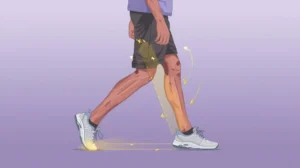







There is a common misconception in the fitness world that if you aren’t pounding the pavement, dripping in sweat, and gasping for air, you aren’t really working out. But anyone who has woken up with stiff knees after a long run knows that high-impact exercise comes with a price tag.
Enter cycling. It’s one of the rare exercises that somehow combines all of those benefits while using your heart and lungs and major muscle groups, not to mention it’s somewhat easier on the joints than running. Whether you’re pedaling on a stationary bike in your living room or flying down the open road with the wind in your hair, cycling occupies a specific “sweet spot” in the world of fitness. It’s hard enough to really develop endurance but gentle enough that I can do it more less forever.
For the rest of us; those who want to stay active without commuting physical pain and large anxieties about our own mortality, cycling is a therapy that we enact upon ourselves. Done properly, it is fitness that is kind to the joints at its best.
You’re building up the structural integrity required for daily life while keeping your cardiovascular system going. But how pedaling a bike leads to better knees and a healthier heart is less obvious. Let’s break down the mechanics.
Does Cycling Hurt Your Knees, or Is It Good for Joint Health?
“Is cycling good for knees, or will it wear them out faster?” This is one of the most common questions ever. The answer is, absolutely yes, it’s awesome for your knees as long as you’re doing it with the right form. Unlike running or high-impact aerobics, in which your joints absorb the shock of moving and hitting the ground with each stride or step, cycling is non-weight-bearing.
Cycling Offers Low-Impact, High-Value Exercise
The magic for your knees in cycling is mechanical. The bike carries you, not your legs.
No Pound-A-Joint: With the weight off your body being supported by a saddle or seat and a comfortable backrest.…your legs, knees and bangin’ joints are impact free. This makes it one of the best low impact exercises for knees as you can still elevate your heart rate without that “ground reaction force”- which, if you have arthritis or existing injuries, is known to exacerbate osteoarthritis and further injury station [1].
Regulated Movement: Cycling helps to guide the knee through a regulated range of movement. This smooth, constant movement stirs the joint surfaces with synovial fluid; nature’s WD-40 and minimizes friction and stiffness so that the cartilage stays healthy and nourished.
How Is Cycling Good for the Muscles That Protect Your Knees?
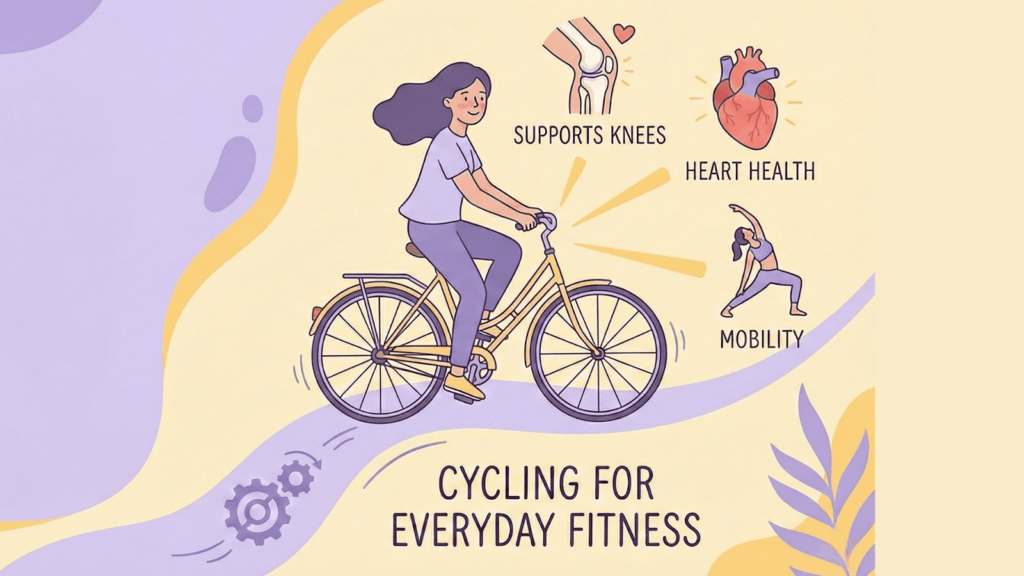
You would think that saving your knees means giving them a rest, but the opposite is true. Your knees are almost entirely dependent on your surrounding muscles to act as shock absorbers. If your muscles are weak, your joint gets pummeled. Cycling joint benefits primarily positions because it allows for the specific strengthening of these muscles, but with a reduced chance of injury.
- Quadriceps Dominant: The downward push during pedaling is predominantly powered by your quadriceps (the big muscles on the front of your thigh). Strong quads are the bodyguards of your knee cap (patella), and keep it from tracking inappropriately and causing pain.
- Hamstring Support: On the upstroke (if you’re clipped in or have some sort of toe cage) and as you transition back to 0s at the bottom of the pedal stroke, your hamstrings are working to pull that pedal backwards. Proper muscle balance between the front and back of the leg is very important for healthy knees.
- Glute Engagement: While cycling can be leg-heavy, maintaining proper form requires that more than just your legs do the work; you want power coming from the glutes (your booty muscles). It helps to engage glutes, which prevents your knees caving in toward the midline as you pedal- a frequent cycling mechanical issue that can cause injury.
By creating this “muscular corset” around the knee, cycling means that when you do walk, run or climb stairs for the rest of your life, it’s the muscles – not the bones, that take up all the slack.
What Are the Cardiovascular Advantages of Regular Cycling ?
As your legs do the heavy work, your heart is also getting a major workout. Cycling for the heart is such an effective exercise because it’s rhythmic and aerobic (capable of being sustained for long periods) so you keep your heart pumping at that ideal training level.
Better blood flow:
Moving your legs works like a pump to send blood back up to the heart. This is good for your general vascular health, and over time it can contribute to reducing blood pressure because loosey-goosey arteries may also be most responsive to BP-managing drugs.
Less Inflammation:
Chronic inflammation is a leading cause of heart disease. Consistent, moderate exercise such as cycling has been found to lower the levels of C-reactive protein in your body. Thus cooling down inflammation and protecting artery walls [2].
Heart Strength:
Your heart muscle gets stronger, the more efficient your heartbeat becomes and the greater volume of blood that pumps from your heart. A more powerful heart delivers more blood with each heartbeat, resulting in a lower resting heart rate; an essential measure of longevity and aerobic fitness.
Can Cycling Improve Overall Mobility and Flexibility?
We tend to associate mobility with yoga or stretching, but the daily cycling fitness gains can also be found in our ability to move more on two legs. Stiffness is the enemy of aging; as we age, our connective tissues close.
Bicycling counters this by moving the hips, knees and ankles repetitively through a fluid range of motion. This is not merely stretching muscles; it’s mobilizing the joint capsules themselves. With the hip’s sitting in flexion all day (people sit at desks all day), the hips become chronically tight or shortened and so do their muscles. Cycling may be done sitting, but on the active extension and flexion of your leg muscles can help to ease stiff hip joints than sitting in a stationary position.[3]
In addition, with the increased blood circulation to muscles, they become warmer and therefore more flexible. A light, 15-minute spin is why you often hear this recommended as a warm-up before laying into some deep stretching or mobility work, it literally preps the tissue itself to be safely stretched.
What are the most common cycling mistakes to lead to knee pain?
And even though it seems to be a fit and active form of outdoor recreation, cycling can leave you in pain if your equipment isn’t right. This is not the exercise’s fault, but rather ergonomics. Knowing cycling posture tips is essential: the last thing you want to do is turn a healthy hobby into something that’s bad for you.
Bike Setup Errors: It’s the relationship between the body (your body) and the bike that can make or break whether you pack on muscle or grind cartilage.[4]
Seat Height: If the seat is too low, your knee will remain overly bent at the peak of the pedal stroke, adding unwanted stress on the patella. (If it’s too high, your hips shift from side to side as you press the pedals down, putting strain on your lower back and hyperextending the knee.) Ideally you should have slight flexion (25-30 degrees) in the knee with the pedal at bottom [3].
Handlebar Reach: This is when cycling vs walking for joints starts to get interesting. This should not surprise: walking is upright, and cycling is forward-leaning. If your handlebars are too distant or low, you may have to hunch your shoulders and crane your neck. This “turtle neck” position can cause tension in your upper back and neck, which will distract you from focusing on your legs.
Safe Way to Pedal (Joint Health) for Beginners
If you are a newcomer to the saddle, then eagerness is good but patience is better. You’d never jump out of the car and into a 20-mile ride with no physical prep or conditioning (without incurring some tendinitis, at least).
Begin with Low Resistance:
Do not mash the big gears. Try to keep a higher cadence at a lower resistance. Slower grinding against high resistance applies load to the knee joint, while fast spinning transfers the load to your cardiovascular system.
Warm Up Right:
Pedal an easy rate for 1/3 of your riding time. This allows the synovial fluid to coat your joints, and the blood vessels to dilate, before you begin pushing for speed or power.
Listen to Your Body:
A burning sensation in muscles is good; sharp pain in joints is bad. If you get a sharp pain on the outside of your knee (IT band syndrome) or under your kneecap, stop and inspect your bike fit.
Conclusion
Cycling, as a sport, demonstrates fitness does not need to punish in order to be productive. It’s an amazing resource that takes you from rehab to high performance training. It supports your weight and challenges your muscles, providing a sustainable route toward stronger knees, a resilient heart and body that moves with fluid ease.
Riding your bike to work, on a weekend trail ride or spinning along with television: Cycling is more than exercise, it’s sustainable movement therapy when practiced mindfully. It allows you to invest in your future mobility and help make sure your joints age as gracefully as your spirit.
betterhood: This is How We Enable You to Live Pain-Free
Where cycling addresses the “active” dimension of your health, betterhood is about the vital ”recovery” phase. You see, it’s actually after you’ve dismounted your two-wheeled steed that those things called “muscle repair” and “joint strength,” which we’re all so desperately seeking from a good ride, actually take place, when the body is at rest or asleep.
If you complete an awesome ride, only to immediately follow by slumping on the couch with terrible posture or sleeping in a position that folds your neck like a cheap hot dog bun, you’re counteracting everything your body is trying to do. betterhood promotes active recovery through joint alignment and muscle ease.
With our alignment-focused pillows, posture-support essentials, and knee support solutions, betterhood helps your body stay in neutral, recovery-ready positions after movement. Supportive knee sleeves reduce strain during and after activity, while our pain-relief range helps relaxed muscles recover faster, so the freedom you feel on the bike carries comfortably into the rest of your day.
Explore More Health & Wellness Solutions:
Would you like to be up-to-date on everyday health and wellness issues? Here are some interesting pieces to help you. Follow the links below if you want practical tips or solutions:
- What Causes Back Pain? Understanding Root Triggers & Prevention Tips
- 10 Effective Home Remedies for Body Pain Relief Naturally
- Wrist Support Braces Explained: Protocols for Pain Relief
- Pillow for Neck Pain: Best Contour Pillow Every Side Sleeper Needs
Frequently Asked Questions
Generally, yes. Cycling is non weight bearing and therefore the compressive stress on knee cartilage is far less than in a high impact activity such as running, so it’s safer for those with existing joint problems.
You should shoot for 30 to 45 minutes of moderate cycling a day, just for your overall health. This length of time is enough to stimulate your heart, cardiovascular and respiratory systems as well as burn calories without straining the joints or needing loads of recovery.
It could, if your bike fit is bad. In particular, a too low saddle raises pressure behind the kneecap (patellofemoral pain) . But for the properly fitted and formed, cycling tends to be restorative rather than reductive.
Absolutely. Cycling ranks among the best exercises for seniors because it increases leg and core strength and puts extra weight on a joint, which helps deter fall-inducing fractures; instead of walking or running, you can boost your heart rate while cruising south eight miles to look at tulips.
Yes, the benefits for your knees and heart are the same for exercise in indoor cycling as it is for outdoor cycling. Here you’ve got a controlled environment where you don’t have to worry about balance, traffic or lumpy terrain and it’s the perfect place for newbies.
References
- Arthritis Foundation. (n.d.). Cycling: Indoor and Out. Arthritis Foundation. https://www.arthritis.org/health-wellness/healthy-living/physical-activity/other-activities/biking-exercise-arthritis
- Harvard Health Publishing. (2016, August). The top 5 benefits of cycling. Harvard Medical School. https://www.health.harvard.edu/staying-healthy/the-top-5-benefits-of-cycling
- Cleveland Clinic. (2021, December 21). Aerobic exercise: What it is, benefits & examples. https://my.clevelandclinic.org/health/articles/7050-aerobic-exercise
- Hospital for Special Surgery. (2020, December 21). How to set up an exercise (or spin) bike properly. https://www.hss.edu/health-library/move-better/set-up-exercise-bike
- Oja, P., et al. (2011). Health benefits of cycling: a systematic review. Scandinavian Journal of Medicine & Science in Sports, 21(4), 496–509. https://pubmed.ncbi.nlm.nih.gov/21496106/
- Hospital for Special Surgery. (2022, September 18). What to know about cycling with osteoarthritis. https://www.hss.edu/health-library/move-better/cycling-with-osteoarthritis