





When sleep begins to falter, most people turn their attention to the bedroom: darker curtains, a quieter room, better mattresses. But before you even hit the pillow, your body is well on its way to deciding whether sleep will come easily or feel like an act of war.
The food itself serves as a biological signal. What you eat and when, and how consistently you eat can deliver quieter cues to your brain about whether it is time to stay alert or wind down. Conventional eating habits such as late dinners, sugary foods, caffeine hiding in surprising places, frequently do not align with the body’s natural release of melatonin, the hormone that determines when you fall asleep (1).
It is also one of the places many people go wrong with sleep supplements. The body’s sleep rhythm cannot be jerked like a dog on a leash. Smashing it with melatonin pills might work in the short term, but it does not gradually strengthen the body’s innate capacity to fall asleep and wake up. For food that helps with melatonin production, it’s a slower method but ends up building long term sleep stability as opposed to dependence (2).
In this guide, we delve into how melatonin-rich foods work, nutrients that help support its production, perfect meal and snack timing for optimal natural production in your body as well as smart pairings (to leverage on what you eat) and common mistakes that quietly sabotage good sleep.
What is Melatonin and Why It Matters for Sleep?
Melatonin is frequently called a “sleep hormone,” but that moniker is misleading. Melatonin does not sedate you. It’s not like you take a pill and fall asleep.
Melatonin is a timing hormone. It sends a signal to your body when it’s time to sleep, not how much you should be sleeping (3).
Melatonin is produced by the pineal gland and increases naturally in the evening when light exposure decreases, alerting your circadian rhythm that night is falling. When melatonin is released at the right time, going to sleep feels normal instead of by force.
Diminished or mal-timed melatonin doesn’t just interfere with sleep. Studies have associated alterations in melatonin rhythms with mood disturbances, decreased immunity, compromised metabolic fitness and daytime sleepiness (4). If it is about an overall body regulation, it is really not just about the comfort at bed time.
How Food Influences Melatonin Production?
Tryptophan: The Starting Point
The process of making melatonin starts with tryptophan, an essential amino acid that must be obtained from food. Tryptophan is the source your body uses to make serotonin, which then becomes melatonin (5).
Some foods are high in natural tryptophan, such as:
- Oats
- Nuts and seeds
- Bananas
- Chickpeas
- Dairy products
But simply consuming tryptophan doesn’t mean you’ll sleep better. More nutrients and appropriate metabolic environment is required by the body to carry out the process.
The Serotonin: Melatonin Pathway
First, tryptophan is transformed into serotonin, a calming neurotransmitter that influences mood and stress management (6). Serotonin is then transformed into melatonin in the dark.
That is, sleep begins before bedtime. The habits during the day that allow your body to make serotonin; well-balanced meals (with some carbohydrate), and light exposure are also influential in how much melatonin your body can create when night time rolls around (7).
The Role of Light and Meal Timing
Release of melatonin is also very responsive to light. Late-night eating under bright artificial light sends mixed signals to the brain. We’re taking in fuel, but darkness says you should start sleeping. This divergence can attenuate melatonin secretion (8).
Dinner serves as a circadian signal. Regular timing conditions the body to be readying for rest at certain times. This internal clock is disturbed by irregular eating patterns.
Best Melatonin-Rich Foods to Support Better Sleep Naturally
1. Tart Cherries
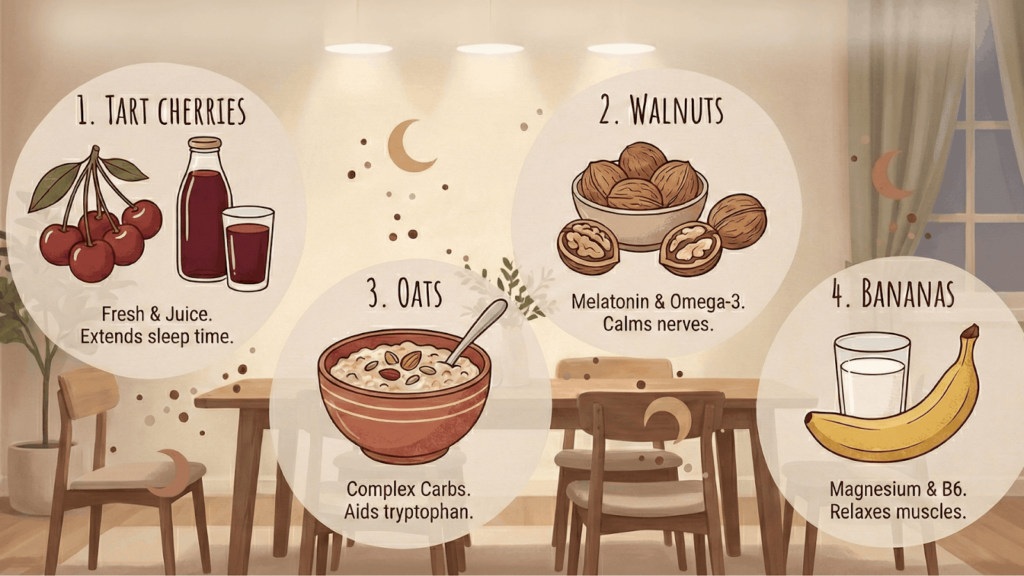
Sour cherries are among the few foods that contain melatonin in significant amounts. Studies have found that tart cherry juice can help extend sleep time and enhance overall sleep efficiency among adults suffering from insomnia symptoms (9).
Best forms:
- Fresh tart cherries
- Unsweetened tart cherry juice
- Chunky pieces of tart dried cherries (sparingly amounts)
2. Walnuts
Melatonin is found in walnuts as well as omega-3 fatty acids which are good for the brain and nervous system (10). This duet can quiet nighttime nerve activity.
Serving suggestion: A small handful (approximately 7-10 walnut halves) in the evening is enough.
3. Oats
Oats contribute to sleep indirectly because the complex carbohydrates in oats can help tryptophan break through the blood-brain barrier (11).
Best evening options:
- Warm oatmeal with milk
- Oats with banana slices
- Overnight oats with nut and seeds
4. Bananas
Bananas contain magnesium and vitamin B6, which help convert tryptophan into serotonin (12). Magnesium also helps relax muscles, which aids against physical restlessness leading into sleep.
- Best timing: 1-2 hours before bed
- Portion: One medium banana
Foods That Help Increase Melatonin Levels (Indirect Boosters)
Magnesium-Rich Foods
Magnesium It’s very important to calm down your nerves and sleep better. It has a crucial role in calming the nervous system.(13)
Good evening options include:
- Leafy greens (spinach, Swiss chard)
- Pumpkin seeds
- Almonds
Vitamin B6 Sources
Vitamin B6 is a necessary cofactor in the synthesis of serotonin (15). Without enough B6, melatonin production wanes.
Food sources include:
- Chickpeas
- Sunflower seeds
- Whole grains
Zinc and Calcium for Sleep Regulation
Zinc supports melatonin release, while calcium helps the brain use tryptophan effectively (15).
Together, these minerals support sleep depth and nighttime hormonal balance.
Best Evening Carbohydrates That Support Melatonin Production
Carbohydrates have also been proposed to reduce competition of other amino acids in the blood stream so that tryptophan can then more easily reach the brain.
Best night-time carbs:
- Oats
- Brown rice
- Sweet potatoes
Portion control matters. Too many carbohydrates can lead to spikes in blood sugar that interfere with sleep.
Best Time to Eat at Night for Better Sleep Quality
Ideal Evening Meal Timing
When you eat 2-3 hours before bed, your digestion will slow down as you sleep. Too much digestion too close to bed also competes with the body’s ability to rest.
Late-Night Snacking: Helpful or Harmful?
If hunger is disrupting sleep, a small snack can help. But sugary or heavy snacks generally exacerbate nighttime awakenings.
Best options:
- Banana with nuts
- Oats with milk
- Yogurt with seeds
Foods and Actions That Halt Melatonin Production
Caffeine and Hidden Sources
The effects of caffeine on melatonin may last up to 6-8 hours, however the ‘not-so-obvious sources’ are chocolate, green tea and some pain medications.
Alcohol and Sleep Fragmentation
Alcohol makes people drowsy, but it decreases total REM sleep and fragments sleep late in the night .
Heavy, Spicy, and Ultra-Processed Foods
When eaten these foods elevate digestive stress and body temperature, negatively impacting melatonin signaling.
Sample Melatonin-Friendly Evening Meal Ideas
Light dinners:
- Brown rice, steamed veggies, grilled tofu
- Lentils with sweet potato
- Grilled fish with greens
Bedtime snacks:
- Warm oats with banana
- Yogurt with walnuts
- Tart cherry juice (small glass)
However, both non-vegetarian and vegetarian options are good when we have a balanced meal.
Can Diet Replace Melatonin Supplements for Sleep?
For most people, bringing diet and lifestyle into alignment is sufficient to help restore healthy melatonin rhythms. Over-the-counter supplements can be useful in the short term to overcome jet lag or shift work, but relying on artificial melatonin in the long run may reduce your body’s own production of the hormone.
Food stimulates resilience; supplements overrule signals.
Who Benefits Most From Melatonin-Rich Foods ?
- People with delayed sleep schedules
- Shift workers
- Older adults with reduced levels of melatonin
- Stress-affected sleepers
Supporting Better Sleep Beyond Nutrition
Food does best with light and timing as well as a comfortable body. Nighttime pain that supersedes hormonal sleep signals can be brought on by slouching).
At Betterhood, they see sleep comfort as feeding the entire body, not just nutrition, a relaxed nervous system sleeps better when it feels like the spine is secure and aligned.
Conclusion: Melatonin; Guiding Your Sleep Rhythm Back Into Balance
Good sleep starts with feeling safe, nourished and supported by the body. Foods with melatonin do not knock you out; they gently and gradually guide your internal clock back into rhythm. Small, regular choices like what you eat when you eat, how often you eat, have far more impact on your sleep than any single supplement.
Perfection isn’t required. Consistency is. Over time, the cumulative effect of these quiet nightly signals is deeper, more restorative sleep that feels natural, rather than a reward.
Explore More Health & Wellness Solutions:
Would you like to be up-to-date on everyday health and wellness issues? Here are some interesting pieces to help you. Follow the links below if you want practical tips or solutions:
- What Causes Back Pain? Understanding Root Triggers & Prevention Tips
- 10 Effective Home Remedies for Body Pain Relief Naturally
- Wrist Support Braces Explained: Protocols for Pain Relief
- Pillow for Neck Pain: Best Contour Pillow Every Side Sleeper Needs
Frequently Asked Questions
Sour Cherries are one of the few natural sources of melatonin in food, and studies suggest it significantly improves sleep duration. And walnuts, oats and bananas provide additional help for melatonin-making nutrients.
Yes. Bananas contain magnesium and vitamin B6, both of which assist in muscle relaxation and convert tryptophan into serotonin and melatonin. This may help to soothe restlessness and contribute toward a more peaceful sleep onset.
Eat your largest meal of the day 2–3 hours before you go to bed so that the normal speed of digestion can help prepare you for sleep. If hunger is interfering with sleep, though, it’s O.K. to have a small snack closer to bedtime, just make sure that the snack doesn’t contain sugar and is easy to digest.”
Yes. Melatonin supporting whole foods can be consumed everyday without building a dependency and inhibiting the natural hormone production. They gradually strengthen your body’s natural sleep–wake rhythm over time.
Sleep is affected by factors other than diet; light exposure, stress levels, posture, pain and erratic sleep timing can all interrupt the release of melatonin. Nutrition is always best in conjunction with good sleep habits and a supportive sleep environment.
References
- Nunes., dos Santos, (2024). Association of evening eating with sleep quality and insomnia among adults in a Brazilian national survey. Sleep Science, https://pmc.ncbi.nlm.nih.gov/articles/PMC11651824/
- Meng, X, Zhou, D., (2017). Dietary sources and bioactivities of melatonin. International Journal of Molecular Sciences, 18(7), Article 1411. https://pmc.ncbi.nlm.nih.gov/articles/PMC5409706/
- National Heart, Lung, (2022). How sleep works: Your sleep/wake cycle. https://www.nhlbi.nih.gov/health/sleep/sleep-wake-cycle
- Cipolla-Neto & Amaral, (2018). Melatonin as a hormone: New physiological and clinical insights. Endocrine Reviews, 39(6), 990–1028.https://academic.oup.com/edrv/article/39/6/990/5094958?login=false
- Arendt, J. (2012). Biological rhythms during residence in Antarctica. Autonomic Neuroscience. https://en.wikipedia.org/wiki/Melatonin
- Young, S. N. (2007). How to increase serotonin in the human brain without drugs. Journal of Psychiatry & Neuroscience, 32(6),https://pmc.ncbi.nlm.nih.gov/articles/PMC2077351/
- Peuhkuri, K., Sihvola, N., (2012). Diet promotes sleep duration and quality. Nutrition Research, 32(1)https://pmc.ncbi.nlm.nih.gov/articles/PMC3402070/
- Gooley., Chamberlain, (2011). Exposure to room light before bedtime suppresses melatonin onset and shortens melatonin duration in humans. Journal of Clinical Endocrinology & Metabolism,https://pmc.ncbi.nlm.nih.gov/articles/PMC3047226/
- Howatson, G., McHugh, (2012). Influence of tart cherry juice on indices of recovery following marathon running. European Journal of Nutrition, 51(8), https://pubmed.ncbi.nlm.nih.gov/22038497/
- Reiter, R. J., Manchester, (2005). Melatonin in walnuts: Influence on levels of melatonin and total antioxidant capacity of blood. Nutrition, 21(10),https://www.nutraingredients.com/Article/2005/09/14/Walnuts-are-a-source-of-melatonin-shows-study/
- Afaghi, A., O’Connor, (2007). High-glycemic-index carbohydrate meals shorten sleep onset time and increase slow-wave sleep in healthy young men. American Journal of Clinical Nutrition,https://www.sleepfoundation.org/nutrition/food-and-drink-promote-good-nights-sleep
- Lang, A. (2021, March 2). Does eating a banana before bed help you sleep? Healthline. https://www.healthline.com/nutrition/banana-before-bed
- Wienecke, E., Nolden, (2016). Magnesium deficiency and sleep: A systematic review. Journal of Research in Medical Sciences, 21(1), 105.https://www.healthline.com/nutrition/banana-before-bed
- Dakshinamurti, K., (1990). Modulation of pyridoxal phosphate metabolism and protein-DNA interactions by estradiol. Annals of the New York Academy of Sciences, 585(1), 435–437. https://www.performancelab.com/blogs/multi/vitamin-b6-for-sleep
- Cherasse & Suzuki, R. (2012). Zinc and sleep regulation. Journal of Neuroscience Research, 90(3), 588–596.https://pmc.ncbi.nlm.nih.gov/articles/PMC5713303/