



Neck pain causes and treatment make sense because neck pain is very common, often relating to daily habits such as poor posture, long hours in front of the computer, awkward sleeping positions or muscle strain. In most cases, the discomfort gets better within a couple of weeks with simple self-care, movement and basic pain relief. [1] [2]
The neck is a sensitive and hard-working part of the body. It supports the head, enables motion in a lot of directions and helps you look around, do work, read and drive. Because it does so much, even minor habits can add extra stress to it over the years. That is why knowing what causes neck pain and how to treat it early can help a lot. [3] [5]
Why neck pain happens
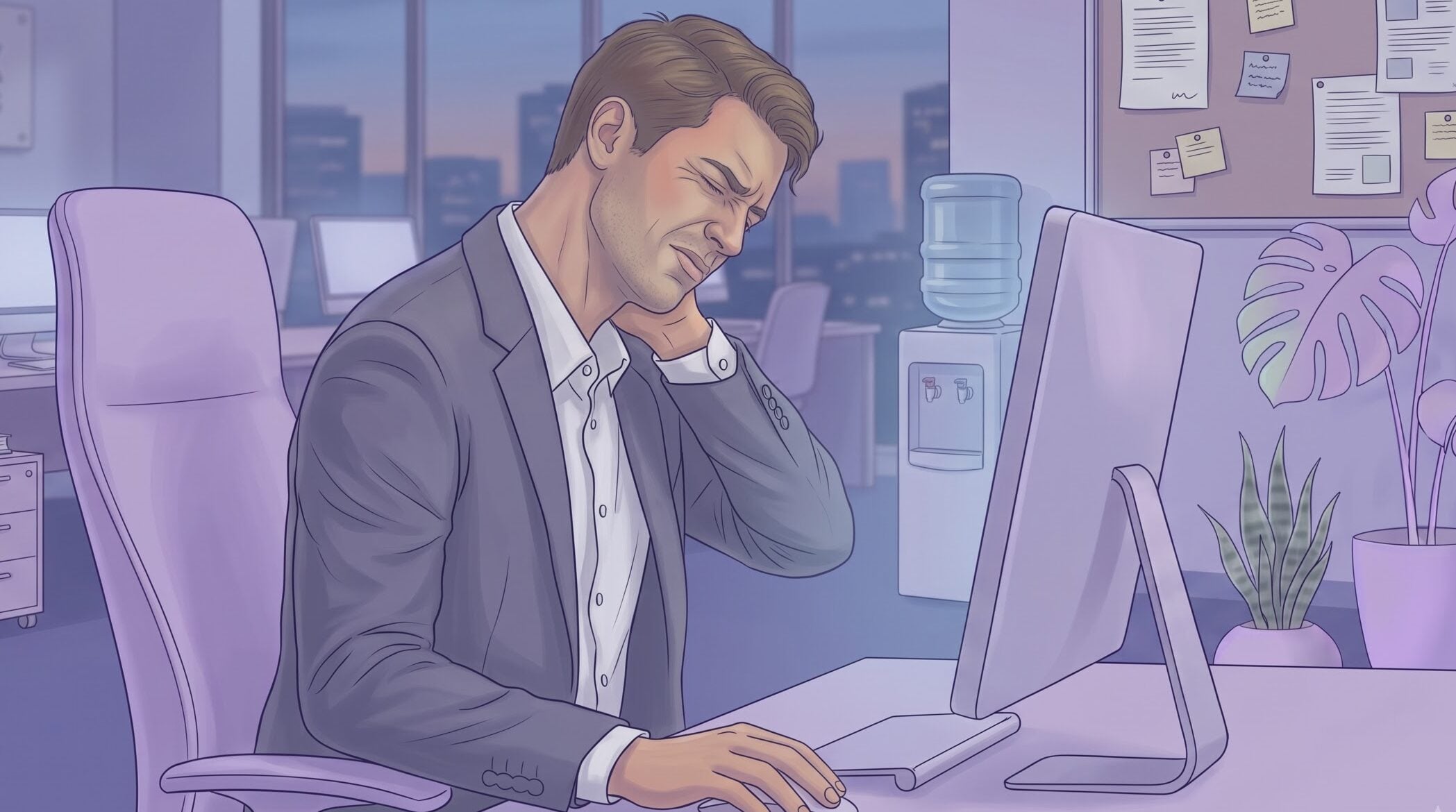
One of the more common causes of neck pain is muscle strain and tension. Some common everyday activities are often to blame, particularly hunching over a desk for long periods; reading or watching TV in an awkward position; having a monitor set too high or low; sleeping in an uncomfortable way; and suddenly twisting the neck while exercising or lifting. [3]
One of the most common culprits is poor posture. Bending forward over a computer or hunching over a workbench pulls on the muscles and soft tissues in the neck. Stress can also play a role, because people often tense their shoulders and neck without realizing it. [5] [7]
Some neck pain causes are age-related or include wear and tear. Cervical spondylosis, a general term for age-related alterations in the neck, can lead to aches and stiffness. Osteoarthritis, herniated discs and other structural problems may be involved, too. [5] [8]
Less commonly, neck pain can indicate a more serious issue. Pain accompanied by numbness, weakness or loss of strength in the arms or hands, difficulty with balance, or pain shooting into the shoulder or down the arm needs to be evaluated by a medical provider. [1] [5]
Common causes of neck pain
The pain in the neck may have many different causes. Muscle strains are one of the most common. They can occur after prolonged sitting, sleeping in an awkward position, exercising too much or with too few breaks, lifting something too quickly or holding the head at a funny angle for hours. [3]
Poor posture while spending hours in front of screens is another culprit. Looking down at a phone or fretting with a monitor in an ill-placed position causes the neck to put forth more effort than it needs. In the course of time, this repetitive strain can lead to stiffness, soreness and headaches. [3] [7]
Neck pain related to stress is also extremely common. When stress accumulates, people tend to jaw clench, shoulder raise and neck stiffen without realizing it. That persistent tension can turn into pain. [7]
Neck pain is sometimes associated with arthritis or degeneration of the cervical spine. Cervical spondylosis results in stiffness, aching or pain and limited movement. In some instances, for example, a disc problem or narrowing around the spinal nerves can also play a part.
Signs and symptoms to notice
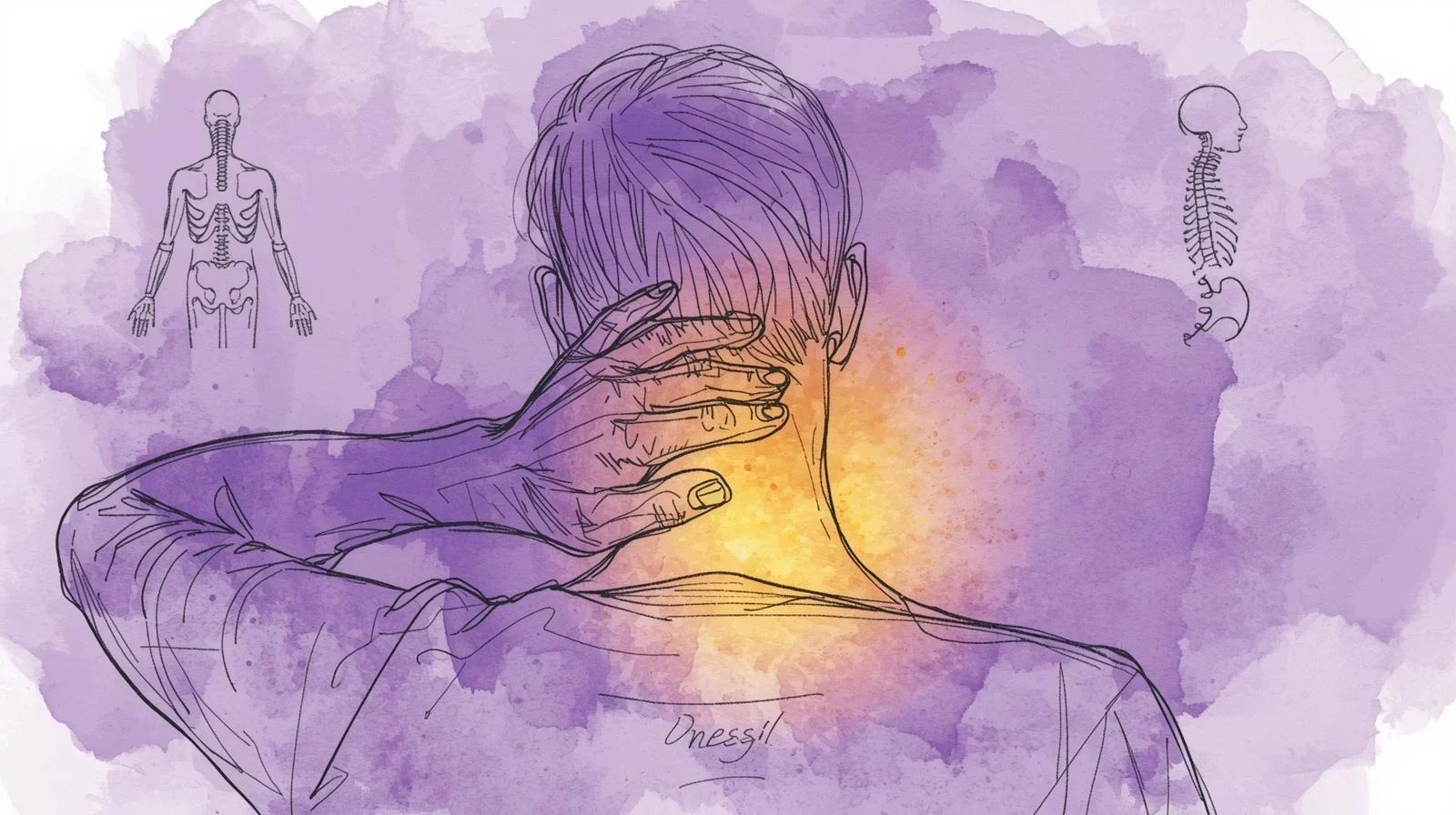
Neck pain doesn’t always feel the same way. It might be dull, sharp, stiff, tight, burning or tender to the touch. Some feel only pain when turning their head, others discomfort throughout the day. A stiff neck can make it difficult to twist the head over your shoulder or tilt your head comfortably. [2] [4]
Some also experience headaches, shoulder tension or pain that radiates into the upper back. If there is decreased range of motion, weakness, tingling numbness or pain radiating down the arm, then this issue may involve nerves as well and not just muscle. [1] [7]
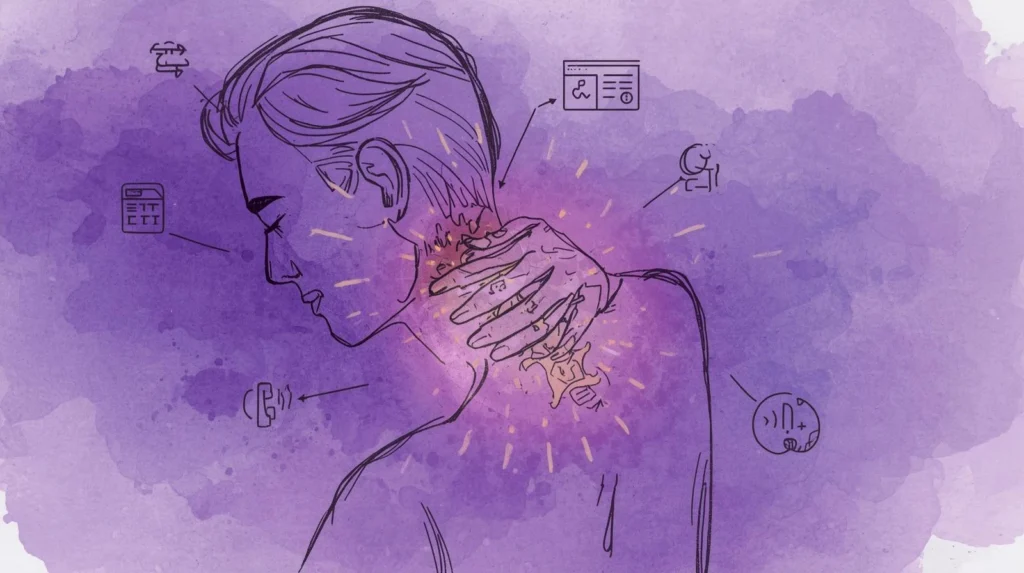
Home treatment for causes of neck pain
Most cases resolve with treatment at home. Mild to moderate neck pain often does not require anything beyond self-care measures, and the pain may resolve within two or three weeks. [1]
The simplest treatment is gentle movement. Staying in the same position often leads to a stiffer neck. Instead, slowly and carefully shifting the neck can help relieve tension. According to NHS guidelines, neck flexibility exercises should be performed for recovery, and other medical outlets also agree that gentle motion is beneficial during the healing process. [2] [6]
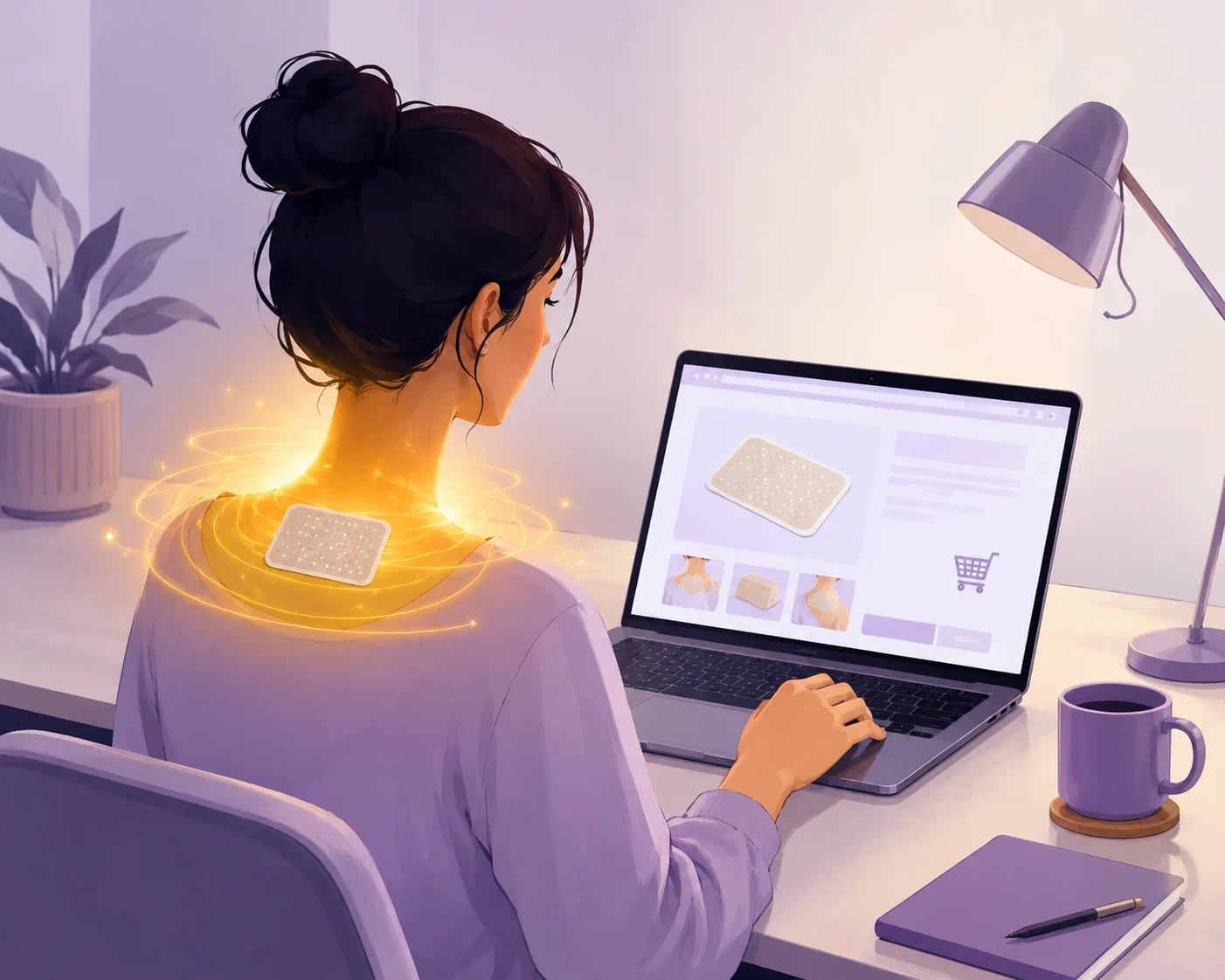
Heat and cold packs may also be beneficial. NHS advice includes applying heat or cold packs to the neck, and Cleveland Clinic adds that ice can help initially, but there is often a role for heat later in many minor stiff-neck cases. The secret is to keep usage short and careful, and not come in contact with the skin directly. [2] [4]
Over-the-counter painkillers may help lessen discomfort and allow you to move comfortably. NHS guidelines mention paracetamol or ibuprofen, and Cleveland Clinic similarly states that acetaminophen or ibuprofen may help with minor neck pain. [2]
A pillow that is low and firm may help keep the neck in a better position while sleeping. Sleeping in a bad position can make stiffness worse; proper support can help reduce strain overnight. [2] [4]
Exercises that may help
Gentle exercise is often one of the most helpful components of neck pain treatment. These slow neck movements can help restore mobility without forcing the area. This typically involves rotation of the head from side to side, looking up and down within a comfortable range, with one’s movements done slowly versus quickly. [2] [6]
Shoulder rolls and resets of posture can also help because the neck, like the head, works in concert with the shoulders. If the shoulders stay tight, then often so does the neck. You can help reduce discomfort by relaxing the upper body. [4]
The biggest rule is to go slowly. Exercises ought to feel gentle, not aggressive. If the pain worsens sharply as you do the exercise, stop it and assess what is happening. [1] [7]
Correct your posture to relieve neck pain
Posture is a key component of both prevention and treatment. So many spend hours hunched over phones, perched over laptops, with their heads jutting forward. This strains the neck muscles more than they are meant to endure long term. [3] [5]
The right setup can make a critical difference. Maintain a screen at an ideal height, don’t let head slump forward for too long stretches, shift frequently. If you work at a desk, try to get up regularly and give the neck a break before stiffness settles in. [6]
Good posture doesn’t mean being stiff all day. It requires finding a balanced position and then moving frequently enough that the same tissues are loaded for no more than 60 minutes at a time. [6]
Neck Pain Related to Your Sleep Habits
Sleeping might heal the neck or ruin it. An unsupported head and neck can make those muscles stiff by morning, she said. NHS guidance advises a low, firm pillow and other medical sources noted that awkward sleeping positions or too many pillows could exacerbate pain. [2] [3] [8]
If you consistently wake with neck pain, it might be worth examining your pillow height, mattress support and sleeping position. Even minor changes usually suffice to minimize morning stiffness. [2] [4]
When to seek medical attention for neck pain
Neck pain tends to improve on its own over time, but there are symptoms worth heeding. Medical care is advised if the pain does not go away as expected, is severe, follows an injury or comes with numbness, weakness or pain that radiates into the arm or shoulder. [1] [5] [7]
Get emergency care if neck pain is accompanied by serious neurological symptoms, like weakness, difficulty walking or balancing, and loss of bowel or bladder control. These symptoms could indicate a more serious spinal or nerve problem. [1] [7]
If you’ve fallen, been in an accident or experienced other trauma and have severe pain, you should also be evaluated right away.
Medical treatment options
If home care isn’t enough, doctors may recommend physiotherapy or stronger medicines, injections, or other types of treatment aimed at the cause. Physiotherapy is a common next step because it can be helpful in improving movement, decreasing pain and addressing posture or muscle imbalance. [1] [6]
For some causes, particularly cervical spondylosis or nerve-related pain, treatment can involve anti-inflammatory medication, physical therapy or steroid shots. Surgery might be an option in rare and severe cases. [8]
Most mild to moderate neck pain does not require advanced treatment. But the right assessment can transform things when discomfort is constant or begins to affect work, sleep or everyday activities. [1] [7]
Neck pain prevention tips
Prevention is the best medicine. Consistent movement, improved posture, adequate sleep support and frequent breaks from sitting and screens all reduce the likelihood of pain regenerating. [2] [6]
For those who work at a desk, changing positions frequently can help prevent stiffness before it sets in. high phone users, lifting the device up before reading it and avoiding prolonged head-down posture can reduce strain.people with their own chronic pain, safe vigilance and strength training may prevent some future episodes. [3] [6]
Preventing also includes stress management. Tension is often held in the neck and shoulders, so relaxation techniques, bending and breathing exercises, along with regular breaks of getting up and moving around throughout a day can help mitigate flare-ups. [7]
The Daily Routine To Reduce Your Neck Pain
Sometimes, a reliably steady routine does better than an on-again, off-again treatment. Gentle mobility exercises for the neck help loosen that area in the morning. Small posture resets and movement breaks throughout the day can help prevent stiffness from accumulating. The evening brings heat, relaxation and a pillow that is kind of supportive that allow the muscles to settle. Such a routine aligns with self-care recommendations from leading health institutions. [2] [4] [6]
If you do this regularly, the best results usually come from consistency. A few minutes of movement in a day is usually more useful than one long session once in a blue moon. [6]
Conclusion
Neck PainCause and CuresLife Style Related Most neck pain starts with some bad habits: poor posture, sleeping poorly, stress or muscle strain. The good news is that most cases get better with simple self-care, gentle movement, heat or cold and improved ergonomics. [1] [2] [3]
If pain persists, comes back repeatedly or is accompanied by warning signs like a loss of feeling or strength in the arm or pain shooting down it, medical evaluation should be pursued. Almost everyone, with the right approach, can relieve pain, increase movement and safeguard their neck against future wear and tear. [1] [7]
FAQs
Muscle strain or tension due to everyday activities, bad posture, wonky sleep positions and hours spent on a screen are some of the most common culprits. [3]
Mild to moderate neck pain typically gets better on its own within two to three weeks with self-care. [1]
Gentle exercise, heat or cold packs, over-the-counter pain relief and a supportive pillow can all help. [2] [4]
[If you’d like to read more about this topic, here are some articles for further reading: You should seek medical care if pain is severe, lasts too long, follows injury or comes with numbness, weakness or pain down the arm. [1] [5]
Yes. Poor posture bending forward over a desk or computer for long stints, for example, can put strain on neck muscles and cause pain. [5] [3]
References
- Mayo Clinic. (n.d.). Neck pain: Diagnosis and treatment. https://www.mayoclinic.org/diseases-conditions/neck-pain/diagnosis-treatment/drc-20375587
- NHS. (n.d.). Neck pain and stiff neck. https://www.nhs.uk/symptoms/neck-pain-and-stiff-neck/
- MedlinePlus. (n.d.). Neck pain. https://medlineplus.gov/ency/article/003025.htm
- Cleveland Clinic. (n.d.). Stiff neck: Possible causes, relief & remedies. https://my.clevelandclinic.org/health/symptoms/24477-stiff-neck
- Mayo Clinic. (n.d.). Neck pain: Symptoms and causes. https://www.mayoclinic.org/diseases-conditions/neck-pain/symptoms-causes/syc-20375581
- MedlinePlus. (n.d.). Neck pain or spasms – self care. https://medlineplus.gov/ency/patientinstructions/000802.htm
- Mayo Clinic. (n.d.). Neck pain in adults: Symptom checker. https://www.mayoclinic.org/symptom-checker/neck-pain-in-adults-adult/related-factors/itt-20009075
- NHS. (n.d.). Cervical spondylosis. https://www.nhs.uk/conditions/cervical-spondylosis/