






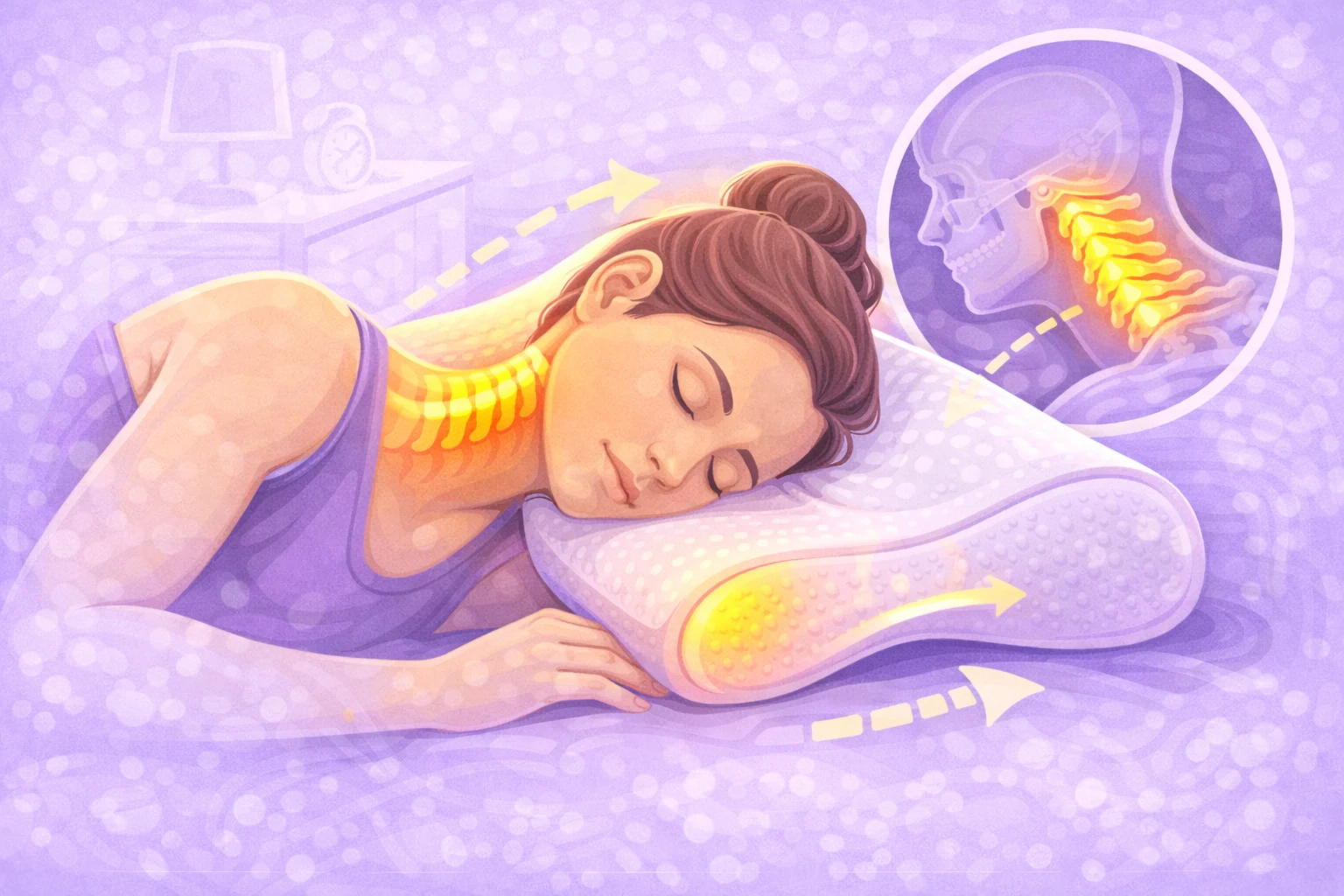
One of the most prevalent musculoskeletal problems today is neck pain. Stiffness and discomfort in the neck area are common for those hours of working on computers, smartphone usage, poor posture and various sleeping positions. This can be exacerbated by poor sleeping posture and choice of pillow. Many people are waking up in the morning with a sore neck, headaches or tension around the shoulder area not realizing it is due primarily to their choice of a right foot pillow.
The Impact Of Sleep Posture On Spinal Health The cervical spine (neck region of the spine) can get misaligned when the head and neck are left unsupported while sleeping. Over many years, this can lead to muscle tension, restricted mobility and chronic pain.
A neck ache pillow or cervical support pillow is a type of cushion designed to support the anatomical curve of your neck and can help you stay aligned while sleeping. These pillows minimize tension on the neck muscles, allowing the body to rest all night.
Studies have also shown the design, height and material of pillows can have a major impact on neck pain as well as waking symptoms. Of course, some studies show that specific pillow designs can lessen neck pain and disability and improve comfort during sleep. [1]
In this detailed guide, we will discuss how neck pain pillows work, its advantages, different types of neck pain pillows and tips to choose a better sleeping pillow for best sleep and neckache relief.
Why Do You Have Neck Pain When You Sleep?
Sleep-related neck pain is typically due to the posture and support. When the neck is held out of position for a few hours, the muscles and ligaments can get strained.
Poor Pillow Support
The single most widespread reason behind neck pain is an inappropriate pillow. Padding either too high or too low can put the neck in a weird angle.
Holding the neck in a bent-up or bent-down position for extended periods adds additional stress on cervical muscles and joints.
Incorrect Sleeping Position
- Side sleepers need a thicker pillow to fill that space between the end of their shoulder and ear.
- People who sleep on their backs require a medium-height pillow that aligns the natural curve of the neck.
- Sleeping on one’s stomach twists the neck and tightens and strains.
Prolonged Screen Use
Modern lifestyle habits, like heavy use of smartphones and laptops, often cause tech neck. Poor alignment during the day stresses muscles in your neck that might still be tight as you sleep.
Muscle Strain and Stress
Tension in the neck and shoulders are brought on by stress and muscle tension. These muscles stay in a strained position all night without sufficient support while sleeping.
Improper Pillow Height
Studies suggest that altering the height of pillows can assist with cervical posturing in order to reduce chronic neck pain and snoring disturbances during sleep. [4]
Why is it important to use a neck ache pillow?
Designed right in a neck pillow it can do wonders for sleep quality and reduce pain.
Supports Natural Cervical Curve
The human neck has a natural curve, which requires support during sleeping. Neck pain pillows are curved to help keep this curve intact and avoid dislocation.
Reduces Neck Stiffness
By spreading the pressure evenly along the neck and shoulders, these pillows help loosen muscles and ease stiffness in the morning.
Improves Sleep Posture
A neck support pillow also maintains alignment of head with spine and avoids a position that can lead to pain.
Enhances Muscle Relaxation
The neck contingent can relax during sleep when it is suitably supported. It helps alleviate tension and enhances recovery.
Helps Prevent Chronic Neck Pain
Background: Long-term use of ergonomic pillows might be able to effectively reduce neck pain symptoms and functional outcomes in patients with cervical problems. [1]
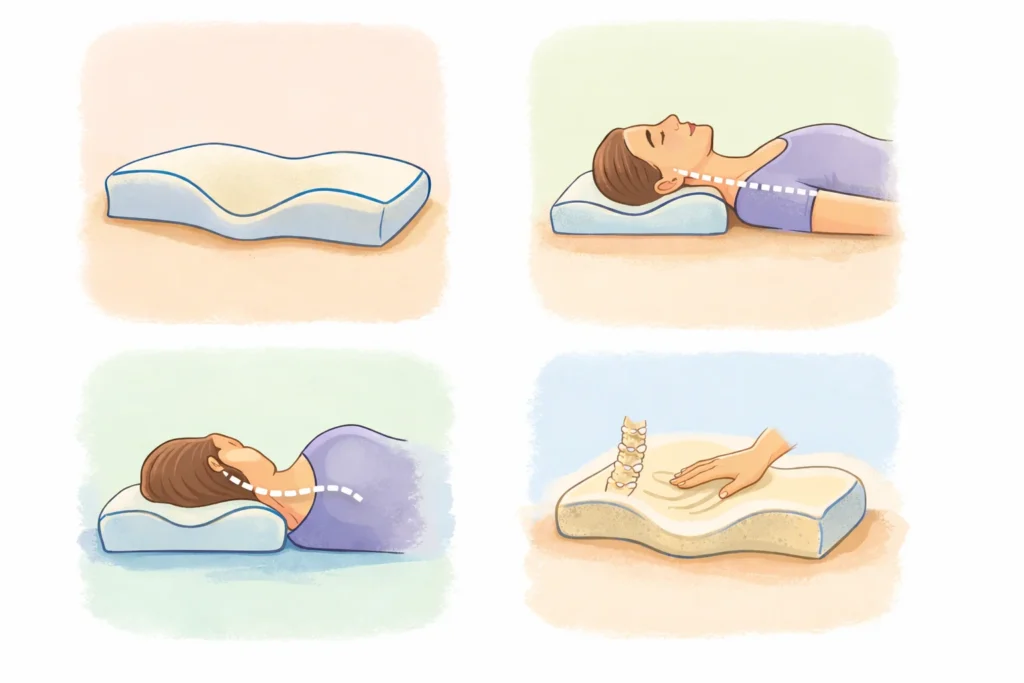
How a Neck Ache Pillow Works
Pillows for neck pain are shaped to an ergonomic contour designed to support both the head and the neck together.
Head Support
The center of the pillow typically keeps the head positioned neutrally.
Neck Arch Support
The raised edges or curved portions accommodate the natural curve of the neck.
Pressure Distribution
Materials like memory foam or latex mold to the shape of the head and neck, distributing pressure evenly.
Spine Alignment
The right support keeps the spine properly aligned from head to lower back, helping prevent any strain on the muscles.
Pillow ergonomics research indicates that maintaining cervical alignment while sleeping helps avoid neck function disorders and musculoskeletal issues. [3]
Types of Neck Ache Pillows
Many different pillows are designed to help relieve neck pain.
Memory Foam Neck Pillows
Memory foam pillows mold around the shape of your head and neck.
Benefits:
- Excellent support
- Pressure relief
- Maintains shape over time
These pillows are most recommended for those suffering from neck pain.
Orthopedic Cervical Pillows
Cervical spine alignment will be maintained with the help of orthopedic pillows.
Features:
- Contoured shape
- Firm support
- Medical-grade design
And they’re often recommended for people with chronic neck pain or cervical spondylosis.
Latex Neck Pillows
Latex pillow materials combine durability and natural elasticity.
Benefits:
- Good airflow
- Firm yet responsive support
- Long lifespan
Ergonomic latex pillows have been reported to have a positive effect on the neck posture and muscle endurance of patients with conditions in the cervical spine. [1]
Contour Pillows
Contour pillows have curved edges to support the neck arch.
They are ideal for:
- Side sleepers
- Back sleepers
- People with neck stiffness
These pillows also help maintain alignment in the spine overnight.
How to Select the Right Pillow for Neck Pain
When it comes to your ideal pillow there is no one-size-fits-all solution.
Sleeping Position
Everyone has different sleeping positions that require a different height for cushions.
Side Sleepers
I require a loftier pillow to keep in alignment.
Back Sleepers
Need mid height with neck support.
Stomach Sleepers
Use thin pillows or none at all.
Pillow Material
Common materials include:
- Memory foam
- Latex
- Fiberfill
- Gel foam
The best materials for neck pain are generally memory foam and latex.
Pillow Height
The height of the pillow should be such that the neck stays aligned with the spine.
An excessively high pillow eventually forces the head forward.
If it is too low, the neck droops down.
Firmness
Firmness affects comfort and support.
And soft pillows can flatten and provide no support.
Pillows that are too strict can be uncomfortable.
Generally, a medium-firm pillow will be ideal.
How to use a Neck Ache Pillow properly
The best pillow in the world will not help if it is being used wrongly.
Position the Neck Properly
The curve of the pillow should cradle your neck, not your head.
Keep Shoulders Off the Pillow
Shoulders just need to sink into the mattress for alignment.
Allow Adjustment Time
It can take a few nights for your body to acclimate to sleeping on a new pillow.
Maintain Good Sleep Posture
Do not sleep in a position that twists the neck.
Other Steps for Easing Neck Pain
A neck pillow is most effective when used along with good habits.
Practice Neck Stretching
They can help decrease tension and increase flexibility.
Examples:
- Neck rotations
- Shoulder rolls
- Chin tucks
Improve Daily Posture
Daytime Poor posture is often why we get neck pain at night.
Tips:
- Keep screens at eye level
- Sit upright with back support
Avoid slouching
Take Regular Movement Breaks
Sitting can tighten neck muscles.
Get up and stretch every 30 to 60 minutes.
Manage Stress
Stress puts us in a state of muscle tension, especially around the neck and shoulders.
Relaxation strategies like deep breathing or meditation may help.
When to Replace Your Pillow
Pillows lose structure and supportability as they age.
How do you know it’s time to get a new one?
- Flattened or uneven shape
- Increased neck pain
- Difficulty finding a comfortable position
Experts generally recommend replacing pillows every to 1 to 2 years to ensure adequate support.
Conclusion
Neck pain can greatly impact comfort and sleep quality. Many forget to consider the way their pillow maintains their spine alignment while sleeping. The wrong pillow can cause neck muscles to tire and spasm, resulting in stiffness, headaches and chronic pain.
Neck ache pillows are designed to make sure that, as they rest, their heads nicely comply with the natural curve of the cervical spine and load is reduced on muscles368>426א9
A supportive pillow, combined with good posture habits, stretching and movement breaks throughout the day can maximize neck health. If it is done correctly, you can start your day fully rested and without neck pain!
Frequently Asked Questions
Yes. A well-fitting pillow supports the cervical spine and enables them to sleep without placing unnecessary stress on neck muscles.
Most people acclimate in 3to7 days, with some taking up to two weeks.
Memory foam pillows mold to the contours of the neck and head, helping provide targeted support and pressure relief.
Yes. Many ergonomic pillows are specifically designed for side sleepers and help fill the space between shoulder and neck.
Yes. An unsuitable pillow can cause cervical misalignment, resulting in neck stiffness or headaches: one that is too high or too low, and one that lacks sufficient support.
References
- PubMed. (2021). The effects of pillow designs on neck pain, waking symptoms, neck disability, sleep quality and spinal alignment in adults.https://pubmed.ncbi.nlm.nih.gov/33895703/
- Fazli, F., et al. (2019). The Effect of Ergonomic Latex Pillow on Head and Neck Posture and Muscle Endurance in Patients With Cervical Spondylosis.https://pubmed.ncbi.nlm.nih.gov/32874156/
- Pawar, S., & Kumbhar, T. (2025). Awareness of Use of Ideal Pillow in Neck Dysfunction.https://theaspd.com/index.php/ijes/article/view/11093
- Yamada, S. (2020). Improving Sleep Disorders and Chronic Neck Pain by Adjusting Height of the Pillow Through Cervical Posture Management.https://academic.oup.com/sleep/article/43/Supplement_1/A464/5847237