





If waking up with neck pain feels like you just wrestled a tiny gremlin while sleeping and lost, that pain doesn’t have to be your new normal. It is hard to believe that your pillow could be the real culprit or your new greatest buddy. Picking the appropriate neck pillow is like picking the right dance partner for your back. It needs to be comfy and supported without bothering others. This blog is a mix of sound science, useful tips, and interesting facts elaborating how you would take care of your neck.
The Science Behind Neck Pain and Pillow Support
Understanding Different Types of Neck Pain
Neck pain can feel like many things: a dull ache from a long Netflix binge, a sharp poke from your posture playing hide-and-seek, or chronic stubborn pain like a recurring soap opera villain. Causes range from muscle strain to medical conditions like cervical spondylosis (which sounds fancy and it is). Your pillow choice should cater to what kind of neck drama you are dealing with; it’s basically a neck therapist for your head.
How Proper Pillow Support Influences Healing?
Your neck is not a straight line; it curves like a gentle “C” called the cervical lordosis [1]. Without the right support, your neck muscles scream louder than your alarm clock. A pillow that respects this curve, keeps your spine aligned, and prevents you from waking up sounding like an old accordion. If your pillow is a rebel, your neck pays the price.
Medical Perspectives on Pillow Use in Neck Pain Management
Let’s get real: pillows cannot cure your neck pain like a magician. Some studies show mixed results on their ability to cure chronic neck pain, but doctors and therapists agree – a supportive pillow combined with exercises packs a powerful punch. Therapeutic neck exercises plus the right contoured pillow were found to reduce pain better than any of those acting alone [2]. Who said pillowy comfort and sweatband exercises can’t be friends?
The Best Pillow for Neck Pain According to Medical Experts
What Makes an Orthopedic Pillow for Neck Pain Effective?
Think of orthopedic pillows as your neck’s personal bodyguard: firm yet comfy, shaped to cradle your cervical spine’s unique curve. The best of them have these superpowers:
- Contoured shapes that hug your neck like a gentle bear hug.
- Medium to firm support so your neck isn’t thrown into a sideways tango.
- Hypoallergenic, breathable materials that keep things fresh [3]. Yes! Because sweaty necks are no fun!
- The durability to stay strong even if you sleep like a side-to-side rollercoaster at night.
- They might even help rescue your poor shoulders from the agony of poor posture trauma.
Cervical Pillows: Why Doctors Recommend Them for Spinal Alignment?
Cervical pillows are basically neck whisperers. They help maintain that natural curve and keep your spinal alignment in check [4]. Memory foam cervical pillows shape-match your head and neck, giving personalized support that can make you want to hug your pillow like a long-lost friend.
How to Choose the Perfect Pillow: Support, Comfort, and Durability?
Picking a pillow isn’t like choosing socks (though mismatched socks are a guilty pleasure). It depends on sleep position and personal taste:
- Side sleepers: Need a pillow with a bit of oomph; firmer and taller to fill the space between head and shoulder
- Back sleepers: Go medium firmness with moderate loft for spine alignment without letting your head tip forward like a sleepy owl.
- Stomach sleepers: Soft and slim pillows or none at all (warning: too thick and your neck gets a nasty twist).
Material preferences matter too. Memory foam or latex rank high for that contour-hugging feel. Avoid pillows that are too flat or soft; because a pancake-flattened neck is no one’s dream.
Signs Your Pillow Is Causing Neck Pain
If you wake up with neck pain while sleeping or feel worse in the morning, your pillow may be the culprit. Common signs include morning stiffness, headaches, shoulder tightness, or a feeling that your neck is “crunched” forward or dropped backward. If your pillow loses shape or feels uneven, it may no longer provide proper cervical spine support.
Common Pillow Mistakes That Worsen Neck Pain
Many people unknowingly worsen their neck pain sleeping posture by choosing the wrong pillow height for neck alignment. A pillow that is too high pushes your head forward, while one that is too flat forces your neck to bend backward. Using worn-out pillows, stacking multiple pillows, or ignoring sleep position-specific support can also increase strain and stiffness.
How Long It Takes for a New Pillow to Help ?
A new pillow for stiff neck relief usually takes a few nights to a few weeks to make a noticeable difference. Your muscles and joints need time to adapt to improved spinal posture. If pain persists beyond 3–4 weeks, it may indicate an underlying condition that requires professional evaluation.
Best Doctor-Recommended Pillows For Neck Pain Relief
Memory Foam Pillows: Benefits and Doctor-Endorsed Brands
Memory foam is like that dependable friend who always has your back; literally! Brands like Dr. Trust, Tempur-Pedic, and betterhood are doctor-pin-approved for molding smoothly to your shape, reducing pressure points, and letting you sleep without neck complaints popping up like unwanted pop quizzes.
Adjustable Orthopedic Pillows for Personalized Support
Adjustable pillows are the DIY furniture of neck care. You get to customize the height and firmness so your pillow feels less like a flat pizza and more like a tailored suit for your neck curves.
Soft Pillows for Neck Pain: When and How to Use Them Safely
Soft pillows can be cuddly and great for stomach sleepers or those with sensitive skin, but beware; too much softness can throw your neck curve out of whack faster than your coffee disappears on a Monday morning. Pair them with smart positioning for the best results.
Best Pillow Materials for Neck Pain Compared
Different materials provide different orthopedic sleep support:
- Memory foam pillows adapt to head and neck contours, making them ideal for spinal posture correction.
- Latex pillows offer responsive support and durability with good airflow.
- Feather and microfiber pillows feel soft but may lack consistent cervical support.
- Adjustable pillows allow customisation of pillow loft for side sleepers and back sleepers alike.
Choosing the right material depends on comfort preference, allergies, and firmness needs.
Neck Pain Pillow Positioning: Expert Tips for Maximum Relief
How to Position Your Neck Pillow for Nighttime Support?
Your pillow edge should sneakily tuck between your shoulder blades, not just sit under your head like a bad date. This positioning lets your cervical curve stay happy and prevents your poor neck from doing all sorts of awkward gymnastics while you dream of beach waves.
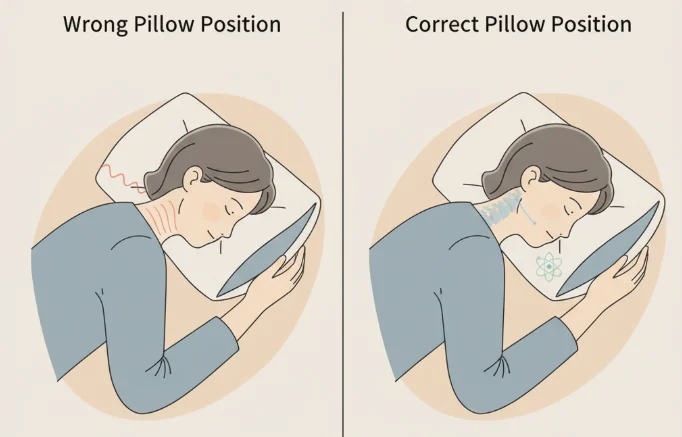
Adjusting Pillow Height and Firmness Based on Sleep Position
- Side sleepers: A proper pillow height should be maintained to keep your spine straight and proud [5].
- Back sleepers: Choose medium firmness and moderate loft; your pillow should not push you into a forward head nod like you are eagerly waiting for a snack.
- Stomach sleepers: Slim and soft pillows are best to keep neck rotation at bay.
Tips for Using a Pillow for Neck and Shoulder Pain
- Your pillow should be shoulder-width friendly. No one likes to feel like their neck is hanging off a cliff.
- Replace pillows when they start resembling a flat pancake or sniff test fails; that’s not a good combo.
- Adjustable pillows can be lifesavers, letting you tweak height and firmness as your neck demands.
Sleeping Positions That Reduce Neck Strain
Your sleeping position plays a major role in neck pain morning stiffness:
- Side sleeping requires a higher pillow loft to fill the shoulder gap.
- Back sleeping benefits from medium pillow height that supports the cervical curve.
- Stomach sleeping often requires a very thin pillow or none at all to avoid excessive rotation.
Maintaining neutral spinal alignment is more important than the type of pillow alone.
Neck Pain vs Shoulder Pain: Pillow Differences
Neck pain and shoulder pain often overlap, but pillow needs differ slightly. Neck-focused pillows prioritize cervical alignment, while shoulder pain sufferers may benefit from a slightly higher pillow that reduces pressure on the shoulder joint. A pillow for spinal posture that keeps both the neck and shoulders aligned is ideal for combined discomfort.
Integrating Pillows into Your Neck Pain Treatment Plan
Combining Neck Pain Relief Pillow Use with Physical Therapy
Science says: pillow + physical therapy = neck pain reduction heavyweight champ. Exercises strengthen and stretch muscles, while your pillow works behind the scenes giving supremely supportive rest to your hardworking neck.
Lifestyle Changes and Neck Exercises to Complement Pillow Use
- Stretch and strengthen cervical muscles regularly (yes, even if you would rather binge-watch)
- Mind your posture: put that phone down once in a while and sit like your spine matters – because it does!
- Blink away from screens frequently to avoid neck stiffening from “tech neck.”
- Choose an ergonomic chair; your neck’s future self will thank you.
When to Consult a Doctor About Your Neck Pain and Pillow Choice?
If your neck pain lasts longer than your attention span during a lecture, or pain spreads to your arms with numbness, it’s time to see a doctor. Remember: pillows help, but they are not a replacement for professional medical care when the going gets serious.
When a Pillow Won’t Help Neck Pain
Pillows are supportive tools, not cures. Severe or persistent neck pain caused by nerve compression, disc issues, or injuries may not improve with pillow changes alone. If pain radiates to the arms or causes numbness, tingling, or weakness, medical consultation is essential.
Final Tips for Maintaining Your Pillow and Neck Health
- Air your pillows regularly to keep them from staging a mold uprising.
- Wash pillow covers often, because no one wants a neck party with allergens.
- Keep pillows in dry environments.
- Replace pillows before they lose their supportive mojo.
Proper taking care of your neck is not limited to the pillow, especially when you are working or travelling for a prolonged period. Learn more about other orthotic devices to control neck pain:
Travel Pillows and Neck Pain: Are They Safe?
Travel pillows can help maintain alignment during long flights or car rides, especially when combined with ergonomic sleep accessories like lumbar cushions. However, poorly designed travel pillows may push the head forward and worsen neck strain. Look for contoured or U-shaped designs that support the cervical spine without forcing flexion.
Summary of Key Factors in Selecting Your Pillow
- Match pillow loft and firmness to your sleeping style, because one size does NOT fit all.
- Prioritize memory foam or latex for contour hugging and spinal respect.
- Replace your pillow every 2-3 years or whenever it looks sad and flat, like your enthusiasm on Monday mornings.
- Keep pillows fresh and clean; neck health includes pillow hygiene!
Stick with your pillow, pair it with neck exercises, and maintain good posture; your neck’s thank you note will be waking up pain-free and ready to conquer your day.
Explore more health and wellness solutions here:-
- https://betterhood.in/learn/best-car-cushions-for-short-drivers/
- https://betterhood.in/learn/regular-vs-orthopedic-car-cushions/
Frequently Asked Questions
Yes. An improper pillow can compress nerves by forcing the cervical spine into unnatural positions, potentially leading to radiating pain, tingling, or numbness.
A pillow that is too high can push your head forward and strain neck muscles. Pillow height for neck alignment should keep the spine neutral, especially for side and back sleepers.
Most people should not sleep without a pillow. A properly designed cervical spine support pillow helps maintain natural alignment. Only some stomach sleepers may benefit from very thin or no pillows.
Cooling pillows can improve comfort and reduce inflammation-related discomfort, but they should still provide orthopedic sleep support and proper alignment.
Yes. Thick or poorly fitted pillow covers can alter pillow loft and firmness, reducing cervical support and potentially contributing to stiffness.
Not always. Price does not guarantee effectiveness. The best pillow is one that matches your sleep position, firmness preference, and spinal alignment needs.
Not always. Soft pillows can be wonderful for stomach sleepers or allergy sufferers, but if you’re a side or back sleeper, soft pillows may turn your neck curve into a question mark; something no one wants to wake up to.
Special neck issues like cervical spondylosis require tailor-made pillows. Consulting with healthcare providers will help you nab the one pillow that supports your unique spinal quirks.
References
- Cleveland Clinic Health Essentials (2022). Cervical Kyphosis: Symptoms, Causes & Treatment. Retrieved from: https://my.clevelandclinic.org/health/diseases/22868-cervical-kyphosis [Viewed on 6 October 2025]
- Helewa, A., Goldsmith, C. H., Smythe, H. A., Lee, P., Obright, K., & Stitt, L. (2007). Effect of therapeutic exercise and sleeping neck support on patients with chronic neck pain: a randomized clinical trial. The Journal of rheumatology, 34(1), 151-158. https://www.researchgate.net/publication/6584238_Effect_of_therapeutic_exercise_and_sleeping_neck_support_on_patients_with_chronic_neck_pain_A_randomized_clinical_trial
- Ramli, R., Chai, A. B., Kamaruddin, S., Ho, J. H., Mohd. Rasdi, F. R., & De Focatiis, D. S. (2021). Development of latex foam pillows from deproteinized natural rubber latex. Journal of Rubber Research, 24(4), 615-630. https://doi.org/10.1007/s42464-021-00130-7
- Lei, J. X., Yang, P. F., Yang, A. L., Gong, Y. F., Shang, P., & Yuan, X. C. (2021, October). Ergonomic consideration in pillow height determinants and evaluation. In Healthcare (Vol. 9, No. 10, p. 1333). MDPI. doi: 10.3390/healthcare9101333
- Healthline (2025). How to Sleep on Your Side Without Waking Up with a Sore Back or Neck? Retrieved from: https://www.healthline.com/health/hip-pain-at-night#bursitis [Viewed on 6 October 2025]