






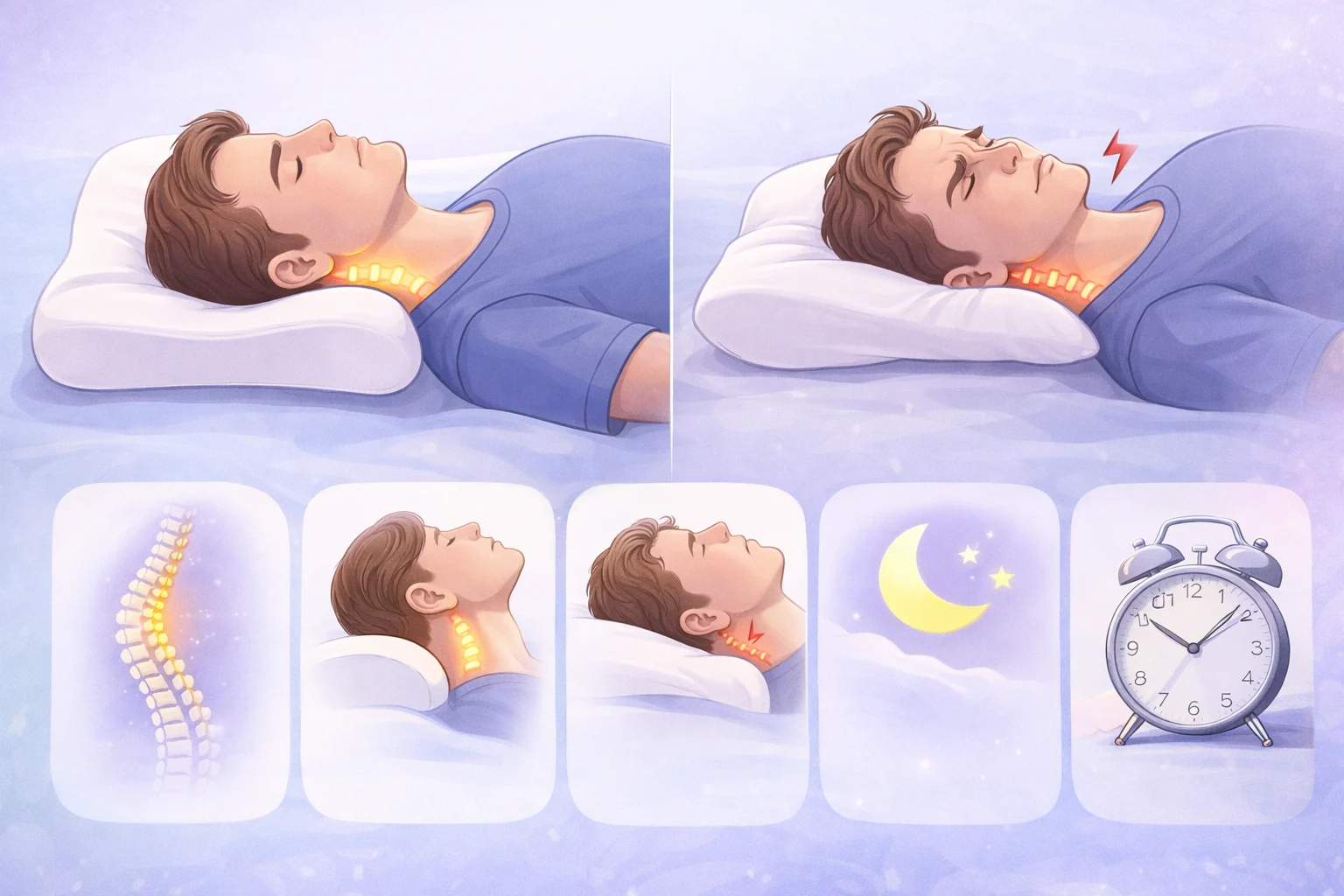
After sleeping for 7 to 8 hours, many people still wake up with neck stiffness, shoulder pain or headaches. More often than not, the problem lies with the mattress but rather with the pillow. Neck supports pillow vs regular pillow in terms of spinal alignment, ergonomics, and long-term comfort.
A regular pillow is primarily designed for softness and comfort; a neck support pillow is designed to keep the natural curve of the cervical spine. Correct alignment relieves pressure on the muscles, optimizes posture, and promotes better quality of sleep . [2]
Doctors and sleep experts say keeping a neutral spine while you sleep is key to avoiding neck pain. An adequately designed pillow offers support for the head & neck, thereby reducing stiffness and muscle fatigue . [5]
This guide discusses neck pillow vs regular pillow and explains who should use a neck support pillow, all in order to help you decide on the best option for you.
What Is a Neck Support Pillow?
A neck support pillow also known as a cervical pillow or ergonomic pillow is meant to follow the natural curve of your neck. Unlike traditional pillows, these are contoured to cradle the head and support the cervical spine.
And the primary role of a neck support pillow is to maintain alignment with the sleeping spine. Suitable alignment decreases strain on muscles and joints, reducing the risk of stiffness and discomfort . [3]
Most neck support pillows are constructed from structured materials that conform to the user’s shape,

including:
- Memory foam
- Orthopedic foam
- Latex foam
- Contoured hybrid foam
- Gel-infused memory foam
They even offer support and conform to the shape of your head and neck. Research has shown that utilizing cervical pillows designed to provide firm support for healthy neck curvature can have both a positive impact on sleep and decrease symptoms of neck pain .[1]
Neck support pillows are particularly helpful for:
- Side sleepers
- Back sleepers
- People with neck pain
- Office workers
- People with posture issues
- Those recovering from cervical strain
Since it is designed to be ergonomic, the towels distribute your weight evenly for less pressure on any given point.
What Is a Regular Pillow?
The most common type of pillow used in homes is a regular pillow. These pillows tend to be flat in design and favor softness over support.
Regular pillows are typically filled with:
- Polyester fiber
- Cotton
- Feather
- Down
- Microfiber
- Hollow fiber
Although they give a soft feel to the neck, they do not hold steady support. Pillows flatten and lose their shapes over time, which can take a toll on spinal alignment.
Lack of proper pillow support can twist the neck in unnatural angles that can cause discomfort and stiffness, particularly in side and back sleepers . [5]
Regular pillows are a hot market though as they:
- Affordable
- Soft and comfortable
- Easily available
- Lightweight
- Easy to replace
But do they make for good long-term neck support?
Neck Support Pillow vs Regular Pillow: Key Differences
Here is a side-by-side comparison of neck support pillow vs regular pillow.
| Feature | Neck Support Pillow | Regular Pillow |
| Design | Contoured ergonomic shape | Flat standard shape |
| Neck Support | Excellent cervical support | Minimal support |
| Spinal Alignment | Keeps spine neutral | Can misalign spine |
| Pain Relief | Helps reduce neck pain | May cause stiffness |
| Comfort Type | Supportive comfort | Soft comfort |
| Best For | Side & back sleepers | All sleepers (not optimized) |
| Material | Memory foam / latex | Fiber / cotton / feather |
| Firmness | Medium to firm | Soft to medium |
| Durability | Long lasting | Flattens quickly |
| Shape Retention | Holds shape | Loses shape over time |
| Posture Support | Yes | No |
Studies indicate that the three collective features of pillows (i.e., height, firmness and shape) have a significant effect on cervical alignment during sleep . [3]
Neck Support Pillow: Benefits
Maintains Proper Spinal Alignment
A neck support pillow maintains the alignment of your head, neck and spine. This relieves pressure and improves sleeping posture .[2]
Reduces Neck Pain
Cervical pillows offer structured support that alleviates stress on neck muscles. Supportive pillows have also been reported to affect neck pain positively in clinical studies . [1]
Improves Sleep Quality
With the neck supported, the body relaxes more naturally, promoting deeper sleep.
Reduces Shoulder Pain
Shoulder pressure is common among side sleepers. Ergonomic pillows distribute weight evenly.
Prevents Tossing and Turning
Better alignment means fewer pressure points, which minimizes movement during sleep.
Long-Lasting Support
Compared to traditional pillows, memory foam pillows last much longer.
Helps With Poor Posture
Good head and neck posture while sleeping will help reduce daily discomfort . [2]
Best Uses of Standard Pillow
Self-containing features: You have neck support pillows growing with added ergonomic advantages while regular pillows still can give you some specifics.
Soft Comfort Feel
Standard pillows are plush as most users like.
Affordable Option
They are typically less expensive than ergonomic pillows.
Lightweight
Easy to move and adjust.
Easily Available
Comes in various materials and sizes.
Good for Stomach Sleepers
Stomach sleepers may need regular pillows that are thin, which will decrease neck strain. [5]
Who Should Use a Neck Support Pillow?
You may benefit from using a neck support pillow if you:
- Have neck pain
- Work long hours on a computer
- Sleep on your side
- Sleep on your back
- Have shoulder pain
- Experience headaches
- Have poor posture
- Wake up with stiffness
Studies show that improper use of pillows is associated with neck dysfunction and musculoskeletal pain . [3]
When a Regular Pillow May Be Satisfactory
A regular pillow may work if:
- You don’t have neck pain
- You sleep on your stomach
- You prefer very soft pillows
- You need a temporary option
- You have a limited budget
However, even in these scenarios, suitable height and firmness are important.
Neck Support Pillow vs Regular Pillow: How To Choose?
Sleeping Position
Neck support pillows are more advantageous for side sleepers.
Contouring support is great for back sleepers.
Regular pillows may be better suited for stomach sleepers.
Pain Level
A cervical pillow helps eliminate strain if you face a problem in your neck. If you suffer from a Neck Pain then using it may help to reduce the stress on your neck.[5]
Firmness Preference
Soft feel → regular pillow
Supportive feel → neck support pillow
Budget
Regular pillows are cheaper, but ergonomic pillows have a longer lifespan.
Material Choice
Memory foam offers structured support.
Fiber pillows offer soft comfort.
Pillow for Sleepers in Different Positions
Side Sleepers
Side sleepers require more elevation support for the neck. A curved-styled pillow will help fill the gap between head and shoulder.
Back Sleepers
Back sleepers do best with a pillow that supports their neck’s natural curve.
Combination Sleepers
Dual-height ergonomic pillows work best.
Stomach Sleepers
You might be more comfortable sleeping on thin regular pillows.
Mistakes Most Commonly Made When Selecting a Pillow
- Choosing too soft pillow
- Using too high pillow
- Using flattened pillows
- Ignoring sleeping position
- Not replacing pillows regularly
- Choosing style over support
Pillows that do not have the right height or firmness can jeopardise cervical alignment . [3]
How Long Does Each Pillow Last?
Neck Support Pillow: 2 to 4 years
Regular Pillow: 6 to 18 months
Standard pillows sag quickly; structured foam holds its shape.
Signs You Need a New Pillow
- You wake up with neck pain
- Pillow looks flat
- Frequent headaches
- Poor sleep quality
- Shoulder stiffness
- You fold pillow for support
These are typically signs of inadequate neck support.
Expert Advice for Improving Neck Support
- Use medium height pillow
- Keep spine neutral
- Avoid stacking pillows
- Replace pillows regularly
- Choose breathable material
- Match pillow with mattress firmness
A good pillow provides support to keep the cervical spine vertebrae aligned and minimizes strain on neck muscles . [2]
Neck Support Pillow or Regular, Which Is the Better Option?
Opt for a neck support pillow if:
- You have neck pain
- You want better posture
- You are a side sleeper
- You want long-term support
Choose a regular pillow if:
- You prefer soft comfort
- You sleep on your stomach
- You want a budget option
In summary, neck support pillows can provide better alignment and support while regular pillows provide basic comfort.
Conclusion
Neck support pillow vs regular pillow the primary difference is support vs softness. Pillows can come with comfort but no structured support or neck support for alignment and posture.
If you find yourself waking up often with stiffness or headaches, upgrading to a more supportive neck pillow may improve sleep quality. The best pillow for you will be determined by factors such as your sleeping position, comfort preferences and support requirements.
Investing in the right pillow can minimize pain, promote better posture and even help you wake up feeling more refreshed each morning.
FAQs
Or in other words, a neck support pillow is better for spine alignment and reducing the strain you put on your neck. It cradles the natural curvature of the cervical spine, which may lead to an improvement in sleep posture and a reduction in stiffness. Regular pillows offer mid level softness but less structure.
If you have neck pain, shoulder stiffness or a poor sleeping posture, a neck support pillow is beneficial. This is also beneficial for side and back sleepers to allow adequate cervical alignment. It may also be useful for office workers and individuals who stare into screens for long hours.
An ordinary pillow can be a factor in neck pain if it is too high, too soft or flattened. Inadequate support will force the neck into an unnatural position while sleeping. In the long run, this can result in stiffness or tightness.
Yes, side sleepers will benefit from neck support pillows. They give support to the gap between the head and shoulder, keeping the spine in line. This eases the weight on the neck and shoulders.
Most people can adapt in a few days to up to one week. The contour design might seem novel at first, but the body subsumes it quickly. Good positioning aids in the adjustment period.
Using it regularly supports the correct sleep position. Over time, it may enhance comfort and minimize morning stiffness.
References
- Helewa A., Goldsmith C., Smythe H. (1998). Neck support pillows: a comparative study. PubMed. https://pubmed.ncbi.nlm.nih.gov/9608378/
- Fazli F., Farahmand B. (2019). Effect of ergonomic latex pillow on head and neck posture. PubMed. https://pubmed.ncbi.nlm.nih.gov/32874156/
- Pawar S., Kumbhar T. (2025). Awareness of use of ideal pillow in neck dysfunction. International Journal of Environmental Sciences. https://theaspd.com/index.php/ijes/article/view/11093
- Goyal M. (2024). Effect of pillow on pain, disability and sleep quality in chronic neck pain. PubMed. https://pubmed.ncbi.nlm.nih.gov/40633255/
- Prevention Health Editors. (2026). Is It Better to Sleep With or Without a Pillow? Prevention.


