




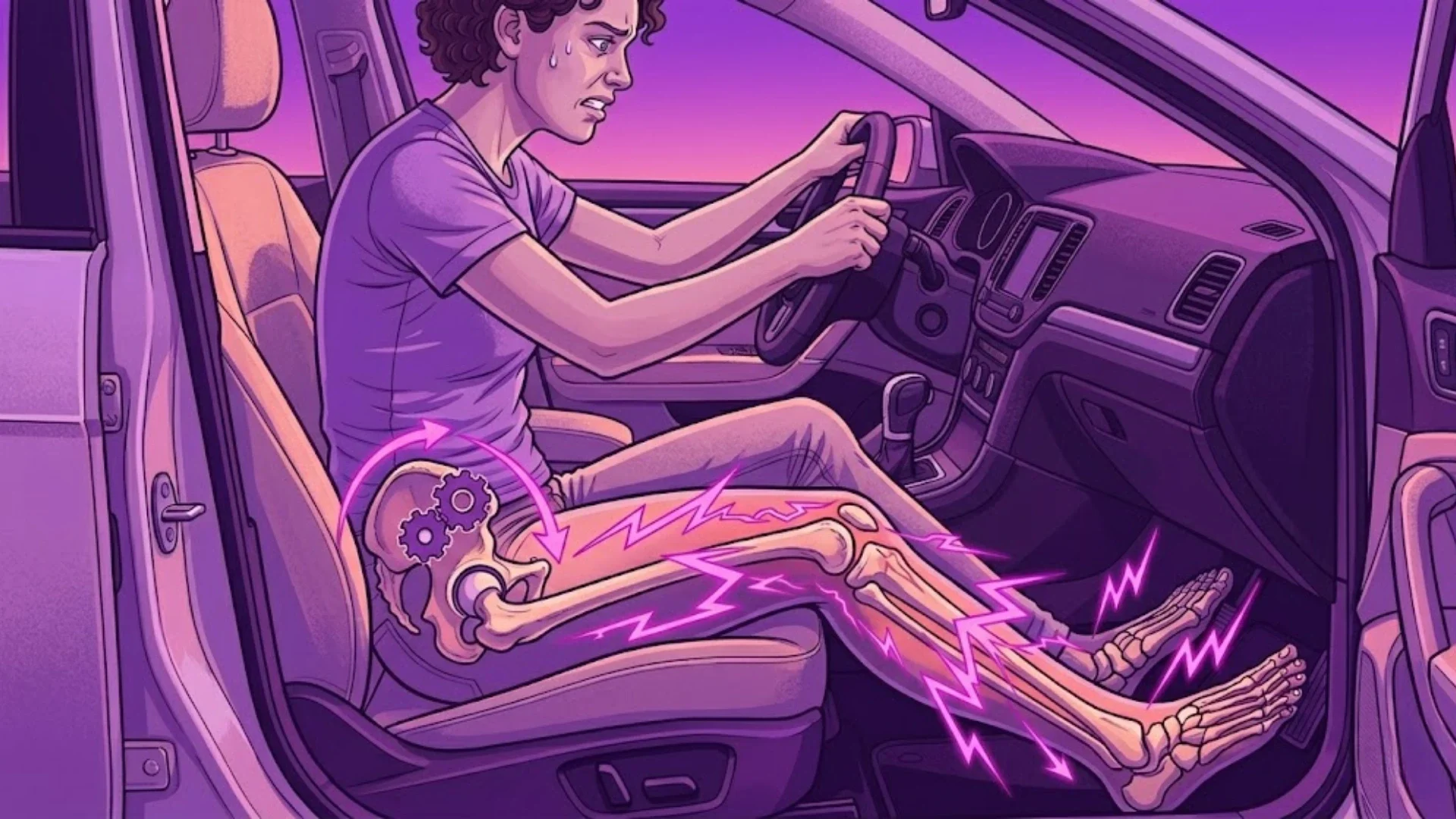
Have you ever idled the gas pedal in a car with automatic transmissions so long that, glancing down, you suddenly realize your left leg, literally speaking, has not moved? One of the sneaky ways pelvic tilts start to manifest is this type of inconsistent use. Your left leg has, literally, nothing to do, relaxed, inert and just plain ignored as your right leg does most of its repetitive gymnastics between accelerator pedal and brake. At first, it feels like a boon. Less work before you even enter the vehicle, less ivory towered coordination of driving as a whole.
But after an extended drive and then we go about cleaning up more than one thing that seems off. Perhaps your right hip is tighter than your left. Perhaps your lower back feels off kilter. Or when you get out of the car and one side of your body feels more awakened and alive while the other is tight, turned off or disconnected.
It is subtle. Easy to ignore. But that’s how pelvic tilts start.
the figure driving on autopilot is so much more convenient than the regular one, but it brings a whole new low balance to the picture rather than using one side so often through repetitive movement it doesn’t use any side at all and so you get what one could call the “dead leg” effect: One becomes effectively passive while the other does most of the functional lifting.
Eventually your body begins to correct itself for this uneven demand. The rich get richer and the poor get poorer. This misbalance slowly tugs the pelvis a bit out of whack not so much that it screams at you in the moment, but enough to shift how your body transfers its weight and gears into motion.
And that is how the pelvic tilts. They’re not built on a huge stressor, but small tasks your body goes through day in and day out.
What Are Pelvic Tilts?
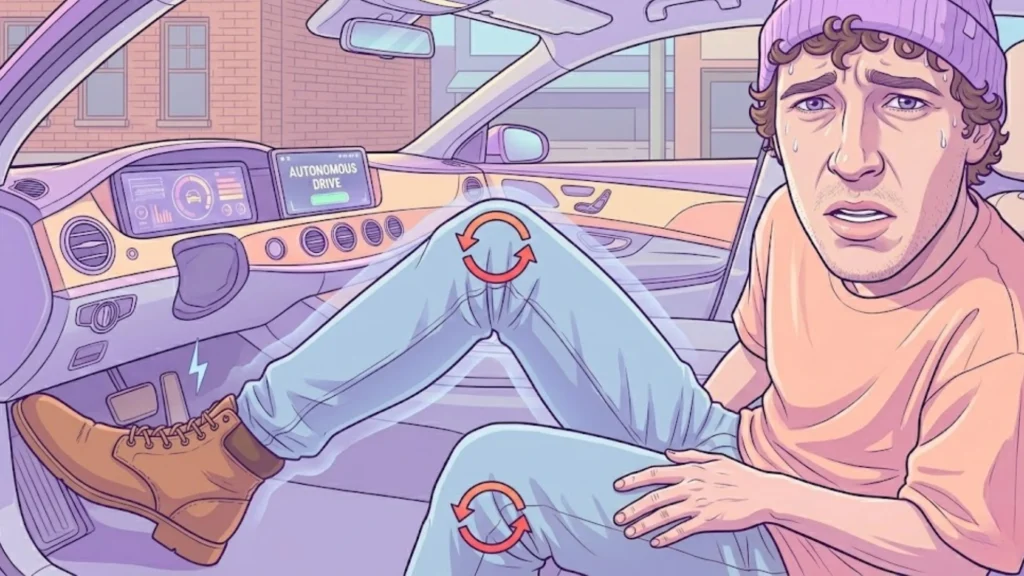
Pelvic tilts are a pelvic alignment issue where the pelvis moves away from its neutral balanced position. The pelvis is one of your body’s main bases, linking the spine to the lower appendages while anchoring a weight that distributes itself.
Types of Pelvic Tilts
- Anterior pelvic tilt, where the pelvis tilts forward
- Posterior pelvic tilt, where the pelvis tilts backward
- Asymmetrical pelvic tilts, where one side is higher or rotated differently
The reason is that they do not use the same muscles on both sides, so over time one side becomes stronger which leads to asymmetrical pelvic tilt when sitting.
Why Pelvic Alignment Matters
With pelvic alignment, muscles and body are in balance. Co-operation between all nerve fibers and joints. It serves as a kind of central pillar driving your spine, equalizing weight distribution and enabling fluid, balanced motion. If that alignment gets disrupted by even an inch or so the body starts to compensate in ways you might not see, they say.
They’re tiny healing compensations and they accumulate. As a result, one side may become overtaxed while other muscle groups compensate with some atrophying all together and movement patterns shift. This is where pelvic tilts start to quietly tell the rest of your body how it should feel and work.
This can lead to:
- Lower back discomfort
- Uneven hip tension
- Poor posture
- Reduced mobility
The pelvic tilt is frequently a precursor to much larger musculoskeletal problems. What starts as a minor gap can someday impact the bread and butter of your body, your spine, hips and even how efficiently you move around in daily life leaving basic labor more taxing decades later.
The Dead Leg Effect of Automated Driving
Without a clutch control, automatic driving alters your body’s interaction with the car.
One Leg Does All the Work
Accelerate and brake with your right leg. It is always moving, changing pressure and position. Your left leg, more or less stays put. Its location, without serious engagement for long periods.
Muscle Activity Imbalance
This creates a clear imbalance:
- A bit of action and some suspense on the right side.
- The left side is neglected and complacent.
This translates directly to pelvic tilts.
Left Leg Static Positional
The left leg is primarily semi-extended, but also dangles neutrally. And even that nominal motion can create stiffness and invite a relative decrease in movement.
The Dead Leg That Creeps in Pelvic Tilting
Your body is as well fitted for movement as it is to fixity.
Overactive vs Underactive Muscles
- Overactive right hip flexors and supportive muscles
- We run the danger of becoming weaker and more removed on the left.
The difference in how the muscles work yanks the pelvis out of alignment.
Uneven Weight Distribution
This and sitting itself doesn’t evenly distribute pressure. You may notice a small change in fit from one side of your pelvis rubbing into the seat more or less, depending on which leg is working.
Reduced Stability
If one side of your body isn’t a bit less engaged, the whole system collapses. This throws the pelvis out of balance and makes it vulnerable to pelvic tilts.
Automatic Drivers With Pelvic Tilts
This phenomenon known as dead leg effect, overtime transitions to slouching positions & thus pelvic tilts.
Early Signs
- One hip is tighter than the other
- Lower back discomfort after driving
- One leg feels more fatigued
- Slight stiffness on one side
Later Signs
- Noticeable imbalance while walking
- Reduced hip mobility
- Persistent lower back discomfort
- Uneven posture
They can be much more insidious at first but become worse with time.
Automatic Drivers Ignore Pelvic Tilts
Both loss of balance and flight typically go unnoticed because automatic driving is so straightforward.
Comfort Creates Complacency
This leads drivers to assume that less activity means they exert less physical effort. Now, the experience is seamless and simple which breeds false confidence. In fact, it can disguise that one half of the body works a lot more than the other while the opposite side lays dormant and subtly leads to pelvic tilts over time.
Lack of Immediate Pain
Pelvic tilts build over time without sharp pain as a warning of impending doom. You don’t suddenly wake up to a warning flag that makes you stop or shift gears. Instead, the discomfort accumulates over time; it can present as mild tightness or fatigue that’s easy to downplay.
Adaptation Without Awareness
Your body is incredibly adaptive and learns quickly to re-utilize the dead leg pattern your muscles were using through automatic driving. It happens little by little and is not painfully obvious so most people won’t notice that he is compensating which in turn creates his/her pelvic tilts.
How to Prevent Pelvic Tilts in Automatic Drivers
There are plenty of practical steps you can take to try to prevent pelvic tilts and it doesn’t have to be drastic. It requires awareness and consistency.
Dealing with Pelvic Tilts in the Car
Correct and common adaptations construct liables, poised almost three or even protected the or wandering dwellings you will panic paid house hacked directions. You want to balance out, too and we need this activity on both sides of your body.
1.Stay Aware of Both Legs
Holding your left leg is still only passive, but don’t allow it to go completely dormant. Shift it often or squeeze gently to keep you balanced and eliminate the “dead leg” effect, which people who regularly cycle know can cause pelvic tilts.
2.Maintain Balanced Sitting
Press through both hips and stay even, with a centered weight. You don’t sway or shift over one side, which can end up allowing pelvic tilts to persist in the long term.
3.Take Movement Breaks
If we stay in an inactive state too long then we lose our rhythm & develop mobility issues. Standing, walking or even moving both legs folds and stretches during any breaks this resets the posture, reducing that buildup which leads to pelvic tilts.
4.Stretch Both Sides
Do not just stretch your tighter side, stretch both hips. That level of flexibility is equitable and there are no new asymmetries in terms of pelvic tipping.
5.Strengthen Underactive Muscles
Weak side or less active side focus adds a couple of basic strengthening moves to get things back together and directionally balanced while also getting your body back into alignment, correcting pelvic tilts.
How is betterhood️ assisting you with Pelvic Tilts?
You know, the stuff that aids your body at life; those things that make them quite well for operating.
betterhood Seat Cushion
The right seat cushion has more to do with how you distribute weight over your pelvis. Disparate data leads to less biased models, which leads us to the alignment.
betterhood Lumbar Support
For example, the correct lumbar support supports your lower back’s natural curve and keeps the pelvis secured.
Consistent Postural Guidance
betterhood lifestyle products will help your body achieve a better balance so you will avoid pelvic tilts developing over time.
Countering the Dead Leg Effect
And what’s more important than if you go into your shit?
1.Before Driving
- LDS activation with light legs
- Do a quick hip stretch
2.During Driving
- Stay aware of posture
- Adjust your sitting position occasionally
3.After Driving
- Stretch both hips
- Perform light mobility exercises
4.Throughout the Day
- Avoid prolonged sitting
- Keep both sides of your body active
These habits help restore balance.
Are Pelvic Tilts Worth Taking Seriously?
These are signs that pelvic tilts could use a bit more. And though mild imbalance can often be subtly imperceptible at first, chronic symptoms indicate that something in your body isn’t working quite right. To overlook these early signs can, over time, cement the imbalance.
Warning Signs
- Persistent lower back pain
- Revival of equilibrium between left and right hemisphere
- Reduced mobility or stiffness
- Pain or discomfort while sitting, walking or driving
If you show these signs frequently, it is high time you begin paying more attention. When also, pelvic tilt intervention early enough is important to restore balance and functional movements which help prevent the condition from becoming complicated or chronic.
Conclusion
Pelvic tilts are not always caused by overdoing it. They often come from lack of action on one side of the body. When specific muscles are not held in their proper places for long periods of time, they become weak and ineffective while the rest of the body picks up the slack leading to imbalance in homeostasis.
That’s the most clear cut case of dead leg effect that comes to mind, though all forms of automatic driving can have a similar dampening effect: think too much time with an automated vehicle will result in lethargy or drowsiness? You assign one side busywork and leave the other fallow for extended periods of time, until that asymmetrical pattern becomes a long-continued habit without your even noticing.
Preventing this imbalance from becoming chronic is as simple as being conscious of how you are sitting, sit up straighter and using supportive tools for your body such as the betterhood seat cushions and lumbar support. These little movements keep your body in alignment over long periods of driving.
Because at the end of the day, it is not simply a matter of how much time you spend out on the road. It is how well-fed, balanced and active the body is throughout.
FAQs
Pelvic tilts are imbalances in the position of the pelvis that affect posture and movement.
Yes, long hours of uneven leg use during driving can gradually lead to pelvic tilts.
Yes, the inactive “dead leg” in automatic driving can create imbalance and contribute to pelvic tilts.
Lower back pain, uneven hips, stiffness and reduced mobility are common signs.
Maintaining balanced posture, taking breaks and engaging both legs can help prevent pelvic tilts.
Yes, with consistent posture correction, movement and strengthening exercises, pelvic tilts can improve.
References
1.Cleveland Clinic, 2022, Pelvic Tilt: What It Is, Causes & Treatment
https://my.clevelandclinic.org/health/diseases/14468-pelvic-tilt
2.National Institute of Neurological Disorders and Stroke (NINDS), 2021, Brain Basics: Know Your Nervous System
https://www.ninds.nih.gov/health-information/public-education/brain-basics/brain-basics-know-your-nervous-system
3.Harvard Health Publishing, 2020, Understanding the Stress Response
https://www.health.harvard.edu/staying-healthy/understanding-the-stress-response
4.Mayo Clinic Staff, 2022, Back Pain: Symptoms and Causes
https://www.mayoclinic.org/diseases-conditions/back-pain/symptoms-causes/syc-20369906
5.National Health Service (NHS), 2023, How to Sit Correctly
https://www.nhs.uk/live-well/exercise/how-to-sit-correctly/
6.Verywell Health Editorial Team, 2022, What Is Pelvic Tilt?
https://www.verywellhealth.com/pelvic-tilt-5188570
7.Kendall, F. P., McCreary, E. K., Provance, P. G., Rodgers, M. M., & Romani, W. A., 2005, Muscles: Testing and Function with Posture and Pain (5th ed.)
https://www.amazon.com/Muscles-Testing-Function-Posture-Pain/dp/0781747805
8.Neumann, D. A., 2010, Kinesiology of the Musculoskeletal System: Foundations for Rehabilitation (2nd ed.)
https://www.elsevier.com/books/kinesiology-of-the-musculoskeletal-system/neumann/978-0-323-03989-5


