




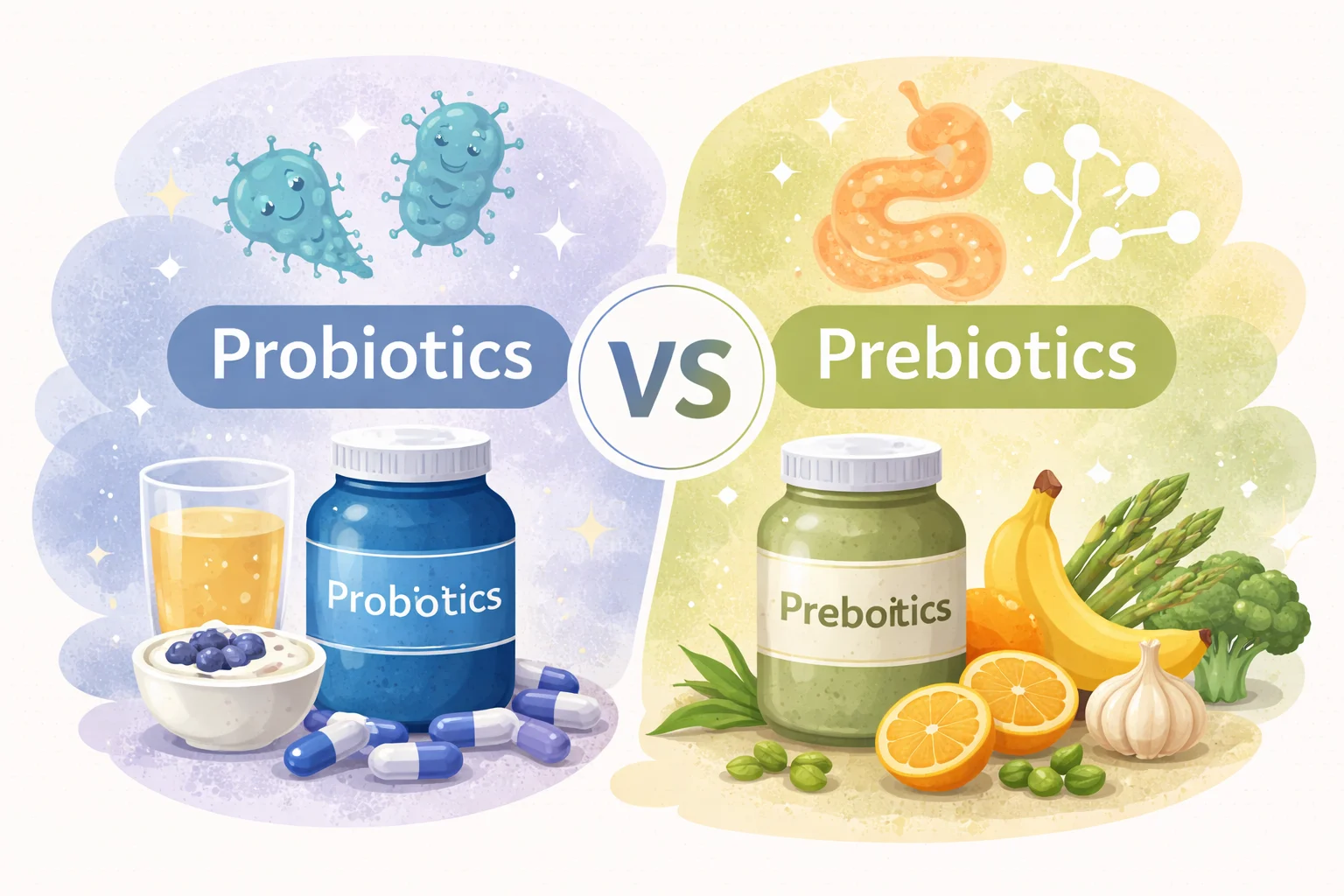
Gut health, it seems, has now joined the pantheon of most-chattered-about subjects in nutrition and wellness. Most are just discovering that they don’t simply digest food, but immunity, metabolism and general well-being. Probiotics And Prebiotics those two words often come up whenever gut health is discussed. Though similar in the auditory realm, they work differently in the body.
Of these, probiotics are the good bacteria that live in the digestive tract; prebiotics are a type of fiber that nourish those friendly bugs. Those two things are linked, working together to promote a healthy gut microbiome, the collection of microscopic organisms that inhabit our digestive tract.
Understanding probiotics versus prebiotics enables you to make better dietary choices that support digestive health. This guide explains in detail what probiotics and prebiotics are, how they work, their health benefits, and some food sources as well as their supplements and working styles to a healthy lifestyle.
What Are Probiotics?
Towne and Tansey explain that probiotics are living microorganisms that, when introduced in adequate amounts, provide a health benefit to the host. These fast bacteria help balance out the odd microorganisms when there is an imbalance within your digestive system tract. The gut is home to trillions of bacteria, some good and some bad. Probiotics help feed the good bacterias, keeping the bad ones in check… a better balance.
Prebiotics are found in fermented foods-type of supplements. Lactobacillus ( L.) and Bifidobacterium ( B.) are the two broadly recognized families of probiotic bacteria. These germs are naturally present in the intestines and aid digestive and immune health. [1]
Body probiotics can aid various functions within the body,
including:
- Maintaining digestive balance
- Supporting immune system function
- Helping break down food
- Supporting nutrient absorption
- Maintaining gut barrier integrity
- Supporting overall gut microbiome health
But when the gut microbes are out of whack there’s too much bad bacteria a state called dysbiosis, it may result in digestive disorders or other maladies; when they’re in balance, it is called eubiosis, and health flourishes. Probiotics help restore this balance.
What Are Prebiotics?
Prebiotics are a group of dietary fibers that nourish healthy gut microbiota. Where probiotics are live bacteria, prebiotics are not. Rather, they are compounds that help feed and grow the beneficial organisms naturally found in the intestines.
Prebiotics travel through the digestive tract in their indigestible form. Once they arrive in the colon, beneficial bacteria settle upon and ferment them, an activity that serves to stimulate these microbes to grow and multiply even more. This helps promote a healthier gut environment. [2]
Prebiotics may support:
- Growth of beneficial bacteria
- Improved digestion
- Better nutrient absorption
- Gut microbiome balance
- Digestive comfort
Well, some prebiotics assist probiotics in achieving this by establishing an environment conducive to healthy bacteria and a thriving digesting ecosystem.
5 Key Differences between Probiotics and Prebiotics
Although probiotics and prebiotics both support gut health, they have different roles.
| Feature | Probiotics | Prebiotics |
| What they are | Live beneficial bacteria | Non-digestible fibers |
| Main function | Add good bacteria to gut | Feed existing good bacteria |
| Source | Fermented foods and supplements | Fiber-rich plant foods |
| Role in gut | Improve bacterial balance | Support growth of beneficial bacteria |
In simple terms, probiotics are the beneficial bacteria, while prebiotics are the food that helps those bacteria grow.
How Probiotics Support Digestive Health
Probiotics support the balance of microorganisms within the digestive tract. “The gut microbiome has trillions of bacteria that affect digestion, immune function and metabolism.
Probiotics are essentially used to restore the healthy state of microbial flora when the balance in gut microbiome is disturbed due to an improper diet, stress, disease or antibiotics.
Probiotics may help:
- Improve digestive comfort
- Support nutrient absorption
- Maintain gut microbiome balance
- Support immune response
- Promote overall digestive health
Certain strains of probiotics can help with occasional bloating, gas or an inconsistent digestive pattern. [3]
How Prebiotics Support Gut Health
Prebiotics play an important role in regulating our gut microbiome and health, as well documented. Because prebiotics are a food source for helpful bacteria, eating plenty of prebiotic fiber can help these microbes grow and reproduce in your gut.
Prebiotics give nourishment to good bacteria to create the types of compounds known as short-chain fatty acids that are critical for gut health and help modulate how well the intestinal lining is doing its essential job.
Benefits of prebiotics may include:
- Supporting beneficial bacteria growth
- Improving digestion
- Supporting gut barrier function
- Helping maintain bowel regularity
- Supporting overall microbiome balance
For instance, foods inherently higher in plant matter often naturally contain prebiotic fibers.
Best Food Sources of Probiotics
Fermented diets naturally contain probiotics. These contain live helpfully and feel good bacteria, which can help your digestion.
Common probiotic-rich foods include:
- Yogurt with live cultures
- Kefir
- Sauerkraut
- Kimchi
- Miso
- Tempeh
- Kombucha
- Fermented vegetables
These foods may help insert good bacteria into the gut. [1]
Best Food Sources of Prebiotics
Certain types of fibers, which are prebiotics, occur in many plant-based foods.
Common prebiotic foods include:
- Garlic
- Onions
- Leeks
- Asparagus
- Bananas
- Oats
- Barley
- Apples
- Chicory root
- Whole grains
An array of fiber-rich foods nourish those good gut bugs.
Probiotic Supplements
Probiotic supplements, which are sold as capsules, tablets, powder or liquid, contain live beneficial bacteria. They are most often taken as a supplement to improve digestive health, particularly when fermented foods are consumed in lower amounts.
Probiotics can come in single-strain or multi-strain supplements. So some supplements act on general digestive health and the others are targeted to a specific problem.
Here are a few things to consider when selecting a probiotic supplement:
- Bacterial strains
- Colony-forming units (CFUs)
- Storage requirements
- Quality and testing
- A health professional can help with whether a probiotic supplement is needed, though.
Prebiotic Supplements
Prebiotic supplements contain fibers, and fibers are a great support for good bacteria in the gut. There are large and regular consumptions to stir up the digestive horse of healthiness and microbiome equability.
Common prebiotic fibers include:
- Inulin
- Fructooligosaccharides (FOS)
- Galactooligosaccharides (GOS)
These fibers may help to feed good bacteria in the intestines.
Can You Take Probiotics and Prebiotics Together?
Right, even though you can use them together as well. Some call this combination synbiotics.
Prebiotics are the fuel that enables these beneficial bacteria to survive and thrive in the gut, which makes them the perfect partner of probiotics consumed at the same time. Probiotics are ‘good’ bacteria and prebiotics are the nutrients that they flourish on.
Both of them together can support a healthier gut microbiome.
Who Might Benefit From Supplemental Probiotics and Prebiotics?
Most of us would benefit from adding both probiotics and prebiotics to our diets.
Individuals who may benefit include:
- People with digestive discomfort
- Individuals recovering from antibiotic use
- People with low fiber intake
- Individuals seeking immune support
- Anyone interested in optimizing gut health
Although consuming a diverse array of fibrous plants like those mentioned in (1) along with fermented foods (which lactic-acid-consuming bacteria on the skin Bruin and his colleagues needed to supplement lab-grown vegetables with) will naturally help keep the GI tract healthy.
Potential Side Effects
Probiotics and prebiotics are generally well tolerated. And some others who rapidly increase their intake may develop mild digestive symptoms initially.
Possible temporary symptoms may include:
- Gas
- Bloating
- Mild digestive discomfort
These symptoms typically fade as the body adjusts.
Ways To Naturally Support Your Gut Health
When it comes to gut health, popping pills won’t cut it. Lifestyle habits matter, too.
Healthy gut habits include:
- Eating a balanced diet
- Consuming fiber-rich foods
- Including fermented foods
- Staying hydrated
- Managing stress
- Getting regular physical activity
These habits can encourage helpful bacteria to thrive in the gut.
Conclusion
Both probiotics and prebiotics play a major role for gut health, though they perform different functions. Probiotics are positive bacteria that help the digestive system while polysaccharides act as a food for these beneficial microbes.
Dietary sources of both probiotics and prebiotics may support a healthy gut microflora balance, enhance digestion, and contribute to good health. Fermented foods combined with a diet rich in high fiber plant foods are keys to keeping the digestive tract healthy.
FAQs
While probiotics leave good bacteria found in food that helps your gut, prebiotics are fibers which help feed and support the growth of these good bacteria.
Both may support gut health. Probiotics introduce beneficial bacteria, while prebiotics help those organisms develop and operate properly.
Yes, they are commonly consumed together as prebiotics act as food for probiotics, allowing them to exist and proliferate in the digestive system.
Yogurt, kefir, kimchi, sauerkraut and miso: Fermented foods are natural sources of probiotics.
Garlic, onions, bananas, oats and asparagus are examples of foods high in prebiotic fibers.
Not always. Most people are able to maintain gut health simply through a healthy diet rich in fermented foods and plant-based fibers.
References
- National Institutes of Health. (2022). Probiotics: What You Need to Know.
https://www.nccih.nih.gov/health/probiotics-what-you-need-to-know - Harvard Health Publishing. (2023). Prebiotics and Probiotics for Gut Health.
https://www.health.harvard.edu/staying-healthy/prebiotics-and-probiotics - Mayo Clinic. (2023). Probiotics and Prebiotics: What’s the Difference?
https://www.mayoclinic.org/probiotics/art-20045640 - Cleveland Clinic. (2023). Probiotics vs Prebiotics.
https://health.clevelandclinic.org/probiotics-vs-prebiotics - Medical News Today. (2023). Prebiotics vs Probiotics: What’s the Difference?
https://www.medicalnewstoday.com/articles/prebiotics-vs-probiotics - World Gastroenterology Organisation. (2023). Probiotics and Prebiotics Guidelines.
https://www.worldgastroenterology.org/guidelines/probiotics-and-prebiotics


