




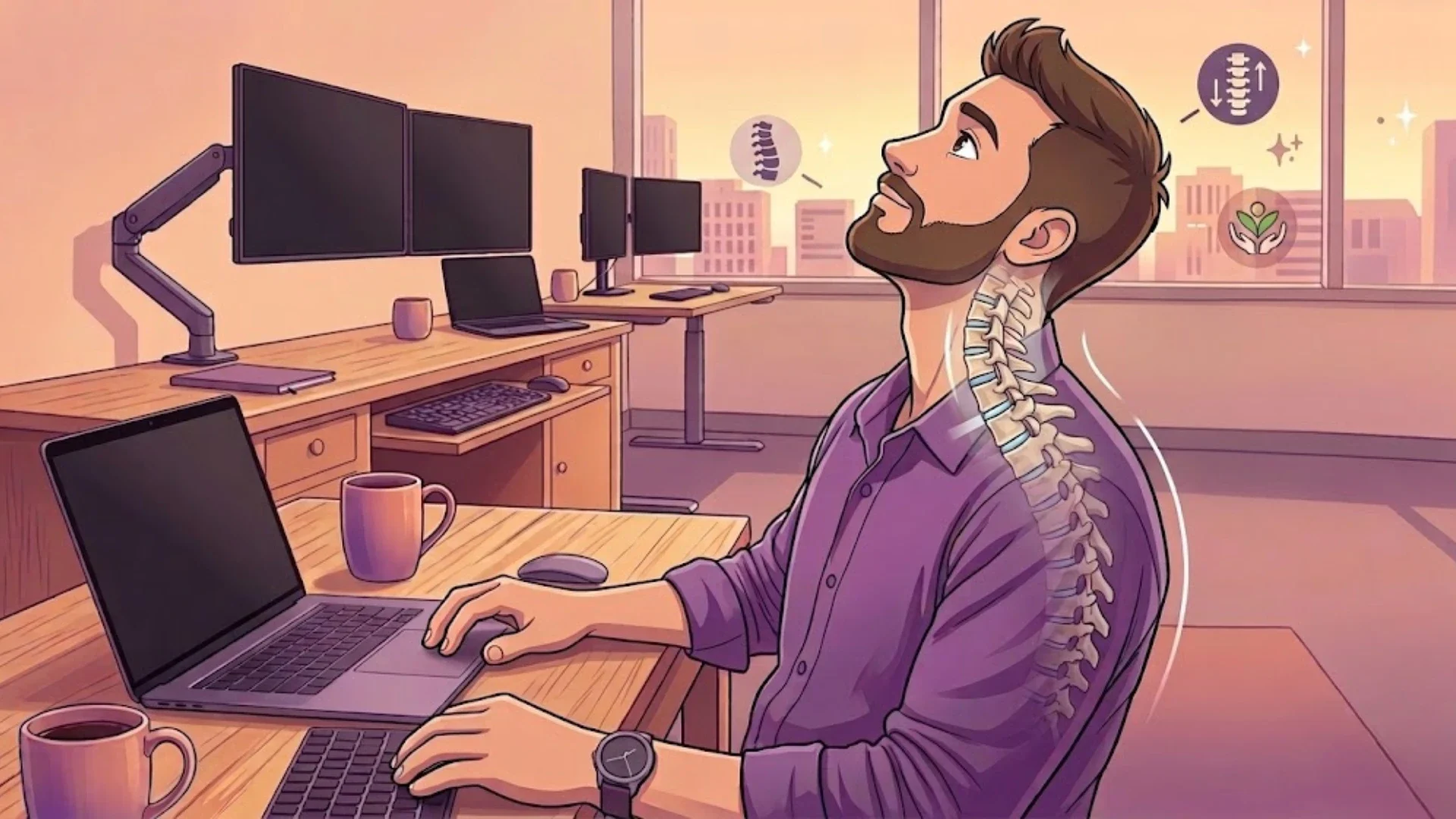
So tell me, why do you think that at night your back feels perfectly normal and by 4 o’clock it has changed? That dull throb starts to creep in. The very action of sitting becomes more burdensome. And standing doesn’t exactly feel good either. You change positions, maybe stretch a bit, but nothing fully resets that discomfort. Sort of like your body is slowly sinking into the day. This is exactly where one spinal decompression exercise comes into play.
It’s not random.
Why does your body feel different later in the day? It has everything to do with how your spine is being treated throughout the day. Gravity begins to compress your spine from the moment you rise until you lay down again. Every hour that you spend sitting, standing or even walking is a little extra weight. Over the course of your late morning breakfast, that pressure accumulates, compressing your spine and causing sleepy muscles.
Instead of believing that back pain is an inevitable event, you can begin to notice it as a predictable consequence of your omnipresent compression. And when you get that much, a spinal decompression exercise goes beyond just a stretch. It’s an actively relieving means of creating more space in your spine and evicting led up pressure so how you feel the coming days doesn’t solidify into something chronic.
What Happens to Your Spine Throughout the Day
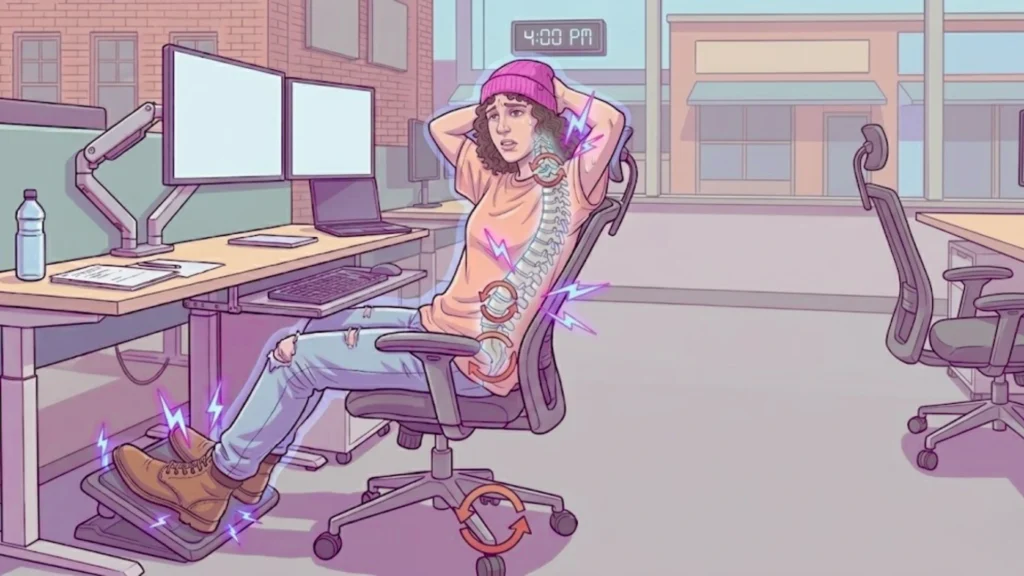
Your spine is a flexible structure. It is dynamic and responsive.
The Role of Spinal Discs
- Between each vertebra are soft cushions called discs. These discs act as shock absorbent spacers between the bones.
- These discs get well hydrated in the morning. That’s why your spine feels really flexible and you’re an inch taller.
- These discs lose water throughout the day under constant load. This leads to compression.
The Effect of Gravity
Gravity is constant. When sitting and standing, your spine takes load.
- Lower back supports Put stress on the lower back.
- Slouching amplifies that pressure
- Prolonged stillness reduces circulation
The back has been under constant pressure for at least a few hours by late afternoon.
Why 4 PM Feels Worse
By 4 PM:
- Disc height is slightly reduced
- Muscles are fatigued
- Posture begins to collapse
We feel stiff, tight or even painful as a result of this combo.
What Is a Spinal Decompression Exercise?
Spinal decompression exercise refers to any movement or position that relieves stress on your spine and gently creates space between vertebrae. Your spine is always under some level of squeeze during the day no matter if you’re sitting, standing or active and repeated pressure can cause compression. One other, well-executed spinal decompression drill does the reverse, encouraging crispness, space and suction in the vertebral architecture.
How It Helps
- Unloads Daytime Stresses Reducing pressure on discs
- Improves circulation to get nutrients to additional spinal tissues
- Relieves muscle tension caused by prolonged seated postures or poor body posture
- Reconciliation brings the spine back into a more neutral state restoring alignment
So instead of “working through” discomfort or ignoring what your body is trying to tell you, a spinal decompression move lets the spine engage in preventative action, healing from each day’s wear and tear.
Signs You Need Spinal Decompression Exercises
No back pain is cut from one cloth, but there are red flags that an injury in your back is of the compression variety.
Common Indicators:
- Sitting more leads to more back pain.
- The more you sit for longer durations, the more painful
- You feel worse when lying down
- Stretching temporarily reduces pain
To help get there, a spinal decompression exercise routine may help.
Reverse Spinal Decompression Exercises
These are simple, powerful movements that can be done at home and even on the job breaks.
1.Passive Hanging
This is one of the greatest spinal decompression workouts.
How to Do It
- Find a pull-up bar or other secure overhead support
- Simply grip the bar, feel your body hang.
- Keep your shoulders relaxed
Duration
20–30 seconds per set
Why It Works
Hanging uses gravity to gradually decompress your spine, creating space between vertebrae.
2.Child’s Pose Stretch
A straightforward gentle exercise for spinal decompression
How to Do It
- Kneel on the floor
- Sit back on your heels
- Reach arms in front of you, lowering torso down
Duration
Hold for 30–60 seconds
Why It Works
This pose helps lengthen the spine and release tension at the lower back.
3.Knees to Chest Stretch
This one targets the lower back.
How to Do It
- Lie on your back
- Draw both knees to your chest
- Hold them gently
Duration
20–30 seconds
Why It Works
It also decompresses the low back and reduces tightness.
4.Seated Forward Fold
Perfect for a short 5-minute break from any task.
How to Do It
- Sit upright
- Slowly bend forward
- Reach toward your feet
Duration
15–30 seconds
Why It Works
It lengthens the spine and releases stuck tension.
5.Pelvic Tilt Movement
A controlled spinal decompression movement that also brings in some stability.
How to Do It
- Lie on your back
- Gently tilt your pelvis upward
- Flat to the mat, lower back pressed.
Repetitions
10–15 slow reps
Why It Works
It reformats the spine and lets respiratory build-up release.
When To Do These Exercises?
Timing is everything or more than most people know. That said, a spinal decompression exercise is most effective if you’re doing it at the moment when your spine absolutely needs relief, and not just because it’s the end of the day. Because it takes time to amortize the steps of creating compression, the challenge is to prevent that from progressing on to clear pain.
Ideal Times
- Several hours later, a good mid-day rest with axial load on your spine.
- Around 4 PM, when stiffness or a familiar ache typically begins to set in
- Everyone has heard of hip flexors if you have been to one position for so long.
A few minutes’ worth of spinal decompression exercise at the right time can relieve pressure that has built up, make your back feel better instantly and help keep that photofinishing discomfort from escalating late in the day.
Posture and Spinal Compression
Some areas of strain eventually become more problematic if daily posture continues to belabor them in which case, exercise alone is not enough.
Common Postural Mistakes
- Slouching forward
- Leaning to one side
- Sitting without lumbar support
These habits increase compression.
How betterhood Supports Spinal Decompression
betterhood products are designed to relieve pressure throughout the day, before muscle soreness kicks in. Instead of reacting to pain, they orient your body in ways that prevent compression as it occurs. With a daily spinal decompression exercise protocol, it is quite easy to observe this difference.
betterhood Lumbar Support
Helps maintain your spine’s natural curve, which is central to avoiding excessive compression. By providing adequate support to your lower back, your spine is held in a position much nearer neutral and significantly less likely to experience the slow buildup of pressure accumulation during the day.
betterhood Seat Cushion
Spread your weight evenly through your pelvis instead of letting you lean or collapse to one side. It lends balanced support to help maintain proper spinal alignment while sitting for hours at a time, and minimizes the constant adjustment of the sitter.
Everyday Support
Rather than after the fact notifications of discomfort or poor posture, these tools work behind the scenes to encourage users to maintain better posture in real time. When combined with spinal decompression exercises, this sets up a supportive environment for your spine to be aligned and reduces the likelihood of your body experiencing some of the stresses that come at the end of day.
Creating a Daily Decompression Routine
Consistency is key. Simple Routine
- Morning: light mobility
- Afternoon: spinal decompression exercise session
- Evening: gentle stretching
Following this technique keeps your spine balanced throughout the day.
Mistakes to Avoid
Even useful exercises can be unhelpful if you do them poorly.
Common Mistakes
- Rushing through movements
- Holding breath during stretches
- Ignoring discomfort signals
- Emphasize slow and deliberate movement
The Bigger Picture: Not Just Pain, It’s Pressure
Your 4 PM back pain isn’t random. It builds slowly, finding its way up your spine throughout the day particularly when sitting for long periods and little to no movement. By the afternoon, you’ve had a weight on your spine for hours.
Spinal decompression is not just about temporary pain relief. It is balancing work: creating space in the spine, easing that pressure before it builds and letting your body re-set itself before the discomfort becomes habit.
Once you notice how your spine changes from morning to evening, then it provides you with additional methods for ensuring that your body feels a certain way. Rather than waiting for pain and responding to it, you write in spinal decompression exercise at the optimal time to diffuse and prevent pain.
Conclusion
Your spine works so hard every hour of the day to hold you up. At least make your machine pause for a sec so the cortisol doesn’t pile up too high.
Spinal decompression should not require a lot of time or energy but if you incorporate it into your routine, you will see significant changes in the way your back feels at work from day to day.
Instead of accepting afternoon slump as simply a reality of your daily life, you can reverse the deteriorating effects on yourself with some proactive attention. A well timed spinal decompression drill will relieve the excess pressure in your spine, bringing ease back into the way that you move.
Because your back requires more than rest. It needs space.
FAQs
A spinal decompression exercise is a movement or position that reduces pressure on the spine and creates space between the vertebrae.
Back pain often increases in the afternoon due to accumulated spinal compression and muscle fatigue from prolonged sitting or standing.
You can perform a spinal decompression exercise 2–3 times a day, especially during breaks or when discomfort begins.
They help improve posture by reducing pressure and restoring alignment but should be combined with good sitting habits.
They are generally safe, but people with existing spinal conditions should consult a professional before starting.
Some relief can be felt immediately, but consistent practice leads to better long-term results.
Yes, simple versions like seated stretches or forward folds can be done during work breaks.
References
1.Adams, M. A., & Dolan, P. (2005). Spine biomechanics and spinal compression. Available at: http://dx.doi.org/10.1016/j.jbiomech.2004.05.012
2.Urban, J. P. G., & Roberts, S. (2003). Degeneration of the intervertebral disc. Available at: http://dx.doi.org/10.1002/art.11304
3.Wilke, H. J., Neef, P., Caimi, M., Hoogland, T., & Claes, L. E. (1999). New in vivo measurements of pressures in the intervertebral disc. Available at: http://dx.doi.org/10.1097/00007632-199908150-00005
4.McGill, S. M. (2007). Low back disorders: Evidence-based prevention and rehabilitation. Available at: http://dx.doi.org/10.1007/978-1-4939-2981-8
5.Callaghan, J. P., & McGill, S. M. (2001). Intervertebral disc herniation risk with repetitive loading. Available at: http://dx.doi.org/10.1097/00007632-200112010-00010
6.van Dieën, J. H., Selen, L. P., & Cholewicki, J. (2003). Trunk muscle activation and spinal stability. Available at: http://dx.doi.org/10.1016/S0021-9290(03)00009-3


