






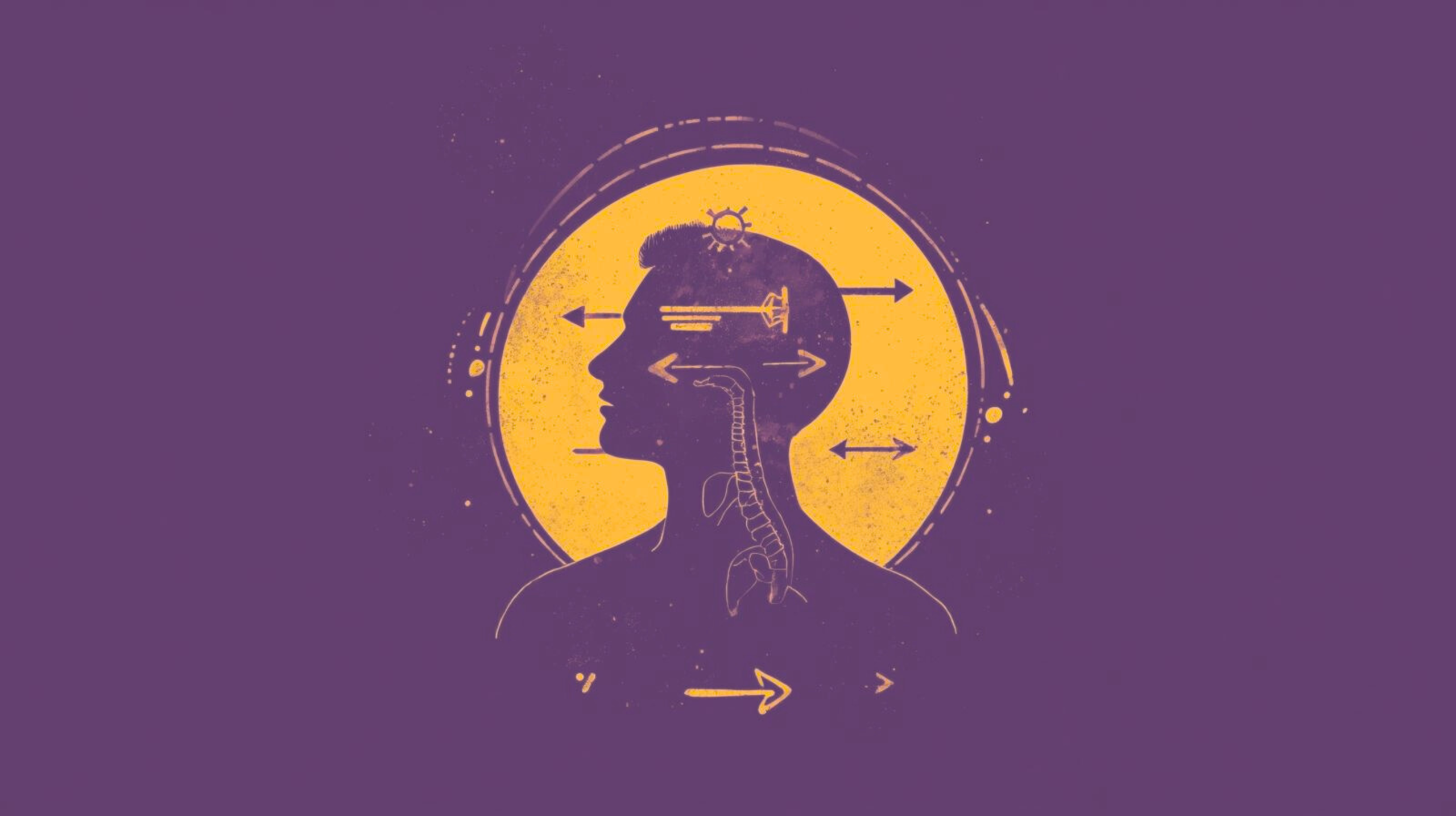
Pain is often interpreted as a failure of strength. It is commonly attributed to weak muscles, poor conditioning, or insufficient resilience, and the solution offered is usually to train harder, push further, and tolerate more. However, pain does not always arise from a lack of capability. In many situations, it emerges when the body has been asked to tolerate more than it can sustainably manage. [1]
Rather than reflecting weakness, pain frequently functions as a signal that boundaries have been exceeded. It indicates that physical, emotional, or psychological limits have been crossed repeatedly without sufficient recognition or adjustment. When awareness or communication fails to establish those limits, the body often enforces them instead.
The Body Recognizes Limits Before Conscious Awareness
Biological systems function through regulation. They continuously balance effort and recovery, load and restoration, stimulation and rest. When stress is appropriate and recoverable, tissues adapt positively. However, when stress becomes chronic, excessive, or ignored, adaptation shifts toward protection. [2]
This protective response may present as muscle tension, restricted movement, increased sensitivity, persistent discomfort, or fatigue. Pain becomes a mechanism through which the body slows behavior, alters movement patterns, and creates space for recovery. In this sense, pain is not simply a symptom but a regulatory signal that encourages behavioral change when conscious regulation has not occurred.
Physical Boundaries and Capacity
From a mechanical perspective, pain often develops when physical load exceeds the body’s current capacity over time. This may occur through repetitive strain without adequate recovery, ignoring early fatigue signals, overtraining, or maintaining limited movement patterns. [3]
Continuing activity despite discomfort can reinforce stress accumulation rather than resilience.
In these situations, pain acts as a braking system. It emerges not because the body lacks strength, but because demands have consistently surpassed sustainable limits. Strength alone cannot fully prevent this outcome. Awareness, variation, and recovery are equally important in maintaining long-term capability.
Psychological Boundaries Expressed Through the Body
The body does not neatly separate emotional stress from physical experience. Individuals who have difficulty setting psychological boundaries often exhibit corresponding physical tension patterns. Chronic stress or an inability to decline demands may manifest as elevated shoulder tension, restricted breathing, jaw clenching, or rigid posture. [4]
When emotional limits are repeatedly overridden, the nervous system remains in a heightened state of readiness. This prolonged activation reduces recovery efficiency and increases physiological sensitivity. Pain can therefore represent an embodied expression of accumulated psychological load rather than purely structural dysfunction.
Nervous System Responses to Boundary Violations
The nervous system is designed to prioritize safety and sustainability. When boundaries are respected, it supports fluid movement, coordinated effort, and adaptive responses to stress. However, repeated violations of physical or psychological limits shift the system toward protective behavior. [2]
This shift may involve increased vigilance, reduced confidence in movement, and amplified pain perception. Pain, in this context, communicates that the current pattern of demand is unsustainable. It serves as feedback that encourages reassessment and recalibration rather than continued escalation.
Why Increasing Strength Is Not Always the Solution
Attempts to resolve pain often focus exclusively on improving strength or endurance. While developing physical capacity is beneficial, it cannot compensate for ongoing boundary mismanagement. Without addressing recovery habits, workload balance, emotional regulation, and behavioral patterns, symptoms frequently recur. [5]
Pain persists in these cases because the underlying issue relates to sustainability rather than capability. Improving strength without restoring balance may increase tolerance temporarily but does not eliminate the factors generating stress.
Restoring Healthy Boundaries
Addressing boundary-related pain requires cultivating awareness and responsiveness rather than suppression. This process involves recognizing early signs of fatigue, allowing recovery before breakdown occurs, adjusting physical or psychological demands appropriately, and restoring movement diversity and breathing efficiency. [3]
Boundaries should not be viewed as limitations. Instead, they create the conditions necessary for sustained performance and adaptability. Systems that operate within defined limits tend to remain more resilient and responsive over time.
The Real Takeaway
Pain should not automatically be interpreted as evidence of weakness. It often reflects the cumulative impact of exceeding manageable limits across multiple domains of life. Strength remains important, but strength without boundaries increases vulnerability rather than resilience.
In many cases, healing begins not by becoming tougher, but by learning to recognize and respect internal signals. The body communicates its needs through sensation, and pain frequently represents a request for recalibration rather than confrontation.
Understanding this distinction allows individuals to respond more constructively. Boundaries do not prevent progress. They enable it by ensuring that effort remains sustainable and growth remains possible.
Chief Science Officer: betterhood
Shayamal is a Human Performance Designer who works at the intersection of psychology, physiology, and human systems design, for the last 25 years he is helping high-performing leaders, teams, and athletes thrive in environments of stress, complexity, and change. His work spans across elite sports, corporate leadership, and chronic health and is grounded in the belief that true performance isn’t about pushing harder, but designing better.
References
Harvard Health Publishing. (2022). Chronic pain and lifestyle factors. https://www.health.harvard.eduand is grounded in the belief that true performance isn’t about pushing harder, but designing better.
International Association for the Study of Pain. (2020). IASP pain definition and overview. https://www.iasp-pain.org
Cleveland Clinic. (2023). Autonomic nervous system and stress response. https://my.clevelandclinic.org
National Institutes of Health. (2022). Overuse injuries and physical stress. https://www.ncbi.nlm.nih.gov
American Psychological Association. (2023). Stress effects on the body. https://www.apa.org/topics/stress/body


