





For most of us, the path to understanding our bodies can seem like working on a jigsaw puzzle with half of its pieces long gone. You might feel “off”, maybe your skin is breaking out as if you were a teenager again, or, despite sleeping eight hours, you’re always tired. Too frequently, such concerns are thoughtlessly dismissed as “just stress” or “part of being a woman.”
We think that your symptoms are a language coming from within your body. One of the most familiar but often badly interpreted culprits for these signs is PCOS. Despite the prevalence of this condition, which is expected to occur in 1 out every 10 women of reproductive age, many suffer for years with no diagnosis [1].
Recognizing the symptoms of PCOS is not about self-diagnosis, it’s about armoring yourself with information so that you can fight for the care you need.
In this guide, we’ll break down PCOS in a simple, science-backed, and judgment-free way so you can better understand your body and advocate for your health.
What exactly is Polycystic Ovary Syndrome (PCOS) ?
PCOS is much more than just a fertility problem, it is multi-system endocrine and metabolic hoopla that the WHOLE body suffers from [2]. Even the name itself can be a little misleading, you don’t actually need to have “cysts” on your ovaries to have it. Instead, those cysts are typically immature follicles that failed to release an egg because of hormonal irregularities.
For clinical acne diagnosis, physicians usually search for two of the three pillars that make up the Rotterdam Criteria [3]:
- Intermittent or absence of Menstrual periods (Anovulation).
- High androgen levels (hormones such as testosterone) that can be seen with a physical sign like acne or excess hair.
- Polycystic ovaries, visible via ultrasound.
The first step in getting closer to a comprehensive management plan is understanding that this is a metabolic illness, one that changes how your body processes energy.
Insulin Resistance and PCOS: The Hidden Hormone Link
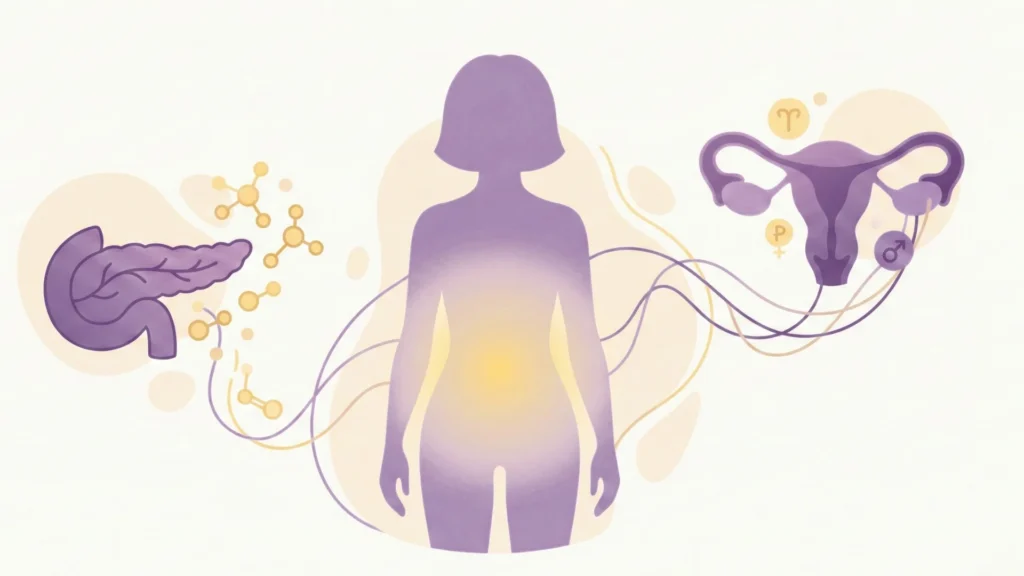
To explain the symptoms of PCOS properly, we have to talk about insulin. Insulin resistance is present in ~70% of women with PCOS [4]. This means that your body’s cells don’t respond well to insulin, causing your pancreas to release even more of it in a bid to keep your blood sugar at a stable level.
High levels of insulin do two things to promote symptoms of PCOS:
- They cause the ovaries to make more testosterone, resulting in acne and hair alterations.
- Their job is to tell your body to store fat, which tends to accumulate around the midsection, so weight management becomes an ongoing struggle.
If you address the underlying metabolism that drives insulin, then a lot of people will find their symptoms start to soften and change.
The 7 Signs of PCOS You Should Never Ignore
1. Irregular or Absent Periods
Regular periods are one of the body’s best signs that your hormones (and generally, the rest of you) are working as they should. And in PCOS, high levels of androgens disrupt the delicate feedback loop between the brain and the ovaries. This means that an egg doesn’t get released, and so the normal shedding of the uterine lining doesn’t occur.
The Red Flag: Regular cycles beyond 35 days, less than nine periods annually or one that swings preposterously from month to month [1].
2. Persistent Adult Acne and Oily Skin
Hormonal acne is different from the pimples you may get here and there. It is attributed to excessive sebum production (oil) due to high androgens. This grease plugs up the pores and feeds bacteria deep in the skin.
The Red Flag: Deep, painful cystic acne that flares up along the “U-zone” specifically around the jawline, chin, and upper neck.
3. Unusual Hair Growth or Loss
The hormones that bring on breakouts can also change your hair in crazy ways. Hirsutism is the excessive hair growth in a “male-pattern” while Androgenetic Alopecia is thinning of hairs from the head.
The Red Flag: Thick, dark hairs sprouting on an upper lip, chin, chest or inner thigh. On the other hand, you may notice your ponytail is thinner, or that your scalp now appears wider at the part [2].
4. Unexplained Weight Gain and “PCOS Belly”
Due to the aforementioned insulin resistance, the body frequently ends up in “storage mode.” This makes you gain weight super easily, and even on a caloric deficit it’s incredibly hard to lose that weight.
The Red Flag: Weight that piles on only around the abdomen (belly fat). Such fat is metabolically active and has the potential to promote inflammation [4].
5. Hyperpigmentation of the Skin (Acanthosis Nigricans)
High levels of insulin may accelerate the reproduction of skin cells. These cells are new ones that have more melanin in them, and they form a patch of skin that appears darker or feels “velvety.”
The Red Flag: Look for patches of dark skin in creases of the body like the back of the neck, underarms or groin area [5].
6. Chronic Fatigue and “Brain Fog”
With your body unable to process glucose properly, your brain and muscles don’t receive a steady flow of fuel. This leads to the “PCOS crash,” usually a few hours after a high-carb meal.
The Red Flag: You’re dealing with a “foggy” brain where it’s difficult to focus, or you feel exhausted and that is not solved by getting a full night’s rest.
7. Pelvic Pain or Heavy Bleeding
When there is no ovulation, the endometrial lining can become too thick. When it does eventually shed, the period can be far heavier and more painful than normal.
The Red Flag: Heavy with clots, longer than 7 days or chronic dull pelvic aching between periods [1].
How to Prepare for Your PCOS Doctor Appointment ?
It can be intimidating to advocate for yourself in a medical setting. For many women, symptoms of PCOS are dismissed as lifestyle problems. Here are a few things to keep in mind before visiting:
- Track Your Cycle: Keep a record (or use an app) to document the true length of your cycles for 3-6 months.
- Document Physical Changes: Do you get spots on your skin or hair growth that runs in flares and fades?
- Get the Right Bloodwork: Ask for a comprehensive hormonal panel which includes Total and Free Testosterone, DHEA-S (dehydroepiandrosterone sulfate), and a Fasting Insulin/Glucose test (this sounds obvious, but many people order an A1C only).
- Bring Up Your Family History: Often, PCOS is genetic; tell the provider if you have had sisters or a mom who experienced these issues.
Why Early Detection of PCOS Matters for Long-Term Health ?
Ignoring PCOS is not just a matter of managing acne or irregular periods. Untreated PCOS in the long run causes Type 2 diabetes, heart diseases and endometrial cancer which results from continuous thickening of uterus lining [1, 2]. Finding it now gives you the opportunity to take proactive, gentle steps to ensure your future health.
Room for Growth: A Gentle, Sustainable Approach to Healing
You are not broken and your body is not failing you. PCOS is your body’s way of communicating that something needs support, not punishment. Healing PCOS is about working with your system, not fighting it.
Blood Sugar Balancing
One of the most effective ways to manage PCOS symptoms is by stabilizing blood sugar levels. Aim to include protein, healthy fats, and fiber at every meal to reduce insulin spikes and improve hormonal balance.
Stress and Nervous System Support
Chronic stress increases cortisol levels, which can worsen androgen imbalance and PCOS symptoms. Prioritising quality sleep, gentle movement, mindfulness, and nervous system regulation can significantly improve hormonal health and symptom control.
Conclusion: Turning Awareness into Action
Living with how PCOS makes you feel can sometimes be like having a full-time job that you never put in an application for. It’s a condition that affects every aspect of your life; from the way you feel when you look in the mirror to the energy it takes to order a cup of coffee. But remember, the most important thing: Your symptoms are not your fault, and they don’t define your value as a person.
It’s signs like these, at Betterhood we think knowing them is the first step towards reclaiming your story. PCOS isn’t a “broken” system; it’s a sensitive one that needs tender loving care and an enormous dose of self-compassion. Whether you are new to the diagnosis journey or have been on this path for years, know that you are part of a community that cherishes your health as much as your soul.
Take this information, talk to a listening healthcare provider and take the small holistic steps towards change that feel right for YOUR individual body. You deserve to feel comfortable in your skin once more.
Explore More Health & Wellness Solutions:
Would you like to be up-to-date on everyday health and wellness issues? Here are some interesting pieces to help you. Follow the links below if you want practical tips or solutions:
- What Causes Back Pain? Understanding Root Triggers & Prevention Tips
- 10 Effective Home Remedies for Body Pain Relief Naturally
- Wrist Support Braces Explained: Protocols for Pain Relief
- Pillow for Neck Pain: Best Contour Pillow Every Side Sleeper Needs
Frequently Asked Questions
Yes. You can have PCOS with regular periods if you have high androgens or polycystic ovaries on ultrasound.
PCOS hair loss usually shows as thinning on the crown or widening part due to excess androgens shrinking hair follicles.
“PCOS belly” isn’t a medical term, but abdominal weight gain from insulin resistance is common in PCOS.
Insulin resistance makes cells struggle to use glucose, triggering strong cravings for sugar and refined carbs.
Yes. Symptoms often shift from acne and irregular periods to metabolic issues like insulin resistance and diabetes risk.
Yes. Many people with PCOS conceive with tracking, lifestyle changes, or medical support.
There’s no single diet, but low-glycemic and anti-inflammatory foods often help manage symptoms
References
- Mayo Clinic. (2023, August 29). Polycystic ovary syndrome (PCOS).https://www.mayoclinic.org/diseases-conditions/pcos/symptoms-causes/syc-20353439
- Centers for Disease Control and Prevention. (n.d.). Diabetes and polycystic ovary syndrome (PCOS). https://www.cdc.gov/diabetes/risk-factors/pcos-polycystic-ovary-syndrome.html
- Rotterdam ESHRE/ASRM-Sponsored PCOS Consensus Workshop Group. (2004). Revised 2003 consensus on diagnostic criteria and long-term health risks related to polycystic ovary syndrome (PCOS). Human Reproduction, 19(1), 1–12.https://pubmed.ncbi.nlm.nih.gov/14688154/
- Legro, R. S., Arslanian, D. S., Ehrmann, D. A., Rhodes, K., Schlaff, W. D., Whitman, B. F., & Wild, R. A. (2013). Diagnosis and treatment of polycystic ovary syndrome: An Endocrine Society clinical practice guideline. Journal of Clinical Endocrinology & Metabolism, 98(12), 4565–4592.https://academic.oup.com/jcem/article/98/12/4565/2833703
- American Academy of Dermatology Association. (n.d.). Acanthosis Nigricans: Who gets and causes.https://www.aad.org/public/diseases/a-z/acanthosis-nigricans-causes