






If every step feels like you’re walking on a sharp pebble, you’re not alone. Plantar fasciitis is one of the most common causes of heel pain, and for many people, it quietly turns simple activities like walking, standing, or even getting out of bed into a painful challenge.
One of the most effective yet often overlooked ways to manage this condition is ankle brace for plantar fasciitis. The ankle and foot work as a connected system, and when the plantar fascia is inflamed, stabilizing the ankle can reduce strain, improve alignment, and speed up recovery.
From compression sleeves and braces to night splints, ankle support devices help reduce excessive foot movement, maintain proper positioning, and relieve pressure on the plantar fascia. When combined with supportive footwear and lifestyle changes, they can make a real difference in both pain relief and long-term prevention.
In this guide, we’ll break down how ankle brace works, who should use it, and the best strategies to recover faster and prevent plantar fasciitis from coming back.
Understanding Plantar Fasciitis
Anatomy of the Foot and Plantar Fascia
The plantar fascia is a dense band of connective tissue (aponeurosis) that originates at the calcaneus (heel bone) and extends to the metatarsal heads (base of the toes). It provides the foot with arch support, helps absorb shock and is an integral part of the mechanics of walking.
Several structures are affected, the attachment to the heel bone (medial calcaneal tubercle), The small muscles in the foot, The calf and Achilles tendon (the tightness here causes increased stress on the plantar fascia) The supports that help support your arch and any effects of footwear or surfaces that our feet come into contact with.
How Plantar Fascia Inflammation Develops
- Micro-tears or degeneration where Achilles attaches at the heel (overuse, repetitive stress).
- Too much tension from a biomechanical ‘imbalance’ – flat feet, restricted ankle dorsiflexion, tight Achilles or calf muscles.
- Increased stress due to overloading (obesity, high impact exercise) or not enough rest.
- Inflammatory or degenerative (fasciopathy) is present with pain, swelling and decreased flexibility.
Symptoms and Diagnosis: Heel Pain, Stiffness, Swelling
- Intense pain in the heel – especially when taking first steps in the morning or after a period of rest.
- Pain after standing or walking for some time, temporarily relieved by activity but may become worse.
- Stiffness, particularly in dorsiflexion (bringing toes up), and a tight calf.
- In those that do, pain would be provoked when the plantar fascia becomes taut – at the bone insertion (calcaneal insertion of the plantar fascia).
- The diagnosis is usually clinical although imaging (ultrasound or MRI) may assist by measuring fascia thickness and to exclude other conditions.
What Is Ankle Brace for Plantar Fasciitis?
Definition and Purpose of Ankle Braces and Sleeves
These ankle supports are in the form of braces, sleeves, splints or straps which aid the foot and ankle structures with stability, alignment, compression and even passive stretching. They may also work by decreasing stress to the plantar fascia, providing shock absorption, maintaining the arch of the foot in a less deformed position or keeping the ankle/foot at an angle that would minimize stretching (strain) on it while at rest (most especially during sleep hours).
How Support Alleviates Tension on the Plantar Fascia
- By supporting the arch so fascia is not overly stressed when a person has weight on it.
- By limiting over-stretching (overpronation) and pulling the fascia.
- By compression to limit swelling and encourage blood flow.
- Through night support (splints) that hold the foot in dorsiflexion overnight prevents shortening of fascia/muscles, preventing pain in morning.
Difference Between Ankle Support, Night Splints, and Orthotics
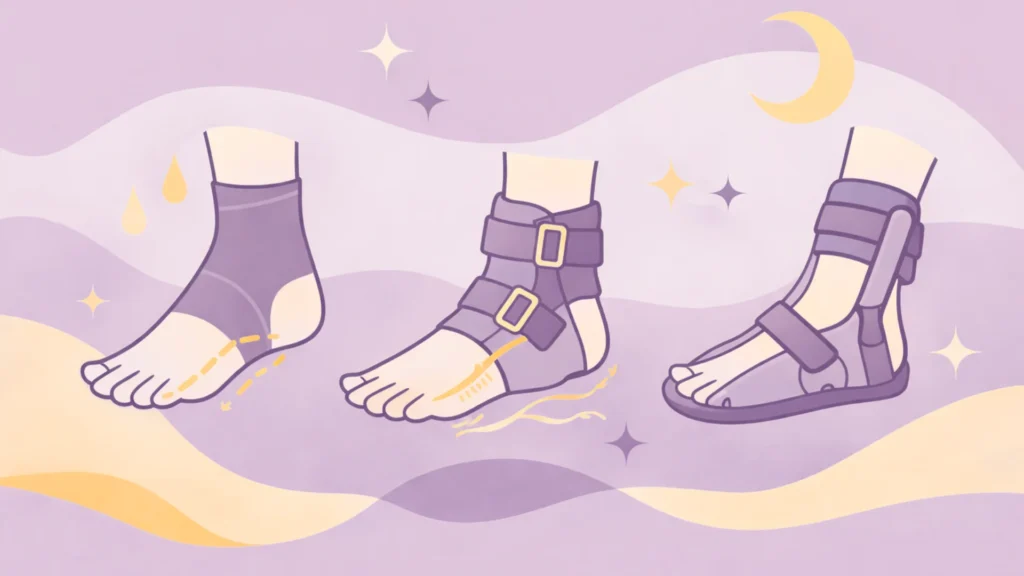
Ankle braces/sleeves: These are support-styled products that are made to help resist motion during the day in order to ease strains to the arch, and prevent you from repeating those aggravating motions.
Night splints: worn at night to keep foot with dorsiflexion thereby avoiding fascia shortening and morning pain.
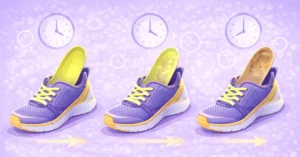
Orthotic inserts: Worn in shoes to help support the arch, cushion the heel and better foot mechanics.
Types of Ankle Support for Plantar Fasciitis
We will list the main styles, followed by features + pros and cons.
1. Compression Sleeves and Socks
These are elastic sleeves over the ankle/foot with or without arch support and heel cushioning. They offer mild support, compression and stabilization for everyday activities.
Best for: Mild pain, walking, light activity, people who want a low-profile support (works with shoes).
Downsides: Less structured support; not as effective for more severe or chronic cases; may still allow movement that puts strain on the area.
2. Adjustable Ankle Braces
Braces were often equipped with straps, rigid supports or plastic parts, adjustable fitting, heel/arch padding. They provide more control of movement, stronger stabilization and perhaps better support for moderate pain.
Best for: walking, work use, moderate pain, when shoes are not enough.
Cons: Bulky; possible decrease of comfort or breathability; could conflict with your shoe game; more visible; may need to be retied.
3. Night Splints
Its purpose is to maintain the foot in a position (typically neutral- ~90° dorsiflexion) while sleeping/resting. Prevent the plantar fascia and achilles complex from contracting during the night.
Best for: Those with strong first-step pain in morning, more chronic cases, when rest is challenging or plateaued recovery.
Cons: Minor discomfort, stiffness; complaints of not liking the feel of sleeping with splint; may be bulky; initial soreness or pressure points.
4. Gel-Padded and Cushioned Supports
These incorporate both structural support and gel or foam padding under the heel or arch, to cushion impacts. Cushioning absorbs much of impact, good for walking and ideal for running on hard surfaces.
Perfect for: Walking, standing work and additional cushioning in the heel strike zone where you have high impact pain.
Trade-offs: Additional bulk; may force shoe size to be tight; variety of durability for gel pads; not enough stabilization without itself for severe conditions.
5. Orthotic Inserts Combined with Ankle Sleeves
Orthotics (custom or prefabricated) in-shoe devices help keep the arch supported or can alter foot mechanics, and when worn in conjunction with ankle braces/sleeves aid offloading the strain on plantar fascia.
Good for: longer term management, people with biomechanical risk factors (flat foot, high arch, tight calf), or those needing active and resting control.
Cons: Price (custom orthotics more costly), importance of proper fit, sometimes an adjustment period.
What are the Benefits of Using Ankle Support?
Here are the main advantages of using ankle support devices, supported by research where available.
1. Pain Relief and Reduced Inflammation
- Supports to help minimize micro-strain and limit irritation at the heel insertion.
- Night splints (some RCT) show morning pain and first-step pain reduction.
- Orthotic inserts with supportive device decrease plantar heel pain and increase function.
2. Supports Arch and Heel Stability
- Ankle support limits excessive elongation of the plantar fascia by controlling arch collapse.
- Braces or sleeves can also help in aligning the foot during the gait cycle, to decrease abnormal heel-load.
3. Prevents Worsening of Plantar Fascia Strain
- Without assistance, repeated stress aggravates micro-tears. Support reduces repetitive strain.
- Night splints may be used to prevent the plantar fascia from contracting while you sleep causing heel pain.
4. Enhances Recovery Speed from Acute Flare-ups
- Early implementation of support devices along with rest, activity modification, and stretching may accelerate reduction in pain.
- Patients combining braces/sleeves or night splints seemed to get better pain and function faster.
5. Improves Comfort During Daily Activities and Exercise
- Buttock back and leg pain/fatigue often occurs when surface or footwear are hard supports for hard surfaces by padding or braces, discomfort = less activity.
- Use of orthoses for shoes or when standing / walking episodes are present will help minimise pain peaks.
How to Use Ankle Support Effectively?
To ensure it works, procedures must be followed.
1. Proper Fitting and Sizing
- Fit should be based on the actual dimensions of your feet, not shoe size or calf circumference.
- Make sure the brace or sleeve fits your foot and ankle geometry; if it’s too tight, that impedes circulation; if it’s too loose, you simply won’t get any support.
- For the night splint, the deflection should be mild (not painfully high), enough to maintain some relaxation but stretching.
2. Duration of Wear: Daytime vs Nighttime Use
- Wear a brace/sleeve to support weight bearing activities (such as walking, standing and exercise).
- Night splints are used to be worn while sleeping, they usually strap the foot into a position that maintains the ” stretch ” of the plantar fascia and achilles tendon during sleep, which reduces morning pain.
- Balance your support usage with muscle rest, do not use continually to the point of pain.
3. Combining with Stretching and Strengthening Exercises
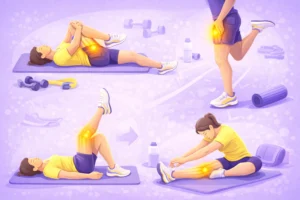
- Stretch the calf muscles (gastrocnemius, soleus), Achilles tendon. Tight calves stress out the fascia.
- Lengthen the plantar fascia itself (ie draw the toes back towards the shin, roll foot over a ball)
- Increase internal support by strengthening muscles located in the foot (toe curl, arch lift).
- Add some mobility to the ankle/foot for less stiffness.
4. Avoiding Over-Reliance and Maintaining Foot Muscle Strength
- The assist devices should help, not take the place of inherent support. Overuse and under-exercise can result in weakened foot muscles.
- Taper as pain improves; rotate use.
- Check fit & comfort; reposition / shift to less rigid support as recovery occurs.
Who Benefits Most from Ankle Brace?
Knowing who could potentially benefit the most from ankle support helps put usage in the right perspective.
- People with long-standing plantar fasciitis: Chronic sufferers, people who continue to have heel pain and morning pain.
- Athletics and running: repetitive pounding, excessive standing, and high demand need extra support.
- Flat footed or high-arched people: structural risk factors; support assists in correcting biomechanics.
- The elderly or persons with obese-induced plantar fascia strain: Feet bear heavier loads, bed cushioning is not too good, fat pad atrophy etc.
And also who have had insufficient relief from footwear, orthoses alone, or stretching exercises may benefit from adjunctive use of ankle support.
Potential Risks and Precautions
There is no risk-free treatment; being careful prevents complications.
- Over-compression: Too snug braces or sleeves can cut off blood flow, feel numbness and tingling, or exacerbate certain symptoms.
- Rash/allergic reaction from the skin: In rubber (neoprene, Velcro covers) or plastic covers where there will be sweat and long-wearing can cause a rash.
- Poor fit: wrong size or shaped (in case of night splints) could apply pressure and the opposite effect of joint/muscle strain other than plantar tension portion (ankle, calf, knee).
- Dependence: when you use the support of others too much it may cause weaker inner muscles and lesser flexibly.
- Not addressing root causes: footwear, weight, biomechanics. if you don’t address these factors simply providing support might not help in the longer term.
- When to see a doctor: In cases of severe or unusual pain (such as sudden severe pain, suspected tear, lack of improvement after 6-12 weeks), consult a podiatrist or orthopedist.
Exercises and Complementary Treatments
Support is most effective when combined with strengthening exercises and other supportive therapies.
Calf Stretches and Plantar Fascia Stretching
- Calf stretch (gastrocnemius): Facing a wall, stand with one leg back and straight, heel down and leaning forward into the wall.
- Soleus stretch: Same, but with the back knee bent.
- Plantar fascia stretch: Pull toes toward shin or roll foot over a tennis ball or frozen water bottle while seated.
These take stress off of the plantar fascia, and Achilles tendon.
Foot Strengthening Exercises
- Toe curls (towel pickup with toes), arch lifts, and doming the foot.
- Towel scrunches, marble pickups.
- Ankle dorsiflexion, plantarflexion, inversion and eversion with resistance band.
Massage and Myofascial Release Techniques
- Self-massage: rubbing the arches and heels with hands or/and massage equipment.
- Myofascial release/soft tissue work: The calf, Achilles and bottom of the foot to help loosen undue tightness.
- Ice massage (device: ice roller) at the heel can decrease inflammation.
Proper Footwear and Orthotics
- Shoes with good arch support, cushioning and heel support, no flat flip-flops or very little padding.
- Replace worn-out shoes.
- Orthotic inserts (prefabricated or custom) to improve foot mechanics.
Comparing Ankle Support with Other Treatments
- Ankle support/braces/sleeves/night splints– Minimises strain, supports arch, alleviates pain; might restrict free movement or be expensive and irritate skin.
- NSAIDs/pain meds– Quick relief of pain; systemic side effects and short duration of effect.
- Physio / exercise -Addresses the fundamental causes of the foot problem and builds strength in your foot. It takes time and consistency.
- Orthotics/insoles- Correct foot mechanics and weight bearing, but can be expensive or require modifications.
- Night splints– Dissuasive of overnight contraction and morning pain; Uncomfortable or difficult to tolerate.
- Advanced treatments (shock wave, injection)– Rapid relief when conservative methods have failed Invasive costly and moderate evidence
How to choose best Ankle support?
These are important features and factors to bear in mind when deciding on any support.
- Level of support and rigidity: Lighter sleeves are for minor types of pain – for medium to high strain or during activity/walking/standing several hours, you may want braces with straps or rigid parts.
- Comfort and fit: Properly measure foot width, arch height, and ankle circumference; braces that leave pressure points or rub inhibit protection.
- Adjustable: Straps, velcro attachments, adjustable tension to customize fit and allows for swelling.
- Material quality and breathability: Made of neoprene, breathable fabrics with multiple perforations for areas where the body leans to sweat due to dirt buildup on the skin.
- Cushioning or cushioned: Gel inserts under the heel or arch and cushioned heel cups absorb impact.
- Night vs. day design: Night splints are more cumbersome; day supports should be commensurately small, fit inside a shoe if possible (and some do double duty).
- Overall ease of use and cleaning: Wipeable and removable materials.
Expert opinion: If in doubt, see a podiatrist or physical therapist; custom braces/orthotics may also be required in some biomechanical circumstances.
Incorporating Use of Ankle Support into a Daily Routine
For maximum effect, support needs to be part of larger, sustained strategy.
1. Wearing During Walking, Running, Exercise
- Start by using support while walking, standing or engaging in low-impact exercise.
- For runners they may wear light braces/sleeves for warm ups and support braces if required, they can also check their footwear.
Steer clear of activities that make pain worse: Reintroduce them slowly as the pain decreases.
2. Using Support During Work or Prolonged Standing
- Jobs where you are on your feet for long hours (cooking, retail, and factory work) can benefit from arch/ankle support.
- Just use cushioned mats, take some breaks and switch your foot postures.
3. Monitoring Recovery and Adjusting Support Use Over Time
- Localise yourself: keep a pain log, making note of; the pain on waking up, how well the support works and if it makes worse anything.
- Re-evaluate fit on a regular basis, and make any necessary adjustments as swelling decreases.
- Use a lighter sleeve or orthotic; decrease dependence when pain lessens.
4.Combining Support with Lifestyle Modifications
- Weight management if overweight.
- Opting for shoes with arch support and good heel cushioning.
- Do not walk barefoot on hard surface.
- Do not wear very high heels or shoes that do not support you.
- Ramp up the volume slowly- no huge increases all at once.
Conclusion
Plantar fasciitis can feel like a stubborn houseguest; annoying, painful, and refusing to leave. But the good news is that you don’t have to live with the pain forever. For most people, a conservative, consistent approach is all it takes to reclaim your mobility.
Think of recovery as a team effort. Tools like Ankle Supports, compression sleeves, or Night Splints are your defense. They protect the fascia, reduce pain, and aid function while you heal. But as the experts say, these tools shouldn’t act alone. Injury risks don’t exist in isolation; they are a complex web of your foot strike, muscle flexibility, and strength.
To truly heal, you must combine support with action. Pairing your supportive gear with a targeted strengthening program creates a powerful “interactome” of recovery. Support protects you, but strengthening prevents the pain from coming back.
With regular care and a little patience, you can find relief in just a few weeks. Don’t just treat the symptom but strengthen the foundation, and take your next step with confidence.
Explore More Health & Wellness Solutions:
Want to stay informed about wellness and everyday health issues? Here are some insightful reads to guide you. Explore the links below for practical tips and solutions.
- How to Prevent Knee Injuries: Proven Tips, and Lifestyle Strategies for Stronger Joints
- How Can Knee Cap Support Help Prevent Injury and Reduce Pain While Running
- 10 Effective Home Remedies for Body Pain Relief Naturally
Frequently Asked Questions
It supports the foot to minimize strain on the plantar fascia, and ultimately helps relieve heel pain.
Compression sleeves, braces, night splints, cushioned supports and orthotic inserts work well.
Yes, night splint works at night and braces or sleeves support foot during the day.
Use during activities or sleep (splints) but do not use 24/7 to avoid muscle atrophy.
Yes, they offer continued comfort and support, they’re at their best when paired with exercises and the right type of footwear.
References
- Plantar Fasciitis: Evidence-Based Review of Diagnosis and Therapy. American Family Physician. AAFP
- StatPearls: Plantar Fasciitis. NCBI Bookshelf. NCBI
- Orthoses For Plantar Fasciitis: What The Evidence Reveals. HMP Global Learning Network. HMP Global Learning Network
- Role of insole material in treatment of plantar fasciitis: Randomized trials. ScienceDirect
- American Physical Therapy Association. (2023). Heel pain – Plantar fasciitis: Revision 2023 clinical practice guidelines. Journal of Orthopaedic & Sports Physical Therapy, 53(12), CPG1–CPG39. https://www.jospt.org/doi/10.2519/jospt.2023.0303
- Cole, C., Seto, C., & Gazewood, J. (2005). Plantar fasciitis: evidence-based review of diagnosis and therapy. American Family Physician, 72(11), 2237–2242. Link: https://www.aafp.org/pubs/afp/issues/2005/1201/p2237.html
- Buchanan, B. K., & Kushner, D. (2024). Plantar Fasciitis. StatPearls Publishing. NCBI Bookshelf. https://www.ncbi.nlm.nih.gov/books/NBK430891/
- HMP Global Learning Network. (n.d.). Orthoses For Plantar Fasciitis: What The Evidence Reveals. Podiatry Today https://www.hmpgloballearningnetwork.com/site/podiatry/orthoses-plantar-fasciitis-what-evidence-reveals
- Taseh, A., Mathur, V., Weaver, B., Hashmi, M., Vrolyk, M. A., Skolnik, J., Ashkani-Esfahani, S., & Waryasz, G. (2024). Role of insole material in treatment of plantar fasciitis: A randomized clinical trial. Foot and Ankle Surgery, 30(6), 524–528. https://pubmed.ncbi.nlm.nih.gov/38677939/
- American Physical Therapy Association. (2023). Heel pain – Plantar fasciitis: Revision 2023 clinical practice guidelines. Journal of Orthopaedic & Sports Physical Therapy, 53(12), CPG1–CPG39.:https://www.jospt.org/doi/10.2519/jospt.2023.0303