






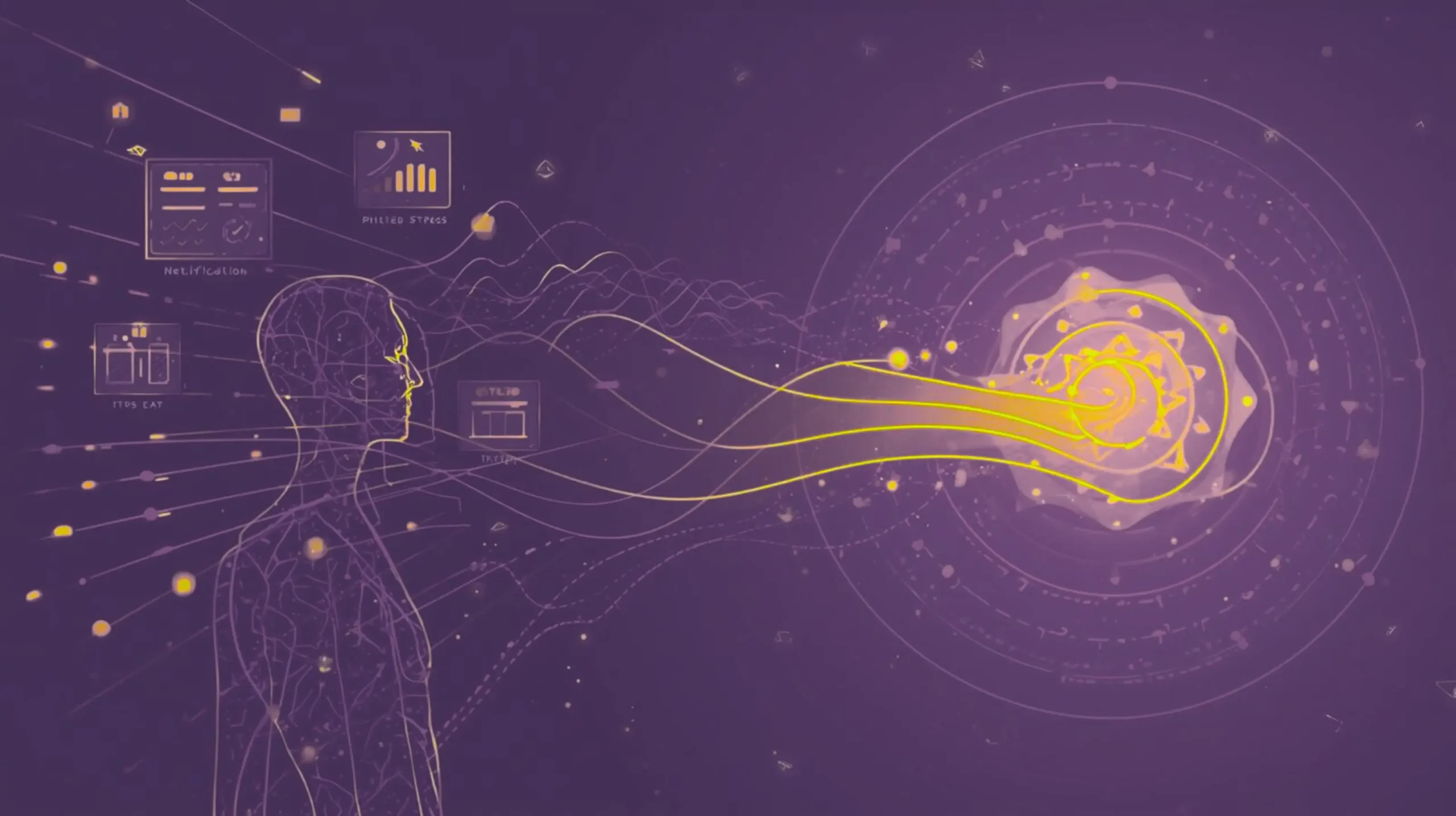
Debt is usually associated with money. It accumulates gradually, often unnoticed at first, and eventually demands repayment with interest.
The nervous system operates in a similar way.
Every day, through decisions, environments, expectations, and behaviors, we either regulate and restore our system or we withdraw from it. When withdrawals exceed deposits, a form of physiological debt begins to accumulate.
This debt is not immediately dramatic. It rarely announces itself with a crisis. Instead, it shows up subtly, reduced patience, shallow breathing, persistent muscle tension, disrupted sleep, decreased focus, and unexplained fatigue. [1]
Over time, these small signals compound.
What Is Nervous System Debt?
The nervous system is responsible for constantly assessing safety, managing stress responses, coordinating movement, regulating energy, and supporting emotional balance. It shifts between states of activation and recovery depending on what the environment demands. [2]
Healthy function depends on oscillation. Activation must be followed by restoration. Effort must be followed by recovery.
When activation becomes constant and recovery becomes insufficient, the system does not immediately fail. Instead, it adapts by operating in a more guarded, vigilant state.
This prolonged state of heightened readiness is what we can think of as nervous system debt, accumulated stress that has not been adequately processed or resolved.
How We Accumulate It Daily
Nervous system debt rarely stems from a single traumatic event. More often, it builds through everyday patterns that appear normal in modern life.
Extended screen exposure narrows posture, compresses breath, and reduces sensory variation. Chronic multitasking fragments attention and prevents cognitive recovery. Sitting for prolonged periods limits circulation and muscular engagement. Uninterrupted noise and notifications maintain subtle vigilance. Emotional labor without processing suppresses internal signals. [3]
Individually, these factors may seem minor. Collectively, they create continuous low-grade activation.
The body remains alert even when there is no immediate danger.
The Physiology of Unpaid Stress
When the nervous system perceives sustained demand, it increases sympathetic activation, the branch responsible for mobilization and alertness. Heart rate subtly elevates. Muscles maintain low-level tension. Breathing becomes shallower and more upper-chest dominant. [2]
Ideally, parasympathetic activity, the restorative branch which balances this response. It slows heart rate, deepens breathing, and supports digestion and tissue repair.
However, when restorative windows shrink, sympathetic dominance becomes the default setting.
This shift does not feel dramatic. It often feels like:
- Constant “busyness” without productivity
- Difficulty relaxing even when free
- Increased irritability
- Reduced physical recovery
- Heightened pain sensitivity
These are not signs of weakness. They are signs of accumulated regulatory imbalance.
The Hidden Interest Payments
Just as financial debt accrues interest, nervous system debt compounds over time.
Sleep quality declines, even if total hours remain adequate. Muscular tightness becomes chronic rather than situational. Inflammatory markers subtly rise. Emotional tolerance narrows. Decision fatigue increases. [4]
The body becomes less adaptable, not because it lacks strength, but because its regulatory flexibility has been reduced.
Resilience is not simply the ability to endure stress. It is the ability to return to baseline after stress. When return becomes incomplete, debt deepens.
Why Rest Alone Does Not Always Repay It
Many people attempt to address fatigue or tension by adding passive rest, watching television, scrolling on a phone, or sleeping longer on weekends.
While rest is essential, not all rest is restorative.
True nervous system repayment requires:
Movement variability
Slow, diaphragmatic breathing [5]
Exposure to natural light
Reduced cognitive input
Emotional processing and expression
Periods of genuine stillness without stimulation
Without these inputs, the system may remain partially activated even during downtime.
Small Deposits That Restore Balance
Repaying nervous system debt does not require dramatic lifestyle overhauls. It requires consistent, intentional deposits.
Short walking breaks during the day restore circulation and sensory feedback.
Breathing practices regulate autonomic balance.
Reducing multitasking improves cognitive efficiency.
Limiting notification exposure reduces baseline vigilance.
Intentional pauses between tasks create neurological reset points.
These small shifts accumulate positively over time.
The nervous system responds more to rhythm than intensity. Regular micro-recovery moments can prevent chronic overload.
The Real Takeaway
Nervous system debt is not a moral failure or a sign of fragility. It is a predictable outcome of sustained demand without adequate regulation.
Modern environments reward efficiency and productivity. Biology, however, requires oscillation and restoration.
The goal is not to eliminate stress. Stress is necessary for growth. The goal is to prevent stress from becoming unprocessed accumulation.
Resilience is built not by pushing through constant activation, but by designing daily life to include deliberate recovery.
Because the nervous system does not collapse suddenly.
It signals gradually.
And when we learn to recognize those signals early, debt becomes manageable rather than overwhelming.
Chief Science Officer: betterhood
Shayamal is a Human Performance Designer who works at the intersection of psychology, physiology, and human systems design, for the last 25 years he is helping high-performing leaders, teams, and athletes thrive in environments of stress, complexity, and change. His work spans across elite sports, corporate leadership, and chronic health and is grounded in the belief that true performance isn’t about pushing harder, but designing better.
References
Harvard Health Publishing. (2021). Relaxation techniques: Breath control helps quell stress response. https://www.health.harvard.edu
American Psychological Association. (2023). Stress effects on the body. https://www.apa.org/topics/stress/body
Cleveland Clinic. (2023). Autonomic nervous system: Function and regulation. https://my.clevelandclinic.org
World Health Organization. (2020). Physical inactivity and sedentary behavior. https://www.who.int/news-room/fact-sheets/detail/physical-activity
National Institutes of Health. (2022). Chronic stress and inflammation. https://www.ncbi.nlm.nih.gov


