





We’ve all been there. The achy throb in your calves after working a long shift, that jabbing tightness in your thighs that makes standing up from a chair feel like work. Pain in the legs is one of the most frequent physical complaints but it’s often overlooked until it dictates your lifestyle. It governs how you relate, play with your children to how productive you are at work to your inclination toward mental happiness.
Your legs are the pillars of your independence, and when they hurt, the whole world shrinks. A step-by-step guide to the smartest leg pain exercises to help you get back in your stride, boost circulation, and create the base for lasting health.
What Causes Leg Pain?
The first step toward healing is understanding the “why.” Leg pain is rarely a one-time thing, it’s usually a warning sign from your own body that something else in your kinetic chain is out of alignment.
- Muscle Strain and Overuse: Exercise too hard or a drastic uptick in activity can create micro-tears in muscle fibers. The effects of exercise are often experienced as Delayed Onset Muscle Soreness (DOMS) [1].
- Slouching & Long Sedentary Life: The modern world demands us to stay in static positions. This causes the hamstrings and hip flexors muscles to shorten and tighten, which can lead to referred pain in the lower legs [2].
- Lack of Mobility: Fascia (the connective tissue around your muscles) becomes stiff and sticky when you don’t move regularly, limiting blood flow and leading to that heavy leg feeling.
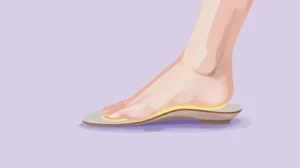
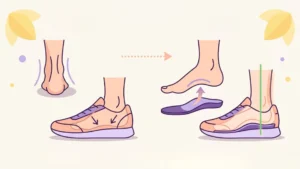
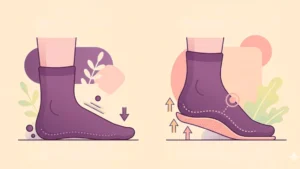
- The Step Connection: A common place for leg pain to begin is at the very bottom. Things such as overpronation (flat feet) cause the leg bones to rotate inward which places an immense amount of stress on our calves and knees.Full-Length Orthotics can help realign this from the bottom up.
If your pain is specific to the back of the foot and hanging down by the heel, head over to the back of the heel pain guide to see if your troubles are coming from an achilles tendon or just good ol’ muscle fatigue.
Exercises for Leg Pain: Benefits and Purpose
Regular movement does more than just stretch a muscle; it rewires your physiology. With a daily routine you can do the following:
Improved Blood Circulation
Your leg muscles work as a second heart. When they contract and relax during exercise, they assist in pumping venous blood back up to the torso, preventing pooling and swelling [3].
Reduced Muscle Stiffness
Stretching increases our production of synovial fluid, which lubricates joints. It also helps “reset” the nervous system, signaling taut muscles that it is OK to let go.
Strengthened Support Systems
Stronger muscles relieve your joints of some mechanical pressure. For instance, healthy quadriceps serve as shock absorbers for the knee joint and minimize muscle atrophy due to age-related bone-on-bone friction.
Prevent Recurring Pain
A strong equilibrium leg is a resilient leg. By strengthening the glutes or calves, you make sure that one muscle group isn’t doing the work of three.
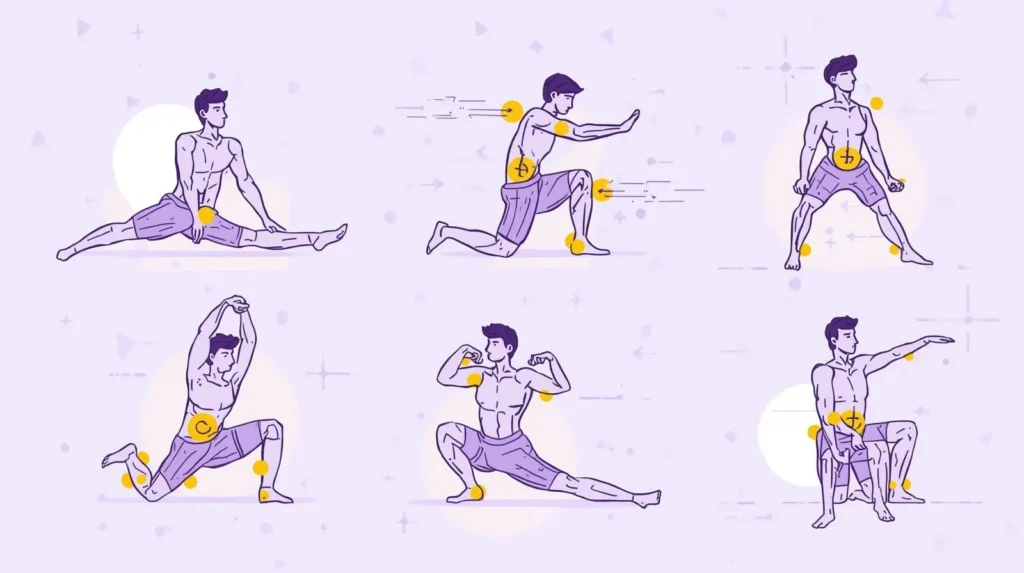
Best Leg Pain Relief Exercises
Make sure you have a forgiving surface to begin. If you’re exercising at home, don’t work out barefoot on hard, cold floors. Orthopedic Indoor Slippers provide arch support as you move, keeping your entire kinetic chain aligned.
This was settled in the van.
Tight calves are one of the top reasons for foot and/or lower leg pain, including Achilles Tendinitis.
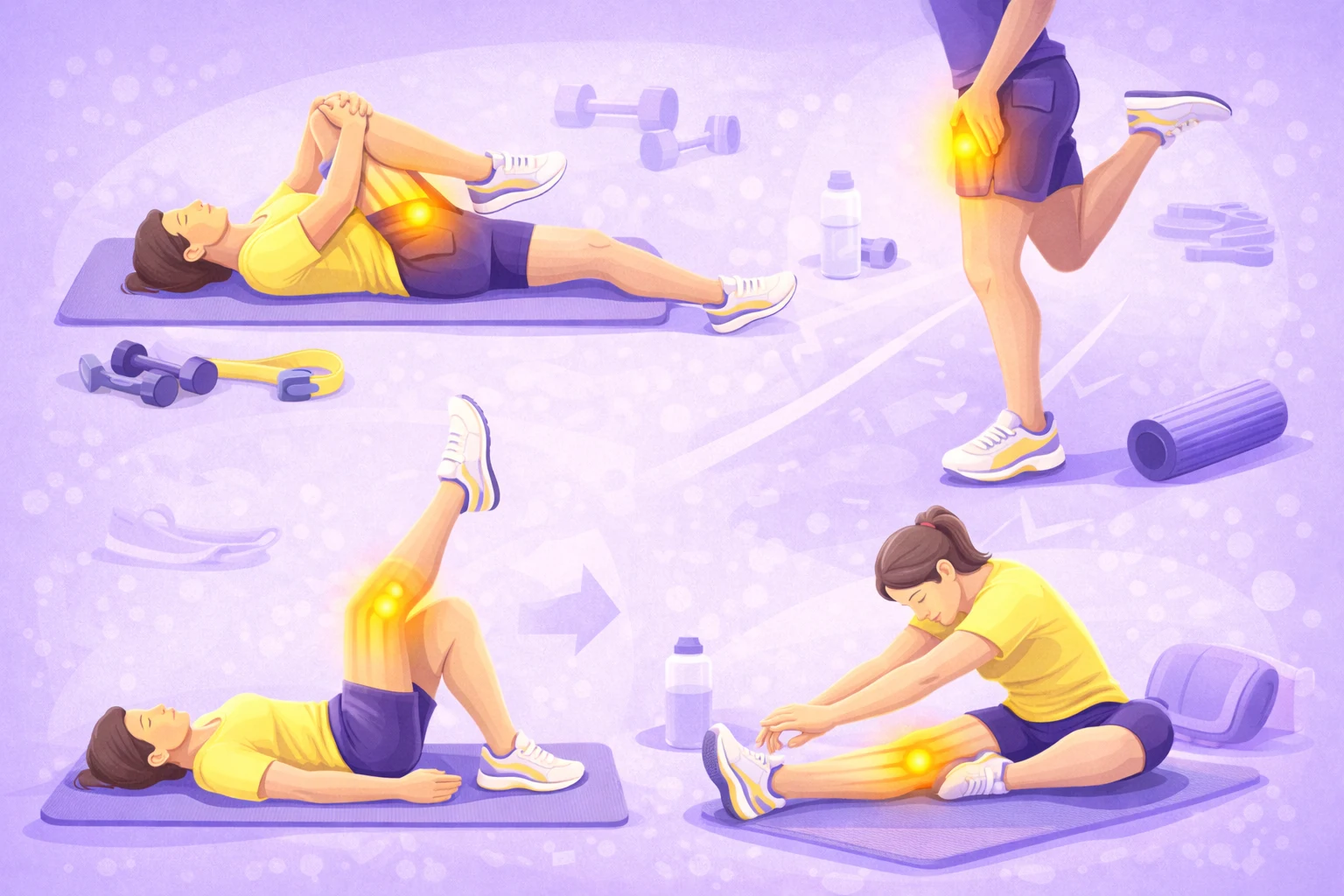
How: Stand facing a wall. Find a wall and place your hands on it at shoulder height. Step one foot back while keeping the heel planted in the floor and the knee straight. Lean forward until you feel a deep stretch in the lower leg.
Hold: 30 seconds per side.
Benefit: It decreases the tension in the gastrocnemius and soleus muscles, which are essential for walking [4].
The Hamstring Stretch (Seated)
Being seated for long hours polarizes your hamstrings to become tight and angry, which in fact might pull on your lower back.
How: Sit on the edge of a sturdy chair. Straighten one leg out with the heel on the ground and toes up. Keep your back straight and bend forward from the hips not from the waist.
Duration: Hold for 30 seconds.
Benefit: Alleviates tension commonly tied to “sitting disease” and the lower back stiffness associated with it [5].
The Quadriceps Stretch (Standing)
How: Standing (use a wall or chair for balance), reach back and grab your ankle. Using your knees together, draw your heel towards your glutes.
Benefits: Releases the major muscles on the front of the thigh, greatly decreasing stress on the kneecap.
Seated Leg Extension
How: Sitting comfortably, straighten one knee slowly until the leg’s horizontal. Squeeze your thigh muscle at the top, hold for 2 seconds and lower back down slowly.
Repetitions: 10 to 15 per leg.
This builds quadriceps strength to help support the knees and among other activities, climbing stairs [6].
Leg Pain from Sitting Too Long Exercises
If you have a desk job, your legs are probably deprived of oxygenated blood. These micro-movements can take place without so much as leaving your desk:
Ankle Rotations: With feet raised, move your feet around while sitting. It promotes lymphatic drainage and decreases ankle swelling.
Seated Calf Raises: Have your toes on the floor and raise your heels up as high as you can. This helps to pump the calf muscle, assisting with circulation.
Posture Check: If most of your leg is dangling off the seat or if your feet don’t touch the floor, you may experience pain in those legs. Wearing PosturePro Insoles in their work shoes will help ensure that their weight is distributed evenly even when standing or walking to the breakroom.
For additional advice on making it through the work day, visit our blog Foot Pain at Work Surviving 8-Hour Shifts.
Strengthening for Long Term Relief
After the acute pain (the sting) has passed, you now need to be building armor around your joints. Stretching is nice at the moment, but strength prevents the pain from returning.
Glute Bridges: Lie on your back with knees bent and feet flat. Raise your hips toward the ceiling. This reinforces the posterior chain and unloads your quads and shins [7].
Step-ups: Place one foot on a small step or sturdy box and drive your body upward. This imitates functional movement in real life and develops balance.
Bodyweight Squats: Make sure your weight is in your heels. If you experience pain in your heels during this, try popping an insertion or Heel Pads into your trainers to cushion the impact.
Using a Magnesium Recovery Lotion can help relax muscle fibers after these sessions and prevent the dreaded midnight leg cramp, allowing you to sleep like a champion athlete.[8]
When to Avoid Certain Exercises
Exercise is important but safety comes first. Pay attention to your body’s “stop signals.” Do not excessively stretch or strengthen in cases of:
Sharp, stabbing pain: Muscle soreness is normal, but sharp pain generally represents a tear.
Nerve Symptoms: The sensation of pins and needles or an electric shock. You may have a pinched nerve or Sciatica.
Visible Popping or Redness: This is an indication of acute inflammation and requires rest and ice prior to exercise.
If you suspect you are dealing with a newly sprained ankle or fall,Ankle Sprains guide covers the basics on whether or not you need medical attention first before beginning a movement routine.
Tips to Prevent Leg Pain
Foundation: You don’t build a house on sand. Keep your feet supported and help avoid the misalignment that causes leg fatigue with Arch Supports.
Warm up: Don’t stretch cold muscles. Do some light walking for 5 minutes, and then a few deep stretches.
Stay Hydrated: Dehydration is the leading cause of electrolyte balance which causes muscle spasms.[9]
Recovery Tools: A Magnesium Spray half an hour before sleep can help with muscle soreness, allowing the affected area to recover properly.
Conclusion
Leg pain is not your new normal. From an athlete to someone spending 8 hours on a retail floor, your body can take it. With targeted exercise and structural support such as betterhood’s line of orthopedic inserts you can transition from discomfort to motion.
Are you ready to start your journey to a pain-free life? Check out Proper Foot Support guide to properly equip the various types of arches you may have in your ever-changing lifestyle.
Frequently Asked Questions
Yes, gentle movement aids circulation and releases tension in tight muscle groups.
Most stretching can be done daily while strengthening should 3 to 5 times per week to allow for muscle repairing [10].
They go hand in hand; the stretch contributes immediacy and flexibility whereas the strength prevents injury further down the line.
The hamstring stretch is best for people who sit a lot or have tight lower backs.
Get medical attention if pain is sudden, severe or associated with visible swelling, warmth or redness.
Absolutely products like PosturePro actually align the kinetic chain, taking pressure off the legs.
That’s a common sign of poor circulation or magnesium deficiency; try dousing yourself with Magnesium Recovery Lotion before bed.
Yes, no-impact walking increases circulation as long as you are wearing the right shoes
Yes, tight calves restrict ankle range of motion, and in turn the knee is forced to overcompensate for movement.
References
- American Academy of Orthopaedic Surgeons (AAOS). (n.d.). Stretching the Calf Muscles. https://orthoinfo.aaos.org
- Cleveland Clinic. (n.d.). Hamstring Tightness and Back Pain Connection. https://health.clevelandclinic.org
- Harvard Health Publishing. (2015). The Dangers of Sitting Too Long. https://www.health.harvard.edu
- Healthline. (n.d.). Benefits of Glute Bridges for Lower Body Stability. https://www.healthline.com
- Journal of Applied Physiology. (n.d.). Muscle Pump and Circulation Efficiency. https://journals.physiology.org
- Mayo Clinic. (n.d.). Muscle Strain: Causes and Symptoms. https://www.mayoclinic.org
- Medical News Today. (n.d.). Dehydration and Muscle Cramps. https://www.medicalnewstoday.com
- National Institutes of Health (NIH). (n.d.). Magnesium for Muscle Relaxation. https://ods.od.nih.gov
- WebMD. (n.d.). Knee Strengthening Exercises. https://www.webmd.comPortal:Internal Data on Recovery Timelines – Referenced for suggested frequency of orthopedic exercises.