






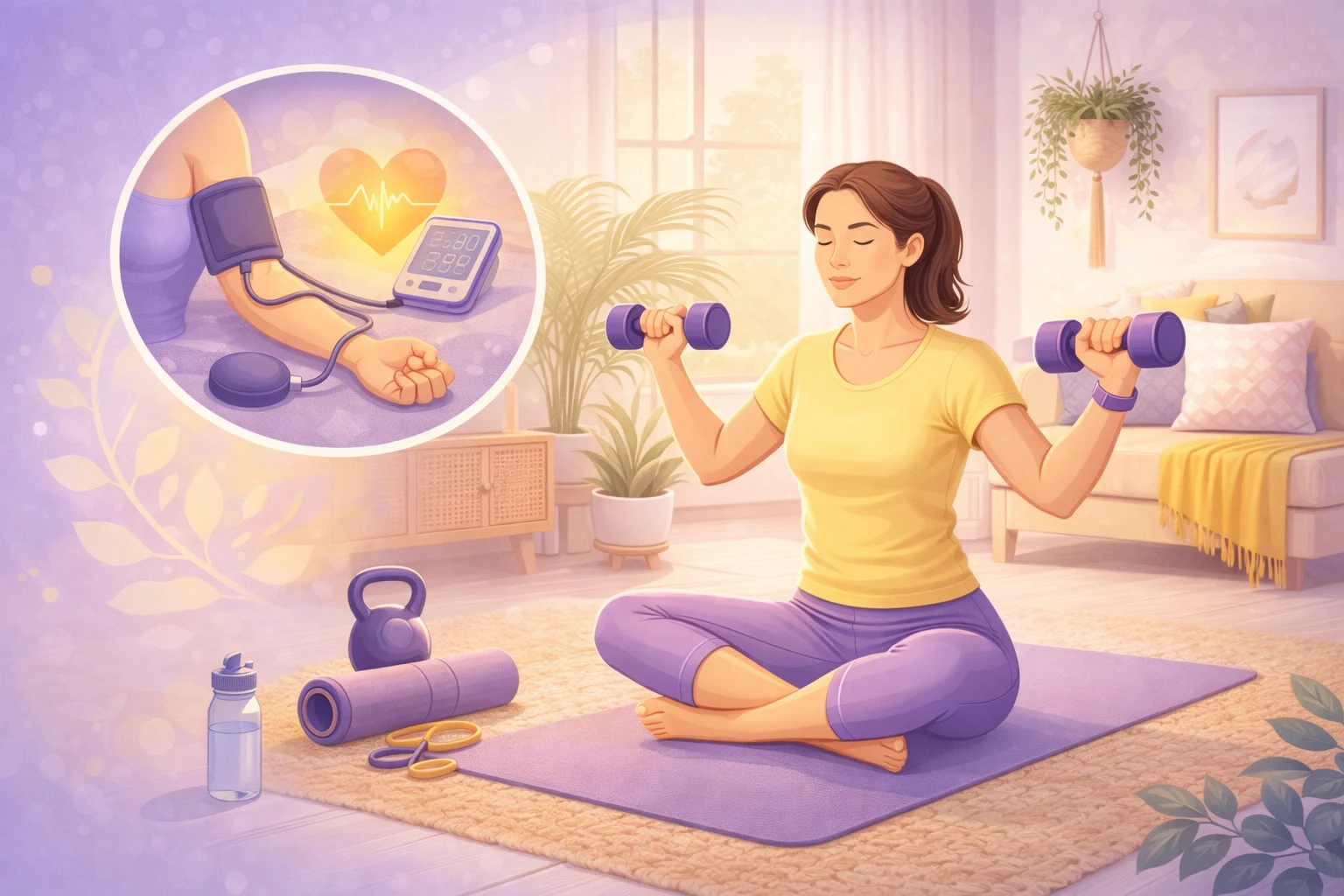
Hypertension (high blood pressure) is one of the leading health issues in our modern society. It affects millions of people but often falls under the radar, because it rarely produces visible symptoms in its early stages. That’s why it is often referred to as the “silent killer.”
High blood pressure can lead to numerous complications including heart disease, stroke, renal failure and even loss of vision if not under control. The good news is that it doesn’t always take strong medicine to control blood pressure. In many cases, changes in lifestyle, especially regular exercise, can make a big difference.
Exercise is extremely important for your cardiovascular health as it lays the foundation for overall well-being that consists of building up blood vessels. It helps the heart pump blood more effectively, reducing pressure for arteries. Over time, exercise decreases systolic (top number) and diastolic (bottom number) blood pressure.[1]
They are saying that the most effective natural ways to prevent and manage hypertension is regular physical activity by global health experts.
This comprehensive guide includes:
- It is one of the primary reasons for blood pressure
- How exercise helps reduce BP
- The best exercises for hypertension
- A weekly workout plan
- Safety tips and common mistakes
What Causes High Blood Pressure?
Understanding what causes high blood pressure is the first step in being able to effectively control it.
Sedentary Lifestyle
Today’s sedentary lifestyle involves sitting for hours working at your office desk, in front of screens and through the travel time. Over time, inactivity makes our hearts weaker and less effective at pumping blood.
Poor Diet
Deliciousness, excess salt, highly processed food, sugar and unhealthy fats are all major contributors to hypertension.
Chronic Stress
Stress prompts the release of hormones, like cortisol and adrenaline, which can briefly raise blood pressure. Long-term stress can lead to chronic hypertension.
Obesity
Even extra body weight puts the heart under extra strain, which ratchets up pressure inside arteries’ walls.
Genetics and Age
Some people have a genetic predisposition to hypertension and the risk increases with age.
American Heart Association Ranking: Diabetes is also caused by inactivity, poor diet and other lifestyle habits all of which are among the top contributors to blood pressure being too high. [2]
Your Blood Pressure and the Benefit of Exercise
Exercise isn’t just for fitness, it’s one of the most potent tools we have to prevent and manage chronic diseases.
Improves Heart Function
Regular exercise strengthens the heart muscle, allowing it to pump blood more efficiently with less effort.
Reduces Arterial Stiffness
Exercise helps maintain elastic blood vessels, leading to better circulation.
Lowers Stress Levels
Exercise reduces stress hormones and helps you relax.
Supports Weight Loss
You are avoiding BP high. One very important factor is body weight.
Enhances Overall Health
It also improves sleep, mood and energy levels.
Exercise can lower blood pressure by 5 to 8 mm Hg similar to the effect of some medications, research has shown.[3]
Best Exercises for High Blood Pressure
Now, let’s see what types of exercises work best for lowering BP naturally.
Walking
Walking is low-impact, doesn’t require any special equipment and can be done by people of all fitness levels.
Benefits
- Improves circulation
- Strengthens the heart
- Reduces stress
How to Start
- Begin with 10 to 15 minutes daily
- Gradually increase to 30 to 45 minutes
- Maintain a brisk pace
Studies also show that brisk walking significantly lowers unsound blood pressure and improves heart health.[4]
Cycling
Cycling is a low-impact, aerobic activity, making it easy on the joints.
Benefits
- Boosts heart health
- Improves endurance
- Burns calories
You can bike outdoors or use a stationary bike at home.
Swimming
Swimming: If you suffer from joint pains, swimming sounds like a great full-body workout for your body.
Benefits
- Improves cardiovascular fitness
- Reduces stress
- Enhances flexibility
Yoga
Yoga also incorporates physical movement, breathing and mindfulness.
Benefits
- Reduces stress and anxiety
- Improves flexibility
- Helps regulate blood pressure
Yoga practice helps in gradually lowering high-pressure level, which has been scientifically proven.[5]
Breathing Exercises
Breathwork is a practice that helps to calm the nervous system.
Simple Technique
- Inhale for 4 seconds
- Hold for 4 seconds
- Exhale for 6 seconds
Taking time to practice daily can reduce blood pressure rises related to stress.
Sample Exercises for Beginners with High Blood Pressure
Get into an exercise program a lot but it doesn’t have to.
Beginner-Friendly Activities
- Light walking
- Gentle stretching
- Basic yoga
- Short workouts (10 to 15 minutes)
Increase duration and intensity gradually as your fitness level increases.
Strength Training for BP Management
It is common knowledge that cardiovascular exercise helps BP (though some only think cardio helps).
Safe Strength Exercises
- Bodyweight squats
- Wall push-ups
- Resistance band exercises
Benefits
- Builds muscle
- Improves metabolism
- Supports joint health
Move your bodyWeight training, moderate resistance exercise can lower blood pressure and improve cardiovascular health.[6]
The-control-your-blood-pressure exercise routine
Here’s a simple weekly routine:
1: Walking (30 mins)
2: Yoga with breath work (20 mins
3: Cycling (30 mins)
4: Rest or stretching
5: Resistance training (20 mins)
6: Walks and breath work
7: Active rest
Consistency is the only route to long-term results.
Lifestyle Habits to Support Exercise
You can’t just be doing exercise, you need The Whole 360.
Healthy Diet
Eat a well-balanced diet that includes:
- Fruits and vegetables
- Whole grains
- Lean protein
A diet that accomplishes this is known as the DASH (dietary approaches to stop hypertension) plan.[7]
Reduce Salt Intake
Excess sodium increases BP levels.
Manage Stress
Use tools like meditation or topical magnesium therapy to relax the nervous system before bed.
Get Enough Sleep
Sleep deficiency can hurt BP.To ensure restorative rest, use a pillow that supports your cervical spine to prevent tossing and turning.
Stay Hydrated
Proper hydration supports circulation.
When to Avoid Exercise
Exercise as the previous proverb says is good, but at times caution has to be exercised.
Do not or stop exercising if you experience:
- Severe chest pain
- Dizziness
- Hypertension stage 3 (systolic ≥180mmHg and/or diastolic ≥120 mmHg)
Consult a healthcare professional if in doubt.
Extreme Case of High Blood Pressure: How to Exercise Safely
- Start slow
- Warm up and cool down
- Avoid overexertion
- Monitor BP regularly
- Stay consistent
Common Mistakes to Avoid
- Skipping warm-ups
- Exercising too intensely
- Being inconsistent
- Ignoring warning signs
- Not consulting a doctor
FAQs
Indeed regular exercise strengthens the heart, enhances blood circulation and reduces blood pressure levels. Even moderate exercises such as walking can be sufficient over time.
Brisk walking is another great and safest exercise that lowers BP. Other great alternatives, based on your fitness level, include cycling, swimming or yoga.
You need at least: 30 minutes of moderate exercise, five days a week. It is better to be consistent than intense when it comes to blood pressure control.
Yes, the vast majority of people with high BP can safely exercise. But you do need to ease into it, and see a doctor if your BP is very high or uncontrolled.
Yes, brisk walking is good for the heart and can lower blood pressure significantly. Particularly when done consistently over weeks and months, it is a great technique.
Breathing exercises relax the nervous system and reduce stress as a result of which BP drops. Doing them on a daily basis can assist with overall blood pressure.
And no, with proper form light to moderate strength training is safe and even beneficial. Don’t lift heavy weights, and practice proper breathing and controlled movements.
If you experience chest pain, dizziness or any unusual shortness of breath, stop exercising immediately. But see a doctor if your symptoms don’t go away or your BP is really high.
Conclusion
Hypertension is a chronic disease, nevertheless it could give way to cure as well through the adjustment of correct lifestyle acclimatizations. Exercise is One of the Most Powerful Tools You Have to Control BP Naturally Physical Activity is one of the most powerful tools available in your regime to control BP naturally.
Walking, yoga, cycling and strength training every little bit helps you get there. Be consistent, Be patient and Process the things approach in Balance
When combined with a well-balanced diet, stress management and proper sleep, exercise has the potential to transform your blood pressure level and potentially your life quality too.
References
- World Health Organization. (2023). Physical Activity Guidelines.
https://www.who.int/news-room/fact-sheets/detail/physical-activity - American Heart Association. High Blood Pressure.
https://www.heart.org/en/health-topics/high-blood-pressure - Mayo Clinic. (2023). Exercise and Blood Pressure.
https://www.mayoclinic.org/diseases-conditions/high-blood-pressure/in-depth/exercise/art-20046868 - Centers for Disease Control and Prevention. Physical Activity Basics.
https://www.cdc.gov/physicalactivity/basics/pa-health/index.htm - National Institutes of Health. (2018). Yoga for Hypertension Study.
https://www.ncbi.nlm.nih.gov/pmc/articles/PMC5871210/ - Harvard Health Publishing. Heart Health and Exercise.
https://www.health.harvard.edu/heart-health - National Heart, Lung, and Blood Institute. DASH Diet Plan.
https://www.nhlbi.nih.gov/education/dash-eating-plan


