






Sciatica Exercises Sciatica exercises is one of most described non-surgical treatments to relieve sciatica pain from the sciatic nerve. These gentle stretches and strengthening movements help relieve nerve compression, improve spinal alignment and aid long-term recovery. Regular performance of sciatica exercises can reduce inflammation, increase mobility and prevent periodic flare-ups.
Sciatic nerve pain commonly occurs in the lower back, hips, buttocks and legs so completing simple everyday tasks such as sitting, walking, bending or even lying down can become uncomfortable. Specific exercises relieve pressure on the nerve, strengthen supporting muscles and restore proper movement patterns. Guidelines from many healthcare professionals call for exercise as a first-line treatment before medications or invasive procedures [1].
Exercises treat the cause of sciatica muscle unbalance, stiffness and lack of spinal support instead of offering passive treatment. Eventually, a well-defined routine can make pain less intense, enhance flexibility and help prevent future episodes. This health-related guide details the best stretches for sciatica, strengthening exercises, daily postures and corrections, and safety guidelines to naturally reduce sciatic nerve pain.
What Is Sciatica?
Sciatica is a result of irritation, inflammation or compression of the largest nerve in the human body known as sciatic nerve. The sciatic nerve starts at the lower spine, runs through the hips and buttocks and down each of the legs. When this nerve gets pinched or inflamed, pain can shoot from the lower back into the hip, buttock and leg.
Due to the underlying cause, sciatica may gradually develop or occur suddenly. For some, it might just feel a little uncomfortable; for others, it can mean intense, shooting pain that makes moving difficult. In fact in many cases muscle tightness, sitting for prolonged periods or bad posture makes the symptoms worse.
Sciatica commonly occurs due to:
- Herniated disc
- Bulging disc
- Muscle tightness (piriformis syndrome)
- Spinal stenosis
- Degenerative disc disease
- Poor posture
- Prolonged sitting
- Lower back injury
- Weak core muscles
- Tight hamstrings or hip muscles
Common symptoms include:
- Lower back pain
- Pain radiating down one leg
- Tingling or burning sensation
- Numbness in leg or foot
- Hip or buttock pain
- Weakness in lower body
- Difficulty standing or sitting long
- Pain when bending or lifting
- Discomfort during sleep
Sciatica is caused by the compression of the nerve, exercises to relieve sciatica can help overall it reduces inflammation and increases lower back and hip flexibility.[1]
Benefits of Sciatica Exercises
Reduce Sciatic Nerve Compression
Light stretching also alleviates pressure on the sciatic nerve and promotes blood circulation. Less compression is known to reduce the radiating pain and numbness.
Improve Lower Back Mobility
Mobility work alleviates stiffness and brings back normal spinal motion. Better physical flexibility leads to better posture and less pressure on discs.
Strengthen Supporting Muscles
A strong core, glutes and hips will support your spine and prevent nerve irritation. Support of the muscles relieves stress on the lower back.
Improve Posture
Corrects postural abnormalities that may predispose towards sciatic pain Improved posture reduces nerve compression when sitting or standing.
Reduce Muscle Tightness
Those femurs can subluxate, and tight hamstrings, hips, lower back muscles exacerbate sciatica. Stretching relieves tension in these areas.
Prevent Future Flare-Ups
Exercise significantly lowers the recurrence of sciatica symptoms by building muscle surrounding the spine and promoting mobility [2].
Improve Daily Function
The exercises serve to ease pain while walking, sitting and standing. It enhances quality of life and comfort in everyday life.
The Best Sciatica Stretches for Pain Relief
Do these stretches slowly and softly. Hold each stretch for 20 to 30 seconds without bouncing.
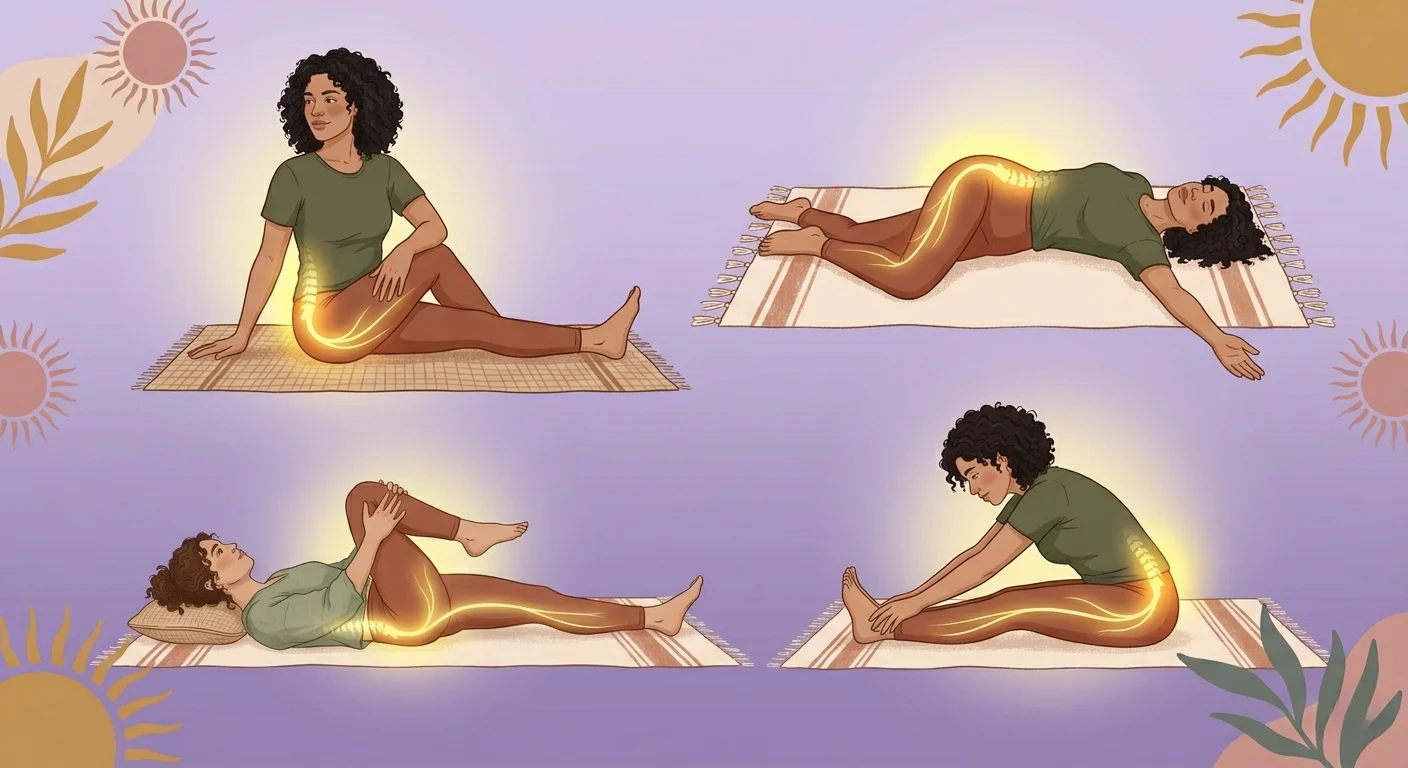
Knee to Chest Stretch
- Lie on your back
- Draw one knee into your chest
- Hold for 20 to 30 seconds
- Switch legs
This relieves pressure on the lower back and tightness in the nerves. It also stretches tight lower back muscles.
Piriformis Stretch
- Lie on your back
- Cross ankle over opposite knee
- Pull thigh toward chest
- Hold gently
This alleviates tight hip muscles, which place pressure on the sciatic nerve. It works particularly well for piriformis syndrome.
Seated Spinal Twist
- Sit upright in chair
- Rotate your torso gently to one side
- Hold and switch
Increases spinal flexibility and decreases lower back tightness
Hamstring Stretch
- Sit with one leg extended
- Reach toward toes
- Hold stretch
Tight hamstrings may also cause the nerve to feel more strained, exacerbating symptoms.
Child’s Pose Stretch
- Kneel on floor
- Sit back on heels
- Extend arms forward
- Relax into stretch
This position also helps decompress the low spine and alleviate pressure.
Figure Four Stretch
- Lie on back
- Cross ankle over opposite knee
- Pull legs toward chest
This stretch focuses on the hips and glutes to relieve sciatic pain.
These stretches increase flexibility, alleviate nerve compression, and relieve tightness around the sciatic nerve [3].
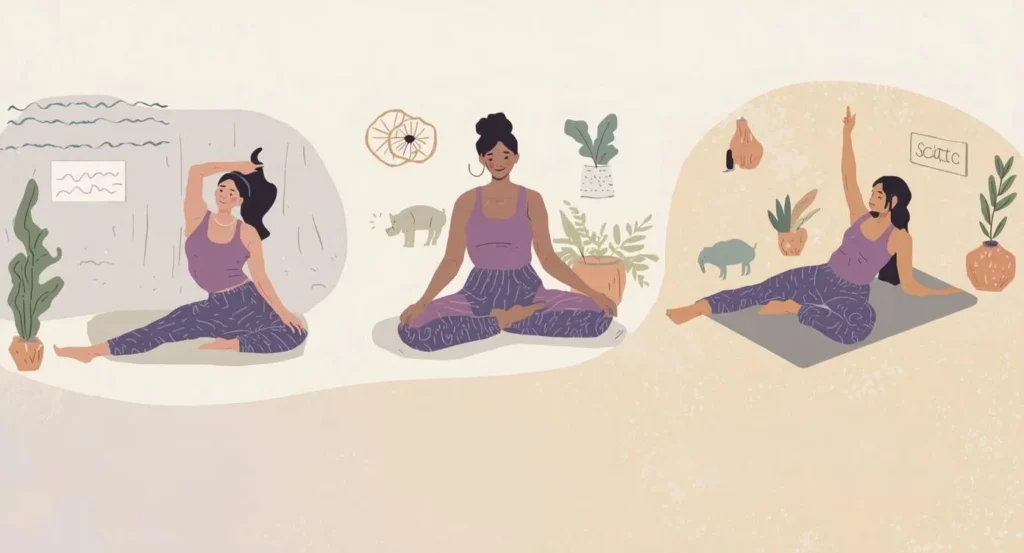
Sciatica Strengthening Exercises
Stabilizing or strengthening exercises can enhance spine stability and diminish the incidence of pain. These types of movements help balance out the work in your muscles and minimize strain on the lower back.
Glute Bridges
- Lie on back
- Bend knees
- Lift hips upward
- Squeeze glutes
- Lower slowly
(Tightens glutes and ensures lower back is aligned.)
Pelvic Tilt
- Lie on back
- Tighten core muscles
- Flatten lower back to floor
- Hold briefly
And strengthens the core to decrease the load on your lower back.
Bird Dog Exercise
- Start on hands and knees
- Extend opposite arm and leg
- Hold position
- Switch sides
Better balance, posture and spinal control
Cat Cow Stretch
- On hands and knees
- Arch back upward
- Lower belly downward
- Repeat slowly
Improves spinal flexibility and mobility.
Standing Back Extensions
- Stand upright
- Place hands on lower back
- Lean back gently
Helps decompress discs and promotes a better posture.
Side Leg Raises
- Lie on side
- Lift top leg slowly
- Lower gradually
Helps strengthen hip muscles which help support the sciatic nerve.
This offers proactive forms of strengthening movements that help align the spine, provide stability through the muscles of the core and ultimately reduce nerve compression [ref-2].
Daily Sciatica Exercise Routine
Morning Routine:
- Knee to chest stretch
- Piriformis stretch
- Cat cow stretch
- Gentle walking
Afternoon Routine:
- Glute bridges
- Bird dog exercise
- Pelvic tilt
- Side leg raises
Evening Routine:
- Hamstring stretch
- Child’s pose
- Figure four stretch
- Gentle walking
Perform daily for best results. Staying consistent reduces pain and helps with flexibility.
Sciatica Exercises for Sitting Pain
If you spend long hours sitting, these exercises relieve the pressure:
- Seated piriformis stretch
- Seated spinal twist
- Standing back extensions
- Gentle walking breaks
- Hip flexor stretch
These movements enhance circulation and decrease nerve compression.
Sciatica Exercises for Beginners
Start with gentle exercises:
- Knee to chest stretch
- Pelvic tilt
- Glute bridges
- Cat cow stretch
- Bird dog
Perform 8 to 10 repetitions each. Progress a few more repetitions as pain resolves. Always take it slowly in the dark, avoid sudden movements.
Exercises to Avoid with Sciatica
Avoid movements that increase pain:
- Heavy lifting
- Deep forward bends
- High impact jumping
- Toe touches
- Twisting with weights
- Sudden bending movements
- Long sitting without breaks
These exercises can aggravate nerve compression and prolong recovery.
Safety Tips for Sciatica Exercises
- Move slowly and gently
- Avoid sharp pain
- Do not overstretch
- Maintain proper posture
- Stop if symptoms worsen
- Consult professional for severe pain
- Warm up before exercises
- Avoid jerking movements
Keeping the body moving gently, rather than staying in bed for days, is actually better, as it prevents stiffness and facilitates recovery [1].
When to Do Sciatica Exercises
Best times include:
- Morning stiffness relief
- After long sitting
- Before bed
- Work breaks
- After light walking
Regularity means quality of recovery and fewer flare-ups.
Conclusion
One of the safest and most effective ways to alleviate sciatic nerve pain is through physical activity in the form of sciatica exercises. Gentle stretching, strengthening, and mobility work relieve pressure, promote flexibility, and aid long-term recovery. Regularly adhering to this health regimen will help manage sciatica symptoms, enhance mobility, and contribute to overall spinal betterment. Consistent practice can minimize flare-ups, enhance alignment and restore comfortable movement throughout your day.
FAQs
Yes, stretching and strengthening relieve tension on the sciatic nerve & increase range of motion [1].
They work best when done daily, gently.
Yes, walking is known to enhance circulation and alleviate stiffness.
Even mild sciatica will typically improve with general exercise over the next few weeks.
Low-impact activity is preferable to being completely still.
Reference
- Mayo Clinic. Sciatica – Symptoms and causes. https://www.mayoclinic.org/diseases-conditions/sciatica/symptoms-causes/syc-20377435
- Cleveland Clinic. Sciatica Exercises for Pain Relief. https://health.clevelandclinic.org/sciatica-exercises
- Harvard Health Publishing. Sciatica: Gentle stretches to help relieve pain and improve mobility. https://www.health.harvard.edu/pain/sciatica-gentle-stretches-to-help-relieve-pain-and-improve-mobility
- Physiopedia. Sciatica. https://www.physio-pedia.com/Sciatica


