





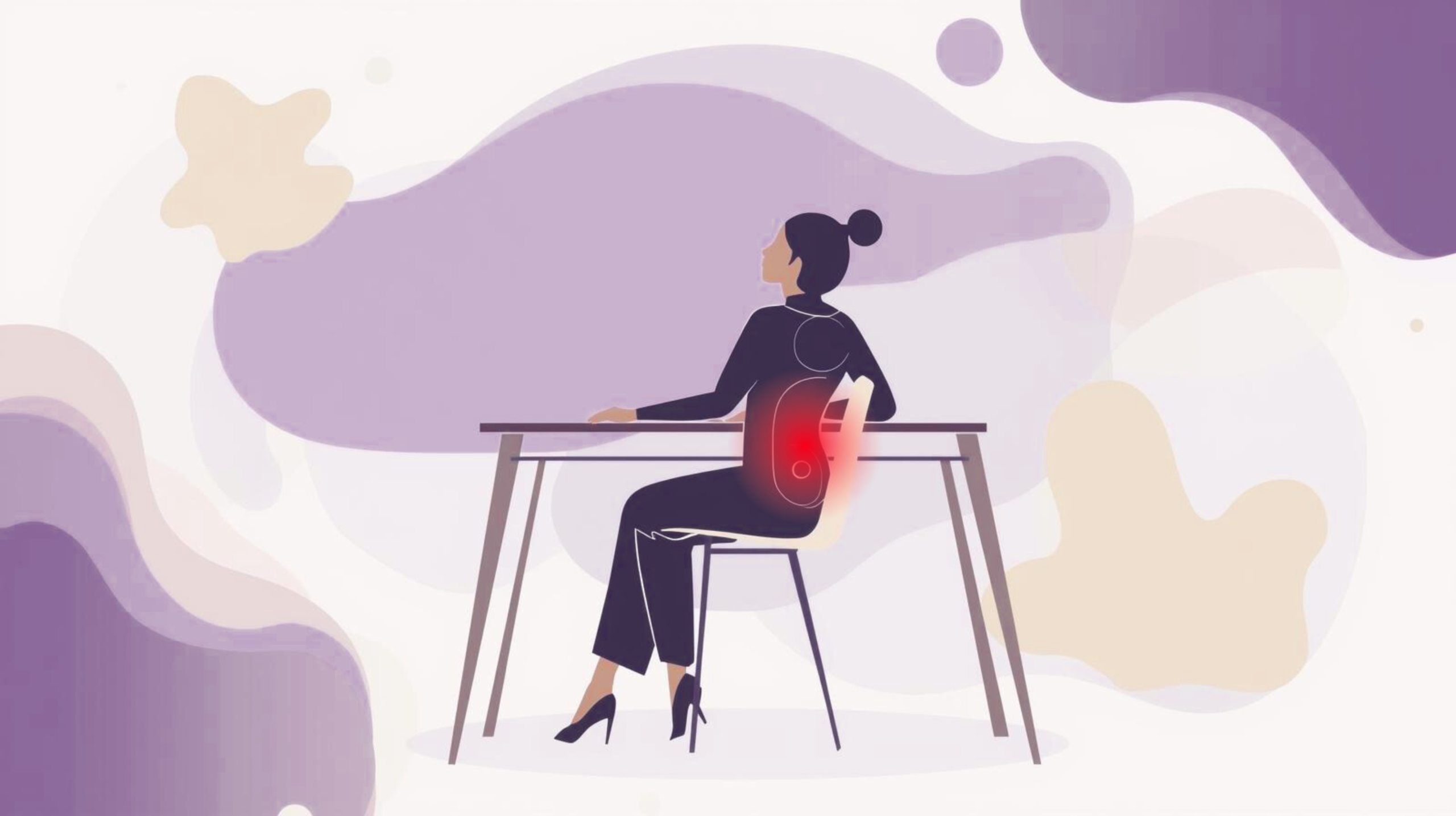
Modern life, let’s be honest, has pretty much made us chair-bound. Whether it is the endless Zoom calls, office work, or late-night scrolling, the majority of us keep sitting for more than 8-10 hours daily. However, here is the bad news: your spine is not made for that kind of inactivity.
When you sit for a long time, it compresses spinal discs, weakens the postural muscles, tightens the hips, and also blood flow to the back muscles is reduced, which is an absolutely perfect chronic pain’s recipe. So what is the result? That deep, dull pain, which you can feel every evening and it is like an unwelcome reminder of your “desk job life”.
The good news is that most of this damage can be reversed by doing only a few targeted moves. These five exercises, supported by scientific evidence, breathe the body with movement, relax the tight muscles, and strengthen the spine’s natural support system, all this can be done without any fancy equipment or long workout sessions.
The Science of Sitting Disease and Spinal Stress
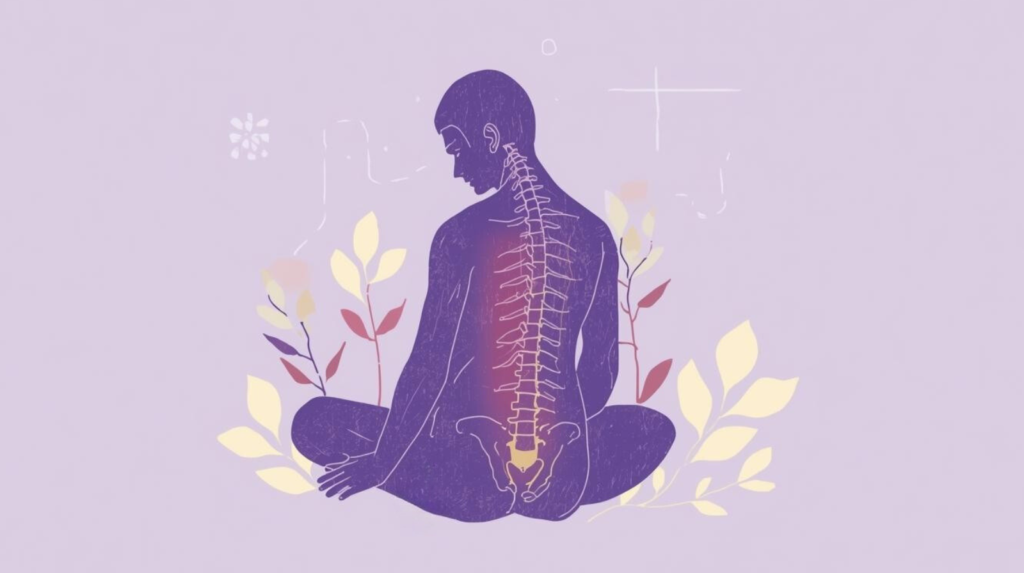
The term “sitting disease” may sound as if it were exaggerated but the truth is that research disagrees with that notion. In a study published in the Annals of Internal Medicine, it was found that people who sit for more than eight hours a day have a 20% higher risk of back pain and spinal disorders compared to those who move more frequently [1].
While sitting:
- Your spinal discs are compressed, thus reducing nutrient flow to the vertebrae.
- Your hip flexors become shorter, as a result, your pelvis is pulled forward and the lower-back curvature (anterior pelvic tilt) increases.
- Your core and glutes are not activated, thus the lumbar spine is left to hold the majority of your body weight.
Eventually, this disorder will not only bring pain but also stiffness and postural fatigue – the kind of fatigue that even makes standing up seem like a stretching exercise.
So what is the cure? The answer is movement – small, well-planned doses of it, that are applied consistently. We will now look at five scientifically proven exercises that accomplish exactly that.
1. Cat-Cow Stretch: Resetting Your Spine’s Rhythm
You can relate this to your spine getting its coffee in the morning. The Cat-Cow Stretch, which is a yoga exercise, helps to increase the spine’s flexibility as well as the fluid movement of the vertebrae.
How to perform:
- Position yourself on the floor with your torso supported by the arms and legs, put your hands under the shoulders and knees under the hips.
- Take a deep breath and curve your back (Cow pose) while lifting both the chest and tailbone upwards.
- Let the breath go and round your spine (Cat pose) by tucking the chin towards the chest.
- Perform 8-10 slow cycles of this stretch.
Why it is effective:
This gentle motion helps re-lubricate spinal joints, reduces stiffness, and promotes blood flow. A 2018 study in the Journal of Bodywork and Movement Therapies found that dynamic spinal mobilization (like Cat-Cow) can significantly decrease pain intensity in individuals with chronic back stiffness [2].
Pro tip: Give it a try before or after long meetings, it’s a mini “reboot” for your spine.
2. Seated Figure-4 Stretch Opening the Hip-Back Chain
Maybe you think that your back is hurting because of your spine but actually the hips have been the real culprits for quite some time. Seated Figure-4 Stretch is a great way to work your glutes and piriformis. When the piriformis muscle is tight, it can put pressure on the sciatic nerve.
How to perform:
- Sit straight in your chair and keep your feet flat on the ground.
- Right ankle over the left knee (making a “4” shape) cross.
- With a straight spine lean your body forward a little until you get the feeling of your glutes being stretched.
- Hold the position for 20-30 seconds; do it again on the other side.
Why it is effective:
It has been found that tight hips are a major cause of lumbar stress. The research published in Clinical Biomechanics, points out that by enhancing the hip flexibility the lower back pain can be decreased by 25% in people with a sedentary lifestyle [3].
Pro tip: Do this stretch during virtual calls your coworkers won’t even notice you’re secretly fixing your back pain.
3. Wall Angels: Reverse the Desk Hunch
Wall Angels will help you if your upper back feels like it is turning into a question mark. The move builds up the muscles of the upper back, shoulders, and those around the scapula, which help to stabilize the scapula, thus it is the opposite of the hunch caused by the forward bend after a long hour at the desk.
How to perform:
- Back, head, and hips touching a wall stand with face forward.
- At 90 degrees, bend the elbows and also keep the arms against the wall.
- Smoothly go back and forth with the arms up and down, as if doing snow angels, only this time on a wall.
- Perform 10-12 repetitions.
Why it is effective:
Wall Angels reinstate the thoracic spine’s mobility and help the posture muscles to get retrained. The research cited in the Journal of Physical Therapy Science (2019) says that scapular stabilization exercises greatly enhance postural alignment and also alleviate neck and upper back pain [4].
Pro tip: Concentrate on doing it right, if your arms cannot be flat against the wall, do not force it. Move forward slowly.
4. Glute Bridge: Wake Up the Muscles Sitting Silences
Simply, glutes are “turned off” if a person is sitting for a long time, and weak glutes mean that the lower back will be overworked. So here comes the Glute Bridge, an easy but very effective activation exercise, to the rescue.
How to perform:
- On your back lie down, with knees bent and feet placed at hip-width apart.
- Hold the stomach tight and also do a glute squeeze to raise the hips off the ground.
- After 2-3 seconds release the position slowly.
- Perform 10-15 repetitions.
Why it is effective:
The exercise helps to build up the gluteal, hamstring, and lower-back muscles and thus contributes to the equilibrium of the whole posterior chain. The study published in the Journal of Strength and Conditioning Research reveals that strengthening the glute muscles is a way to decrease lumbar spine stress and enhance pelvic alignment [5].
Pro tip: For an additional burn, put a cushion under your lower back for extra support during the beginning of your practice.
5. Standing Hip Flexor Stretch: Undo the Chair Effect
The hip flexors are the ones that remain shortened while sitting, thus they tilt the pelvis forward and the lower spine gets strained. Here is a standing stretch that will help you reverse that process.
How to perform:
- You step one foot forward and thus get into a lunge position.
- Keep the leg at the back straight and help the stretch by glute squeezing.
- Hold the position for 20-30 seconds, then switch sides.
Why it is effective:
With this movement, the iliopsoas will become flexible again. The muscle is a deep one, and most of the time, it is forgotten. Regular stretching of hip flexors is said to be an effective way of reducing anterior pelvic tilt and getting rid of low back pain, according to studies [6].
Pro tip: Do it right after the meal; it prepares the body for the next work session.
Simple Micro-Movements to Reduce Back Pain While Sitting All Day
You do not constantly have to get up and move. Even during the hours when you are sitting, a few minor, inconspicuous “micro-movements” can have a substantial impact.
Some ideas:
- Desk Planks: Put your forearms firmly on the desk, tighten your abdominal muscles for 15 seconds.
- Seated Twists: Turn gently from side to side to free your spine.
- Chin Tucks: Move your chin backward (not downward) to help the neck stabilizers get stronger.
- Ankle Rolls & Calf Pumps: Warm up your legs and prevent them from getting stiff.
Micro-movements keep blood flowing, relieve tension, and help mental focus while at the same time not letting the spine rest for even a minute during the day [7].
How 5 Daily Minutes Can Ease Back Pain and Improve Mobility?
Science keeps telling the same thing: consistency is better than intensity when spinal health is concerned. You don’t have to do a one-hour routine. Just short movement breaks every 30-45 minutes for 2-5 minutes can have a great effect on spinal hydration and pain prevention.
A 2020 Harvard Health review has shown that taking brief movement breaks can lower the risk of chronic back pain by as much as 32% [8]. The main thing is to travel around activities, for instance, you can perform Cat-Cow stretches during a meeting or do glute bridges before going to sleep.
Posture, Ergonomics, and Recovery: Your Back’s 24-Hour Plan
Your workout exercises will not take you far if your everyday setting is still working against you. You should make your posture concerted effort work better by:
- Chair height: The knees should be at the level of the hips, and the feet should be flat on the ground.
- Monitor height: The upper part of the screen should be at the level of the eyes.
- Comfort support: Apply lumbar cushions in order to keep the natural curve of your spine.
- Movement prompts: Place your alarms or utilize posture-tracking applications.
Even if you are only able to stand for a brief moment every 30 minutes, it can really make a difference. Besides a quick stretch, watering your body, or going for a short walk will surely revive your muscles as well as your brain.
When to Seek Professional Care ? : Signs You Shouldn’t Ignore
Though such workouts are great for relieving slight and moderate discomfort, if you experience the following symptoms, you should seek a consultation with a doctor or physiotherapist:
- Pain that is persistent and lasts for more than two weeks.
- Loss of sensation or tingling in the legs.
- Sharp pain when moving.
These signs may indicate the presence of serious spinal problems, which require specific treatment.
Conclusion
Your back isn’t demanding perfection, it’s simply demanding movement. These five scientifically supported exercises are not miracles, but they are quite effective in offsetting a sitting lifestyle.
Therefore, the next time you are about to sink into your chair for a long time, do not forget: back pain is not something you have to live with as part of your job. A little movement, a little stretching, and giving your spine a chance to breathe. Both your body and your productivity will be grateful to you.
And if you ever need additional support beyond movement, betterhood offers simple, research-inspired tools that help you maintain healthier posture and reduce daily strain in a gentle, sustainable way.
Explore More Health & Wellness Solutions:
Want to stay informed about wellness and everyday health issues? Here are some insightful reads to guide you. Explore the links below for practical tips and solutions.
- Back Pain Relief Spray: Fast-Acting Solution for Muscle and Joint Pain
- Stop Suffering! The Best Back Pain Stretches to Do Right in Your Living Room
- Office Chair for Back Pain Guide: Ergonomic Features, Benefits, and Buying Guide
Frequently Asked Questions:
1. How often should I do back exercises if I sit for long hours at a desk?
You should be doing them every 2-3 hours or at the very least twice a day in order to prevent the spine from stiffening and to keep it mobile.
2. Are these back exercises safe if I have mild or occasional lower-back pain?
Generally, they are safe and your pains are supposed to be mild, however, if the pain is sharp or radiating, stop immediately.
3. Can I do these back stretches while sitting at my desk?
Yes, some simple movements such as seated Figure-4, chin tucks, and shoulder rolls can be performed right at your desk.
4. What is the healthiest sitting posture to prevent back pain?
A person should be sitting with feet flat on the ground, hips and knees at 90°, shoulders relaxed, and using lumbar support for the lower back.
5. How long does it take to see results from daily back exercises?
It usually takes 1-2 weeks of daily practice to see a decrease in stiffness and an improvement in posture.
6. Do I need special equipment for these back-pain relief exercises?
No, you do not need more than a chair or a wall, your body weight will be doing all the work.
References
- Park, S. M., Kim, H. J., Jeong, H., & Kim, D. H. (2018). Longer sitting time and low physical activity increase the risk of low back pain: A cross-sectional study of Korean adults. Annals of Internal Medicine, 169(4),https://www.sciencedirect.com/science/article/abs/
- Das, S. M. S., & Goyal, M. (2018). Effect of spinal mobilization with leg movement as an adjunct to neural mobilization and conventional therapy in patients with chronic low back pain: A randomized controlled trial. Journal of Bodywork and Movement Therapist https://jmsronline.in/archive-article/spinal-mobilization-with-leg-movement-
- Hamaguchi, K., Saito, A., & Hoshino, T. (2019). Biomechanical factors associated with low back pain: The role of hip flexibility and muscle strength. Clinical Biomechanics, 63, https://www.sciencedirect.com/science/article/abs/pii/S1466853X22001651
- Mohammed, A. N., & Ali, M. A. (2019). Effectiveness of scapular stabilization exercises and deep neck flexor strengthening on pain and postural alignment in patients with scapular dyskinesis. Journal of Physical Therapy Science, 31(2),https://pmc.ncbi.nlm.nih.gov/articles/PMC7365732/
- Jeong, U. C., Lee, D. Y., & Yoo, W. G. (2015). The effects of gluteus muscle strengthening exercise and lumbar stabilization exercise on lumbar muscle strength and balance in chronic low back pain patients. Journal of Physical Therapy Sciencehttps://pmc.ncbi.nlm.nih.gov/articles/PMC4713798/
- Baker, S., Lopez, S., Adams, B., & McNeal, J. (2021). Effect of static hip flexor stretching on standing pelvic tilt and lumbar lordosis. International Journal of Exercise Science: Conference Proceedings, 8(8), https://digitalcommons.wku.edu/ijesab/vol8/iss8/77/
- Liu, J., Wu, J., & Xiao, W. (2021). Myofascial treatment for improving microcirculation and reducing neck and shoulder pain: A controlled clinical study. Frontiers in Physiology, 12, 756789.https://pmc.ncbi.nlm.nih.gov/articles/PMC8700133/
- Harvard Health Publishing. (2020). Why sitting too long is bad for your health and what you can do about it. Harvard Health Letter. Retrieved fromhttps://pmc.ncbi.nlm.nih.gov/articles/PMC5461882/