




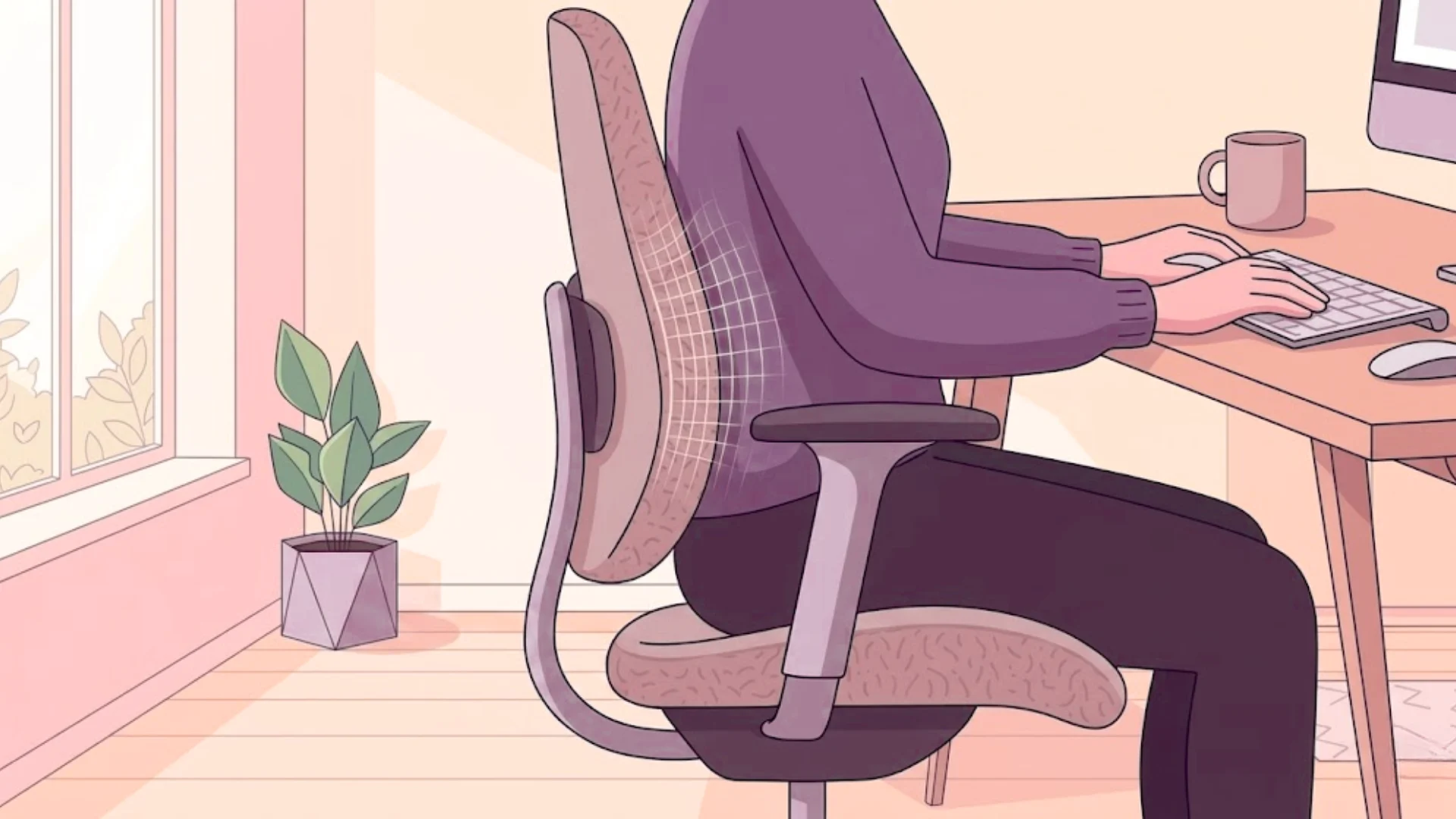
Have you ever been sitting at your desk completely in the zone, minding your own business but suddenly realized that something is off with your back? Not sharp pain, just that dull ache, the kind you get that makes you squirm in your seat every couple of minutes. You straighten for an instant and then you just slip right into whatever kind of OK position again. Sound familiar? Yeah, that happens to nearly everyone.
You woke up this morning perfectly fine. You sit down and open your laptop and get into the work groove without giving a second thought to how you’re sitting. But after a while, your body begins to send you some subtle signals. You lean back when you want recuperative rest and lean forward when you’re ready to go deep. You might even cross your legs or vice versa or sit on the edge of your seat for a minute. None of this seems particularly meaningful just tweaks to ensure everything keeps ticking along.
And the thing is, those niggling little tweaks hardly ever get at the heart of the matter. They only prevent you from thinking about them for a time. Before we know it another 6 hours passes and that little bit of pain has transformed into rigidity. Your lower back, tight; your shoulders heavy, from the act of making thought happen and it ought to be an exercise simply to summon the will to sit still. By the end of the day, your body is more fatigued than your mind was and that’s saying something.
It’s as if your body has been keeping track all day and now, for the first time, it speaks.
Why Sitting Feels Easy But Isn’t
A lot of people have this view that the seated position is more sort of relaxed and easier position, in fact, it puts ongoing pressure on your body which you don’t expect. The biggest issue? Lack of movement. Staying in even a comfortable position too long becomes hard labor for your body.
When you are sitting for hours on end your spine is constantly getting compressed from the inter-vertebral discs between each of the vertebrae in your lower back. The weight of your body begins to rest on your hips and gradually even without you noticing it your posture starts to cave. The problem with sitting as opposed to when you’re walking or standing and your body is engaged and shifting around in such a way that different sets of muscles are activated is that the former’s relatively static. All this absent exercise leads to muscle wasting, bad circulation etc effects that build up over time.
And many of us lean forward over our screens, adding extra strain to the muscles and joints in the neck and upper back. This causes body imbalance, some muscles get addicted to doing more while others reduce. The result? You know, the angsty tightness and the resistance to a break in every three minute stretch.
What “Getting Used to It” Gets Right
So many survive that tension as part of the process. You don’t really question it, you suck it up. So you adjust yourself just a little bit taller, roll your shoulders back or constantly resituate yourself throughout the day, hoping somehow everything would fall into place and feel correct.
And you may find yourself thinking:
- I just need to change my posture.
- This happens to everyone.
- I’ll get used to it.
And after a while you get kind of used to it but that doesn’t mean the problem has gone away. That simply means that your body is acclimating to mediocre support. Instead of smoothing over the problem, it’s compensating for it which can lead to more aches and pains, tighter muscles and even pain down the road.
Why Your Office Chair Falls Short
The knee-jerk response is to upgrade your chair, but a better chair should mean more comfortable. And yes, a good chair helps a lot but it’s not the whole answer each time.
Many of the office chairs on the market are made for a lot of people, not your specific body. It supports broadly, but doesn’t always contour to the curves and pressure points that make your body yours. That’s where the gap starts literally.
In particular, you may notice gaps between your body and the seat of the chair. You don’t notice them for a while, but they can influence the alignment of your body. If those components are not properly aligned, your muscles make adjustments. And when it goes on for hours, day after day, the discomfort piles up that much is not new.
So even with a good chair, your body may still be doing more work than it has to just to remain seated.
The Missing Link: Proper Support
Wanting to upgrade whatever supports you instead of heating your body up over and over again will resonate. And this is where a chair cushion for office chair setups prove their worth and make a huge difference.
This fills in the void your chair makes and helps position your body in a more natural position. It promotes posture instead of mandating it, so comfort is less of a battle and more a constant consideration during the workday.
What a seat cushion Actually Does
A cushion isn’t solely about softening your seat, it alters how you’re supported. A good seat makes all the difference to comfort on a long sit.
So, an ideal office chair cushion metric would be:
- Weight Distribution to Minimize Pressure
- Supporting your spine’s natural alignment
- Improving posture without constant effort
They might seem a little incremental in isolation, but the differences really stack up over time during sit-down usage to produce a much more stable and comfortable experience.
Softness Vs Support
We think being soft is good. Soft cushions might feel physically comfortable at first, but do not generally provide enough structure for your body.
If, say for example, you have a cushion which is way too soft you are then going to be sinking unevenly lower into the thing and generating pressure points so that your posture ends up being all the more difficult to do. The key to true comfort lies in the right combination of cushioning and support.
That’s what makes memory foam and similar stuff so great you sink into it, but then it maintains its shape, providing both comfort and support.
The Importance of Tailbone and Breathability
The tailbone support and airflow are considerations people often overlook. And both have huge implications for how comfortable you feel sitting for hours on end.
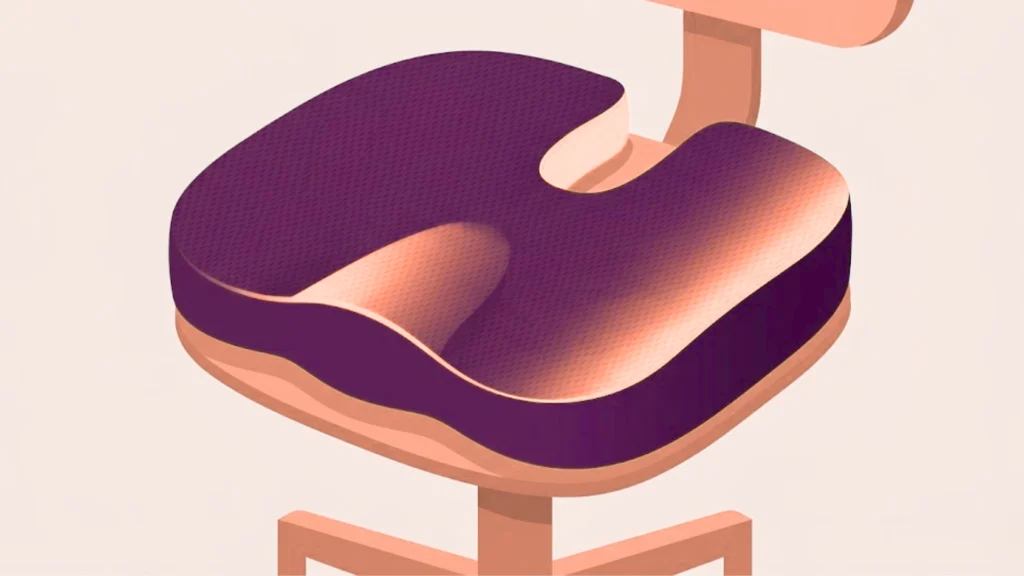
If not cushioned properly, the coccyx (tailbone) absorbs this extra weight and pressure while seated leading to discomfort and a lack of repositioning. The heat can build up in that area; there’s no airflow in hot places.
This is why a good office chair cushion incorporates many of these features:
- A cut out for pressure relief on the tailbone (coccyx)
- Breathable fabrics air can pass through the weave of the fabric to release heat and sweat
- Cumulatively, they offer greater comfort and usability over the course of a day.
How a Cushion Will Change Your Day to Day Life
The feeling of a nice cushion doesn’t hit you with a splash it builds up slowly, almost imperceptibly at first. Initially you might just notice that sitting is more comfortable, less distracting. You’re not even always aware you need to reorient and your mind is where it should be on your work.
This disparity is becoming more and more apparent to all of us every day. You may be moving more; your lower back tension should dissipate and your hips absorb some of the load, in his words. Better still, your posture begins to improve without you being able to help it. You’re sitting up much taller without reminding yourself every couple of minutes to do so.
By the end of the day, you could definitely feel it. Your body typically feels more supported and in relaxation mode than it does tired and stiff. These marginal gains accumulate into a workday that’s smoother, more pleasant and counterintuitively more productive.
When You Might Want a Chair Cushion
Your body is doing its best to give you a heads-up when something’s amiss you just need to listen. These warning signs may be faint at first, but it is essential to recognize them early in order for them not to develop into something far more unpleasant.
If you are always fidgety and notice that you keep having to adjust in the office chair just to settle into a comfortable position (which wears off fairly quickly) then an office chair cushion is most definitely for you. Perhaps your lower back tightens up after a stretch of sitting or your hips begin to ache by the end of the day. Even a vague sense that your chair is kinda comfy but not so much means you need better support for your body.
Choosing the Right Chair Cushion
Not all cushions are created equal and the right cushion can make a difference in how well this works. Not just introducing softness, introducing the correct kind of assist.
Search for a cushion with an ergonomic design that conforms to the body’s natural curve. This promotes proper alignment and takes pressure off areas of your body, such as your lower back and tailbone. High-density foam is also a key component; it does the heavy lifting and won’t flatten too quickly, so you know you’ll be getting just as much support for years to come.
Breathable materials such as a cotton material and mesh covers will improve your experience particularly if you are prone to sitting in one place for extended periods of time. They help to cool things down, so that we don’t feel hot and bothered. And don’t forget a non-slip base. It helps anchor the cushion in place, so you won’t have to regularly adjust it throughout your day.
All that functionality adds up to a cushion that not only feels great for five minutes, but supports you hour after hour.
Simple Habits That Enhance Comfort
A cushion improves your setup and a good one even results in better habits. Small alterations to the way you like to sit can accumulate over time.
Try to:
- Recline as deep back into your seat as possible
- Take a sense of your feet in a neutral position on the floor
- Take micro breaks every 30 to 60 minutes and get away from the screen
And also to adjust a more neutral and comfortable sitting position, with appropriate support.
Why This Small Change Matters
It’s easy, therefore, to assume that remedying discomfort requires a major, expensive renovation and the acquisition of an entirely new chair. Everyone, however, does not need to be so. All sorts of tweaks can dramatically impact how your body feels throughout the day.
In fact, office chair setups are one of those simple yet transformative tweaks that can make an enormous difference: Swapping in a better seat cushion. It builds on what you know; it is not starting from scratch again. And being able to lift higher can help provide even more physical support to the body lower back, hips and tailbone area for an easier sit that feels more balanced with less or no effort.
betterhood Solutions To Upgrade Your Comfort
If you’re ready to experience sitting like never before, betterhood has designed the ultimate solution that checks off all the boxes for support, comfort and breathability:
- Ergonomic Memory Foam Seat Cushion: Distributes weight evenly to reduce pressure on your hips while sitting for long periods
- Coccyx Memory Foam Cushion: Adjusts to promote healthy tailbone support and corrected body alignment
- Lumbar Backrest Cushion: Offers lower back support cushion for lumbar spine alignment
- Breathable Cotton Covers: Your covers keep the surface cool and reduce sweating for comfortable all-day use
Each product complements the other to form a complete support system helping you sit better, feel lighter, and be comfortable while working
Final Thoughts
But dealing with physical discomfort while you sit is not something you need to suck it up and put up with. That’s usually your body telling you that it’s hungry for better support and alignment, ignore it and things are only going to get harder over time.
But a cushioned office chair pad is an instant solution that can make a world of difference in your everyday level of comfort. It cuts down on unnecessary strain, promotes better ergonomics and makes hours spent at your desk much less tiring. You probably won’t feel it right away but your body will, over time.
Making is not always about overturning everything. It’s about making one more clever move that shifts the whole ambience of it.
FAQs
Yes, they do help with support and alignment which takes pressure off of your lower back.
If it’s uncomfortable, stiff or you find yourself constantly shifting positions, you need more support.
Yes, memory foam is body-conforming and offers prolonged hours of support.
It takes pressure off the tailbone and alleviates discomfort while sitting for prolonged periods.
Indeed, it provides airflow so you aren’t sweating in your suit jacket all day.
Yes, good quality ergonomic cushions are meant for long usage every day.
References
[1] Ergonomics and Musculoskeletal Disorders National Institute for Occupational Safety and Health 2021 Available at: https://www.cdc.gov/niosh/topics/ergonomics
[2] Sitting and Health: Risks of Prolonged Sitting Harvard Health Publishing 2020 Available at: https://www.health.harvard.edu/pain/sitting-risks
[3] The Impact of Posture on Back Pain American Chiropractic Association 2019 Available at: https://www.acatoday.org
[4] Effectiveness of Ergonomic Seat Cushions Journal of Physical Therapy Science Lee et al. 2018 Available at: https://www.ncbi.nlm.nih.gov/pmc/articles/PMC5857449
[5] Pressure Distribution and Sitting Comfort Study International Journal of Industrial Ergonomics Zhang et al. 2017 Available at: https://www.sciencedirect.com


