






Collagen has quietly shifted from a “beauty buzzword” to a wellness power player. You’ll hear about it in conversations about skincare, workout and joint health, and healthy aging. And though the glow that comes from good skin can steal the show, collagen’s true effects go far beyond looks.
It impacts the way in which we move, it helps us to recover, and the manner in which our body maintains itself over time. From cushioning joints to fortifying bones and enabling muscles to recover post workout, collagen is involved in nearly every physical system we rely on daily.
In this article, let’s cut through the buzz and break down what collagen truly does in the body. We’ll also examine where you can find collagen, what are the most relevant types of it for daily health, and how it helps maintain skin, joints, bones and muscle recovery as we age.
We’ll also discuss specific ways to help the body produce collagen from food, lifestyle habits and through supplementation without far-fetched promises or fad claims. Whether you’re experiencing creaky joints, slow recovery period from strains and sprains, or just want to move and feel better in your day-to-day, the more you know about collagen can guide you as you make better-informed decisions around overall wellness.
Because when wellness is considered thoughtfully; emphasizing comfort, movement and sustainability, collagen starts to become not so much a peak oil as a supportive audience for a body that has to maintain in real life.
Why collagen declines with age
Collagen production naturally decreases with age. As early as the mid-20s our body’s collagen production declines [1]. In addition, stress, lack of sleep, sun exposure, smoking and nutrient deficiencies can speed up this decline. Over the years, this loss manifests as looser skin, stiffer joints, weaker bones and slower recovery after physical activity.
Why collagen matters beyond beauty
Though we readily recognize the visible benefits in smoother complexions, collagen’s true value is structural support. It is essential for joints to move smoothly, bones to remain flexible, muscles to recover effectively, and connective tissues to stay strong. In a wellness-first sensibility; the kind betterhood represents, collagen is no longer about vanity. It feels like it’s about staying comfortable, active and capable as life asks more of our bodies.
What is Collagen and Why is it Important?
Structural protein explained simply
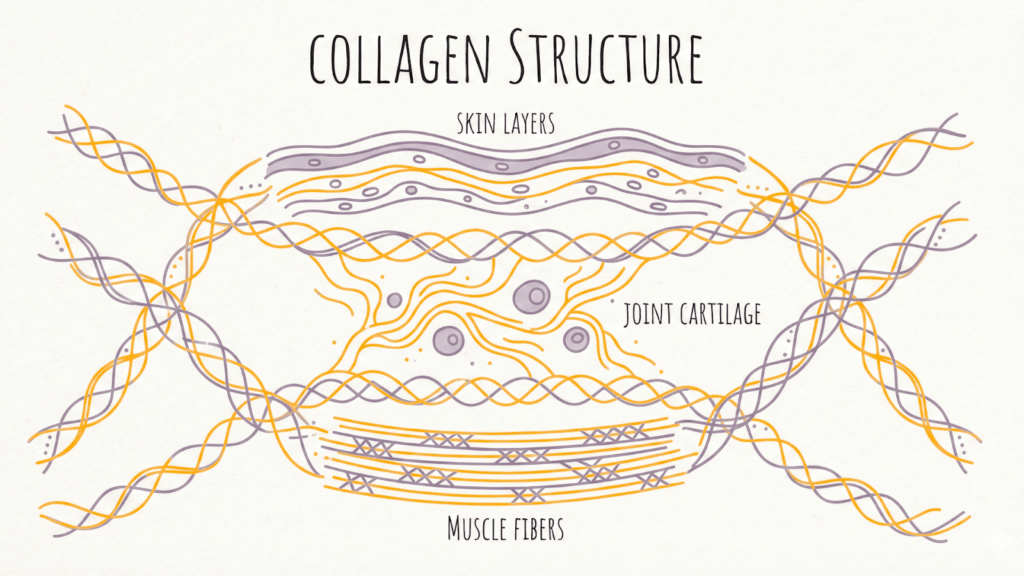
Collagen is the most abundant protein in the human body and accounts for approximately 30% by weight of total protein [2]. Think of it as the body’s inner scaffolding. It imparts to tissues their shape, strength and capacity for managing stress. Without collagen, skin would droop, joints would grind and muscles wouldn’t work together with optimal efficiency.
Where Is Collagen Found in the Body? Key Areas You Should Know
Collagen is not monogamous to one place. It’s throughout the body, including:
- Skin,where it is responsible for firmness, elasticity and hydration.
- Cartilage, which gives joints their cushioning and enables smooth movement.
- Bones, in which collagen makes them flexible and not brittle.
- Muscles, tendons and ligaments; helps with movement and stability.
- Organs and blood vessels, providing mechanical support.
In simple terms, collagen nourishes the way your body looks and feels from head to toe.
Common Types of Collagen You Need to Know
There are at least 28 known varieties of collagen in the human body, but only a few of them provide most of the structure and support and resilience we depend on every day. Of these, Types I, II and III are the key components in supporting skin health, joint comfort and bone strength as well overall mobility.
Type I, II, and III overview
- Type I collagen is the predominant of all collagens in the body. It is a major component of skin, bones, the tendons and ligaments along with connective tissues. This kind offers tensile strength, which means it can help tissues resist pulling and stretching forces. When Type I collagen is vibrant, skin looks firmer, bones remain strong and tendons are in a better position to withstand the stress and strain of everyday movement.
- Type II collagen is primarily located in cartilage, the smooth, spongy tissue that cushions joints. And its job is to absorb shock.The latter product lubricates your joints to prevent the rubbing of them, while type II collagen ensures that your joints will glide effortlessly during movement. Keeping enough on hand is important to ensure joints stay healthy and comfortable as the wear and tear factor accumulates over time, or from physical activity.
- Type III collagen is closely aligned with Type I and is particularly important for tissue resiliency and repair. It can be found in the skin, blood vessels, lungs and internal organs. Type III collagen provides the necessary flexibility and structural integrity to enable tissues to accommodate movement, pressure or healing requirements. It is of particular importance in growth, restoration and wound healing.
Functional Differences Between Collagen Types and Their Roles in the Body
Different collagen types serve different functions, but they work best when combined. Type 1 gives strength and solidity, Type II protects joints from impact and wear/tear, and Type III brings flexibility to the tissues. Combined, they provide optimum support for the body to move well and find it easy to stand correctly and recover from physical effort.
This balance is especially crucial in later life, when sitting habits or repetitive motion can take a toll, or even during intensive physical practices that are only sustainable with ongoing support to the health of collagen.
What are the Benefits of Collagen for Skin
The state of their skin is often where people first become aware of the effects of collagen, for good reason.
May Improve skin elasticity
Collagen is what allows the skin to stretch and bounce back. Research indicates that collagen supplementation can help to enhance skin elasticity, especially in aging skin where firmness begins to decrease [3]. Softer, more supple skin looks and feels healthier; skin shouldn’t be tight or fragile.
May Reduce wrinkles and dryness
When you have less collagen, skin gets thinner and drier; fine lines also become more apparent. Studies show that collagen peptides can reduce wrinkle depth and increase skin hydration by improving the skin structure beneath [4]. Moist skin is not just only better looking, it feels more comfortable and offers some protection from environmental stress.
How Collagen Benefits Joints and Cartilage ?
If any, joint health is where collagen’s effect usually becomes most apparent.
Joint cushioning
Cartilage is mostly collagen, and it functions as a cushion between bones. When collagen decreases, the cartilage becomes less functional, causing it to rust together and cause pain when moved [5]. Back to supporting collagen: That’s one way you can help maintain that pillow, so everyday activities such as walking or bending over or driving are far more cushioned.)
Reduced stiffness and pain
Some studies indicate potential benefits of collagen intake in terms of reducing pain and stiffness in the joints (especially among individuals with osteoarthritis) or sportsmen [6]. Collagen can help to support cartilage health and decrease inflammation, both of which will make movement feel less jerky or restricted over time.
Collagen and Bone Strength
Bones aren’t just hard minerals. They are living tissues, and they depend upon collagen in order to maintain flexibility.
Bone density support
The organic matrix of bone is composed by about 90% collagen [7].It’s what gives bones their capacity for absorbing impact without cracking. Without sufficient collagen, even if mineral levels seem fine, bones may end up being stiff and more prone to cracking.
Aging-related bone loss prevention
Bone density and flexibility are lost as collagen production wanes with age. Studies have also indicated that collagen supplementation can help prevent a loss in bone mineral density, particularly in addition to calcium and vitamin D [8]. This is critical to aging well, and remaining independent longer.
Collagen for Muscle Recovery & Stronger Muscles
Collagen has a more subtle but not less important role in muscle function and recovery.
Muscle repair after workouts
For the purpose of force transmission and support, muscle tissue is dependent on a collagen-rich connective structure. Collagen supplementation with resistance training has been proposed to enhance skeletal muscle mass and strength in elderly individuals [9].This is especially useful for post workout or after long tiring and physically exhausting days.
Tendon and ligament health
Tendons and ligaments contain collagen fibers. Their strength and ability to withstand deformation to adequate strain are: supported by sufficient collagen, thereby decreasing the possibility of strains and injuries [10]. And for those with stiffness from desk work, long drives or repetitive movement, this support is more important than we know.
What are the Natural Methods for Stimulating the Production of Collagen ?
Before considering supplements, it makes sense to first consider daily habits that can help your body make its own collagen.
Protein-rich foods
Collagen is composed of amino acids, including glycine, proline and hydroxyproline. You can get the building blocks for your body through foods like eggs, dairy, legumes, fish and lean meats. Incredible info right there I think we need to share! My input: protein – Protein in general, not only collagen.
Vitamin C and zinc
Vitamin C is required for collagen formation and it acts to stabilise the molecules of collagen [11]. Zinc aids in tissue repair and wound healing. Citrus fruits, berries, bell peppers, nuts, seeds and whole grains all play their part in these everyday little ways.
Lifestyle habits that protect collagen
Sleep, stress and sun protection are huge. Our body breaks down collagen due to chronic stress and UV exposure, our body repairs and rebuilds tissues thanks to restful sleep. Small habits such as better posture, postural support and movement breaks that help reduce stress on collagen-based tissues also jibe naturally with a wellness-first lifestyle.
Collagen Supplements: What to Know
They can be supplementing, but they work best when not over-hyped.
Hydrolyzed collagen
Hydrolyzed collagen (collagen peptides) are usually utilized in most collagen supplements, being broken down so that you can digest and absorb them more easily [12]. These peptides supply the amino acids that your body can apply where it needs them, such as skin, joints or muscles.
Absorption myths
Collagen doesn’t head directly from your digestive system to your skin or joints as collagen. Instead, it’s metabolized to breakdown products: amino acids and peptides. The body then repurposes those building blocks where they’re most needed. This process is a natural occurrence and does not render supplements ineffective, despite what you have heard [13].
Who Benefits Most From Collagen Supplementation?
Those with joint discomfort; dry, itchy skin; decreased mobility or sluggish recovery are likely to benefit the most. They are also product appropriate who want to get fit, the older adult getting fitter rather than looking better and athletes and people with a physical job who need to focus on performance rather than aesthetics.
Conclusion
Contrary to our media narratives, collagen is not about chasing youth or a quick fix. It’s all about aiding the way in which your body moves, recovers and holds up through its daily journey. Whether it’s aiding smoother joints, stronger bones, better muscle recovery or more resilient skin, collagen has a quiet but important role in aging well.
When combined with good nutrition, mindful movement and supportive lifestyle choices; the type that prioritize comfort, posture and long-term wellness, collagen is part of a larger canvas. One where health is coaxed, not forced, gently, steadily and sustainably.
That’s the kind of durable, everyday wellness that matters.
Explore More Health & Wellness Solutions:
Want to stay informed about wellness and everyday health issues? Here are some insightful reads to guide you. Explore the links below for practical tips and solutions:
- Stretching Exercises for Flexibility: Improve Mobility, Posture, and Prevent Injuries
- The Ultimate Guide to Posture Correction Belts
- Cervical Pillow Benefits: How Orthopedic Pillows Improve Sleep
- The Real Benefits of Knee Compression Sleeves
Frequently Asked Questions:
1. When should I take collagen ?
When should I take Collagen? Some take it in the morning for consistency; others, post-workout, to aid recovery. The more important thing is regular consumption over time.
2. Is collagen safe long term?
The previous had indicated that collagen supplementation could be safely taken for long term at doses recommended [14]. As with all supplement use, quality matters and so does moderation.
3. Can collagen replace protein?
No, collagen is not a full protein and does not contain all of the essential amino acids. It is most effective when relied upon as supplementary protein, rather than a replacement for well-rounded dietary protein.
4. How long before results appear?
However, skin beneficial effects may require 8-12 weeks while, joint and mobility benefit needs up to 12-24 weeks with lot, depending on the adherence and life style. Collagen works gradually, not overnight.
5. Does collagen help joint pain?
It has been demonstrated that collagen supplementation possibly decreases joint pain and stiffness, especially in osteoarthritis and physically active people [6]. Results vary, but many people say it becomes less uncomfortable over time.
References
- Shuster, S., Black, M. M., & McVitie, E. (1975). The influence of age on skin thickness, skin collagen and density. British Journal of Dermatology, 93(6), 639–643. https://doi.org/10.1111/j.1365-2133.1975.tb05113.x
- Shoulders, M. D., & Raines, R. T. (2009). Collagen structure and stability. Annual Review of Biochemistry, 78, 929–958. https://doi.org/10.1146/annurev.biochem.77.032207.120833
- Proksch, E., Segger, D., Degwert, J., Schunck, M., & Zague, V. (2014). Oral supplementation of specific collagen peptides has beneficial effects on human skin physiology. Skin Pharmacology and Physiology, 27(1), 47–55. https://doi.org/10.1159/000351376
- Asserin, J., et al. (2015). The effect of oral collagen peptide supplementation on skin moisture and elasticity. Journal of Cosmetic Dermatology, 14(4), 291–301. https://doi.org/10.1111/jocd.12174
- Henrotin, Y., Mobasheri, A., Lambert, C., & Daminet, S. (2012). Fibulin 3 peptides Fib3-1 and Fib3-2 are potential biomarkers of osteoarthritis. Arthritis & Rheumatology, 64(5), 1423–1432. https://doi.org/10.1002/art.34392
- Clark, K. L., et al. (2008). 24-week study on collagen hydrolysate as a dietary supplement in athletes with activity-related joint pain. Current Medical Research and Opinion, 24(5), 1485–1496. https://doi.org/10.1185/030079908X291967
- International Osteoporosis Foundation. (n.d.). Bone biology. https://www.osteoporosis.foundation/health-professionals/about-osteoporosis/bone-biology
- König, D., et al. (2018). Specific collagen peptides improve bone mineral density. Nutrients, 10(1), 97. https://doi.org/10.3390/nu10010097
- Zdzieblik, D., et al. (2015). Collagen peptide supplementation and resistance training. British Journal of Nutrition, 114(8), 1237–1245. https://doi.org/10.1017/S0007114515002810
- Shaw, G., et al. (2017). Vitamin C–enriched gelatin supplementation and collagen synthesis. American Journal of Clinical Nutrition, 105(1), 136–143. https://doi.org/10.3945/ajcn.116.138594
- Pullar, J. M., Carr, A. C., & Vissers, M. C. (2017). The roles of vitamin C in skin health. Nutrients, 9(8), 866. https://doi.org/10.3390/nu9080866
- Iwai, K., et al. (2005). Identification of food-derived collagen peptides in human blood. Journal of Agricultural and Food Chemistry, 53(16), 6531–6536. https://doi.org/10.1021/jf050206p
- Clark, K. L., Sebastianelli, W., Flechsenhar, K. R., Aukermann, D. F., Meisius, F., Millard, R. L., Deitch, J. R., & Fernando, D. (2008). 24-Week study on the use of collagen hydrolysate as a dietary supplement in athletes with activity-related joint pain. Current Medical Research and Opinion, 24(5), 1485–1496. https://doi.org/10.1185/030079908X291967
- de Miranda, R. B., Weimer, P., & Rosenthal, D. (2021). Effects of hydrolyzed collagen supplementation on skin aging: A systematic review and meta-analysis. International Journal of Dermatology, 61(12), 1449–1461.https://doi.org/10.1111/ijd.15518