




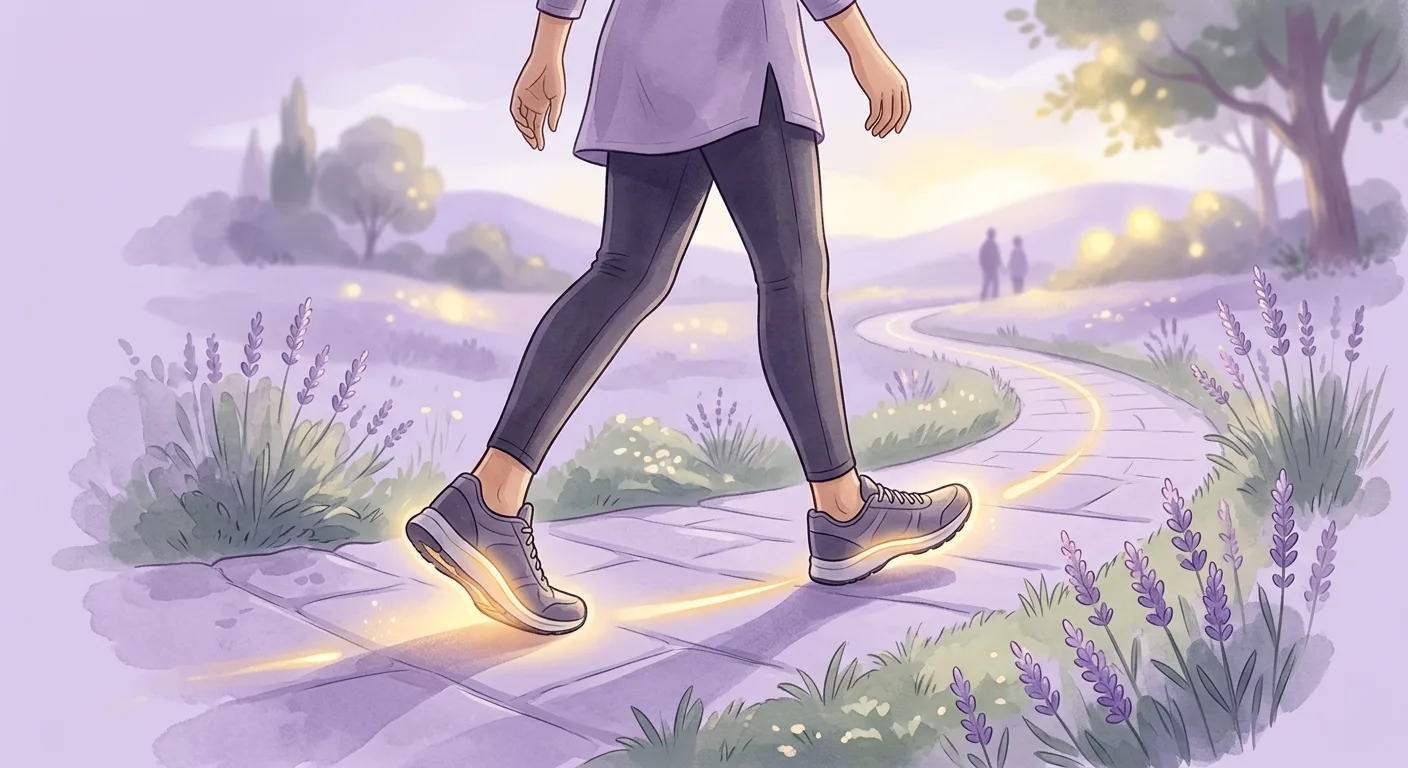
SignalWalking is one of the most mundane things we do each day. But many still do it in a way that can stealthily raise stress in the body. And over time, bad walking habits can affect a person’s feet, knees, hips, back and balance. And that is also why proper walking posture isn’t just a good idea. It’s embedded in everyday health and motion.
When you have bad posture, your body works harder to help you move. That extra step may not seem immediately apparent.” Yet gradually it can also cause pain, fatigue and less stability while walking. The silver lining is that you can correct walking posture by making some easy tweaks. [1]
Why walking posture matters
By walking with the right technique, you ensure that your bones and joints are aligned properly. According to the NHS gait advice, good walking posture can reduce wear and tear on muscles, joints, and ligaments. It can also help prevent back, hip, neck and leg pain; reduce fatigue; and promote balance and stability.
More to the point, it’s not just having an upright appearance that counts as good posture. It is about moving efficiently. Balanced walking uses less unnecessary effort in your body. That means your steps may feel smoother, your muscles may not feel as fatigued and your movement can seem more natural.
This is why walking wrong can be bad for your health. Little posture mistakes may not appear too serious, but add them up, repeated day after day, and they can accumulate to something that leads to discomfort and strain. [1]
What is the correct walking posture?
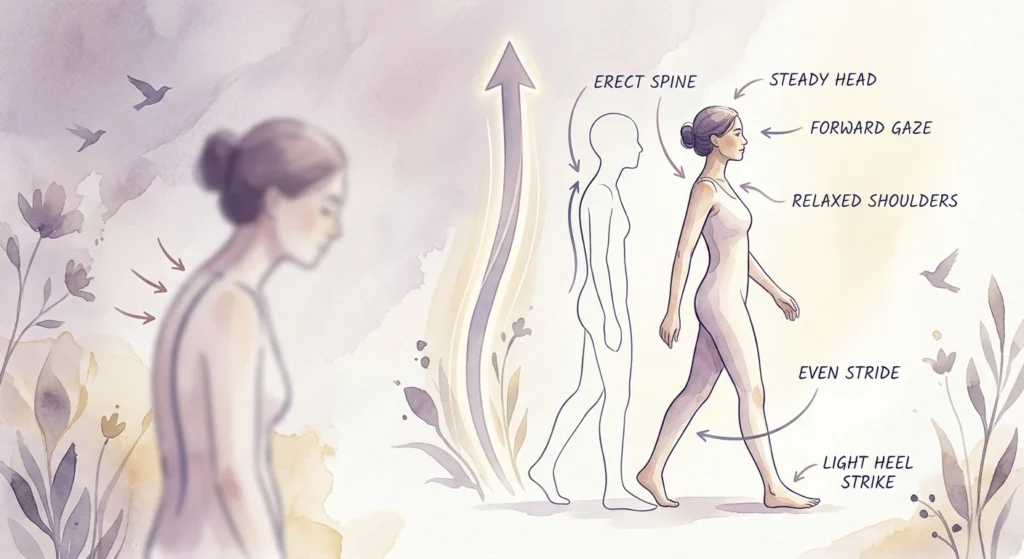
Proper walking posture involves maintaining alignment in an optimal manner for safe and effective movement. NHS advice on gait includes standing tall, looking up, relaxing your shoulders, maintaining a light brace through the abdominals, keeping your feet about hip distance apart and walking with a smooth heel-toe step.
Also, your arms should swing freely from the shoulders rather than across the body. So, it helps with balancing and energy efficiency. The body feels steady, but not stiff.
So walking like a robot is not correct walking posture. It’s about walking with natural, controlled movement that stabilizes the entire body. [1]
Why Walking Wrong could cost you a hidden price
If you walk poorly for months or years, your body can adjust in unhelpful ways. Some muscles get tight, and others weak. Balance can get worse. Pain can manifest in the back, hips, knees, calves or feet.
Good posture lowers stress on the back muscles, and poor posture is a known factor in developing or maintaining back pain, according to the Mayo Clinic. Their advice on pose and alignment also explains that better posture can relieve strain on joints, muscles and the spine.[2]
That means you can silently grind your body by walking wrong every day. It may not present as a huge problem immediately, but it can create cumulative stress that ultimately manifests as pain or fatigue.” [1]
Some common signs your walking posture might be off
If your walking technique needs some tweaks, you might find that you:
- look down while walking
- keep your shoulders tight
- take short or shuffling steps
- feel tired very quickly
- feel unsteady on your feet
experience soreness in your back, hips, or legs following a
The NHS gait leaflet points out that shuffling steps are more likely to lead to trips, slips and falls. It also states proper walking can enhance balance and stability.
That means your body often sends signals. If walking is awkward, tiring or unstable-feeling, posture may be partly to blame. [1]
The ultimate head-to-toe guide for walking posture
Keep your head up
Well, a good walk begins with the head. Imagine that your head is being gently pulled up, and make sure that your chin stays parallel to the floor, according to NHS guidelines. This prevents a forward dropped head position. [1]
A more upright head tends to bring the spine and shoulders into better alignment as well. That can help your walk feel more balanced.
Relax your shoulders
Shoulders should be relaxed and back, not raised or tense. One of them are tight shoulders because they stiffen your upper body and can go on to affect the posture of the rest of the body. The NHS guidance on walking mentions relaxing your shoulders as part of a healthy gait. [1]
Use a light abdominal brace
The NHS gait leaflet states to lightly pull in the abdomen. This assists in supporting the trunk during ambulation. It doesn’t mean sucking in your stomach. This is just a soft engagement, something to help stabilize. [1]
Keep your feet hip-width apart
A steady base helps balance. The NHS leaflet recommends keeping your feet around hip distance apart. That provides your body with a more stable base as you move. [1]
Step heel to toe
Your heel should touch first, followed by rolling your foot forward. The NHS leaflet advises maintaining a consistent heel-to-toe gait and avoiding flat-footed or toe-first strides. [1]
Swing your arms naturally
Your arms should move from the shoulders in an easy fashion. Doing so counterbalances the legs, which ultimately conserve energy when motion occurs. According to NHS guidance, arm swing helps balance, gait stability and efficiency. [1]
How bad posture affects pain
Bad walking posture will increase the stress level on your back and lower body. Back pain is often exacerbated by posture and repeated stress, according to the Mayo Clinic. Their guidance also states that good posture decreases tension on the muscles of your back, which helps to maintain your body’s alignment. [2]
The body will compensate when the walking posture is bad. For instance, tight shoulders might pull the upper body forward. Dropping your head can alter spine alignment. Shuffling steps may reduce balance. These cumulative small signs are unavoidably discomforting.
And that’s why proper walking posture is important, even if you don’t already have pain. It is a habit of prevention as well as comfort. [1]
Balance and posture go together
Walking is more than a leg motion. It is also a balance skill. NHS balance guidance includes the exercises that promote stability and mobility. It demonstrates that balance training assists with tasks such as standing and walking in the real world. [5]
The gait leaflet also states that proper walking position enhances balance and stability. That may matter because balance problems can lead to walking that is less secure and more exertive.
So if you want to improve your walk, don’t make it all about your feet. Balance, posture and body awareness correlate.[1]
What causes poor walking posture?
Multiple common activities can lead to poor posture while walking. It can be related to muscle weakness, pain, or sedentary lifestyle as well poor core stability. As the NHS gait leaflet states, these factors can impact on posture and quality of walking. [1]
It can also occur when people sit too much. If the body’s in one position for hours at a time, some muscles may become tight and others lose strength. That can change your walk down the road.
At times, this change goes unnoticed. The body is slow to adapt, so the posture problem becomes habitual.
How to walk better: Fix your gait with these tips
The first step is awareness. Before you start walking, first stand tall. Walk with your head up, shoulders relaxed and feet balanced. Then walk with a fluid heel-to-toe gait.
It also assists in assessing your arm swing. Allow your arms to swing naturally instead of tensing them. Try not to rush. Walking stiffly as if in a hurry is generally worse than walking slowly. [1]
If you’ve been walking with poor posture well, years of it will take practice to change. The Alexander technique is another way to address posture and movement awareness. It emphasizes becoming more aware of how you sit, stand and move. [4]
That means improvement is possible. It simply requires attention and repetition.
Habits of your daily life that promote better walking
Good walking posture is also easier when you have a strong, balanced body. The stability of gait (walking) and posture (standing).
Another thing you can do for yourself is to not sit still for long. Posture and body alignment can decrease strain, according to Mayo Clinic, and regular movement can let the body work more efficiently. [3]
So, to encourage proper walking posture, it helps to:
- stay active regularly
- work on balance
- get up and move more throughout the day
- keep your shoulders relaxed
- have a steady heel-to-toe gait
Conclusion
Walking is easy, but how you walk is more important than most people think. Bad posture causes more wear on the body, greater fatigue and a higher risk for pain or imbalance. That’s why proper walking posture merits the time spent learning and practicing in moving your body this way.
The great news is that tiny tweaks can really help! Holding your head up, shoulders back and relaxed, abdomen engaged gently and upwards with controlled steps can help you to move better.
If walking has been feeling more difficult than it ought to, posture might be the hidden culprit. Repairing it can make daily movement seem easier, more stable and less creaky. [1]
FAQs
Correct walking posture is to walk with your head up, shoulders relaxed, abdomen slightly engaged and a steady heel-to-toe step. It includes natural arm swing and balanced weight transfer.
Proper posture while standing is important because it minimizes wear, promotes balance, and lowers the risk of discomfort in the back, hips, neck and legs.
Yes. Improper walking posture can put additional strain on muscles and joints, which, over time, may lead to pain, fatigue and instability.
So keep your chin up, shoulders down and feet stable. Practice walking heel to toe and let your arms swing naturally.
Yes. Good posture aids balance and stability, while a shuffling gait may heighten falling risk.
References
- Leicester Partnership NHS Trust. (2024). Advice on gait (walking).
https://www.leicspart.nhs.uk/wp-content/uploads/2019/08/Advice-on-Gait-Walking.pdf - Mayo Clinic. (2024). Back pain – Symptoms and causes.
https://www.mayoclinic.org/diseases-conditions/back-pain/symptoms-causes/syc-20369906 - Mayo Clinic. (2024). Back pain – Diagnosis and treatment.
https://www.mayoclinic.org/diseases-conditions/back-pain/diagnosis-treatment/drc-20369912 - NHS. (2024). Alexander technique.
https://www.nhs.uk/conditions/alexander-technique/ - NHS. (2024). Balance exercises.
https://www.nhs.uk/live-well/exercise/balance-exercises/


