




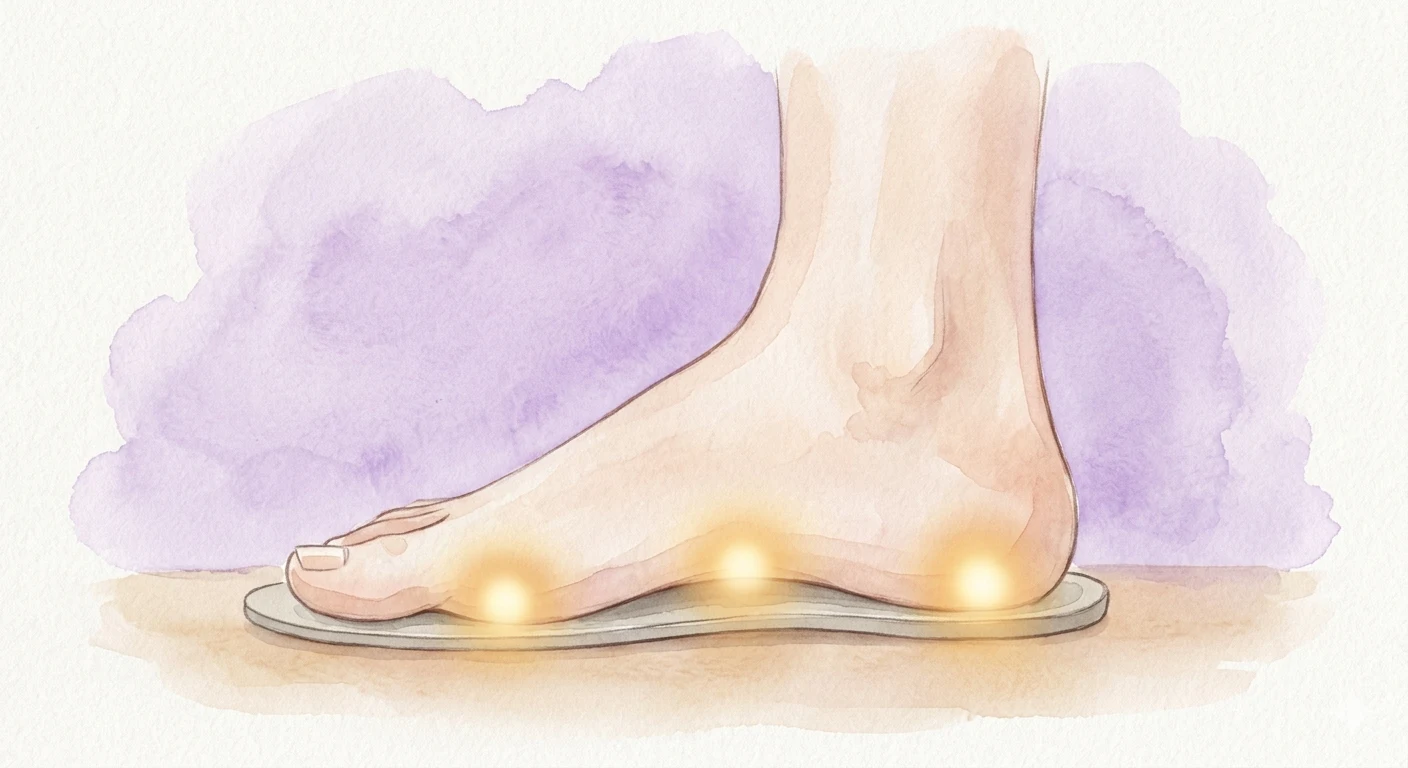
Running should feel hard, but it shouldn’t always hurt. If your foot hurts every time you run, your body is likely trying to tell you something. Oftentimes, it’s not simply “running too much.” The actual issue could be one of the 3 overhead running foot discomfort causes, such as inadequate foot assistance, overuse, level feet, high arches or plantar fasciitis. [1]
The good news is that running pain usually falls into a pattern. Once you know what to look for, you can figure out whether the pain is from healthy stress or from some deeper problem. That helps you know what the right fix is, and how not to make things worse. [3][ 4]
Reasons not to ignore foot pain while running
The foot acts as a shock absorber in every step when running, so learning how to prevent or reduce foot pain while running is key. If the foot isn’t supported enough or if one spot bears too much weight pain can accumulate. According to MedlinePlus, foot pain may stem from inadequate arch support, spending long hours on your feet and several foot problems. [3]
Also, if the pain continues to occur run after run the body may not be recuperating as it should. That can make a small problem persist longer.” Many problems with foot pain get better with supportive shoes, inserts, stretching and decreased activity depending on the cause, [4]
So when your foot hurts while running, it’s worth taking early notice.
Common running foot pain causes
1) Plantar fasciitis
Plantar fasciitis is one of the most common running foot pain causes. This occurs when the thick band of tissue that runs underneath the foot becomes irritated. The pain is usually worse close to the heel, particularly when getting out of bed or after running.[5]
According to Mayo Clinic, many people recover through conservative treatment with stretching, icing and avoiding the activities that make it hurt. It adds that arch supports and shoe inserts can provide some relief. [5]
2) Flat feet
Flat feet can alter the distribution of pressure across the foot. The NHS states that flat feet generally do not require treatment, unless causing problems, though shoe insoles, stretches and supportive shoes can help where there is pain or stiffness. [1]
According to the Mayo Clinic, arch supports can reduce pain from flat feet even if they do not cure the condition. [2]
3) High arches
Another common source of running pain: high arches. high arches can cause the foot area to put more strain on the heel, ball of the foot and outer toes. That can cause walking and running to feel painful or unstable. [7]
High arch types tend to have less shock absorption in their feet, so they may require extra cushioning and support.
4) Metatarsalgia
Some pain is in the ball of the foot. According to the Mayo Clinic, metatarsalgia can often get better with rest, different shoes or the use of an arch support or pad. [8]
This can be important because not all types of foot pain from running originate in the heel or arch. In some cases the front of the foot is affected instead. [3]
5) Overuse and repetitive strain
Running is repetitive. That means the same tissue is stressed over and over. But if the volume of training increases too quickly, the foot may not tolerate it well. Many conditions that cause pain in the feet stem from overuse or repetitive stress. [3]
That’s why unaccustomed increases in mileage, speed or hill work can set off pain. The body needs time to adapt. [5]
What your pain location might be saying about you
The location of the pain can provide clues to the cause. If you have heel pain, it often points to plantar fasciitis or some related support issue. Arch pain may indicate flatfoot, arch strain or lack of support. Pain localized to the ball of the foot may suggest metatarsalgia or overload pressure. [5] [1]
If the outer portion of your foot is aching, it could be due to how you’re loading up upon ground contact. High arches may direct increased pressure to the outer aspect of the foot. [7]
So the body often provides you with hints of its location. You only need to hear them. [3]
Signs That the Pain might be a real Issue
Not every pain is harmful, but certain symptoms require greater scrutiny. If the pain is sharp, worsens during the run or causes you to alter your stride it may be more than normal soreness. That, too, is another danger sign if it keeps returning every time you run. [3]
You should also take note if:
- the pain is in one exact spot
- the foot is weak or unstable
- walking hurts after the run
- there is swelling or significant tenderness
These symptoms could indicate that the issue requires more than simple rest. [4]
What the body is trying to tell you
If foot pain keeps recurring while running, the body may be sending one of three messages.
To begin with, it might be saying the foot is overworked. That can occur when you run too, soon or if your shoes do not provide adequate support. [3]
Second, it might be saying that the shape of your foot needs some further assistance. Both flat feet and high arches alter how the foot absorbs pressure. [1][7]
Third, it could be saying the tissue needs to recover. Sustained stress and insufficient rest can perpetuate the problem. [5]
Which is why the causes of foot pain are not as simple as just looking at the foot. More often they are about support and load and recovery together. [3] [4]
How better support can help
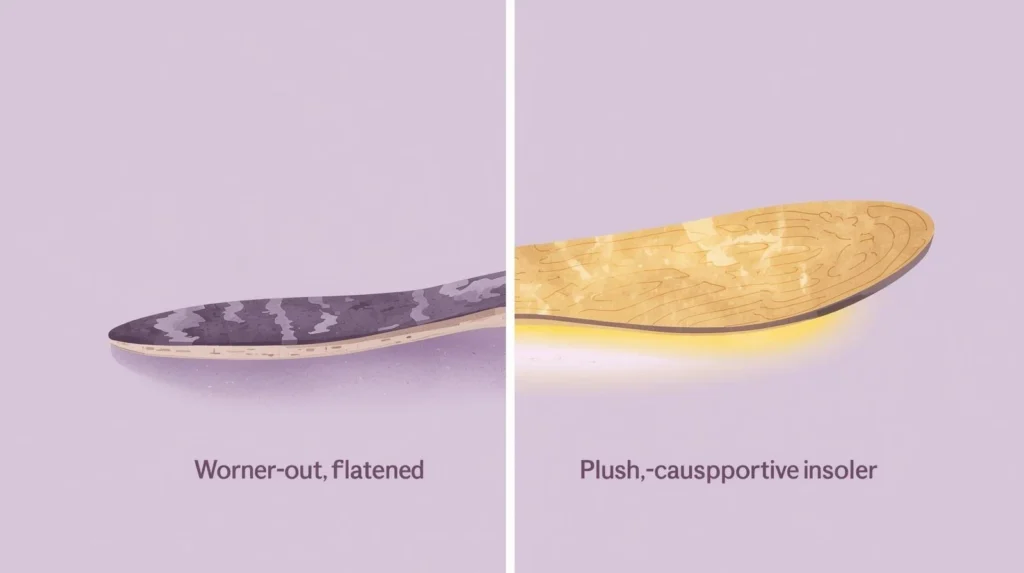
Supportive shoes and inserts can be a big help. Guy’s and St Thomas’ NHS Foundation Trust states that insoles broadly help support and cushion the foot or alter your gait. [4]
Orthotics can relieve pain from flat feet, according to the Mayo Clinic, and stretching may also help some people. [2]
Cleveland Clinic Tennis elbow, hip bursitis and plantar fasciitis are some conditions in which orthotics may help relieve pain, the Cleveland Clinic also says ostensible over-the-counter options may help with mild symptoms. [4]
That doesn’t mean support is merely comfort. It is frequently included in the solution. [2]
When to Seek Help if Your Foot Hurts While Running
If the pain is mild, decrease your running volume and allow time for the foot to recover. Conservative treatment for plantar fasciitis, according to the Mayo Clinic, includes rest from painful activity as well as stretching and icing. [5]
If the pain is in the ball of the foot, switching shoes or adding an arch support or pad might provide relief. These types of self-care measures for metatarsalgia are recommended by Mayo Clinic. [8]
Offer supportive footwear and insoles if family members’ shoes are flat or unsupportive while standing, as those can contribute to strain. NHS guidance explains that in cases of flat-feet-related pain and stiffness, shoe insoles can support the feet. [1]
When to get checked
If your pain persists, worsens or begins to interfere with your walking from day to day, it’s worth consulting a health care professional. Chronic pain may require a more specific treatment plan. [2][5]
This is particularly the case if pain is strong, alters your running or prevents you from walking normally. [3][8].
Conclusion
Running foot pain usually is a message, not simply an annoyance. It can indicate plantar fasciitis, flat feet, high arches, metatarsalgia and overuse or inadequate support. If you know the causes behind your pain, you can pinpoint the right remedy rather than take a shot in the dark.[1] [3] [5] [8]
The right support, shoes and recovery habits can make running feel good. When pain keeps returning, your body is not telling you to push harder, it’s asking for some attention. [5]
FAQs
Some of the most common include: plantar fasciitis, flat feet, high arches, metatarsalgia and overuse. Poor support and repeated impact can aggravate these issues.
Running applies the same stress over and over again, so weak support or angry tissue starts to hurt after exercise. That is typical in overuse conditions and plantar fasciitis.
Yes. Flat feet may be a source of pain or stiffness from time to time, and arch supports can help alleviate some symptoms.
Yes. People with high arches may put more pressure on the heel, ball of the foot and outer toes, which can make running uncomfortable.
Cut back on the running load, inspect your shoes, and if needed consider support or stretching depending on the cause. If the pain does not go away or you feel intense pain, get yourself checked.
References
- NHS. (n.d.). Flat feet.
https://www.nhs.uk/conditions/flat-feet/ - Mayo Clinic. (2022). Flatfeet – Diagnosis and treatment.
https://www.mayoclinic.org/diseases-conditions/flatfeet/diagnosis-treatment/drc-20372609 - MedlinePlus. (2024). Foot pain: MedlinePlus Medical Encyclopedia.
https://medlineplus.gov/ency/article/003183.htm - Cleveland Clinic. (2024). Orthotics: Definition, Risks, Benefits, Types & Tips.
https://my.clevelandclinic.org/health/treatments/orthotics - Mayo Clinic. (2023). Plantar fasciitis – Diagnosis and treatment.
https://www.mayoclinic.org/diseases-conditions/plantar-fasciitis/diagnosis-treatment/drc-20354851 - MedlinePlus. (2024). Heel pain: MedlinePlus Medical Encyclopedia.
https://medlineplus.gov/ency/article/003181.htm - Cleveland Clinic. (2024). High Arch Feet (Pes Cavus).
https://my.clevelandclinic.org/health/diseases/high-arch-feet-pes-cavus - Mayo Clinic. (2025). Metatarsalgia – Diagnosis and treatment.
https://www.mayoclinic.org/diseases-conditions/metatarsalgia/diagnosis-treatment/drc-20354795


