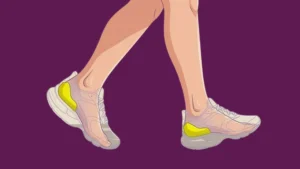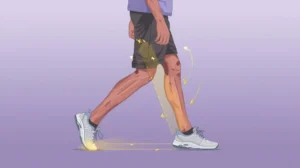






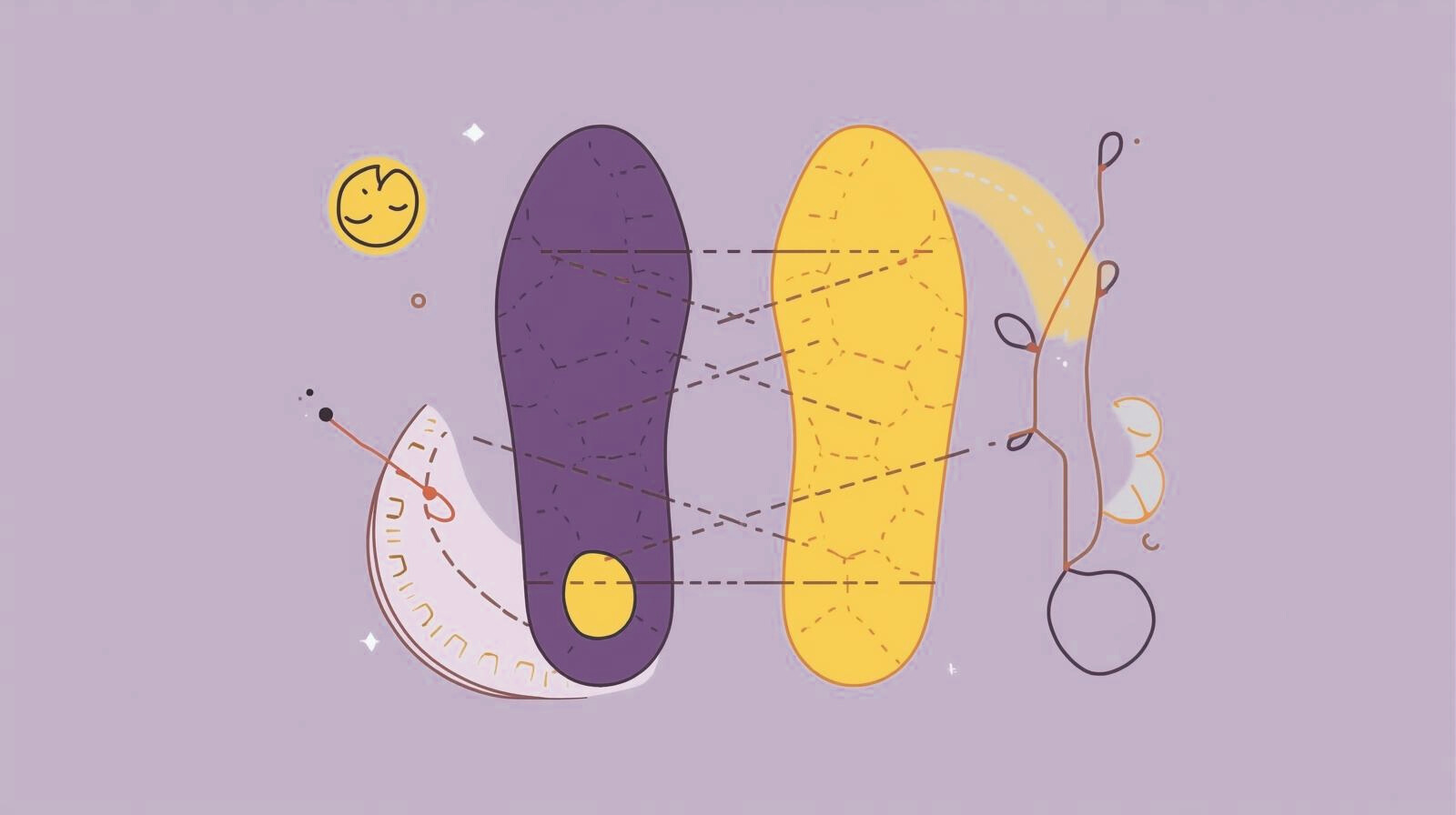
If your shoes break down more quickly on the outside edge, your ankles feel wobbly or sore, or your knees and lower back just plain hurt with no clear cause, you could be experiencing the insidious power of how our feet work (and sometimes) work against us. This pattern is called supination, or underpronation, and it has wide-ranging effects beyond your feet.
Supination insoles are designed to restore healthier balance as your feet make contact with the ground. They don’t just cushion your steps; they enable the rest of your body to move better, recover more quickly, and age more comfortably as well. In this guide, we’re going to simplify what supination actually is and how it affects everyday health, along with how the proper insoles and recovery habits aligned with the betterhood philosophy can contribute to overall well-being.
Sometimes when your feet are balanced, the rest of your body tends to follow.
What Is Supination (Underpronation)?
Supination is when your foot rolls outward while you walk or run, putting extra weight on the outer edge of your foot. Unlike overpronation in which the foot collapses inward, supination doesn’t allow enough roll to absorb any impact.
Runners that have a tendency to supinate often, present with some of the same physical attributes:
- High, or inflexible arches, which also decrease the ability of the foot to flatten and absorb force naturally.
- Poor foot flexibility due to the fact that their feet are not adjusting well to uneven surfaces or too much repetitive movement.
- Less area touching the ground, which concentrates pressure rather than distributing it.
Due to this different mechanics, impact forces are higher up in the body rather than when they land on their feet. Over time, that can put strain on ankles, knees and hips or even the lower back, particularly after a long walk around town, a day full of standing at work or high-impact exercise.
Supination tends to be overlooked because it doesn’t usually result in immediate pain. Most people learn to make do, often without realizing they could be further handicapping themselves with the way they walk. But mild imbalances, when they are repeated thousands of times a day, may serve as the embers that quietly contribute to discomfort, fatigue and instability throughout the body.
Supination is not a defect or mistake your body makes. It’s a biomechanical feature, and with adequate support, alignment and habits of recovery in place it doesn’t need to restrict comfort or movement in the slightest.
What are the Common Symptoms of Supination ?
Supination rarely announces itself loudly. Instead, it’ll present as seemingly unrelated, recurring discomfort.
You may notice:
- Repeated ankle instability as a result of lack of stability.
- Heel pain or plantar fasciitis, particularly with high arches
- Shin splints or calf tightness
- Unequal distribution of force; Knee pain.
- Pain or stiffness over either hip after prolonged standing or walking
If left untreated, these symptoms may progress to become chronic complaints.
Chronic pain is usually a message, not an accident.
How Does Supination Affect the Entire Body?
Your feet are your foundation. And when they tilt out, your body compensates upward.
Impact on Ankles and Knees
Supination mechanics offer less cushioning for impact, which places even more stress on the ankle ligaments and knee joints. Indeed, it has been demonstrated that underpronation is associated with increased ankle instability [1] as well as the occurrence of stress injuries.
Impact on Hips and Spine
The external rotation of the foot subtly changes the position of the pelvis. Over time, this can lead to tight hips, an unbalanced walk, and a compressed spine [2].
Impact on Posture and Fatigue
Inefficient foot mechanics make muscles work harder, causing fatigue earlier and decreased efficiency of movement.
Final thought: Alignment is not about standing up straight, it’s about moving ‘straight’ efficiently.
What Are Supination Insoles?
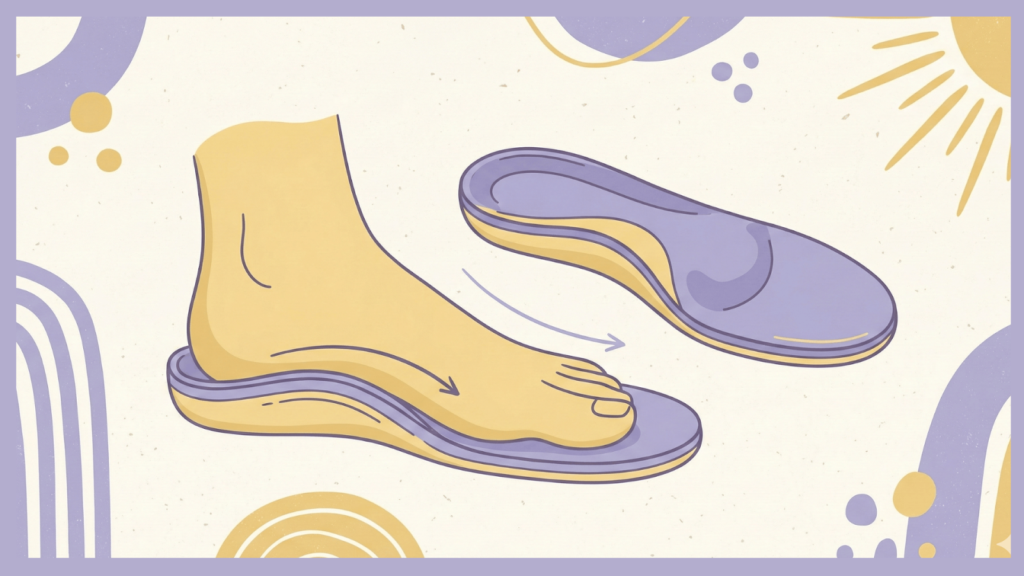
Supination insoles are orthotics that help you achieve a more neutral foot position. They’re not so much a passive shock absorber, as are with flat cushioning; instead they actually shape how your foot strikes the ground.
Key features include:
- Lateral support along the side of the shoe to discourage outward rolling (supported on Havaianas Slim and Havaianas Comfort).
- Enhanced arch support for high arches
- Shock-absorbing materials to reduce impact
- Heel cupping for improved stability
These components combine to spread pressure largely evenly across the foot.
Closing thought: Help is best when it flows naturally, not resists.
How Supination Insoles Actually Work?
Instead of forcing movement, quality supination insoles easily control the foot.
They help by:
- Enhanced shock absorption by more ground contact area
- Heel keeping stable and mitigate ankle sprain
- Arch supports for muscles not to work overtime
- Improving gait symmetry and balance
Studies also support the use of orthotics to decrease pain and improve functional deficit in individuals with malaligned foot structure [3].
Bottom line: Tiny corrections, done daily, change the game.
Who Should Use Supination Insoles?
Supination insoles are beneficial for:
- Those with high arches who suffer from foot pain
- Runners or walkers that have recurrent ankle sprains
- Those with unattributable knee or hip pain
- Desk workers walking or standing throughout the day
- For the one feeling tired from standing long periods
Anybody can use them. Everyday movement deserves support too.
Closing thought: Comfort need not be limited to recovery days.
Supination Insoles for Running and Athletic Wear
Some athletes abuse their feet time and again, so correct alignment is very important.
Supination insoles can:
- Minimize impact-based activities that can cause injury
- Enhance the capability to transfer energy while running or jumping
- Aid to a quicker recovery between training sessions
When combined with proactive recovery tools like betterhood’s posture-supportive pillows for spinal alignment during sleep, the gains are not limited to training hours.
Parting thought: You only get faster when you treat recovery like training.
Supination Insoles and Plantar Fasciitis
High foot arch is a vulnerable factor of the plantar fasciitis [4]. Supination insoles help with alleviating pressure from the plantar fascia.
They do this through:
- Even pressure distribution
- Improved heel cushioning
- Enhanced arch support without rigidity
This minimizes microtears and encourages healing in the long run.
P.S.Healing starts when pressure is released, not ignored.
How to Choose the Right Supination Insoles ?
All insoles are not created equal. Look for:
- Moderate instead of heavy cushioning.
- Shaped arch support for those with a very high arch
- Breathable materials for daily wear
- Compatibility with your footwear type
- Custom orthoses may be useful in the most severe instances, but many people respond well to “good-quality prefabricated” options [5].
Closing thought: The best aid is the one that you will actually put on.
Best Insoles for Supination & Foot Alignment (With Brand Examples)
| Brand / Insole | Type of Support | Key Features | Best For |
| Betterhood PosturePro Dual Gel Insoles | Everyday comfort + posture support | Dual-layer gel cushioning, shock absorption, helps reduce strain on ankles, knees, and lower back, designed for all-day wear | Daily activities, long standing or walking, general alignment and comfort |
| Frido Gel Insoles | Gel-based cushioning support | Soft gel construction, absorbs impact at heel and forefoot, improves surface-level comfort | Mild foot fatigue, casual walking, short-duration standing |
| Fovera Gel Insoles | Cushioning and pressure relief | Gel padding for shock absorption, reduces pressure points in shoes | Everyday comfort, basic foot soreness, regular footwear |
| Decathlon High-Arch / Sports Insoles | Arch support + activity support | Structured arch support, foam or EVA cushioning, designed for sports and walking shoes | Active users, walking, running, high arches with mild supination |
| PowerStep Pinnacle High Arch Insoles | Arch support + motion control | Semi-rigid arch support, deep heel cradle, helps distribute pressure evenly | High arches, plantar strain, supination-related discomfort |
| Superfeet High Arch / Deep Heel Cup Insoles | Structured stability support | High arch contouring, deep heel cup, moisture-wicking top layer | Long shifts, daily walking, standing-intensive routines |
How to correctly use Supination Insoles?
It’s as important to wear (and use) the insoles properly as it is to pick them.
- Begin with a few hours per day gradually wear them longer.
- Give your muscles time to acclimate
- Pair insoles with supportive footwear
- Change Insoles, which compress as materials wear down over time
Reap what you sow (and do it consistently) for long term results.
Closing thought: Adaptation is driven by patience, not pressure.
Supination, Recovery and The betterhood Way
betterhood is founded upon the belief that healing is not a choice, it’s inevitable.
Supination insoles help to keep you properly aligned during the day, with recovery tools in the form of contour pillows taking over at night and maintaining a neutral spine while sleeping. Both of them help each other out and form a virtuous circle.
This alignment-rest-recovery cycle:
- Reduces cumulative strain
- Supports nervous system recovery
Signup for news on the Kapils New Products: * Indicates required field Enhances quality of sleep and physical endurance.
Closing thought: Support isn’t on the clock, wellness works best when it doesn’t stop at bedtime.
Long-Term Benefits of Correcting Supination
Supination insoles can help over time:
- Reduce chronic pain
- Improve posture and balance
- Enhance walking and running efficiency
- Doohickeys- (To convey support for joint health with aging)
These shifts are small, but mighty over the long-haul.
When to See a Professional?
If that doesn’t help, have a podiatrist or physical therapist evaluate you. Individualised intervention may be needed for a certain structure, injuries or neurological causes [6].
Closing thought: Tools are powerful, but support doesn’t remove the subjectivity from the equation.
Final Thoughts: Grass-Roots Support
Supination insoles are about more than fixing foot mechanics. They are for reharmonizing the body. They are part of a larger wellness story when combined with mindful recovery, posture awareness and supportive sleep tools.
Better movement begins down at your feet, but it doesn’t stop there.
You take care of your foundation, and every day you get to say thank you.
Explore More Health & Wellness Solutions:
Want to stay informed about wellness and everyday health issues? Here are some insightful reads to guide you. Explore the links below for practical tips and solutions.
- How to Prevent Knee Injuries: Proven Tips, and Lifestyle Strategies for Stronger Joints
- How Can Knee Cap Support Help Prevent Injury and Reduce Pain While Running
- 10 Effective Home Remedies for Body Pain Relief Naturally
Frequently Asked Questions:
Yes, supination insoles can indirectly play a role to help lower back pain by aligning the foot and correcting problems with walking/running. This may reduce pressure from your knees, hips and spine during attempts to compensate in your lower back.
It usually takes a few weeks, 1-2 for most people to begin to experience relief. Complete biomechanical adaptation, which involves less joint stress and improved posture, may require a number of weeks while muscles and movement patterns slowly shift.
Some supination insoles are made for flat shoes, like sandals and casual shoes. Such designs tend to be more sleek and offer focused lateral support for offenders such that they can be comfortably worn on a daily basis.
Yes, children and teenagers can use supination insoles, especially if they are prone to frequent ankle sprains, foot tiring or uneven wearing of their shoes. Early support could facilitate healthier movement patterns during growth, but only in consultation with a professional.
Absolutely. “What’s great about supination insoles is that, even if you don’t have any actual foot pain, they can still make up for poor alignment generally and help avoid future joint stress when your body begins to fatigue. And seriously, a lot of folks just like to use them preventatively: to promote good posture and build up endurance, plus amp up long-term musculoskeletal health.
References
1. Supination and ankle instability
Wright, C. J., Taube, W., & Herzog, W. (2016). Deficits in subtalar pronation and supination proprioception in subjects with chronic ankle instability. Foot and Ankle Surgery, 22(4), 245–250. https://doi.org/10.1016/j.fas.2015.10.006
2. Supination and hip/spine impact**
Younus, A., & Kim, K. H. (2021). Hip spine syndrome – A case series and literature review. Journal of Clinical Orthopaedics and Trauma, 17, 101–107. https://doi.org/10.1016/j.jcot.2021.03.005
3. Orthotics for supination pain/function
Cáceres-Madrid, M. V., et al. (2025). The influence of prefabricated foot orthosis use on the foot posture index in school children. Children, 12(1), 45. https://doi.org/10.3390/children12010045
4. High arches and plantar fasciitis
Rabey, K., et al. (2021). Risk factors for plantar fasciitis in physically active individuals: A systematic review and meta-analysis. Sports Health, 13(5), 497–507. https://doi.org/10.1177/19417381211007227
5. Prefabricated orthotics efficacy**
Cáceres-Madrid, M. V., et al. (2025). The influence of prefabricated foot orthosis use on the foot posture index in school children. Children, 12(1), 45. https://doi.org/10.3390/children12010045
6. Professional evaluation for supination**
Advanced Podiatry and Wound Care. (2024, December 31). Excessive supination affects your foot health. https://www.advancedpodiatryandwoundcare.com/blog/excessive-supination-affects-your-foot-health