





Introduction
If your uncomfortable sleep translates into a stiff neck, shoulder pain or discomfort after waking up then a memory foam neck pillow can be a good option for you. Often neck pain is associated with bad posture, sleeping in a wrong position and pillows that fail to maintain a better head to neck alignment. A neck pillow is defined as a pillow created to support the neck so that it remains in a more natural position while sleeping. [1]
Unfortunately, not every single memory foam neck pillow works in the same manner. The best one is typically something that matches your sleep position, supports your neck without bending it too far out of alignment and feels stable enough to prevent you from readjusting on the regular. For that reason, “best” is less about trends or price as it’s more about matching the pillow to your body. [2]
Another benefit of a memory foam neck pillow
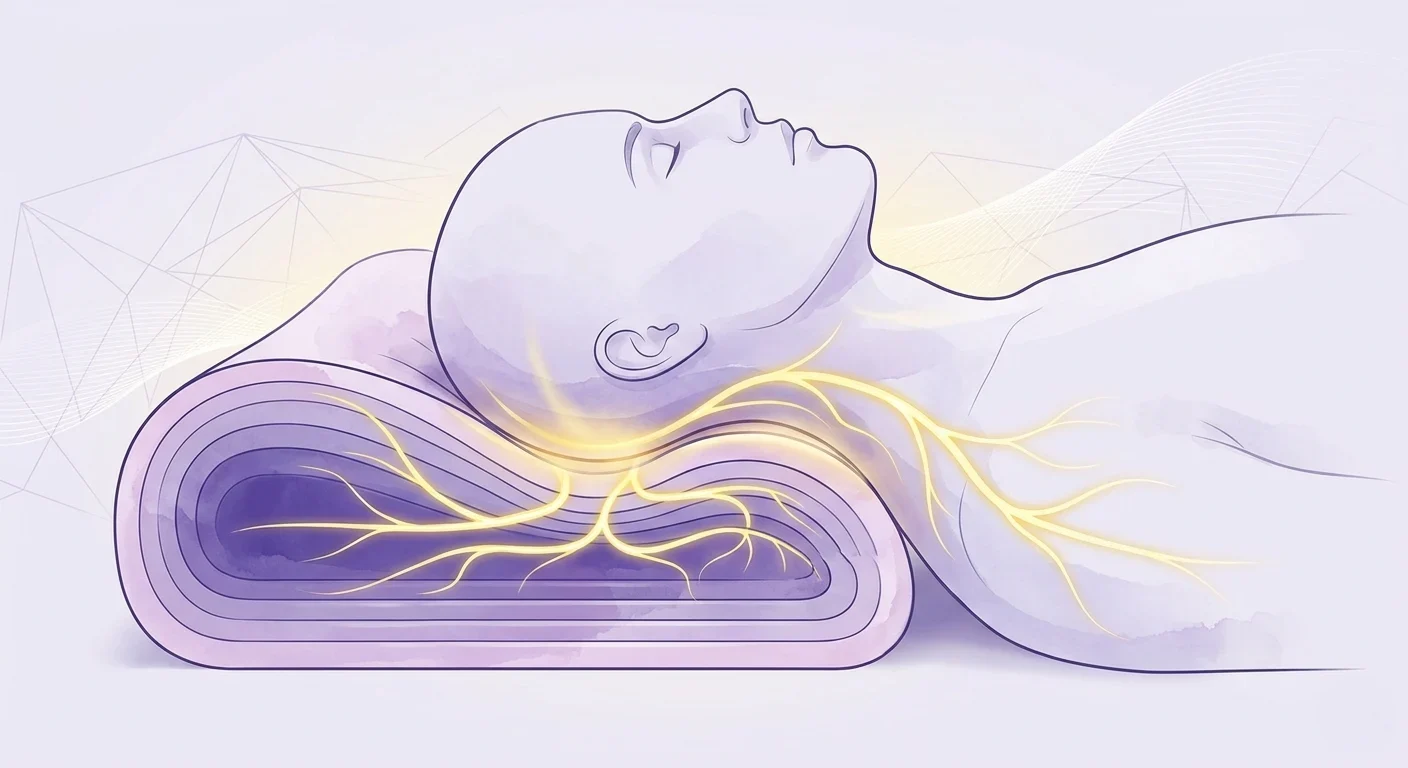
Neck PillowThe memory foam neck pillows are often designed to contour the cervical spine, the neck region of the spine. Most have a mold with an elevated area for pillows to rest the neck, along with a recessed center to help keep them in place. The aim of a proper sleep posture is to keep the head, neck and spine in alignment. [2]
It is preferred because memory foam responds to pressure and slowly takes the shape of the head/neck. Sleep Foundation reports that neck pain pillows typically perform best when they align with a sleeper’s height, firmness preference, and sleep position. This is why memory foam tends to feel supportive, but not firm. [3]
Know your sleeping position
Before choosing a neck pillow, one of the important things to consider is your sleeping position. Back sleeping and side sleeping are usually easier on the neck than stomach sleeping, according to Harvard Health. For back sleepers, a rounded pillow or a pillow with built-in neck support can maintain the natural cervical curve of the neck. [2]
For side sleepers the pillow has to close the gap between the head and shoulder so that as little movement of the neck can occur as possible. If it is too low, the neck can lower down. If too high, it can arch the neck upwards. Either way, it is expected your neck will be sore when you wake up. [2]
Because the stomach-position often keeps the head turned to one side too long, it is generally the worst position for neck comfort. This is also highlighted by NHS and Harvard Health making clear that unlikely positions in pain can exacerbate neck pain. [2]
Loft is more important than most people even know
Loft is all about the height of your pillow. The wrong height can cause just as many problems as no support at all, which is why this is one of the most important things to check before purchasing a memory foam neck pillow. According to Harvard Health, if the pillow is too thick or stiff, it may tip the neck into an uncomfortable position. NHS: would recommend a low lying firm pillow for neck pain sufferers. [2]
Most back sleepers find a lower profile that supports the curve of the neck without pushing the chin unless I am forward. Because the pillow must bridge the distance between a sleeper’s shoulder and head, side sleepers often require greater loft than either back or stomach sleepers. That gap is different for everyone, and this variance is exactly why there cannot be a one size fits all pillow. [2]
The knee pillow is good in rule of thumb: the head must rest in line with the spine. If your head is pushed too far up or dropping too low, the loft likely doesn’t suit you. [2]
Firmness is just as important
Many believe that having a soft pillow will be comfortable, but it doesn’t necessarily translate to comfort in the support of your neck. Too soft a pillow may collapse under the weight of a person’s head and no longer provide overnight support. One that is too hard can place the neck in a stiffened position; it may feel as if they are sleeping on concrete. [3]
A medium-firm feel works for many sleepers because it provides support without being overly firm. Let me give you a hint before we discuss neck pain pillows, the sleeper should look for support, loft and position together rather than softness. It is this balance that can often make memory foam neck pillows feel comfy and supportive at the same time. [3]
It is shaped and contoured to fit around your body
Unlike regular neck pillows, memory foam neck pillows are of different shapes. Some are shaped with a very deep cutout, some have a moderately shallow curve, some stand taller at the end for the neck and lower in the middle for the head. According to Harvard Health, a rounded pillow is ideal for back sleepers at the side; the rounded surface supports the natural curve of the neck. [2]
For many side sleepers they need a height that keeps the neck level. If the contour is shallow, the head could sink down. A contour that just, ultimately is far too much, typically causes the pillow to not only feel far too high but as a result of its aggressive elevation becoming rigid. The best shape is one that conforms to your sleeping position without forcing you to wrestle with it. [2]
Quality of Material impacts comfort and durability
Memory foam is a popular choice because it conforms to pressure and retains its shape more than most soft fill pillows. Which can make it a decent choice for those who want stable support throughout the night. According to the Sleep Foundation, this is why the most common materials used in cervical pillows are memory foam so that it can help with spinal alignment. [3]
Quality matters, though. Low-grade foam pillows sometimes flatten too much, or lose their shape, so support is reduced, and the same discomfort returns. Foam pillows are a bit nicer, are less likely to change their shape for the future and provide dependable comfort after prolonged use. [3]
If it’s warm out, covering your pet with something breathable can enhance the experience as well. A pillow that might be the perfect shape, but traps heat will feel great for a while, until you find yourself sweating. Breathable fabrics can make the use of the pillow, every night; comfortable. [3]
The first few nights to expect
To begin with, a memory foam neck pillow may feel strange and that is perfectly acceptable. You’re accustomed to the previous shape and amount of support level, so the new pillow may require a few normalizing nights. Support and fit matter, as noted by the Sleep Foundation; those adjustments aren’t instantaneous. [3]
Only if the pillow feels categorically wrong, do NOT judge it on a single night. The body sometimes needs a little time to recalibrate into better alignment. If your neck still hurts after a few nights, the height or firmness may be wrong for you. [3]
Common mistakes to avoid
You foolishly choose a pillow simply because it felt soft in the store. Just because a pillow is soft, doesn’t mean it supports you, and sometimes what feels plush to the touch turns into neck strain overnight. [3]
Another thing that you may be doing wrong is stacking multiple pillows. Mayo Clinic states that using too few or too many pillows can also lead to neck pain, hence less is usually more when it comes to setup. [1]
The third error is neglecting your sleep position. One pillow can be perfect for a back sleeper but too high for a side sleeper, and vice versa. Avoid any generic “one fits all” label; the best choice is the one that matches your position. [2]
Who may benefit most
A memory foam neck pillow is generally most suited for individuals who sleep on their back or side. Harvard Health states that those two positions are less difficult on the neck than sleeping on your stomach especially when the pillow supports your natural curve right. [2]
Desk dwellers (those forced to spend long hours at a desk, on a phone or at a computer) are likely to benefit too; postural strain experienced during the day can spill over into night time. Mayo Clinic Health System explained: “Tech neck slight aches, stiffness or pain in your neck or shoulder that may be caused by bad posture while using technology. Better sleep support can be a component of a more comfortable routine. [5]
When a pillow is not enough
Neck pillow makes comfort but it’s not a paragon of medical treatment. According to the Mayo Clinic, neck pain can occasionally be serious particularly if it persists for days or weeks, or accompanied by numbness, weakness or shooting pain into your shoulder or arm. [1]
If the pain is intense, chronic and atypical, the medical recommendation ought to be embraced instead of assuming that the pillow will cope with it. You may support and comfort with the help of your pillow, but you cannot treat every principle cause of neck pain. [1]
Steps to test a pillow before you move in with it
While testing a memory foam neck pillow, notice how your neck feels when you get up. Better support usually also means less stiffness, smaller adjustments to your position and the feeling of shoulders that are not so contracted. [2]
When purchasing online, ensure that you have visible metrics for sleep position, loft, firmness and return policy. Since neck support is a very personal issue, a pillow that offers you a brief trial period is often easier to assess. [3]
Should you buy one?
If it seems like your neck pain is linked to sleep position or your current pillow, you should try a memory foam neck pillow. The top-rated pillow is whichever one gives you proper neck support, suits your sleeping style, and feels good enough to sleep on every night. [2]
That might equate to better sleep with fewer toss-and-turns at night and less stiffness in the morning for many. It is not a miracle product, but it can be an effective enhancement for a sleep system that requires additional support. [1]
Conclusion
Above all, you should prioritize comfort before purchasing a memory foam neck pillow that will help you relieve pressure during sleep due to your sleep position and other preferences such as its loft, firmness level, contour shape. the ability of the material to retain support over time. The details of what is inside the box matter a lot more than the marketing label on that box. [2]
As long as the pillow supports your neck and is firm/lumbar enough to sleep together easily, it may reduce tension and give a boost to how you are feeling about morning. And this is actually the major benefit of a decent neck pillow: it does not merely make you comfy for several minutes but rather gives you a much deeper and refreshed sleep in the night. [1]
FAQs
It provides support for the neck and maintains more natural alignment of the head while sleeping. This takes stress off and can help with comfort.
Neck-back sleeping and side-sleeping are generally gentler than stomach-sleeping in my opinion.
Your head should be level with your spine neither jutting up too high or sinking in too low.
Your body might need a few nights to acclimate to the new pillow.
If the neck pain persists for some weeks, severe, or accompanies numbness, weakness or radiating arm pain medical attention is signified.
References
- Mayo Clinic. (2022). Neck pain Symptoms and causes. https://www.mayoclinic.org/diseases-conditions/neck-pain/symptoms-causes/syc-20375581
- Harvard Health Publishing. (2022). Say “good night” to neck pain. https://www.health.harvard.edu/pain/say-good-night-to-neck-pain
- Sleep Foundation. (2026). Best Pillows for Neck Pain in 2026: Data-Backed Expert Picks. https://www.sleepfoundation.org/best-pillows/best-pillow-for-neck-pain
- NHS. (2023). Neck pain. https://www.nhs.uk/conditions/neck-pain-and-stiff-neck/
- Mayo Clinic Health System. (2024). Tech neck is a pain in more than just the neck. https://www.mayoclinichealthsystem.org/hometown-health/speaking-of-health/tech-neck-is-a-pain-in-more-than-just-the-neck