




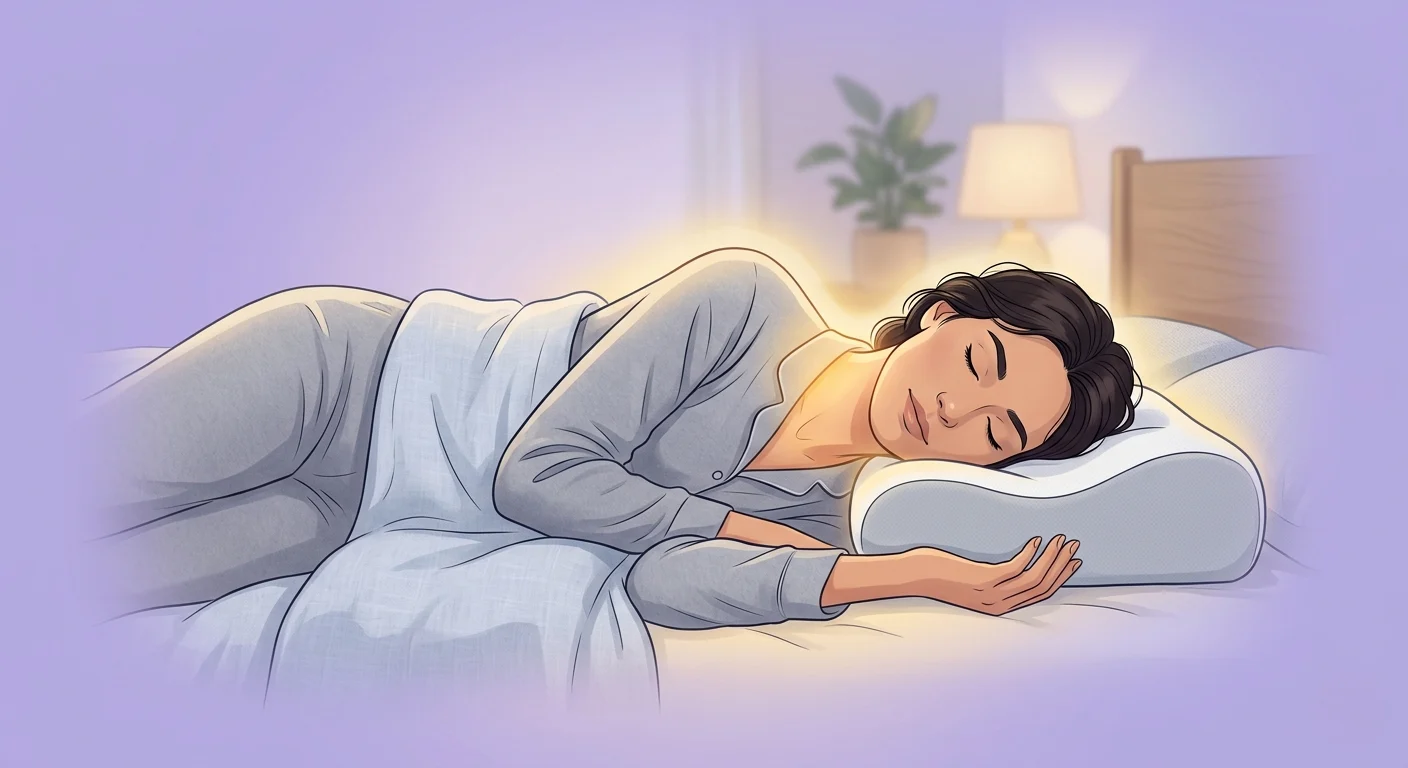
Cervical pain can make mundane tasks feel more difficult. When the neck and shoulders tense up, simply turning your head, sitting at a desk or trying to fall asleep can be painful. This is where one of the most common manifestations of this tension shows up, at night when we expect the body to be resting. A neck support pillow keeps your head and neck in a more natural position than normal pillows while sleeping to relieve that strain .
That matters because the neck is a segment of the spine. If the pillow is too high or low, or too soft, then for hours at a time, the neck can bend. Over time, it could leave you waking up stiff, sore or more fatigued than when you went to sleep. Good alignment of the neck [3].
This guide explains how a neck support pillow can address cervical pain and shoulder relief, what you need from it when sleep alters your needs, why support especially matters if neck stiffness has become part of your routine and other factors to consider (like pricing and size) when seeking one.
Why neck and shoulder pain frequently go hand in hand
There is a close relationship between the neck and shoulders. When one area is under pressure, the other often offsets this. That’s why cervical pain can radiate into the shoulders, and tightness of the shoulder girdle muscles can exacerbate neck pain in the neck. Mayo Clinic attributed neck pain to posture, sleeping position, and daily unloads and added that NHS states neck pain could be accompanied by stiffness and discomfort extending to adjacent areas [4].
That connection matters during sleep. If the neck isn’t supported, the shoulders should remain tight to help stabilize the head. Shoulders are tensed and pulling the neck out of neutral position. Using a neck support pillow interrupts that cycle by supporting the head such that the upper body can relax more naturally [1].
What is a neck support pillow meant to do
A neck support pillow is designed to assist the natural curve of the cervical spine. It helps keep the head at a more balanced position throughout the night instead of letting it sink too low or tilt to one side . MedlinePlus recommends sleeping on a firm mattress with a pillow that supports the neck, and advises maintaining neck alignment with the chest and back [5].
This is the essential concept of support. The pillow is not intended to feel fluffy first and supportive second. It should hold the neck in a neutral position so muscles aren’t working all night as you sleep. When it does, the shoulders tend to feel less overloaded as well because they are no longer overcompensating for poor head positioning [2].

How cervical pain can change sleep
Cervical pain tends to worsen when the body remains static for long, such as while sleeping. You might remain in one position for several hours while sleeping, without you knowing. When your pillow doesn’t fit well with your body, your neck can stay tilted in one direction for the entire night. According to the Cleveland Clinic, a good pillow should keep the neck parallel to the mattress, whilst the NHS recommends a low, firm pillow for neck pain.
That is why some people wake up in pain, even if they fell asleep feeling well. The problem may develop gradually throughout the evening. A neck support pillow contributes by minimizing such angles as much as possible and providing stability to the neck .
The start of shoulder relief is all about alignment
Tension behind the shoulder is frequently associated with neck support. When your head is too high, the shoulders can lift or tighten to compensate. A pillow that’s too low can strain the neck and invite the shoulders to take over. Cleveland Clinic recommends that you should not raise the neck too much and a more neutral position with the neck parallel to the mattress will lessen strain .
For side sleepers, a pillow’s shoulder comfort relies on how the pillow fills in the space between the head and mattress. If the cushion is past low, then the shoulder at the lower aspect receives too much strain. If the pillow is too high, a compression of the opposite side of the neck may be felt. A neck support pillow to help alleviate this imbalance by keeping the head level and allowing the shoulders to relax more fully [2].
The way you sleep matters more than many realise
Different sleep positions require different styles of pillow support. Surfers, back sleepers and manipulative positions all create different neck challenges. “Instead of fighting against it, the pillow needs to agree with your sleeping position,” says Mayo Clinic; Cleveland Clinic adds that “your pillow should match your sleep position” [1].
Back sleepers
For back sleepers, the pillow should cradle the curve of the neck without thrusting the head too far forward. The Mayo Clinic advises keeping the neck aligned with the chest and back, and recommends a pillow under knees to support the lower body . That can keep the entire spine more balanced.
Side sleepers
For a side sleep position, the pillow here fills the gap between ear and shoulder. According to Cleveland Clinic, the position of your head should be neutral rather than tilted toward your mattress or ceiling . That is where a neck support pillow typically helps most, because it can help to maintain the orientation you need to stay in alignment.
Stomach sleepers
Sleeping on your stomach can be rougher on the neck. Mayo Clinic reports that sleeping on the stomach can be tough on the back, and Cleveland Clinic points out that poor pillow height can bend the neck into a position of stress . If cervical pain is a concern, this is the position that you should change most.
How to tell if your pillow is making things worse
The simplest clue is how you feel when you wake up. If your neck is stiff, shoulders feel tight or the upper back ache, it’s possible your pillow isn’t providing adequate support. Another indication is how much you move your pillow around throughout the night. Well, the pillow might not suit your style of sleep if you keep on folding it, stacking it or changing position to get comfortable.
Over time, a used pillow can also become misshapen. When it does, it may no longer support the neck adequately. Even if it felt good beforehand, the structure can collapse and lose its ability to support the head at the appropriate height.
What does one neck support pillow do better than another
On the whole, the best neck support pillow is one that keeps your head and neck in a neutral position without being uncomfortable enough to keep you up all night ref-1 Height matters. Firmness matters. Shape matters.
Loft, or height, is particularly crucial for those who sleep on their sides. A pillow that is too shallow can cause the head to dip, and one that’s too lofty can shove the neck up. If you’re a back sleeper, you generally want medium height so the neck remains supported without being pushed forward .
Firmness: Pillows that are too soft may sink too much. NHS has recommended to use a low, firm pillow for neck pain, and MedlinePlus also says to use a supportive pillow to substance the neck on a firm mattress. That balance is what allows support to feel helpful instead of just mushy.
Why shape matters as much as material
Memory foam, contoured foam and orthopedic shapes are also popular because they can maintain their shape overnight. But it’s not just a material issue. It has to be a shape that fits the way bodies rest. Based on studies in pillow design, wall pillow design impacts neck pain, sleep quality, symptoms upon awakening and spinal alignment .
That means a contoured neck support pillow may be a good fit for someone who needs focused support in the neck area, while a flatter design may work well for someone whose alignment is already relatively neutral. The best outcome typically involves the pillow conforming to the body, not vice versa .
Why a pillow can help shoulder pain as well
Shoulder relief is often a byproduct of improved neck support. When the head is well-centered, the shoulders can relax to allow the body to remain stable. Supportive pillows decrease strain by keeping the neck parallel to your mattress, and they help the body stay more aligned , Cleveland Clinic points out.
This is particularly important for side sleepers, since one shoulder carries more direct pressure. A too-low or high pillow makes the shoulder work too hard or feel pinched. Of course, a neck support pillow matching the physical height and shape of the body relieves that tension making all the upper body feel more relaxed .
How holding yourself throughout the day means something for your cushion around evening time
And a pillow is part of the solution, but it’s not the whole solution. Posture and daily strain are common contributors to neck pain . Long hours spent sitting behind a desk, staring down at a phone, lugging around a heavy bag or generally staying tense throughout the day can all make the neck more sensitive by bed time.
If daytime strain is already in place, an awful pillow can exacerbate the issue. A neck support pillow is most effective when used in conjunction with improved daily habits, such as awareness of your posture and regular movement. That doesn’t make it any less important. It simply means the pillow is one component of a larger comfort strategy .
When you should pay more attention to neck pain
Not every neck pain case is about sleep posture. According to the NHS, you should consult with a medical professional if your neck pain persists for several weeks, worsens or is accompanied by symptoms such as numbness, pins and needles or a cold arm . MedlinePlus also recommends being checked for such a condition when neck pain turns severe or unusual .
This is crucial, because while a pillow can solve the common stiffness from sleeping on one’s side or back, it cannot fix all sources of cervical pain. Professional evaluation matters if symptoms are pervasive or accompanied by red flags .
What to keep in mind when selecting cervical pain support
Usually the best is that which allows the alignment to work without locking or cramping up the neck in a fixed or uncomfortable position. Mayo Clinic advises keeping the neck in line with the chest and back, Cleveland Clinic emphasizes parallel to the mattress, and the NHS solution is a low but firm pillow .
That means comfort is a requirement, but support takes priority. A neck support pillow should enable you to wake up without as much stiffness, less tension in your shoulders and a better feeling that the body truly rested overnight .
Conclusion
A neck support pillow for cervical pain and shoulder relief really comes down to one thing: allowing your upper body a better chance to relax. When the neck is left aligned and the shoulders aren’t needing to work overtime, sleep can feel more restorative and mornings can feel less dreadful .
It’s a small tweak, but it can have a real impact. If you frequently wake up with a tight neck and shoulders, it may not be your sleep duration that’s the culprit. It might be about how well your body is supported while you sleep .
FAQs
What is a Neck Support Pillow? It alleviates stress and can also make cervical pain and tension in the shoulders feel more meek ref-1.
Yes. Improved neck alignment alleviates pressure that often radiates to the shoulders, especially for side sleepers ref-2.
It can do a little for both, but the appropriate height and shape depend on how you sleep. Most side sleepers require a greater degree of loft while back sleepers want evenly distributed neck support ref-1.
If you wake up stiff or sore, or feel like you’re constantly shifting the pillow back into position, it might not be supporting your neck as well as it could ref-2.
If the pain sticks around for weeks, gets worse, or is accompanied by numbness, pins and needles or a cold arm you should get medical advice ref-3.
References
- Mayo Clinic. (2024-01-19). Sleeping positions that reduce back pain. https://www.mayoclinic.org/diseases-conditions/back-pain/in-depth/sleeping-positions/art-20546852
- Cleveland Clinic. (2020-12-10). Is Your Pillow Giving You a Stiff Neck While You Sleep? https://health.clevelandclinic.org/is-your-pillow-hurting-your-neck-7-tips-for-better-sleep
- NHS. (n.d.). Neck pain and stiff neck. https://www.nhs.uk/symptoms/neck-pain-and-stiff-neck/
- Mayo Clinic. (2022-08-25). Neck pain: Symptoms and causes. https://www.mayoclinic.org/diseases-conditions/neck-pain/symptoms-causes/syc-20375581
- MedlinePlus. (2024-02-08). Neck pain: Medical Encyclopedia. https://medlineplus.gov/ency/article/003025.htm
- Chun-Yiu, J. P., et al. (2021). The effects of pillow designs on neck pain, waking symptoms, neck disability, sleep quality and spinal alignment in adults: A systematic review and meta-analysis. https://pubmed.ncbi.nlm.nih.gov/33895703/


