




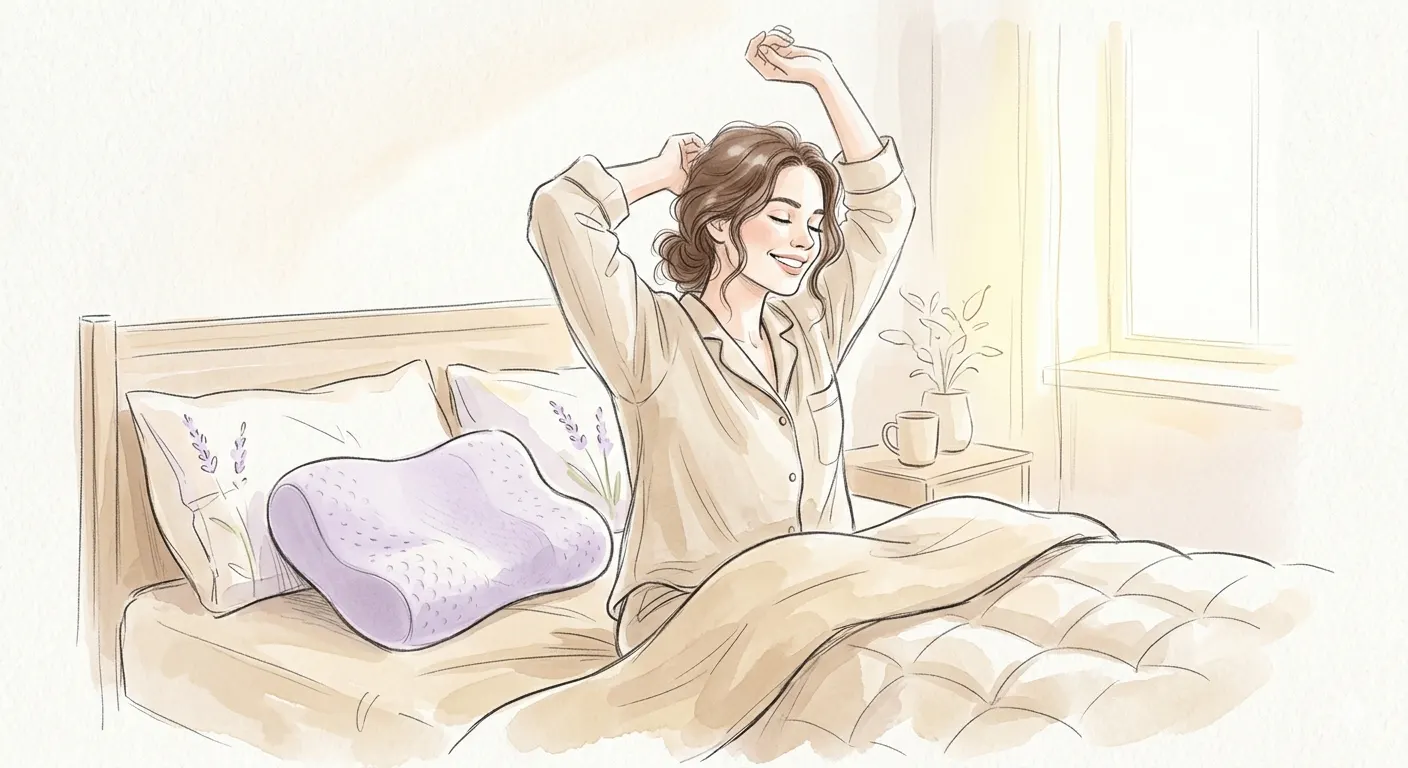
You go to bed tired.
You should wake up feeling refreshed.
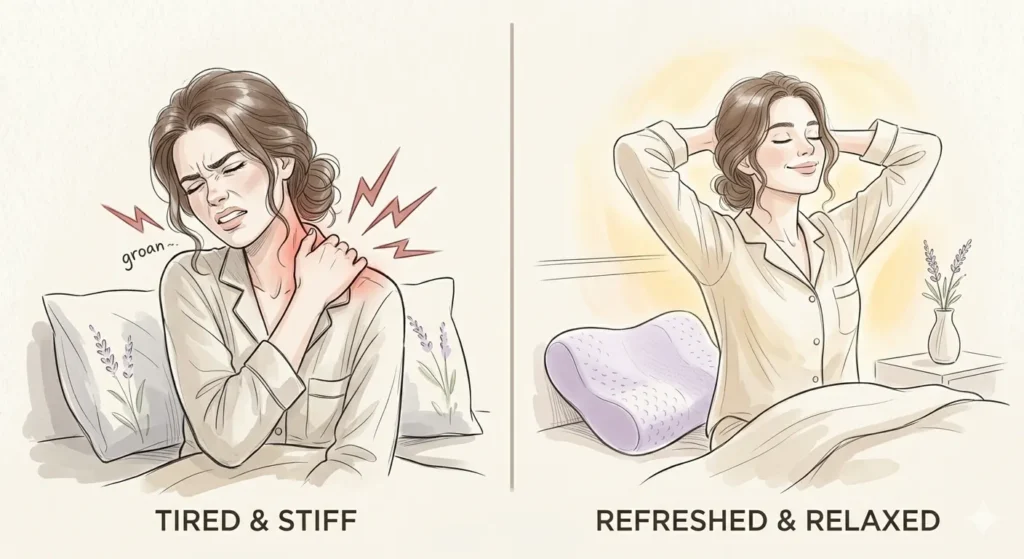
But instead your neck is stiff. Your shoulders feel tight. And your sleep doesn’t feel as restorative as it ought to.
And this is not always due to stress or fatigue. Sometimes, it boils down to one thing: your pillow.
A neck support pillow ensures your head, neck and spine stay aligned as you sleep. That alignment is especially important because your body is locked into one position for hours. If that position happens to be incorrect, your muscular system remains in a taut state.
Mayo Clinic says keeping your head and neck aligned with your body while sleeping can help minimize strain and maximize comfort [1].
So this isn’t simply a matter of comfort. It is about recovery.
Why Side and Back Sleepers Need Different Support
Not all positions for sleep are equal. This means not every pillow behaves the same way.
Side sleepers require a different type of support than back sleepers. The problem: Many people change positions while sleeping. Hence, it is all the more important to choose the right neck support pillow.
Side sleepers need height.
Back sleepers need balance.
If the pillow is not right for your position, then your neck bends in unnatural ways. This can contribute to stiffness, poor sleep and discomfort over time.
According to Cleveland Clinic, pillows should help keep your neck parallel to the mattress rather than bent up or down [2].
That is the basic aim, but hugely significant.
What Is a Neck Support Pillow?
A neck support pillow, also referred to as a cervical pillow supports the natural curve of your neck rather than allowing it to collapse.
It is designed for alignment, unlike regular pillows. This space is where the gap between your neck and mattress is. This keeps your head stable and your spine neutral.
According to MedlinePlus, individuals with neck pain are likely to be more comfortable sleeping on a mattress with neck support rather than one that is flat [5].
Simply put, it gives support to your body when you’re sleeping.
The Real Problem: Misalignment of Sleep
The vast majority are unaware of how critical alignment is.
When your pillow is wrong:
- Your head tilts forward
- Your neck bends sideways
- Your shoulders carry extra strain
- And this continues for 6 to 8 hours a night.
NHS advises that a low, firm pillow is used to prevent the neck from bending too much during sleep [3].
The neck pillow is therefore not a luxury.It is about preventing strain.
How Does a Neck Support Pillow Work?
Imagine your neck as a curve that requires support.
If there is a gap, your neck falls.
If it is too tall, your neck hunches.
That second part is where a neck support pillow comes in perfectly.
Here is what it looks like when everything works as intended:
- Your muscles relax
- Your spine stays aligned
- Pressure reduces
- Sleep becomes deeper
According to the Mayo Clinic, proper alignment helps relieve muscle strain while sleeping [1].
That is why the right pillow feels easy, not forced.
Support Pillows for the Neck: The Benefits
Neck support pillows do more than just provide comfort.
Reduced Morning Stiffness
You feel loose when you wake up instead of tight.
Better Sleep Quality
You are less active and sleep more soundly.
Improved Posture
Your body begins the day in alignment.
Less Shoulder and Neck Tension
Pressure does not build overnight.
Consistent Comfort
You sleep pretty much the same every night.
According to the Cleveland Clinic, finding the right position for sleep will relieve strain and allow for comfort [6].
Side Sleepers: What You Need
If you sleep on your side, your pillow needs to fill in the gap between your head and shoulder.
If it does not:
- Your head drops downward
- Your neck bends
- Your spine loses alignment
A good neck support pillow maintains alignment of your head with your spine.
Cleveland Clinic recommends sleeping on your side with a neutral, untitled head position [6].
Back Sleepers: What You Need
Back sleepers want balance, not height.
Your pillow needs to support the curve of your neck without forcing your head forward.
If your pillow is too high:
Your chin falls toward your chest.
If it is too low:
Your neck loses support.
And Mayo Clinic advises you to make sure your neck is in line with your chest and back [1].
What If You Switch Positions?
Most of us do not sleep in the same position all night.
You might begin on your back and face the side later.
So your neck support pillow should be adaptable.
For mixed sleepers, a balanced-support pillow is most suitable.
His pitch must not be too high or too flat.
This can help keep things aligned when your positions are different.
When You Should Get a Better Pillow
Unsure whether your pillow is the culprit?
Look for these signs:
- You wake up with neck pain
- You experience morning stiffness
- You adjust your pillow often
- Your sleep feels restless
- Your shoulders feel tight
These are common signs that suggest your pillow isn’t giving you the support you need.
Common Mistakes to Avoid
Even some mistakes can make you sleep.
Using Too Many Pillows
Excess height compromises the angle of your neck.
Choosing Only Soft Pillows
Soft does not mean supportive.
Ignoring Sleep Position
Different positions need different support.
Using Old Pillows
Worn-out pillows lose shape.
Instead of multiple stacked pillows, the NHS has suggested using a supportive pillow [ref-3].
Choosing the Best Neck Support Pillow for You
Selecting the best neck support pillow becomes easy with a single-minded focus on basics.
Loft (Height)
- Side sleepers need a higher loft.
- Back sleepers need medium loft.
Firmness
Unless you know a specific firmness that feels best for your body, medium-firm is the safest bet.
Shape
Supporting the neck curve contour designs
Stability
- This pillow needs to maintain its shape throughout the night.
- The right pillow is the one that keeps your neck neutral.
Why Firmness Matters
Softer pillows are better, many believe.
But a pillow that is too soft collapses.
This takes away support and bends your neck.
For neck pain, NHS recommends low firm pillow [3]
Firmness, therefore, is not just about comfort.
It is about support.
Why You Still Hurt (Even with a Good Pillow)
A pillow assists, but it’s not everything.
Neck pain can also come from:
- Poor posture during the day
- Long screen time
- Stress and muscle tension
- Lack of movement
According to the Mayo Clinic, common causes of neck pain include posture and daily strain [4].
Thus, a neck support pillow is more effective when combined with healthy habits.
Simple Habits That Improve Sleep
To get the maximum benefit from your pillow:
- Posture Correct Meaning at day
- Stretch your neck regularly
- Screen time long before bed should be avoided
- Keep your mattress supportive
All these little changes make it more comfortable overall.
When to See a Doctor
At times, a pillow falls short.
You should seek help if:
- Pain lasts for weeks
- You feel numbness or tingling
- Pain becomes severe
- Movement is restricted
NHS advises medical attention for persistent or unusual symptoms [3]
How Betterhood Can Help
Betterhood aims to enhance your everyday comfort with some easy fixes.
It helps people think of better alignment without making/routine complicated.
This is helpful for those who have stiffness or sleep poorly.
It helps develop consistency in sleep habits.
Over time, this helps encourage better rest and recovery.
Why This Small Change Matters
A pillow has an impact on your sleep every single night.
If your neck is supported:
- You sleep better.
- You wake up refreshed.
- You spend your days more at ease.
Cleveland Clinic drives home the point that sleep position and support affects comfort directly [6].
So, one of the easiest ways to make your life just a little bit better every single day is simply changing your pillow.
Conclusion
Neck support pillow for side and back sleepers is all about alignment, not just comfort.
- It maintains the natural position of your neck.
- It reduces strain.
- It improves sleep quality.
If you regularly wake up feeling stiff or tired, your pillow could be to blame.
It’s an easy fix but the difference can be powerful.
FAQs
A neck support pillow keeps your head and neck aligned while you sleep. It alleviates stress and enhances comfort [1].
Yes, it does keep the head in line with the spine and not bent [6].
Yes, it holds the neck curve without pushing forward [1].
If you wake up with stiffness or find yourself moving your pillow around often, it might not be supportive enough.
Yes, as long as it’s a balance of height and firmness.
References
- Mayo Clinic. (2024). Sleeping positions and alignment. https://www.mayoclinic.org
- Cleveland Clinic. (2020). Pillow and neck alignment. https://health.clevelandclinic.org
- NHS. (2023). Neck pain and stiff neck. https://www.nhs.uk
- Mayo Clinic. (2022). Neck pain causes. https://www.mayoclinic.org
- MedlinePlus. (2023). Neck pain self-care. https://medlineplus.gov
- Cleveland Clinic. (2023). Sleeping positions for pain. https://health.clevelandclinic.org


