




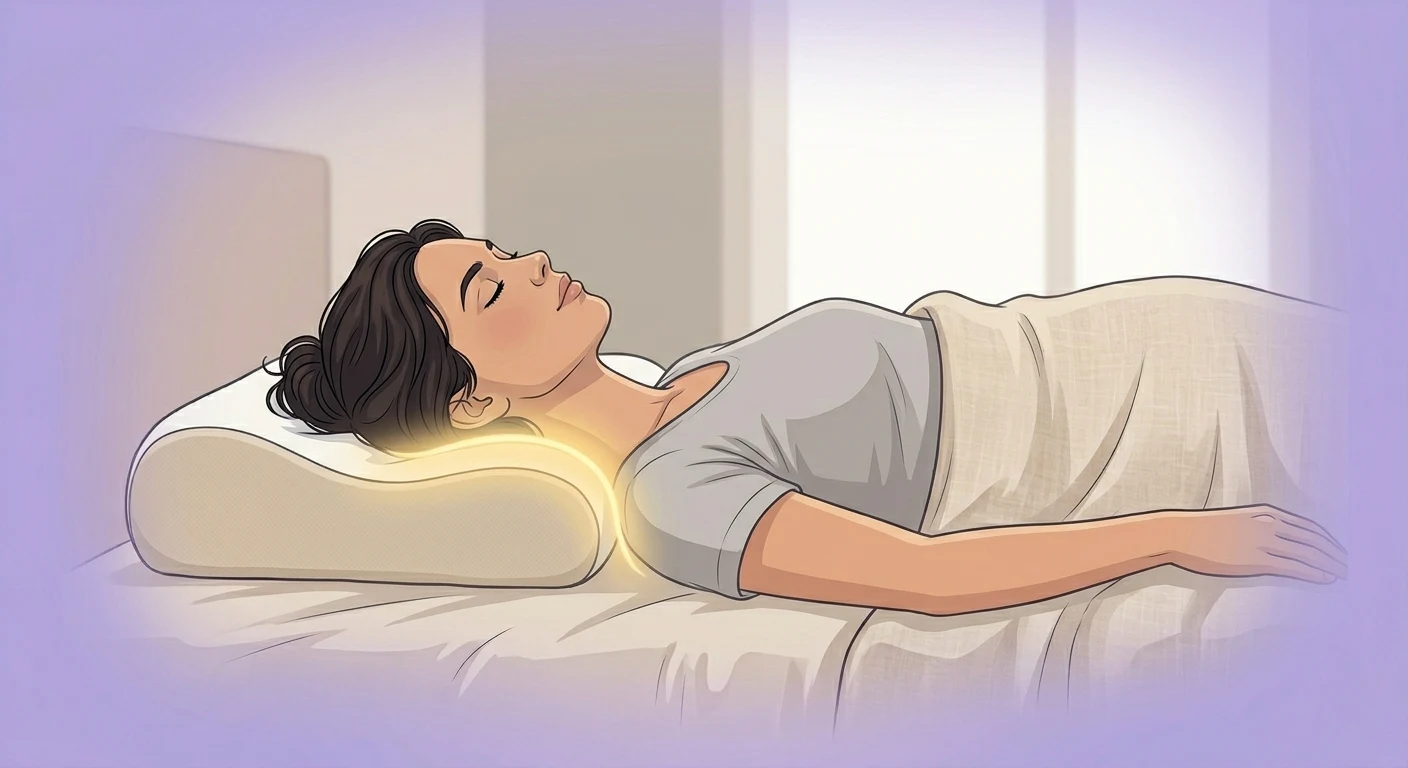
The body uses sleep to recover. But a neck bent too far forward, too far back or to one side for hours can leave you feeling worse after sleep instead of better. That’s where a neck support pillow can really help. It is intended to assist in maintaining the head, neck, and spine in a more natural alignment so that the body can rest with less strain .
This matters because there’s no one muscle or joint in charge of neck comfort. It impacts the shoulders, upper back and even your quality of sleep at night.” position in which someone sleeps can affect their neck alignment, while Cleveland Clinic adds that a good pillow should keep the neck parallel to the mattress rather than raised up or sagging down [1].
In this guide, we’ll review how an ergonomic neck support pillow works, why alignment matters, how side and back sleepers benefit differently, and what to search for if neck discomfort has become part of your everyday life [3] [6].
Why you need an ergonomic neck support pillow
Your neck has a natural curve. That curve should be supported during sleep. If the pillow is too high, too low, too soft or too flat, the neck can remain under strain for hours. According to NHS guidelines on neck pain, a low firm pillow should be used, and MedlinePlus advises sleeping on a firm mattress with a pillow that supports the neck [3].
That is the primary function of the ergonomic neck support pillow. Meaning it supports the cervical curve instead of flattening it. It also helps keep the head balanced, so that the muscles do not have to constantly adjust the position as you sleep [2].
This kind of support can make a big difference if you awake with stiffness, shoulder soreness or the sense that sleep was not completely restorative. A pillow that supports the body well might minimize that variety of discomfort as well as increase rest quality [1].
What makes a pillow ergonomic
Ergonomic merely means that it is designed to fit the body better. In the case of sleep, that will translate into a pillow that supports the natural curve in the neck, not one that forces it into an unnatural angle. Cleveland Clinic says the right pillow should help keep the neck parallel to the mattress, while Mayo Clinic says a proper pillow will keep your neck in line with your chest and back [1].
Many ergonomic neck support pillows also have one or more of the following characteristics: a contoured shape, stable firmness, retained shape and sufficient height for your sleep position. The point isn’t luxury for luxury’s sake. The desired result is alignment, stability, and comfort that holds up throughout the night [2].
That is why a pillow can somehow feel “right” despite not feeling especially soft. In most cases, a firmer pillow is preferable to a cushy one, because it holds the neck up rather than allowing it to sag into an unhealthy position [3].
How sleep position affects what you need
All sleepers don’t require the same pillow. Back and side sleepers require different kinds of neck support, so which type is best for you depends on your preferred sleeping position [1].
Side sleepers
Side sleepers typically require taller pillows since the pillow needs to bridge the top of the head over into the shoulder gap. If the pillow is too low, it allows the neck to drop down. If it’s too low, the neck bends downward. According to the Cleveland Clinic, keeping a neutral rather than pitched head is best, which a good pillow should help maintain [2].
Back sleepers
Back sleepers generally require medium support. The pillow should support the neck without driving the head too far forward. It is also suggested to place a pillow under the knees to better support the lower body, in addition to keeping your neck aligned with your chest and back.
Stomach sleepers
Stomach sleeping puts additional stress on the neck, because for long periods of time the head has to turn to one side. Mayo Clinic advises that stomach sleeping can wreak havoc on the back, and Cleveland Clinic cautions that a pillow height that’s too high or too low will bend the neck in an unhealthy direction. If neck pain is already an issue, this is probably the position to change most.[1]
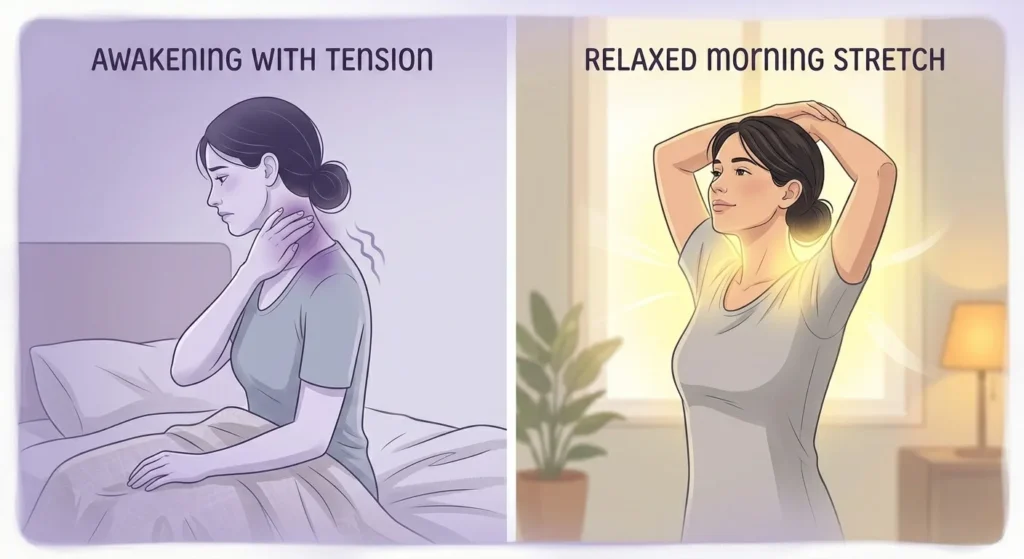
Why neck pain often arrives in the morning
One of the more pronounced signs that the neck wasn’t resting well overnight is morning stiffness. Without a supportive pillow, the neck muscles may remain tense for hours. Common factors associated with neck pain according to Mayo Clinic includes posture, sleeping position and daily efforts [4].
That can create a cycle. It’s stiff in the morning, so you move differently during the day. Then the daytime strain accumulates, and by bed time, the neck is already fatigued again. A neck support pillow shifts this cycle by minimizing the bending and twisting activities while sleeping [1].
That is, the pillow signifies more than just bed comfort. It also can affect how your body feels when you wake up [4].
What to consider when shopping for an ergonomic neck support pillow
The ideal pillow for neck support generally does four things right: height, firmness, shape and stability. Those attributes are more important than stylish packaging or marketing verbiage [2].
The neck must stay in line with the rest of the spine. Side sleepers typically require greater loft, while back sleepers generally need less. Firmness is important, because a pillow that’s too soft may sink and lose support, while one that’s too firm could create pressure. Shape is important because contoured designs can fit closely to the neck around its curvature ref-5.
A quality ergonomic neck support pillow should feel firm, not flimsy. It should maintain its shape throughout the night and support your neck without making you feel like your head is being pushed or lifted too much [2].
The importance of contour and support over softness
A lot of people think that the softer the pillow, the better comfort. That is not always true. A pillow may feel comfortable when you lie down but permit the neck to bend into a poor position once asleep. The most common mistake is one of choosing a pillow that bends the neck forward or to one side [2].
For neck pain, suggests a low and firm pillow , whereas the latter mentions that people with neck discomfort may find a “neck support” type of pillow more beneficial. And that is why support often trumps softness.
In conclusion, an ergonomic neck support pillow is used to maintain the shape and stability of the neck. That can be more important than a pillow that feels really generally plump when you first lay down but kind of collapses later in the evening [2].
Can a good pillow make a difference in sleep quality?
That can help especially if bad pillow support is one of the reasons sleep seems to be dispersed. Studies of pillow design show that pillows influence neck pain, waking symptoms, sleep quality and spinal alignment at night [6]. That said, not every pillow works for everyone. It does mean design matters.
When the head and neck can remain in a neutral position with help from a pillow, then maybe the body will settle more easily and move less at night. Which can help sleep feel deeper and mornings feel lighter . An ergonomic neck support pillow is designed to facilitate that type of sleep environment, not disturb it [2].
Common mistakes people make
A common reason for this is using too many pillows. That can elevate the head too high and flex the neck forward. For neck problems, a low firm pillow is better than one where you stack more pillows on top of each other. [3].
Another common mistake is selecting a pillow only based on how it feels in a store or within the first five minutes of lying down. A pillow might feel soft and comfortable at first glance but can form neck strain after hours of sleep [2].
Mistake number three is disregarding sleep position. What’s good for a back sleeper won’t necessarily be favorable to a side sleeper. This is why an ergonomic neck support pillow needs to fit the body and not just the room décor or the price tag [1]
How your daytime posture influences your pillow at night
Sleep is just one piece of the puzzle. Even your stance during the day is important. Posture and daily strain are among the most common factors mentioned in neck pain articles such as this one from Mayo Clinic. Spending a long time at a desk, staring down at a phone or hauling heavy bags can make the neck tender by bedtime.
That means a pillow is not a cure-all. It is also part of a larger comfort strategy. A neck support pillow with some ergonomic features helps at night, but proper posture, frequent movement and gentle neck care during the day also matter .
When neck pain requires more attention
Long-lasting neck pain that worsens or comes alongside warning signs such as numbness, pins and needles or a cold arm should make you seek medical advice [ref-3]. According to MedlinePlus, getting examined is also recommended if biological symptoms are severe or unusual [5].
That matters because a pillow can help with comfort but cannot address every source of pain. Some of the time it is posture, some of the time it’s strain, and some of the time it needs master minding [3]
An ergonomic neck support pillow helps with support and alignment but nagging symptoms should be taken seriously [4].
How betterhood can help
Betterhood can easily fit into an alignment- and comfort-based sleep routine.It bolsters the notion that a good night’s sleep begins with a better setup.
When it comes to easing stiffness, a supportive sleep routine matters.A carefully selected pillow can be an uncomplicated addition to that scene.
Over time, all that consistency can help make sleep feel calmer and more restorative.
Conclusion
An ergonomic neck support cushion for deeper and more restful sleep really boils down to one thing: assisting the body in remaining aligned when it’s at rest. With the neck properly supported, one may experience more relaxed shoulders, a better maintained neutral spine, and less morning stiffness [1] [6].
The right pillow isn’t necessarily the softest one. It’s the one that conforms to your sleep position, keeps its shape and supports the neck in a way that feels natural throughout the night [3] .
Not all neck pain is the same, and if it’s persistent or severe, seeking medical attention matters. But a proper pillow can quietly transform and improve life in its everyday moments [3].
FAQs
An ergonomic neck support pillow helps you maintain a more neutral position of the head and neck while sleeping. This relieves stress and increases comfort [1].
Yes. Side sleepers typically require a pillow that provides enough elevation to align the head with the shoulders and maintain neutral positioning of the cervical spine [2].
Yes. Back sleepers typically require medium firmness that supports the neck without driving the head forward [1].
Yes. Evidence and consensus-based recommendations indicate that pillow design (pillow type) and cervical spinal alignment in sleep can play a role in waking symptoms, neck pain, and comfort [4].
When pain persists for weeks, intensifies or is accompanied by numbness, tingling or other unusual symptoms, medical advice is crucial [3].
References
- Mayo Clinic. (2024-01-19). Sleeping positions that reduce back pain. https://www.mayoclinic.org/diseases-conditions/back-pain/in-depth/sleeping-positions/art-20546852
- Cleveland Clinic. (2020-12-10). Is Your Pillow Giving You a Stiff Neck While You Sleep? https://health.clevelandclinic.org/is-your-pillow-hurting-your-neck-7-tips-for-better-sleep
- NHS. (n.d.). Neck pain and stiff neck. https://www.nhs.uk/symptoms/neck-pain-and-stiff-neck/
- Mayo Clinic. (2022-08-25). Neck pain: Symptoms and causes. https://www.mayoclinic.org/diseases-conditions/neck-pain/symptoms-causes/syc-20375581
- MedlinePlus. (2024-02-08). Neck pain: Medical Encyclopedia. https://medlineplus.gov/ency/article/003025.htm
- Chun-Yiu, J. P., et al. (2021). The effects of pillow designs on neck pain, waking symptoms, neck disability, sleep quality and spinal alignment in adults: A systematic review and meta-analysis. https://pubmed.ncbi.nlm.nih.gov/33895703/


