






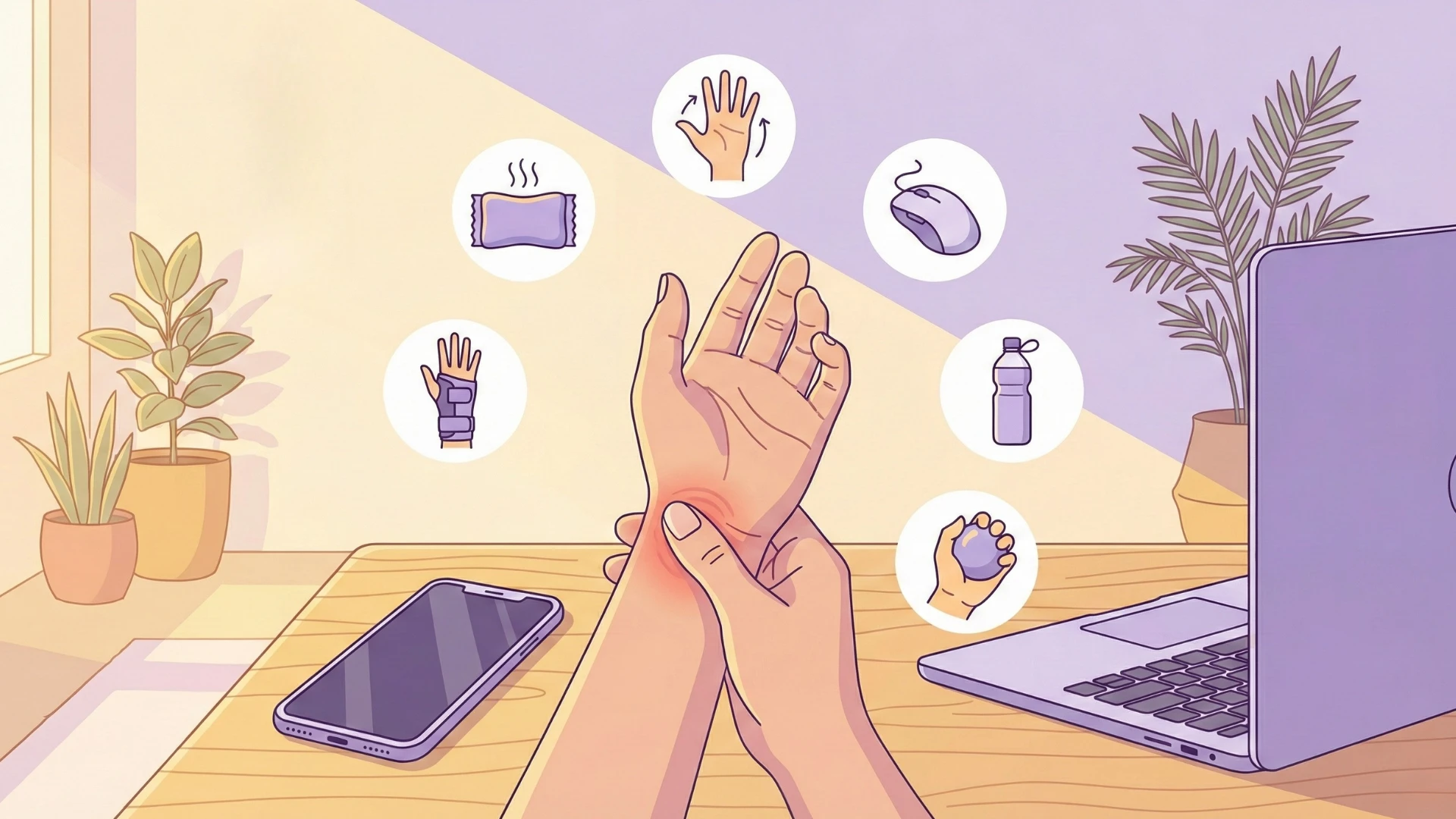
Imagine this, you’re attempting to send a rapid whatsapp message to a friend, but your thumb hurts with every swipe. Or maybe you’re in the middle of pickle prep and your wrist shrieks the moment you twist the lid. Sound familiar? You’re not alone.
In our hyperconnected Indian lives of 10-hour desk shifts, long scooter commutes through unforgiving traffic, and endless scrolling, thumb and wrist pain has quietly become the new normal.That’s exactly why learning self-treatment tips for thumb and wrist pain can make a real difference before these everyday aches turn into long-term problems.
We don’t believe these little discomforts should run your life. This is what betterhood stands for. Whether the culprit is Diwali cleaning strain or back-to-back typing during a marathon office session, understanding what’s behind the pain is the first step toward reclaiming your mobility.
This guide walks you through six practical, science-backed ways to move from constantly adjusting to living with ease and confidence again.
Understanding Thumb & Wrist Pain: Why It Happens?

Before we dive into solutions, it helps to realize what’s actually going on when your hand complains. The thumb and wrist contain a complex array of small bones, tendons and ligaments that simply weren’t made to bear the static load of repetitive modern technology.
Common Causes of Wrist Discomfort
Repetitive Strain Injury (RSI): This is the number one mistake. Typing, texting and gripping result in microscopic damage to tissues more quickly than your body can repair it.
De Quervain’s Tenosynovitis: This refers to the inflammation of the tendons on the thumb side of your wrist. It is often brought on by the “one of these, two of those” pinch we make when holding our smartphones or hoisting heavy grocery bags.
Texting Thumb: All that swiping and tapping can create a ton of stress on the thumb’s basal joint, making it tender [1].
Bad ergonomics: In a lot of Indian households, we’re working at the dining table or on the sofa. This tilts the wrist at unnatural angles, thus creating not only muscular imbalances that last even during your down time.
Arthritis & Wear: Age can turn some joints into pain magnets, particularly when it is cold out or after a day of heavy work like chores around the house or garden.
6 Self-Treatment Tips for Thumb & Wrist Pain Relief
1. Perform Gentle Stretches and Exercises
Regular motion is the “oil” for our joints.Therapeutic stretching improves blood flow and reduces the muscle tension that builds up during a long day of work.
For Thumb Pain
Thumb Extensor Stretch: Spread hand on a table palm facing down. Lightly curl your thumb toward the palm of your hand. Hold for 20 seconds.
Finkelstein Stretch: Close your fist, with thumb inside fingers. Bend your wrist toward the little finger side (as shown) [2].
For Wrist Pain
Wrist Flexor: With palm facing up, extend your arm. Then use the other hand to gently press your fingers down towards the floor.
Wrist Rotations: Do 5 clockwise, and then 5 counter-clockwise, slow controlled circles to keep the joint lubricated.
betterhood Tip: It’s paramount to keep up with it, not the intensity, but more so the consistency. Do these 3-4 times a day, especially when you take your chai or coffee break.
2. Optimize Your Workspace Ergonomics
You want an environment that matches your biology, not fights with it. Misalignment pushes your joints into compensatory positions that result in chronic wear and tear.
The 90-Degree Rule: Your elbows should be bent at a 90-degree angle when you’re typing. Even if your desk is too high, and they may well be: High desks (“jugaad” home offices are ordinary) will have you bending your wrists upward and that can hurt.
Neutral Wrist Position: Keep your wrists straight and in-line with your forearms. Don’t let your palm heels rest on sharp edges .
Height of Monitor: Maintain your screen on an eye level. When you crouch forward to see a low screen, that strain moves down your shoulders and toward your wrists.
3. Implement the RICE Method for Immediate Relief
The RICE protocol is considered the gold standard when pain is acute (sudden and new) [3].
- Rest: Do not to use the painful area for 24-48 hours. Try the voice-to-text option on your phone instead of typing.
- Ice: Use cold pack enveloped in a light towel for 15 minutes. This decreases inflammation and dulls the pain.
- Compression: Bandage lightly with a barrier support wrap or soft elastic bandage. It should be tight enough to fit snugly but not so tight that your arm feels uncomfortably fatigued and you experience “pins-and-needles.”
- Elevation: Raise your arm above the level of your heart whenever you can, particularly when you are going to bed as this will promote fluid drainage.
4. Consider Over-the-Counter Relief Options
Over-the-counter fixes can break the inflammatory cycle when used properly.
- Topical Gels: In India we frequently use our herbal balms; but for the rest of the world, there are medicated NSAID gels, which provide localized relief with much less systemic side effects (than pills).
- Painkillers: Drugs such as paracetamol can help reduce the pain, but remember, they’re “band aids.” The underlying postural cause is not addressed.
5. Utilise Supportive Devices and Braces
You could think of braces as “training wheels” for your recovery. They help the injured tissue to rest as you go about your day.
- Thumb Spica Splints: These are great for De Quervain’s, allowing fingers to move, but the thumb is immobilized.
- Wrist Braces: These will hold the wrist in a neutral position, which is particularly good if you naturally curl your wrist while sleeping.
- Compression Sleeves: These are good for mild warmth/support (Some like to wear these in the office as a form of “office fatigue” relief, especially during colder weather.)
At betterhood, we provide custom wrist and thumb braces that are lightweight and comfortable to use in Indian weather.
6.Modify Activities for Long-Term Relief
Lasting relief comes from a change in your relationship with the world.
- The 30/30 Rule: For every 30 minutes of typing/scrolling, give yourself a 30-second of micro-break.
- Full-Hand Grip: While lifting heavy pans or dabbas, do not use fingers, but grip with whole palm spreading the weight.
- Tech Adjustment: Issue voice commands to search or send long messages. Your thumbs were not made for 5,000 words daily!
- An Anti-Inflammatory Diet: Include Indian superfoods such as turmeric (haldi) and ginger, which are anti-inflammatory and maintain joint health naturally [4].
When to See a Doctor?
Although 80% respond to these maneuvers there are certain “Red Flags” which necessitate further evaluation by a professional:
- Permanent Numbness or Persistent Tingling Could Mean Carpal Tunnel Syndrome
- Pain that jolts you awake in the middle of the night.
- Obvious inflammation or redness that is warm to the touch.
- Not being able to carry a cup of tea or even button up your shirt.
If these do not provide you with relief from the symptoms for a while, meaning from 2-3 weeks onward, you should see your GP (general practitioner) or physiotherapist.
Conclusion: Small Daily Shifts That Protect Your Hands Long-Term
Thumb and wrist pain may feel like an unavoidable side effect of modern life, endless typing, scrolling, and repetitive tasks, but it doesn’t have to become your new normal. When ignored, minor discomfort can quietly turn into reduced grip strength, stiffness, and long-term strain that affects everything from work productivity to simple daily actions.
The good news is that meaningful relief often starts with small, consistent changes. Adjusting your workspace, taking short movement breaks, practising gentle wrist stretches, and being mindful of how you load your hands throughout the day can significantly reduce strain over time. Supporting your wrists during high-use activities can also make a noticeable difference by reducing overuse stress and allowing irritated tissues to recover.
At betterhood, the focus is on helping your body move with ease, not pushing through pain. Thoughtfully designed wrist supports can provide the right balance of stability and flexibility, offering relief while still allowing natural movement and strength to build gradually. When support works with your body instead of restricting it, recovery feels more sustainable and less forced.
Start with one small change today. Protect your hands now, and you give yourself the freedom to work, move, and live comfortably for years to come.
Explore More Health & Wellness Solutions:
Would you like to be up-to-date on everyday health and wellness issues? Here are some interesting pieces to help you. Follow the links below if you want practical tips or solutions:
- What Causes Back Pain? Understanding Root Triggers & Prevention Tips
- 10 Effective Home Remedies for Body Pain Relief Naturally
- Wrist Support Braces Explained: Protocols for Pain Relief
- Pillow for Neck Pain: Best Contour Pillow Every Side Sleeper Needs
Frequently Asked Questions
Yes! Turmeric is full of naturally occurring curcumin, an anti-inflammatory. Can be beneficial for joint health, in addition to the stretches above as well [4].
Thumb pain can develop gradually from overuse, repetitive gripping, or frequent phone use. Conditions like tendonitis, early arthritis, or mild nerve compression often build up quietly before pain becomes noticeable.
Typing for long hours with bent wrists or poor desk height strains tendons and compresses nerves. Over time, this repetitive stress leads to inflammation, stiffness, and aching pain.
With timely rest, activity modification, gentle exercises, and proper support, thumb tendonitis typically improves within 2-6 weeks. Ignoring it or continuing overuse can delay recovery.
In most cases, wrist cracking is harmless and caused by gas release in the joints. However, if cracking comes with pain, swelling, or weakness, it may indicate joint or tendon issues that need evaluation.
Yes. Sleeping with your wrist bent or tucked under your head can compress nerves and strain tendons overnight, leading to morning stiffness or tingling sensations.
References
- Cleveland Clinic. (2023). De Quervain’s Tenosynovitis. https://my.clevelandclinic.org/health/diseases/10915-de-quervains-tendinosis
- Mayo Clinic. (2022). Wrist pain: Diagnosis & treatment.https://www.mayoclinic.org/diseases-conditions/wrist-pain/diagnosis-treatment/drc-20366215
- O’Neil, B. A., Forsythe, M. E., & Stanish, W. D. (2001). Chronic occupational repetitive strain injury. Canadian Family Physician, 47, 311–316. https://pmc.ncbi.nlm.nih.gov/articles/PMC2016244/
- Harvard Health Publishing. (2021). Turmeric: An anti-inflammatory powerhouse. https://www.health.harvard.edu/staying-healthy/turmeric-benefits-a-look-at-the-evidence


