





It is 11:30 PM. You’re tired, but your mind is moving too fast. You lay in bed looking at the ceiling trying to figure out how much sleep you’d get if you fall asleep this minute. But forcing sleep only makes it recede further.
We have all been there. In a world where everything is hyperlinked and we never feel like there’s enough time, the shift from “busy day” to “restful night” isn’t always seamless. Our bodies frequently end up in a “tired but wired” state, physical exhaustion colliding with mental hyperactivity. You can reach for a sleeping pill, which could provide immediate relief, but doesn’t resolve the issue: an overactive nervous system that doesn’t know how to power down.
Enter acupressure. It’s an ancient practice, a part of Traditional Chinese Medicine (TCM), and it is a nervous system “hack” basically. By delivering targeted pressure to certain areas of the body, you can manually sort (via your brain) from high alert to rest and relaxation.
At Betterhood, we value quality sleep as the best recovery tool there is. It’s when your spine is able to decompress, your muscles can begin repairing and your brain can sweep away toxic byproducts. In this guide, we’ll discuss the science of acupressure for sleep, break down the best pressure points to help you fall asleep and teach you how to craft a simple bedtime routine that actually works.
Why Do We Struggle to Fall Asleep?
The only way to fix sleep is to figure out what breaks it. Sleep isn’t just an “off” switch but rather a sophisticated biological dance controlled by your circadian rhythm (body clock) and sleep pressure (the accumulation of the adenosine molecule).
Typically, when the sun goes down, your pineal gland secretes melatonin, the hormone of darkness. Concurrently, cortisol (the stress hormone) should tank. But this delicately balanced arrangement is disrupted by modern life.
- The Sympathetic Overdrive: Stress, blue light from screens, and late-night eating keep the body’s sympathetic nervous system (your “fight or flight” mode) activated. This keeps your heart rate up and your body temperature warmer than it should be when trying to sleep.
- The “Busy Mind” Loop: Anxiety about the next day sets off mental rumination. This mental tension is experienced physically as a tight jaw or tensed neck and shoulders.
- Physical discomfort: When your neck isn’t in the right alignment or is thrown off by a bad pillow, you experience slight pain signals instead of an epic sleepiness vibe when it’s bedtime.
This is where acupressure with its natural ways to promote sleep can help fill in the gaps. It’s not just that they sedate you; they make their way into the body to physically interrupt stress responses.
How Does Acupressure Work To Help You Sleep Faster?
Acupressure is like a remote control for your nervous system. There’s evidence that stimulating certain points can bring your parasympathetic nervous system which moves your body from fight or flight into “rest and digest,” a state of relaxation, restoration [1] into play.
The Physiology of Pressure
By applying firm, constant pressure on these areas, you activate nerve fibres that send signals to the brain to release endorphins and serotonin.
- Reducing Cortisol: Acupressure has been found to reduce cortisol levels, physically bringing down the body’s stress baseline.
- Melatonin Synthesis: Few studies have suggested that the acupressure can modulate melatonin regulation and reset the circadian rhythm [2].
- The Relaxation Loop: When you loosen the muscles around certain points (like in your neck or your feet), you’re sending a message of safety to the brain. A relaxed body can convince a busy brain that it is OK. to go to sleep.
For those who struggle with meditation because of a wandering mind, acupressure for better sleep provides the concrete, physical anchor to concentrate on.
6 Powerful Pressure Points for Deep Sleep and Stress Relief
Not all pressure points are equally effective. Some are energy boosters (awesome at 3 PM, terrible at 10 PM), while others serve as a natural sedative. These are the “Big Six” pressure points to help you get to sleep.
1. Anmian (The Peaceful Sleep Point)
- Location: Located behind the ear. Find the bony bump behind your earlobe (mastoid process) and move your finger just into the hollow between bone and neck musculature.
- Why It Works: As its name implies (“Anmian” means “peaceful sleep”), this point is used specifically for insomnia, palpitations and vertigo. It soothes the soul and eases the mind.
2. Yintang (The Third Eye)
- Location: This point is in line with your brows, right at the bridge of the nose.
- Why It Works: This is a well-known point to quiet the mind and ease frontal headaches. By applying a gentle pressure to this point, you can eliminate the mental over-activity that prevents sleep and helps those who feel too much before they drift off.
3. HT7 (Shenmen or “Spirit Gate”)
- Location: Just beneath your pinky finger on the underside of your wrist. Locate the small hollow area at the crease of your wrist.
- Why It Works: HT7 has been demonstrated in trials to help regulate mood and anxiety neurotransmitters which can contribute to poor sleep quality and insomnia [3].
4. KD1 (Yongquan or “Gushing Spring”)
- Where: On the bottom of your foot. Curl your toes; the spot is the hollow between where they press together in the middle of the sole.
- Why It Works: This is the point in the body that is most grounding. Its effect is a pulling of too much energy down and away from the head. It’s good for that whole “tired but wired” thing.
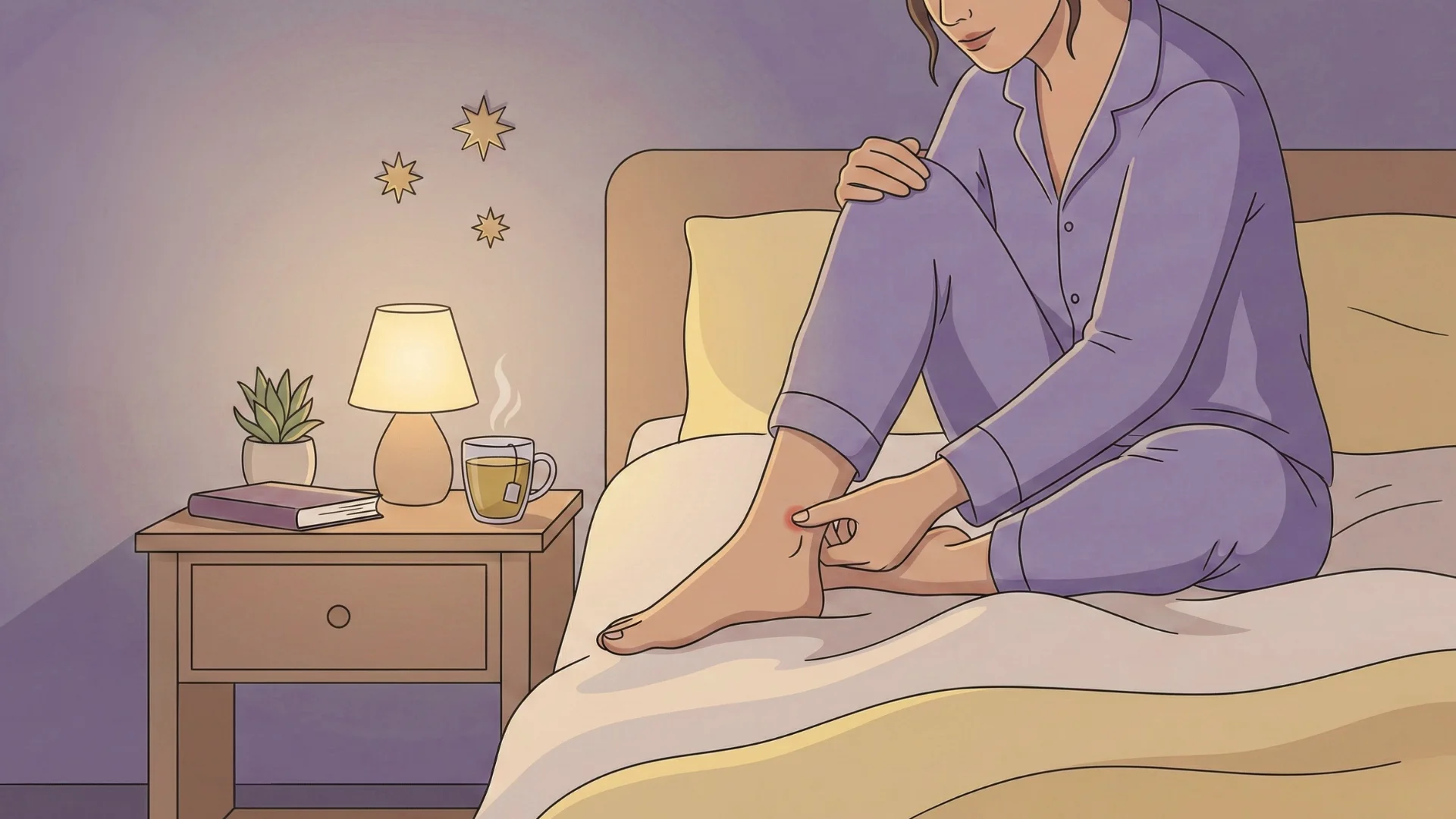
5. SP6 (Sanyinjiao)
- Location: On the inside of your lower leg, about four finger-widths above your ankle bone and just behind the shin bone.
- Why It Works: SP6 is a hormonal balance and pelvic relaxation powerhouse. It is commonly used to induce or maintain sleep, also in menstrual and general sedation [4].
Caution: Do not use this point if pregnant, as it may cause uterine contractions.
6. LV3 (Tai Chong)
- Where: On the top of your foot, in the webbing between your big toe and second toe.
- Why It Works: This point is specifically aimed at liver stagnation, which in TCM can include stress and anger. Releasing stress here “vents out” the day’s frustrations so that you don’t carry them to bed.
Pressure Points for Sleep: A Simple Nighttime Method That Works
The points are half of the battle; technique is the other half. Here’s a sleep acupressure routine to try.
Preparation
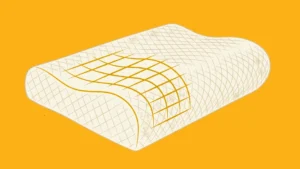
Create a conducive environment. Turn the lights down 30 minutes before getting into bed. Be sure your neck is supported. If you’re doing this in bed, lie on an ergonomic pillow that cradles your cervical spine so you aren’t requiring those neck muscles to work against gravity while trying to relax.
The Technique
- Find the Point:Feel for the Map: Press your thumb or an index finger until you feel a depression.
- Apply Pressure: Press with enough firmness to feel a dull ache or “good pain” but without feeling sharp pain.
- The Motion: You can either hold that static pressure or make very small, slow circles.
- Breathe: This is crucial. Breathe in for four counts, hold for four and out on a count of six. The breath drives the parasympathetic input.
- Duration: 1 to 2 minutes on all points.
Quick Customization:
- Can’t fall asleep? Focus on Anmian and Yintang.
- Waking up at 3 AM? Concentrate on HT7 and KD1 to root back down to sleep.
- Anxious thoughts? Focus on LV3 and Yintang.
Can Acupressure Help With Insomnia and Restless Sleep?
Yes, and specifically for psychophysiological insomnia; the kind caused by stress and conditioned arousal.
A study published in Sleep Medicine Reviews concluded that acupressure is a useful non-pharmacological treatment for reducing insomnia [5]. Continually lowering heart rate and decreasing cortisol, acupressure interrupts the cycle of “worrying that you’re not sleeping.”
In addition, there are points to help in terms of digestion such as SP6 and ST36 (both on the leg). What most people may not realize is that many of the methods used to relieve insomnia involve calming the gut. For those of you who experience bloating or indigestion at night, stimulating these points can help to alleviate the physical discomfort of sleep arousals.
Note : Acupressure is powerful, but if you have chronic insomnia it’s a good idea to get CBT-I (Cognitive Behavioral Therapy for Insomnia) from an expert. Acupressure makes a great adjunct to CBT-I – not to the exclusion of medical treatment in cases of sleep apnea or severe conditions.
Acupressure for Deep Sleep: What Research Shows
It’s not just about falling asleep; it’s also making sure you stay asleep and get to the restorative stages of sleep. Deep sleep (slow-wave sleep) is when the body restores tissue and builds bone and muscle.
Polysomnographic studies have indicated that acupressure increases the amount of slow wave sleep and decreases the number of arousals. An acupressure trial in elderly is (4 weeks, ) also found meaningful sleep quality and early morning awakening enhancement compared with the control group [6].
This improvement is probably associated to HRV. HRV, the flexible and adaptable tone of vagal nerve activity, is also enhanced by acupressure; HRV reflects the well-trained nervous system that can move into deep rest states.
Should You Avoid Any Pressure Points Before Bed?
Safety is key. Most of the time, natural sleep remedies like acupressure are relatively fail-safe.
Avoid Stimulating Points: LI4 (in the web of the hand) is excellent for headaches, yet it can be extremely stimulating and sends energy upwards to your head. In general, focus on points that move energy down (such as the feet) at night.
Pregnancy Precautions:: As we mentioned above, points such as SP6 and LI4 are avoided in pregnancy. If you are pregnant, don’t begin any new routine until after consulting with your doctor.
Don’t Push Too Hard: If you press so hard that it hurts, you’ll trigger the sympathetic nervous system (fight or flight), the very thing we’re trying to counteract.
How to Build a Simple 5-Minute Acupressure Ritual
You don’t need 30 minutes. You just need consistency. Let me just share with a how to sleep faster naturally step-by-step system you can follow:
The betterhood Wind-Down:
- Hydrate & Warm: Sip a small cup of chamomile tea or soak your feet in warm water for 5 minutes.
- Support: Supine on your back. Make sure your contour pillow is cradling the neck.
- The Flow (1 Minute Each):
- Yintang (Third Eye): Massage to clear the thoughts of the day.
- Anmian (Behind Ear): press / click to activate the sleep button.
- HT7 (Wrist): grasp to soothe the heart.
- Doing some kicking onto KD1: rub thoroughly (or a massage ball will be more practical) ~ it’s grounding.
- Breathe: Do 5 more deep breaths, imagining the stress exiting your body out through your feet.
Consistency is magic. It generally takes around 1-2 weeks for the body to develop a conditioned response where touching these points is enough to communicate with your brain that it’s time to sleep.
Conclusion: The Power of Rest is in Your Hands
Acupressure is more than just a technique; it is a quiet conversation with your own body. It offers a simple, natural path to soothe a frayed nervous system, lower the volume of anxiety, and guide you gently into the deep, restorative rest you deserve.
But remember, sleep isn’t just about what happens at 10 PM,it is a 24-hour ecosystem. It thrives when internal calm meets external support.
At betterhood, we design for this exact intersection. While your fingertips unlock the flow of energy within, our ergonomic sleep pillows and calming magnesium essentials build the sanctuary around you. Think of acupressure as the software that powers down your mind, and your betterhood environment as the hardware that supports your body through the night. Together, they turn “sleeping” into true “healing.”
Tonight, don’t aim for perfection. Just start with one or two points. Breathe deeply, be patient with yourself, and trust the process. The path to better slumber isn’t far away; in fact, it’s right at your fingertips.
Explore More Health & Wellness Solutions:
Would you like to be up-to-date on everyday health and wellness issues? Here are some interesting pieces to help you. Follow the links below if you want practical tips or solutions:
- What Causes Back Pain? Understanding Root Triggers & Prevention Tips
- 10 Effective Home Remedies for Body Pain Relief Naturally
- Wrist Support Braces Explained: Protocols for Pain Relief
- Pillow for Neck Pain: Best Contour Pillow Every Side Sleeper Needs
Frequently Asked Questions
Apply firm, steady pressure or gentle, circular motions for 1 to 3 minutes per point.
The best time is right before bed as part of a nightly, calming routine.
Some feel relaxed after one session, but consistent, daily practice is recommended for better, long-term results.
Acupressure is generally safe, but avoid pressing too hard or on areas with injuries, infections, or open wounds.
Yes, a tennis ball can be used to massage the soles of the feet (KD1 point).
If you are pregnant, have a chronic disease, or recently had surgery, consult a healthcare provider first.
While it can improve sleep quality, it is a complementary, not a replacement for, medical treatment for severe insomnia.
References
- McFadden, K. L., & Hernández, T. D. (2010). Cardiovascular benefits of acupressure (Jin Shin) following stroke. Complementary Therapies in Medicine, 18(1), 42–48https://pmc.ncbi.nlm.nih.gov/articles/PMC2834413/
- Spence, D. W., et al. (2004). Acupuncture increases nocturnal melatonin secretion and reduces insomnia and anxiety: a preliminary report. The Journal of Neuropsychiatry and Clinical Neurosciences, 16(1), 19-28. https://pubmed.ncbi.nlm.nih.gov/14990755/
- Nordio, M., & Romanelli, F. (2008). Efficacy of Valeriana officinalis and acupressure in the treatment of insomnia. Minerva Medica, 99(6), 567–574. https://www.minervamedica.it/en/journals/minerva-medica/article.php?cod=R10Y2008N06A053
- Yeung, W. F., et al. (2012). Acupressure, reflexology, and auricular acupressure for insomnia: a systematic review of randomized controlled trials. Sleep Medicine, 13(8), 971-984. https://pubmed.ncbi.nlm.nih.gov/22841034/
- Waits, A., Yip, Y. B., & Sng, E. (2018). Acupressure effect on sleep quality: A systematic review and meta-analysis of randomised controlled trials. Sleep Medicine Reviews, 37, 24–34https://pubmed.ncbi.nlm.nih.gov/28089414/
- Chen, M. L., Lin, L. C., & Wu, S. C. (1999). The effectiveness of acupressure in improving the quality of sleep of institutionalized residents. The Journals of Gerontology Series A: Biological Sciences and Medical Sciences, 54(8), M389-M394. https://pubmed.ncbi.nlm.nih.gov/10496543/