






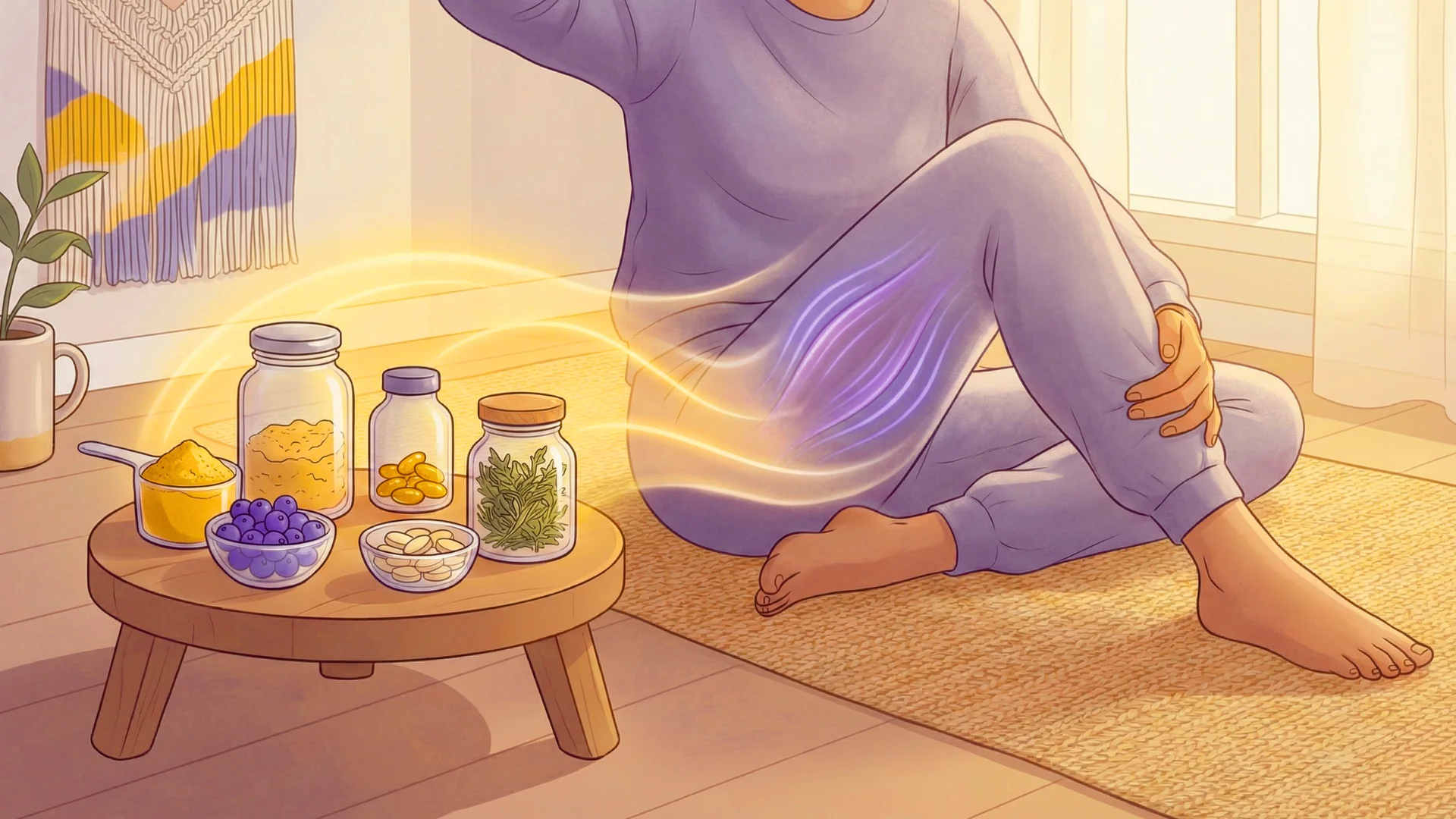
We have all been there. You nail a high-intensity workout and feel like a bad ass, strong as hell. But the following morning, getting out of bed seems nearly impossible. Your quads are crying, your arms are leaden and descending stairs takes a military battle plan. This is called Delayed Onset Muscle Soreness (DOMS) and, as much respect it as you deserve for having worked out so hard, it can also be a big deterrent to adhering to a consistent workout schedule.
The fact is, the exercise alone is only part of the equation. Training breaks down the muscle fibers; it’s recovery that builds them back up stronger. When your bad days outweigh the good, you feel stagnant. Sleep and whole foods are the non-negotiable cornerstones of health, but with targeted muscle recovery supplements, you can get that little something extra to replace the gap between “I feel sore” to “ I am ready to work out.”
In this guide, we’re going to sort through the marketing B.S. and explore the clinical science behind 5 evidence-backed supplements that actually DO help speed muscle tissue repair, decrease inflammation, and make good use of your down-time.
The Biology of Repair: Why You Get Sore

Before we dive into the bottles and powders, let’s get a handle on what it is we’re trying to repair. Lifting weights or running hard will actually make microscopic tears in your muscle fibers. The body’s natural response to this damage is inflammation and this starts the process of healing.
This inflammation is a good thing, it causes the release of growth factors. But too much inflammation (or inflammation that lasts too long) results in stiffness and pain. You don’t want to suppress muscle breakdown altogether (it would be stunted growth if you did), but rather control it as best as possible for a speedier bounce-back.
1. Whey Protein: The Rapid Builder
If muscles are the house, protein is its bricks. You just cannot repair the damaged muscle if you don’t have enough amino acids floating around your bloodstream. You can still get protein from chicken or lentils, but here’s where whey wins out for post-workout recovery in at least one specific regard: speed.
Why It Works
Whey is a fast-digesting protein. As you consume a shake postworkout, the amino acids flood into your system in 30 to 60 minutes, and muscle protein synthesis (MPS), which is already elevated following a session, begins at the perfect time when your body is most receptive to it.
- Leucine: There’s a reason all these fast-digesting protein supplements are so high in leucine, the “master amino” that flips the switch on your body from breaking down to building up.
- Convenience: It allows you to hit your daily protein allotment, but not with full meal feeling in your belly directly after an effort.
The ingestion of whey protein after exercise is known to amplify muscle recovery and recovery of force compared with carbohydrates alone [1].
2. Creatine Monohydrate: The Cellular battery
Creatine gets a bad rap as a supplement exclusive to the hypertrophied, it’s not! The truth of the matter is, it is one of the most studied and proven muscle recovery supplements for all athletes whether sprints or riding.
Beyond the Pump
When you take creatine, it gets stored in your muscles as phosphocreatine, and it’s this supplement that helps the body form ATP, the primary energy currency for explosive movements. But its impact on recovery is equally amazing.
- Reduced Cell Damage: Research also indicates that creatine loading may support less damage (markers like creatine kinase) and inflammation post-exhaustive exercise.
- Glycogen Loading: Creatine combined with carbs has been shown to refill muscle glycogen stores quicker than just carbs alone. This in turn means your fuel tank is filled up faster for the next session.
- Hydration: It pulls the water into muscle cells which provides an optimum environment for repairing muscles [2].
3. Tart Cherry Juice: The Anti-Inflammatory Powerhouse.
For those who skew toward natural alternatives instead of synthetics, tart cherry juice is one to watch. Not to be confused with the sugary cherry juice you’ll find in the soda aisle, tart (Montmorency) cherries are loaded with potent antioxidants known as anthocyanins.
Nature’s Ibuprofen
When it comes to killing soreness, many athletes turn to NSAIDs (such as ibuprofen), but these can harm your gut and could even stymie long-term muscle building. Tart cherry juice provides an alternative, which is safer.
- Pain Relief: Systematic reviews have concluded that consuming tart cherry juice before or following endurance races (like marathons) can significantly reduce reported muscle pain and weakness.
- Sleep Better: Tart cherries are naturally high in melatonin as well. Given that sleep is the most powerful recovery tool there is, this double-spike in benefit makes it quite a special ingredient to have in your stack.
One study in theJournal of the International Society of Sports Nutrition even found that long-distance runners who consumed tart cherry juice experienced 23% less pain following a race than those who took a placebo [3].
4. Omega-3 Fatty Acids: The Long-Term Protector
Fish oil is not just for the heart and brain; it plays a crucial role in mechanical recovery. The EPA and DHA in omega-3s are potent anti-inflammatory compounds that can help to regulate the systemic inflammation produced by heavy training.
Fighting Anabolic Resistance
As we age, or when we are under stress, our muscles may become more “anabolic resistant,” they don’t respond as well to protein signals. Omega-3s help sensitize the muscle cells to protein so that the food you do eat goes toward repair.
- Joint Health: We are always talking about joint alignment at betterhood. Omega-3s support joint lubrication and flexibility to enhance the natural structural support offered by ergonomic pillows, posture tools.
- Reduced Soreness: Daily intake has been associated with less DOMS and improved range of motion 48 hours post exercise [4].
5. Magnesium: The Nervous System Reset
You could have the strongest muscles in the world, but if they are constantly tight and cramping, you will not recover. Magnesium is a necessary mineral which participates in more than 300 metabolic reactions, including muscle contractions and relaxations.
The “Relaxer” Mineral
Exercising causes you to lose magnesium through sweat. A lack of it can cause twitching, cramps and restless sleep.
- Central Nervous System (CNS) Recovery: Pure strength work beats up your central nervous system. Magnesium glycinate or citrateHere acts as a relaxant on the nervous system to decrease levels of cortisol thus preparing the body for deep restorative sleep.
- Muscle Function: It is a natural calcium blocker that works to relax muscles after contracting. Without sufficient magnesium, calcium resides in the cells longer leading to a semi-contracted muscle that is stressed.
The Missing Link: Mechanical Recovery
Supplements deal with the chemical part of recovery, refueling glycogen, building protein and damping inflammation. But the other side of the coin is mechanical recovery.
You can cram down all the muscle recovery supplements on this earth, but if you sleep 8 hours with a pillow that kinks your neck or sit 9 hours in a chair pressing on your spine, guess what: Your body is still stressed out!
How Betterhood Supports Your Stack
We, at Betterhood, believe in holistic approach. Creatine and protein rebuild the fibers, but our tools make sure the architecture is in order.
- Sleep Alignment: The most substantial aspect of recovery (growth hormone) is produced during deep sleep. Our ergonomic pillow provides proper support, improper neck support during the night can increase snoring Our pillows are designed to foster proper head and neck alignment, preventing the tossing and turning that disrupt REM sleep.
- Active Release: Most of the time, tight muscles harbor blood that’s rich with nutrients but can’t make it to the sore spots. You can also use recovery tools to massage your tight fascia, which can help the supplements you’re taking work better.
Imagine how you would take on a new trip and travel supplements as the 5 Star gas, and the betterhood products are the maintenance to the engine chassis. For a smooth drive, you need both.
Conclusion
Recovery is not something passive, it’s a discipline. By supplementing with compounds that promote muscle recovery, such as whey protein, creatine, tart cherry juice, omega-3s and magnesium, you supply your body with the raw materials it needs to heal at an accelerated pace.
But keep in mind that supplements are supposed to supplement a healthy lifestyle, not replace it. They’re most effective built on a foundation of eight hours of sleep, nutrient-dense eating habits and proper mechanical support for your joints and spine.
Listen to your body. If you’re forever sore, take a look at your diet and the way you’re sleeping. Adding these powerhouse nutrients to your rotation could have you back to top performance.
Explore More Health & Wellness Solutions:
Would you like to be up-to-date on everyday health and wellness issues? Here are some interesting pieces to help you. Follow the links below if you want practical tips or solutions:
- What Causes Back Pain? Understanding Root Triggers & Prevention Tips
- 10 Effective Home Remedies for Body Pain Relief Naturally
- Wrist Support Braces Explained: Protocols for Pain Relief
- Pillow for Neck Pain: Best Contour Pillow Every Side Sleeper Needs
Frequnetly Asked Questions
Timing varies by supplement. It’s recommended to consume whey protein within an hour after your workout. Creatine is acceptable for either “morning” or “night administration”, provided that one’s intake is consistent. Magnesium and casein protein are better taken before bed in order to support sleep and overnight repair.”
Strictly speaking, no. Protein, creatine (from red meat) and magnesium can be in found in food. But sufficient therapeutic doses whether that be the quantity of creatine needed to see performance benefits or the level of antioxidants found in a glass of tart cherry juice can be impractical and expensive through whole foods alone. Supplements offer convenience and precision.
Creatine pulls water into your muscle cells, not under your skin. Some people experience a little water retention in the beginning, but if you use high quality creatine monohydrate there shouldn’t be much bloating at all. The “puffy” look is simply a matter of poor diet, it’s not the creatine.
Yes. The standard post-workout snack is to mix whey protein and creatine into water or milk. Magnesium and Omega-3s is usually consumed at dinner or before bed.
Sleep is when the “construction crew” gets to work. Supplements are the bricks (protein), and energy (creatine) but sleep is the labor. Without falling into deep sleep, your body cannot properly absorb these nutrients to help heal.
References
- Jäger, R., et al. (2017). International Society of Sports Nutrition Position Stand: protein and exercise. Journal of the International Society of Sports Nutrition, 14, 20. https://jissn.biomedcentral.com/articles/10.1186/s12970-017-0177-8
- Kreider, R. B., et al. (2017). International Society of Sports Nutrition position stand: safety and efficacy of creatine supplementation in exercise, sport, and medicine. Journal of the International Society of Sports Nutrition, 14, 18.https://pubmed.ncbi.nlm.nih.gov/28615996/
- Kuehl, K. S., et al. (2010). Efficacy of tart cherry juice in reducing muscle pain during running: a randomized controlled trial. Journal of the International Society of Sports Nutrition, 7, 17. https://jissn.biomedcentral.com/articles/10.1186/1550-2783-7-17
- Jouris, K. B., McDaniel, J. L., & Weiss, E. P. (2011). The Effect of Omega-3 Fatty Acid Supplementation on the Inflammatory Response to eccentric strength exercise. Journal of Sports Science & Medicine, 10(3), 432–438. https://www.ncbi.nlm.nih.gov/pmc/articles/PMC3737804/
- Volpe, S. L. (2013). Magnesium and the athlete. Current Sports Medicine Reports, 12(4), 279–283.https://www.semanticscholar.org/paper/Magnesium-and-the-Athlete-Volpe/b61672f6d