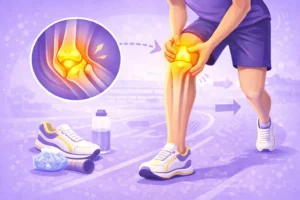






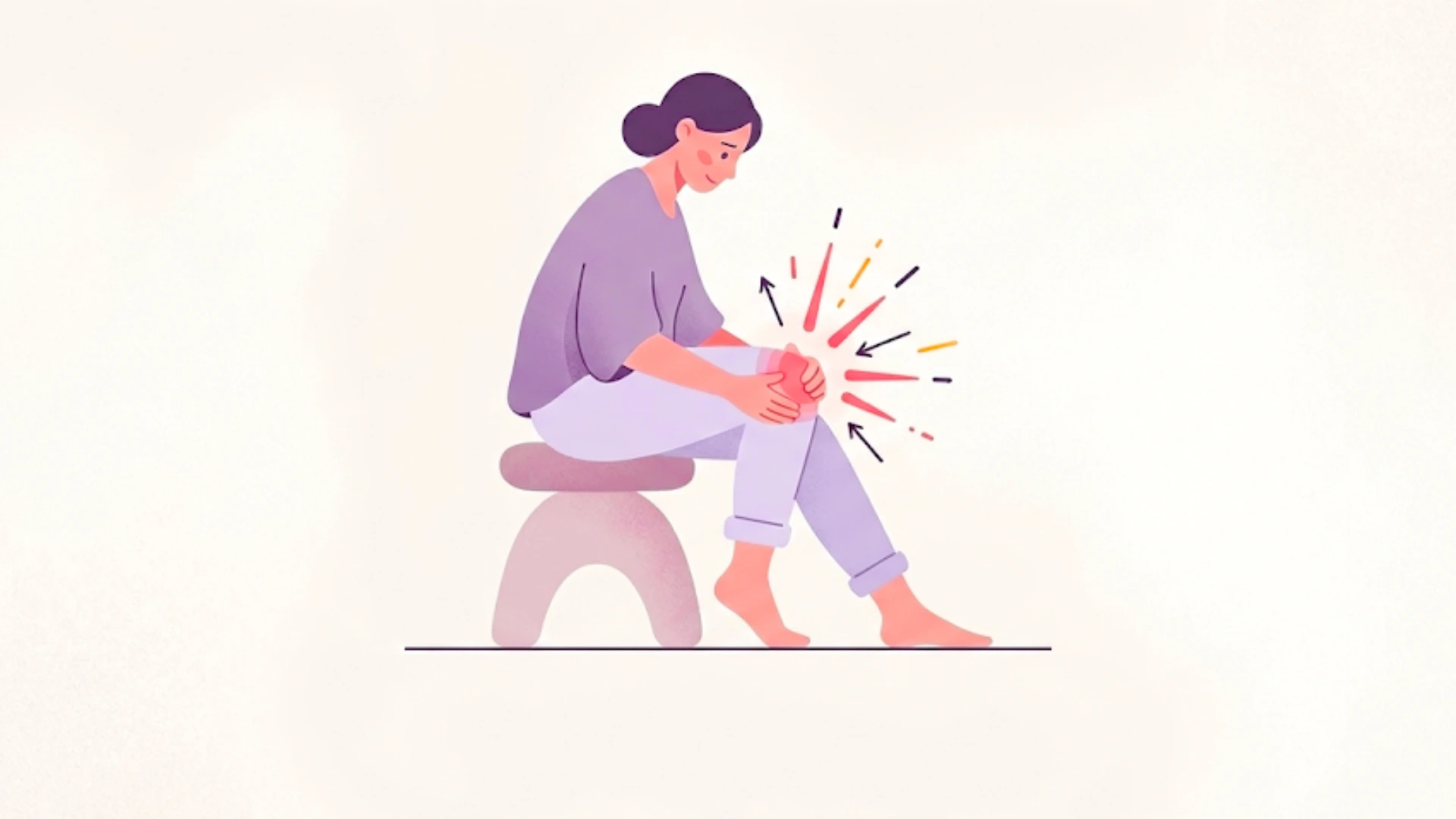
Knee pain is one of the illnesses which more and more people ignore in the first go. It starts small. Maybe you notice a slight tug when going up some stairs. You could be experiencing heavy knees from sitting too long. You yawn a little and then you move on. But then that little annoyance starts pacing a bit more often. Overnight, it starts impacting the way you sit and eventually your posture and how you walk and that’s when you begin searching for real knee pain relief.
Your knees are among the largest and most active joints in your body. Every time you walk, as well as when you bend down to pick something up, squat down, sit down at a meal or stand back up your knees are doing work. Understanding the cause of knee pain and what it is like is the first step toward managing it correctly.
Understanding the Knee Joint
What to know before knowing pain structure: The thigh bone also called femur and shin bone which is tibia are bridged by the knee joint. Between those bones is cartilage, which acts as a cushion. There are ligaments that keep everything together and again the muscles allow the joint to move smoothly.
When these elements all function smoothly in concert, it creates a sense of secure flow. Once one element becomes weak, inflamed, injured or worn down, the pain begins.
Knee pain is rarely random. There is almost always a reason for it.
Why Does Knee Pain Happen? Understanding the Real Reasons Behind It
Pain in the knee doesn’t come out for no reason. Most of the time, it accumulates slowly due to repeated stress, muscle imbalance or posture habits and lifestyle factors we’re unaware of. Your knees bear your body weight every day. While walking, going up and down stairs, sitting and standing for hours.
Repetitive Stress and Overuse
Repetitive stress is one of the primary drivers behind knee pain. Your knees are under constant stress if you frequently stand for long hours, climb stairs regularly, walk a lot or squat down.
And people who launch into the sort of hard-core exercise programs abruptly and unprepared might get knee pain as well. Your body needs to acclimate to additional exertion. Without that time, the tissues around the joints become inflamed.
Not all forms of overuse are painful immediately. It builds gradually. It can cost you weeks without even knowing it. But over time, the stress accumulates and the knee begins to feel sore or stiff.
Weak Supporting Muscles
Your knees do not work alone. They depend quite a bit on the surrounding musculature, particularly the quadriceps which are the muscles at the front of your thigh, hamstrings are the back of your thigh, calves and glutes.
Insufficient strength of these muscles causes the knee joint to take loads more than it can afford. Where shock is typically absorbed by the muscles, this puts direct force on joints. Do you think that will contribute to a state of discomfort and instability in the long run?
Most of them only focus on the knee when it hurts, though. But the solution is often to fortify the muscles in surrounding areas.
Poor Posture and Alignment
Good posture is not just about your back. It affects your knees too.
Standing with one hip cocked, locking your knees when standing, crossing your legs often or wearing shoes that do not provide enough arch support can change how weight is distributed. If you have body weight that is not balanced, one knee usually absorbs more than the other.
Over time, this unequal load causes stress on the joint and results in pain.
How you even walk can determine the amount of stress placed on knees. Even a slight misalignment in hips or ankles can alter how pressure is distributed through the knee joint.
Age-Related Wear and Tear
As we grow older, the shock-absorbing cartilage in the knee can gradually wear away. Typically, it happens together with osteoarthritis. As cartilage wears away, the bones in a joint may grind more directly against one another.
It makes movement stiff, swollen and painful.
Most knee pain from aging sets in gradually. Stiffness might be your first clue, in the morning or slight pain over changes in the weather. Finding out may happen more often over time.
But old age does not mean knee pain. This procedure can take a long time but can be postponed with great concern and the gain of muscular mass.
Sudden Injuries
Knee injuries happen during sports, exercise or even daily living. A sudden twist, bronchitic landing, fall or sharp turn can stress ligaments or inflame tissues inside the joint.
An injury usually causes immediate pain, swelling and sometimes an inability to put weight on the leg.
Examples include ligament sprains, meniscus irritation and tendon strain. Some of these need to be curated and at times, medically evaluated.
Excess Body Weight
Having added body weight puts pressure on the knee with each step. Every additional weight you gain is a few more kilograms of explosive force on your knees every time you take a step.
Over continuous time, the applied stress accelerates wear and tear, increasing the risk of chronic pain.
It makes a difference: Even moderate weight control helps relieve pressure significantly.
Inflammatory Conditions
So a little of that knee pain is actually caused by inflammation in the joint. Diseases such as Rheumatoid arthritis or gout can cause swelling, warmth and chronic pain.
Inflammatory pain may be different from some mechanical strain.
Symptoms of Knee Pain
Knee pain is not universal for everyone. It varies depending on the cause and severity.
For some it begins as a dull ache that appears after exercise. In the beginning, it might even seem manageable, something to put aside. Some have acute pain when flexing the knee or ascending stairs or rising from a seated position. When placing your weight on the leg, pain might worsen.
Stiffness is another common symptom. You might wake up in the morning with a feeling that your knee needs time to “loosen up.” After sitting for too long this also causes the joint to feel stuffy and weighty. Often implying there is some irritation in and around the knee. The area may feel slightly puffy or warm when you touch it.
Others hear clicking, popping or grinding sounds when they move. Sounds that occur infrequently are usually reviewed as harmless, yet when pain accompanies a sound it must not be ignored.
One other commonality is a sense of instability. The knee may feel like it will buckle when walking. This is usually a sign of ligament weakness or strain.
In more severe cases, knee pain can completely immobilize you. Your body rarely stays silent. Pain most often is a demand for attention.
When to Take Symptoms Seriously
Most cases of knee pain are self limited and can be resolved with basic care, but some symptoms want medical evaluation.
If your knee bends much more than it should after an injury, if you cannot bear weight on it or the joint appears clearly deformed and there is severe pain also with fever then see a doctor as well.
Any pain that extends more than a few weeks should be assessed, as well. And noticing things early means that little problems don’t develop into chronic ones.
Knee pain can seem maddening because it interrupts the most basic of acts: walking fluidly, sitting cross-legged, going up stairs, in fact crouching from a chair. Fortunately, knee pain is self-limiting and usually gone with the right mix of movement, support and small tweaks we can make on a daily basis. Surgery does not become step one. And in many cases steady care trumps aggressive intervention.
Above all, just remember that there is no one magic bullet for relief. It’s about reducing stress, strengthening your knees and supporting them so they can heal and function normally again.
So we are going step by step into it.
How to Treat Knee Pain Effectively and Safely
There is nothing quite as frustrating as knee pain. It makes basic things difficult in walking with ease, sitting at rest, Scaling steps or even reorienting in bed. You typically don’t need total bed rest or radical treatments. In fact, light movement is more beneficial than completely halting mobility. The premise is simple: support your knee, make small changes day by day and let it heal in a safe, controlled way while still keeping it moving.
Stay Active But Move Smart
When your knee is painful, first it stops moving at all. Rest is important but total inactivity for too long actually leaves the joint stiffer and weaker. The surrounding muscles at the knee start to weaken rapidly and put more stress on the joint.
Rather than stopping all the movements, transit into low-impact motions. Gentle walking on flat ground, slow cycling or light stretching helps blood circulate around the joint. Better circulation means your tissues heal more quickly.
The movement should feel intentional, not forced. The trick when an action aggravates acute pain is to stop and switch.
An intensity is nothing if not built on consistency.
Ice and Heat at the Appropriate Time
Ice is useful if the knee feels swollen, warm or recently inflamed. This soothes inflammation and anesthetizes pain, the cold pack must be placed for 15–20 mins. Especially if on your feet all day or after exercise.
Heat works differently. It also loosens tight muscles, which allows blood to circulate. But if your knee is stiff rather than puffy, a warm compress will ease that tightness.
Switching off between cold and heat can involve a whole lot of trial and error, but plenty of people get relief like that at home, depending on how the knee feels on any given day.
Strengthening Exercises for Knee Stability
Your knee depends quite a lot on the surrounding muscles. When they are strong, the direct load on the joint is reduced. It is the uncomplicated exercises done repeatedly that can generate a large impact:
- Quadriceps strengthening: In a chair, extend one leg slowly upward and hold for several seconds, then lower it. This builds the strength required in the front thigh to stabilize the knee.
- Hamstring Activation: Lying on your stomach gently bend your knee and bring your heel to your hip then lower your leg slowly. Strong hamstrings balance knee movement.
- Wall sits: Lean your back against a wall and slide down into a partial sitting position, holding for several seconds. It builds endurance in the thigh muscles.
- Leg raises: While lying flat, slowly lift one leg with a straight knee directly ahead and lower it again. This allows you to maximize muscle activation without stressing the joint.
The goal is not speed. It is controlled movement. Provide us with something to do together.
Improve Joint Alignment
Knee pain is often not just about strength it is about how your body moves.
If your knees knock together as you walk or if your feet pronate all common misalignments that could be placing excess strain on the joint. This increases pressure unevenly.
Good shoes with good arch support can align you better and not just make you more comfortable. Steer clear of shoes that are too flat or worn out for long periods.
Even small shifts in your posture matter. If you are standing, avoid locking your knees and keep them slightly bent. Make sure to keep your body weight evenly distributed between the legs. Alignment reduces hidden strain.
Manage Body Weight Gradually
If extra weight is the problem, keeping weight to instruct will reduce that strain on the knee too. Even modest cuts have a felt impact.
The answer is not extreme dieting. A long-term improvement comes from a food pattern that is sustainable over time along with mild physical activity.
Lower pressure on the knees = improved response.
Support That Actually Works: Choosing the Right Knee Brace
Exercise and lifestyle habits are paramount in the recovery process from knee pain, but supportive products can make everyday life a bit easier.
An appropriately designed knee brace provides gentle compression, improves proprioception of the joint and offers stability with mobility. But not every support is a good one.
The Stable Supportive for the Knee Frido, Dr. Ortho and Tynor are mainstream brands that you will discover in India when talking about knee support with up to certain levels of comfort and some pain relief. They are popular brands that come in various compression levels and materials.
But the most important factor is long-term comfort that provides enough support to maintain joint alignment.
Betterhood’s knee support range has been designed not just for short-term relief but structured stability over a much broader time-frame of real-world use be it working late hours, commuting, travelling or simply being active. The materials breathe well in Indian weather and it is a firm compression, nothing so constricting that you can not move.
Rather than being dense or too tightly-packed, that cushioning is balanced and supportive but plush enough for prolonged use.
We never want to be supported in greeting someone entirely, because that means you could just be them. It should facilitate recovery, not replace it.
The Prevention Guide: How to Protect Your Knees
Knee pain is best prevented if you can. Everyday habits that protect your joints for decades. Do not ignore early signals.
If your knee hurts after you go up some stairs, that is data. If you’re sitting you stiff it feedback.
Early correction prevents long-term strain. Changing activity, enhancing muscle strength and realigning posture before the pain can be chronic.
Listening early saves time later.
Warm Up Before Physical Activity
Not warming up to exercise but rather jumping right into it raises the risk of strain. A quick five-minute warm-up and a little walking, some gentle knee bends, slow leg swings prepares the muscles for action.
Warm muscles absorb shock better.
Avoid Sudden Increases in Activity
If you have been sedentary for a while, do not overdo it straight away. Gradually, increase duration and intensity each week
One of the biggest causes of knee pain is loading too fast.
Strengthen Consistently, Not Occasionally
Consistency matters more than intensity. A big workout once a month is not worth as much as strengthening exercises twice a week regularly.
Muscle endurance protects the joint with daily life activities.
Maintain Mobility
Hip, thigh and calf stretching reduce the tension on the knee. Gentle stretching after a workout can help keep tight muscles in balance.
The pull of tight thigh muscles through the knee joint. Flexible muscles move more smoothly.
Choose Proper Footwear
The shoes without cushioning or arch support put stress on the knees. Wear shoes that provide even pressure distribution and shock absorption.
Replacing worn shoes helps much more than people think.
Stay Active Daily
Complete sedentary life = un-muscled weakness and rigidity in joints. 20–30 minutes of daily walking; this does wonders for circulation and joints.
Movement keeps the knee nourished.
Focus On What You Need Support With And Not Everything
Knee supports aid too when you are traveling long distances, standing on your feet for a tough day or healing from some minor strain. And like the muscles, depending on them without using them will make one weak.
Avoid sustain through compound movements, low-sustained scenarios and progressive overload for highest durability.
Betterhood’s knee supports are made to enhance motion, not limit it, so you can wear them throughout the day when your knees require a little extra stability without compromising natural movement.
Which Knee Support Brand Truly Supports You? A Real Comparison That Actually Helps
When your knees begin to throb, brand names don’t immediately come to mind. You think about relief. That’s when you start searching.
You’ll find ones like Dr. Ortho, Tynor and Frido. These brands get popular for a reason. They provide compression, light cushioning and are easy to find online. People will often first try them because they’re relatable and readably available.
But here’s what most people don’t understand at the get-go; not all knee support feels the same after 4–5 hours of wearing. But not all of them trade compression for comfort. And not all of them are made for actual, daily Indian life; long commutes, standing jobs, stairs, rough roads and frantic schedules.
This is where betterhood takes a somewhat different route.
Rather than simply pursuing the tightest compression or basic elastic material, betterhood prides itself on the knee support that also has a feeling of stability without making it feel restrictive. The idea is not only to “hold” the knee, it’s to allow natural movement while limiting unnecessary strain.
| Features | betterhood Knee Support | Dr. Ortho Knee Support | Tynor Knee Support | Frido Knee Support |
| Breathability | High – suited for long hours & warm weather | Medium – can feel warm | Medium – better than basic but not the best | Lower – softer material may feel sweaty over time |
| All-Day Comfort | Yes, while working, commuting, travelling | Better for short uses | Good for general use | Best for short comfort, not structured support |
| Alignment & Stability | Supports proper knee alignment and balanced movement | Mostly padding | Offers good structural support, but can feel stiff | Focuses on comfort, not alignment |
When to See a Doctor
While most knee pain will improve with conservative treatment, you should visit a doctor if any of the following happens:
- The knee got ridiculously swollen
- You cannot bear weight
- There is visible deformity
- Pain, by definition, persists after a few weeks despite care
- You feel our guidance become more unstable
Early evaluation prevents complications.
Conclusion
Knee pain does not need to control your daily life. In many cases, it is your body asking for better balance and stronger muscles, better alignment and healthier movement habits.
Regular small modifications can improve how your knees feel. Strengthening exercises build stability. Gentle activity maintains mobility. Proper fitting shoes and alignment reduce much of the stress. And when they need extra help, the proper knee brace or compression support makes movement around in everyday life more comfortable.
Betterhood’s knee care line is made for actual daily life breathable materials, structured compression and a fit that allows movement without hindering it. When combined with regular exercise and a healthy lifestyle, it is integrated into the overall joint strategy.
They know you through every step of your life.” What you do for them today determines what they do for you tomorrow.
Frequently Asked Questions
Not necessarily. Gentle ambulation on a flat surface usually increases blood flow and helps with recovery, except when there is extensive injury.
A mild strain typically heals in a matter of weeks, with rest and strengthening. Chronic issues require consistent management.
Yes, when used appropriately. They assist with strain, but not a substitute for strength work.
It depends on the cause. Pain from mild over use can recover in 2–4 weeks. Chronic conditions are longer term, require more structured care.
References
- Hunter, D. J., & Bierma-Zeinstra, S. (2019). Osteoarthritis. The Lancet, 393(10182), 1745–1759. Available at:https://pubmed.ncbi.nlm.nih.gov/31034380/
- Peat, G., McCarney, R., & Croft, P. (2001). Knee pain and osteoarthritis in older adults: A review of community burden and current use of primary health care. Annals of the Rheumatic Diseases, 60(2), 91–97. Available at:https://pubmed.ncbi.nlm.nih.gov/11156538/
- Crossley, K. M., van Middelkoop, M., Callaghan, M. J., Collins, N. J., Rathleff, M. S., & Barton, C. J. (2016). Patellofemoral pain. British Journal of Sports Medicine, 50(4), 247–250. Available at:https://pubmed.ncbi.nlm.nih.gov/26620820/
- Heidari, B. (2011). Knee osteoarthritis prevalence, risk factors, pathogenesis and features. Caspian Journal of Internal Medicine, 2(2), 205–212. Available at:https://pubmed.ncbi.nlm.nih.gov/24024017/
- Felson, D. T. (2006). Clinical practice. Osteoarthritis of the knee. New England Journal of Medicine, 354(8), 841–848. Available at:https://pubmed.ncbi.nlm.nih.gov/16495396/
- Bennell, K. L., & Hinman, R. S. (2011). A review of the clinical evidence for exercise in osteoarthritis of the hip and knee. Journal of Science and Medicine in Sport, 14(1), 4–9. Available at:https://pubmed.ncbi.nlm.nih.gov/20663794/