







Myofascial release, a hands-on technique that applies gentle and steady pressure to help relax tight fascia in order to relieve tension in the muscles. Fascia is a connective tissue that surrounds and supports our muscles when it becomes tight or irritated, this tissue can lead to discomfort, stiffness and limited movement. Cleveland Clinic defines myofascial release therapy as gentle, steady pressure that is applied to eliminate tightness in the myofascial tissues; PubMed research defines it as a low-load, long-duration stretch experienced on the myofascial system. [1]
This technique is commonly used for individuals experiencing muscle tightness, trigger points, chronic pain or limited movement. Research indicates that myofascial release helps some people, but the strength of evidence ranges by condition, and results tend to be strongest when it is included in a larger treatment plan rather than used alone. [3]
What Is Myofascial Release?
Myofascial release is a type of hand-on therapy that aims to alleviate tension in the fascia and nearby soft tissue. A clinician or therapist uses constant pressure, stretching or sustained contact on specific areas until the tissue starts to give. Cleveland Clinic says providers frequently search for trigger points, then use gentle pressure until tension releases. [1]
The term is also applied to self-myofascial release, which involves devices like foam rollers or massage balls. In either case, the aim is pretty much the same: to enhance soft tissue mobility, facilitate movement by decreasing stiffness, and make it easier to move. [6]
Why Myofascial Release Matters
Helps reduce muscle tightness
When fascia and muscle tightens up movement feels restricted. Myofascial release is used to relieve that tightness by applying pressure on the targeted area. [2]
May improve function and movement
Research on myofascial release for chronic low back pain and neck pain shows that it can improve pain and physical function in some people, but the evidence is not equally strong for all conditions. [7]
recovery from overuse and posture-related strain
Myofascial pain syndrome is commonly associated with overstressed muscles, postural misalignment and trigger points. Releasing those irritated areas may help alleviate discomfort that accumulates from long sitting, repetitive movement or training load. [4]
Can be incorporated into a broader pain-management regimen
NCCIH says that research suggests massage-based approaches can affect some pain conditions, but results are typically only long term with certain conditions, and vary depending on the quality of the evidence. Myofascial release is best used as an adjunct after or with manual movement, exercise and other clinician guided secrets. [5] [8]
Extraordinary Areas Treated With Myofascial Release
Neck and shoulders
Overactive neck and shoulder tension is a well-known postural phenomenon among those who are desk-bound all day. Low to moderate quality evidence was found for some outcomes though based on the research around myofascial release for neck pain. [7]
Lower back
Myofascial release has been studied in chronic low back pain and the results of a meta-analysis confirmed beneficial effects on pain and physical function but noted limitations with the quality of available studies.
Hips and glutes
Tightness in and around the hips or glutes can disrupt walking, sitting and exercise. This area of work typically employs myofascial work to create more tissue mobility and comfort. [6]
Chest, calves, and upper back
These areas can get tight with repetitive movement, training or poor posture. Self-myofascial release is something that is often used here, using foam rollers or massage tools. [8]
Types of Myofascial Release
Manual myofascial release
A therapist applies gentle, constant pressure on fascia and tight soft tissue with his or her hands. This is, after all, the most traditional version of the technique. [1]
Self-myofascial release
This version employs foam rollers, massage balls or similar tools so that people can address tightness at home. It has become popular in fitness and recovery practices. [6]
Trigger point-focused release
For example, some treatments trigger tender knots in muscles that can cause local or referred pain. These points are commonly associated with myofascial pain syndrome. [9]
Integrated myofascial therapy
In practice, myofascial release tends to be used in tandem with other techniques like stretching, exercise and posture correction rather than on its own. That combined approach is more in line with current pain-care guidance. [8]
Benefits of Myofascial Release
May reduce pain
There is some evidence that myofascial release might reduce pain in conditions including chronic low back pain and fibromyalgia, although the size of the effect varies and many studies are not high quality. [5]
May improve flexibility
Myofascial release is thought to ease tissue tightness, which may improve the comfort of moving within a range of motion in some people. [6]
May support relaxation
Therapeutic massage and manual therapy based approaches can elicit a relaxation response that may alleviate tension and stress. [10]
May improve function
Some studies report improved physical function following myofascial release, particularly in chronic pain populations, but there is a continued need for higher quality randomised controlled trials.
How Myofascial Release Is Performed
During a therapy session
A clinician finds tight or sensitive spots, then gently presses into them. The pressure tends to be more gentle than mashing and can be applied until the tissue softens.
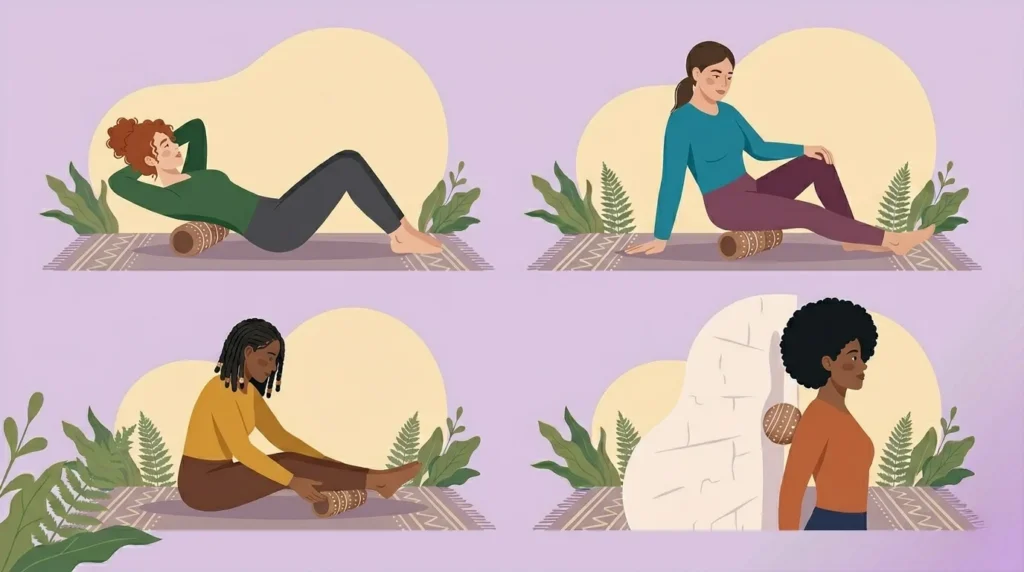
With self-myofascial release
Popular tools include foam rollers and massage balls. Pressure is typically applied gradually, with the aim of being within a tolerable range rather than forcing through pain.
With exercise and mobility work
A session could also include stretching, mobility work or strengthening to help maintain the benefits of tissue release.
Who Can Benefit From Myofascial Release
Those who commonly use myofascial release tend to have:
- Muscle tightness
- Trigger points
- Posture-related stiffness
- Chronic low back pain
- Neck or shoulder tension
- Exercise-related soreness
Some examples of fibromyalgia symptoms
Safety Tips for Myofascial Release
Use gentle pressure
Myofascial release should not be aggressive or overly painful. The standard method is gentle, sustained pressure. [2]
Avoid working through severe pain
It’s not pain that is sharp, or worsening, or notable and you shouldn’t push through that.Medical evaluation is important if symptoms are severe or persistent. [8]
Watch out for specific health issues
As NCCIH points out, massage-based techniques are not appropriate for everyone, particularly those who have bleeding disorders, some skin problems or other medical issues. [10]
Add to it professional advice if required
If someone’s pain persists, a clinician or physical therapist can help determine the reason for it and devise a safer treatment plan.
Myofascial Release vs Regular Massage
Myofascial release
It uses slow, sustained pressure and mobility of tissues to place stress on the fascia and/or trigger points.
Regular massage
Can be more broad and overall with techniques geared toward relaxation, muscle supply or to relieve pain. NCCIH advises that massage might be beneficial for some pain conditions, but evidence is often limited or of a short duration.
When to Incorporate Myofascial Release into Your Routine
Use it before movement
Many individuals perform self-myofascial release prior to a training session in an attempt to improve stiffness and prepare for activity. [6]
Use it after long sitting
It might help relieve tight spots from sitting at a desk or standing for long periods.
Pair it with stretching
After releasing, a stretch can help to keep these mobility gains in check. [6]
Stay consistent
Work on soft tissues tends to work well with regular rather than occasional application.
FAQs
Myofascial release is a hands-on treatment approach that applies gentle, sustained pressure to ease tension in fascia and soft tissue.
It can benefit some people with pain and mobility, particularly in low back pain, neck pain and certain chronic pain conditions, but the evidence is mixed and not equally strong for all conditions.
It should generally feel like consistent pressure, not extreme pain. The technique itself is relatively gentle and controlled.
Indeed, self-myofascial release is most frequently performed with foam rollers or massage balls, but it should be approached mindfully and within an appropriate range of motion.
People with certain medical conditions, bleeding risks, skin problems or strong unexplained pain should consult a clinician first.
That depends on your condition, comfort level and goals. If you do use it, a few times per week along with stretching and exercise is common.
Conclusion
Myofascial release is an easy, hands-on technique that might help some people release tension, facilitate motion, and support pain relief. It’s most commonly used for trigger points, chronic tension and stiffness in the neck, back, hips and other overworked areas. Although research indicates real benefit in some cases, the evidence remains mixed, so that it functions best as part of a broader recovery or pain-management strategy. [7]
References
- Cleveland Clinic. (2022). Myofascial Release Therapy. https://my.clevelandclinic.org/health/treatments/24011-myofascial-release-therapy
- Ajimsha, M. S., Al-Mudahka, N. R., & Al-Madzhar, J. A. (2015). Effectiveness of myofascial release: systematic review of randomized controlled trials. https://pubmed.ncbi.nlm.nih.gov/25603749/
- Wu, Z., et al. (2021). Myofascial Release for Chronic Low Back Pain: A Systematic Review and Meta-Analysis. https://pubmed.ncbi.nlm.nih.gov/34395477/
- StatPearls / NCBI Bookshelf. (2025). Myofascial Pain Syndrome. https://www.ncbi.nlm.nih.gov/books/NBK499882/
- NCCIH. (2023). Massage Therapy for Health: What the Science Says. https://www.nccih.nih.gov/health/providers/digest/massage-therapy-for-health-science
- NCCIH. (2023). 6 Things To Know About Massage Therapy for Health Purposes. https://www.nccih.nih.gov/health/tips/things-to-know-about-massage-therapy-for-health-purposes
- Guo, Y., et al. (2023). Myofascial release for the treatment of pain and function in chronic neck pain: A systematic review. https://pubmed.ncbi.nlm.nih.gov/36305079/
- NCCIH. (2023). Pain: Considering Complementary Approaches. https://www.nccih.nih.gov/health/pain-considering-complementary-approaches-ebook
- Barbero, M., et al. (2019). Myofascial pain syndrome and trigger points: evaluation and management. https://pubmed.ncbi.nlm.nih.gov/31313700/
- NCCIH. (2023). Complementary Health Approaches for Chronic Pain. https://www.nccih.nih.gov/health/providers/digest/complementary-health-approaches-for-chronic-pain-science


