





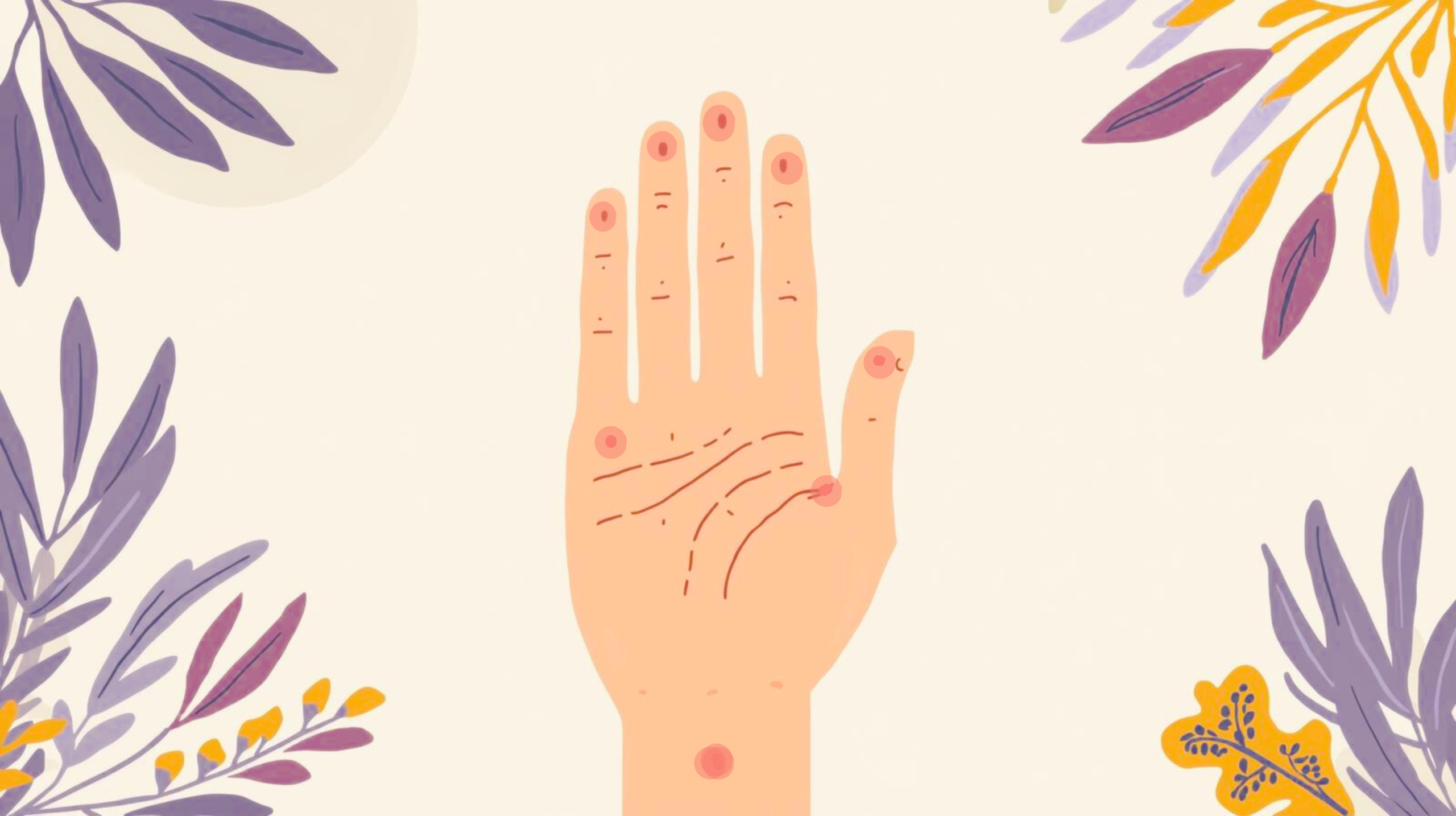
If someone had said to you that your hands secretly possess emotional reset buttons, you might have probably checked your hands again and again and asked, “Are you saying that my hands have been showing me the way with their superpowers all this time?”
Well, surprisingly yes.
Hand acupressure has been a natural calming method for the nervous system, releasing emotional tension, and supporting deep sleep for thousands of years. Modern research is also in line with this ancient practice by demonstrating that stimulating certain points on the hands can lead to the activation of the brain areas associated with relaxation, emotional regulation, and parasympathetic response.
If stress, anxiety, or sleep problems were your exes that kept following you without letting go, this guide will teach you how to literally withdraw them by a simple gesture.
And what is more, the entire thing is already with you.
How Is Hand Acupressure Effective?
Hand acupressure is not magic, nor is it “just placebo.” A pressing of certain points on your hand causes the body to set off a biological chain reaction. You can imagine it as turning on small switches that are linked to your nervous system, muscles, and even the brain.
The nerve endings at these points receive the message to the brain through the spinal cord from different brain areas. The nervous system in crisis can be calmed by these messages, stress hormones decreased, the blood flow better, and natural analgesic substances like endorphins may be released. This explains why, after only a few moments of pressing the correct point, one feels warmth, relaxation, or a sudden “ahh” sense.
Simply saying: the body is still the same machine with self-healing and self-regulation programs, it is acupressure that acts as an assistant to the body who helps meet the needs more efficiently.
The Brain and Hand Nerve Connection: What Makes These Points So Fast ?
The hands are the parts of the body with the greatest number of nerve endings per unit area. Hence, even a tiny cut on a finger can be quite an ordeal that makes one think over one’s life decisions again.
According to research, when people stimulate certain pressure points, it results in a signal being sent to the spinal cord as well as emotional centers of the brain. The vagus nerve, parasympathetic system and limbic centers (which control emotions) are among the things that react to acupressure stimulation [1].
In short, hitting the right spot on the hand is like sending a gentle SMS to the brain with the message “Relax bro, it is all right”.
Hand Reflex Zones That Can Be Used For Instant Emotional Stabilization
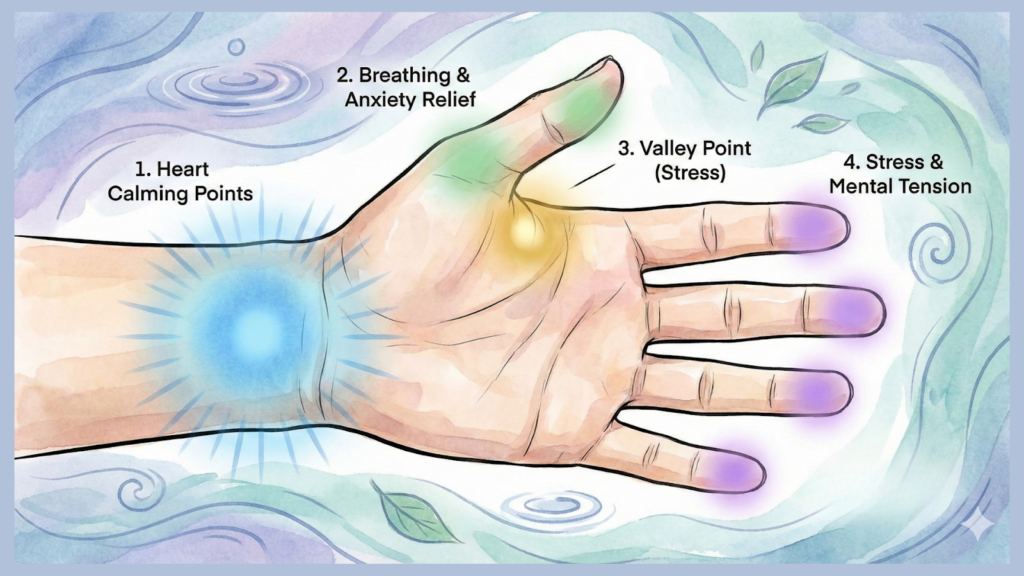
1.Heart calming points around the wrist
These areas correspond to the heart meridian and, therefore, not only breathe emotionally overwhelmed air but also help to calm the breath.
2. Points on the thumb impact breathing and anxiety
The thumb pad is connected with the lungs and the diaphragm and, thus, can aid in the relief of chest tightening and the subjugation of the stress response.
3.The valley point of the hand provides rest to the nervous system
It is located between the thumb and the index finger, and this point loosens the muscles and calms the nerves that are excessively stimulated.
4. Fingertip areas control stress and mental tension
Fingertips are linked with the emotional centers of the brain, which helps to clear the mental clutter and reduce overthinking.
In what ways does hand acupressure speed up work under stress ?
When you are anxious, stressed, or suffering from insomnia, your sympathetic nervous system is overactive. Acupressure turns on the completely different system: the parasympathetic state.
Once the relaxation process is on, several things happen:
- The heartbeat slows down
- Breathing becomes more regular and oxygen is better utilized
- The muscles that were tight get relaxed
- The mind that was running in circles stops
As a result, your whole body is prepared for sleep.
It is comparable to changing from “fight or flight mode” to “I want to curl up with chai and rest” mode.
Acupressure Points on Hand Chart: The Simple Way to Know What Each Point Does ?
An arm pressure point graph is similar to a small map of the road to your health. It informs about the location of each point and the organ or mind part that it influences; stress, sleep, pain, or emotional balance. With the help of a quick reference, it is very easy to find the points that need pressing for instant relief, thus turning your hands into a handy, wellness tool accessible at any time.
These are 6 emotionally calming, sleep-relieving, stress-reducing points that are supported by science and frequently used.
1. HT7 (Shenmen)
Location: The wrist crease, side of the little finger
This point is well known for its effects on anxiety relief and emotional grounding. It has been demonstrated that nervous tension is reduced and that irregular heartbeat caused by panic episodes is regulated [2].
Advantages:
• Helps to reduce anxiety
HT7 stimulation results in the sympathetic nervous system relaxation that is responsible for stress reactions. This leads to an instant drop in the feeling of nervousness and the body gets into a calmer, more grounded state which is characteristic of a shift.
• Decreases emotional restlessness
The Shenmen point is connected to the brain areas responsible for the regulation of emotions. The release of tension, irritability, and the feeling that “I can’t calm down” which usually accompanies high stress, can be brought to a halt through stimulation of this point.
• Enhances sleep quality
By using this point, one is led to deep relaxation as mental activity is slowed down and the body is relieved from tension. This is the reason why sleep comes easily and is uninterrupted even during nights when the mind is too active.
• Helps to stabilize mood swings
HT7 is useful in balancing the flow of energy within and, thus, it is effective in abolishing mood swings and emotional highs as well as lows. Continuous stimulation may result in a more stable and balanced mood during the day.
For 2 minutes, softly press this point with your thumb.
2. LI4 (Hegu)
Location: Somewhere between the thumb and the index finger
LI4, the “universal stress relief” point is often referred to as one of the most researched acupressure points that are the main causes of headache, muscle tightness, and emotional stress. The point works fast, especially, when the body is stiff due to long hours of work or screen time.
Advantages:
• Intellectual peace
LI4 stimulation helps in the stopping of racing thoughts and in anxiety increases by a signal sent to the nervous system for it to lower its activity. The point is perfect to use when one is mentally over-stimulated.
• Neck and shoulder tension release
The muscles that get tight when the posture is bad, e.g. during long steady driving or desk work, are the ones directly influenced by this point. The pressing of LI4 can be the cause of letting the muscle stiffness go away and thus it brings the feeling of lightness to the upper body.
• Eases irritability
LI4 is an acupuncture that helps to regulate one’s mood and emotional fluctuations so that a person can more easily come to terms with dissatisfaction or grumpiness. Many times people experience a faint feeling of “emotional release” within a few minutes.
• Reduces mental overload
By fixing the blood supply and relieving the tension in the head, it takes off the weariness of the brain. That is why it is very helpful during very demanding mentally days or after a long period of focus. In such a case, it is also very good for people who are going to spend several hours driving or working at a desk, both of which are bad for the posture and also drain the mental clarity.
3. PC6 (Neiguan)
Location: Inner side of the wrist, three finger-widths below
Besides getting rid of nausea and calming the heart, PC6 is generally utilized to calm down anxiety and improve sleep according to the latest studies. This acupoint assists in calming down the brain when the body is under stress.
Benefits:
• Regulates heartbeat
If you are pressing on PC6, it can assist your heart rhythm to calm down when it is restless or anxious due to anxiety or stress. It supports the heart to make beats that are smooth, regular, and calm in nature and these signal relaxation to the brain.
• Reduces anxiety
This acupuncture point very directly influences the circuit that manages emotional stress, thus, it helps in giving relief from that tight, extremely uncomfortable feeling in the chest or the stomach that accompanies anxiety, etc.
• Promotes emotional relaxation
When the PC6 is stimulated, it helps to soften the emotional areasunder most pressure as it lets the internal release of the pressure and also facilitates deep breathing. Also, it is the most comforting one after an emotionally exhausting day.
• Ideal before bedtime
PC6 by nature makes the nerve system slower which in turn facilitates the relaxation of the mind and after that, the transition to sleep. Many people find that it helps them to sleep quicker.
4. SI3
Location: Side of the hand, at the base of the pinky
SI3 has a strong connection with the human vertebral column, neck, and mental clarity. It is traditionally believed that this point is instrumental in people’s ability to fall asleep and stay that way without breaking their sleep frequently.
Benefits :
• Promotes deep sleep:
One of the ways SI3 helps people to sleep deeply is by turning off unwanted thoughts of the mind and also it lessens the physical restlessness which in this way the body is guided to sleep cycles that are deep and unbroken.
• Reduces tension headaches
This point helps the release of the neck and upper spine regions that are tight and thus, causes headaches due to these areas. A lot of people experience the removal of the oppressive feeling within a few minutes after applying light force.
• Clears mental clutter
SI3 removes the clutter of a busy mind by calming the overly active parts that are connected with worry. It is a great point when your thoughts keep turning round without stopping.
• Relaxes upper body tension
The release of the shoulder blades, neck, and upper back areas, which usually become stiff due to bad posture or the building up of stress, is achieved by this point.
Pro Tip: Those with sleep difficulties caused by poor spinal alignment may get better results if they stimulate SI3 along with using cervical cushions for better support.
5. Lung 9
Location: Wrist crease, thumb side
Lung 9 is a point that helps to regulate breathing as well as emotional stability. Since anxiety usually causes restriction of breath, thus, when it is activated this point can very quickly bring back balance and relief.
Benefits :
• Calms emotional agitation
This point is the one that brings back the emotional rapidity “flutter” that is caused by panic or stress to normality, thus, helping the mind to become more grounded and steady.
• Supports better breathing
Working on Lung 9 will open the chest area thus allowing the person to take deeper and freer breaths. And so, by a snap of the finger, the tightness that you felt because of shallow breathing resulting from anxiety can be relieved.
• Helps with stress-linked chest tightness:
The cause of the chest tightness in the person’s chest who is feeling stress is due to the tension of the muscles in the chest. So, this point helps in the relaxation of those muscles, which will at the same time bring a sense of both physical and emotional release.
6. Hand Valley Relaxation Point
Location: The soft tissue between the thumb bones
This spot which is not very familiar among people is, however, quite powerful when it comes to quick and immediate stress relief. It is the perfect place for sudden emotional spikes as it triggers the fast-acting relaxation pathways in the brain.
Benefits :
• Instant calming effect
If only a few seconds relief from the emotional intensity is what you are looking for, then this point is the perfect place to be pressed. Relaxing this point results in the fastest nervous signals being sent to the brain to calm down and stabilize the situation.
• Reduces tension
By working on this point, one can help the release of tension in the hands, forearms, and shoulders, areas which, as a result of the stress that is building up without being noticed, become tightly clenched.
• Relaxes muscles
When muscle relaxation is achieved by the point that works on the muscle contraction which thereby loosens the body and makes it possible for the person to breathe more freely and feel physically lighter therefore, the hand valley point is thus confirmed as a relaxation point.
How Do You Use These Hand Pressure Points Correctly?
It won’t help if you are randomly pressing a spot on your hand as if you are trying to turn on a secret button. The technique that you use is still important here.
Step 1: Locating Each Point Properly
You don’t always have to be as accurate as a doctor to find the right place. Usually, acupressure points are located within small zones. Try pressing gently in the area until you find a spot that is slightly sensitive. This is the point.
Step 2: Using the Right Pressure
- • Apply medium pressure
- •The feeling of the area should be slightly tender but not painful
- • Press with a circular motion
- • Take deep breaths during the process
Step 3: How Long Should You Press Each Point?
If you want to get the best possible results, you should press each point gently for 1 to 3 minutes. This time gives enough space for your body to respond fully and relax [5].
Step 4: The 5-Minute Sleep Routine Before Bed
This routine is just right for people who have troubles with sleep:
- HT7 – 1 minute
- PC6 – 1 minute
- SI3 – 1 minute
- Lung point – 1 minute
- LI4 – 1 minute
Within a few minutes, you will feel more relaxed and calmed.
How Does Acupressure on Hand Help With Chronic Stress?
Stress is not just something that you “feel in your mind.” It is also manifested in your body; for example, tight shoulders, clenched jaws, shallow breathing, racing thoughts, and restless sleep. Eventually, these physical reactions form a loop that keeps your nervous system in a state of high alert.
Hand acupressure is a method that can successfully break this cycle since it has both calming effects on the mind and the body simultaneously.
1. It Lowers Cortisol Levels:
Studies suggest that performing acupressure regularly may lead to a decrease in cortisol – the hormone that is most responsible for the sudden rise of stress, irritation, and mental fatigue [6].
Decreasing cortisol is a step toward reducing the number of stress-triggered situations such as chest tightness, rapid heartbeat, and concentration difficulties. At the same time, it helps bring about an equilibrium state inside where the body no longer behaves as if it is under constant “vigilance.”
2. It Activates the Parasympathetic System:
Hand acupressure is one of the causes for the body to turn on the parasympathetic nervous system, which is the source of recovery and healing for the body. As this system is turned on, improvements in the following areas occur naturally:
- Digestion: Stress is a factor that slows down digestion; however, the parasympathetic activity restores normal gut movements and lessens both bloating and nausea.
- Muscle relaxation: Hard muscles that surround the neck, jaw, wrists, shoulders, etc. start to relent.
- Emotional stability: The person is less reactive, more focused This shift is as if it were moving from the “fight or flight” to “finally, I can breathe” mode.
3. It Helps With Stress-Induced Physical Pain:
One aspect of chronic stress that is highly common is the fact that it manifests itself in the body in the form of pains or tightness. So, without even realizing it, we tend to put stress in certain parts of the body which can be:
- The jaw – going through clenching or headache situations
- The shoulders – making knots and stiffening
- The lower back – the place where, according to most, emotional tension usually settles
- The chest area – giving the feeling of being pressed and not breathing deeply
By stimulating such points as LI4, Lung 9, and HT7, one can rid oneself of this tension that has been accumulating over time. These points not only allow the blood to circulate more freely but also help to relax the muscles which have been overused and, thus, break the vicious cycle that leads from stress to physical pain.
Hand Acupressure for Better Sleep: Does It Actually Work?
Yes, and here is a detailed explanation of how it facilitates sleep for your body and mind in a more natural way.
It Reduces Night-Time Hyperarousal
In case your brain becomes a philosopher just when you are about to sleep and that is why your thoughts keep running, what you are experiencing is night-time hyperarousal. In such situations, the hand acupressure method can be very helpful in that it quiets the pathways by which the brain stays activated and, hence, abates this mental overexercise. This change enables the brain to calm down and, thus, one can fall asleep without the need to struggle a lot with overthinking.
It Improves Melatonin Regulation
There are certain points on the hand that can boost melatonin, the sleep hormone [7]. This helps your body relax and transition into deeper, restorative sleep without medication.
This in turn helps the body to unwind and progressively reach deep sleep which is very rejuvenating and is achieved without the use of drugs.
It Helps With Physical Tension That Prevents Sleep
Muscle tightness caused by bad posture or prolonged sitting may prevent you from sleep. Hand acupressure works on the release of the tightness, the improvement of blood flow, and making the body physically ready for sleep.
Note: In case chronic neck stiffness or bad sleep posture is among the reasons for your problem, then using a cervical cushion together with acupressure will help you get much deeper and longer-lasting relief.
Common Mistakes People Make When Performing Hand Acupressure
1.Pressing too hard
More results will not come from applying more pressure. If you press too hard, it may cause you to feel uncomfortable and, thus, your muscles may become tense rather than relaxed. The best effect is achieved by using gentle and steady pressure.
2.Moving too quickly
If one were to be very quick in the performance of acupressure, the important element would be missed which is the gradualness of the action. The body is slow in its reaction to help achieve the intended effect, so it is of a certain degree that the stimulation has to be too quick so the body will not be able to recognize it.
3.Ignoring the fact that one should breathe slowly while doing it
Your breathing is as much a part of the medicine as the acupressure point itself. Inhaling deeply, slowly, and rhythmically further promotes the relaxation effect and aids the nervous system in reaching a state of calmness while the point is being stimulated.
4.Performing the action only once and expecting immediate results
To get the most out of acupressure, you should be consistent. Occasional performance will bring about slight results only, whereas habitual practice trains one’s body to relax faster and it also brings about permanent results.
Conclusion
Your hands are not simply the fingers which after all are used for typing, texting, and 1 am food reels scrolling. These are the powerful doors leading to your emotional and mental wellness.
By using proper acupressure methods, you can relieve stress, anxiety, and sleep better without any intervention of medicine. No fancy tools. No pricey therapy gadgets. Your hands are enough.
Whether implementing these methods while working at your desk, resting on your bed, or experiencing a stressful workday, they will help you feel more grounded, calm, and in control. And if you add them to the supportive lifestyle practices like the betterhood-approved posture habits, the benefits won’t only be cumulative but also they will accelerate each other.
Explore More Health & Wellness Solutions:
Would you like to be up-to-date on everyday health and wellness issues? Here are some interesting pieces to help you. Follow the links below if you want practical tips or solutions:
- What Causes Back Pain? Understanding Root Triggers & Prevention Tips
- 10 Effective Home Remedies for Body Pain Relief Naturally
- Wrist Support Braces Explained: Protocols for Pain Relief
- Pillow for Neck Pain: Best Contour Pillow Every Side Sleeper Needs
References
- He, T., Qin, W., & Li, Q. (2015). Neural mechanisms of acupuncture as revealed by fMRI studies. Evidence-Based Complementary and Alternative Medicine.
Link: https://pubmed.ncbi.nlm.nih.gov/25900479/ - Au, D. W. H., Hui, E., & Chow, J. (2015). Effects of acupressure on anxiety: A systematic review and meta-analysis. Journal of Clinical Nursing (systematic review entry on PubMed).
Link: https://pubmed.ncbi.nlm.nih.gov/26002571/ - Umemoto, K., Naito, H., & Yamamoto, K. (2019). Acupuncture point “Hegu” (LI4) is close to the vascular branch from the superficial branch of the radial nerve: anatomical study and clinical implications. Evidence-Based Complementary and Alternative Medicine.
Link: https://www.ncbi.nlm.nih.gov/pmc/articles/PMC6614981/ - Lee, S. H., & Ernst, E. (2010). Acupuncture and heart rate variability: a systematic review. Evidence-Based Complementary and Alternative Medicine.
Link: https://pubmed.ncbi.nlm.nih.gov/20304708/ - Wu, D. J., Yin, W., & Chen, X. (2018). Acupressure for insomnia: a protocol for systematic review. Medicine (Baltimore).
Link: https://www.ncbi.nlm.nih.gov/pmc/articles/PMC6250509/ - Peng, Z., & colleagues (2024). Acupressure: a possible therapeutic strategy for anxiety review of clinical studies. Frontiers in Psychiatry / PMC review (open access).Link: https://www.ncbi.nlm.nih.gov/pmc/articles/PMC10993250/
- Chung, J. W., & Wu, X. Y. (2014). Effect of acupuncture on heart rate variability implications for sleep and autonomic regulation (review). PMC review article on HRV and acupuncture.Link: https://pmc.ncbi.nlm.nih.gov/articles/PMC3944737/